作者: admin

  • Small Craft, High Surf Warning in effect as tropical wave nears

    Small Craft, High Surf Warning in effect as tropical wave nears

    The Caribbean island of Barbados is preparing for potential severe weather conditions this weekend, as the Barbados Meteorological Services (BMS) keeps close watch on a developing tropical wave moving across the Atlantic Ocean. As of 11 a.m. local time Thursday, the weather system was positioned roughly 1,056 miles east of the island nation, with forecasters projecting it will track north of Barbados between Friday night and Saturday while maintaining strength as a robust tropical wave.

    The approaching system has already triggered changes to local weather advisories. According to an official statement from the BMS, gusty winds blowing ahead of the tropical wave have already degraded marine conditions across the region, prompting officials to upgrade an existing small-craft and high-surf advisory to a full warning. Beyond dangerous sea conditions, the agency warned that Barbados can expect powerful gusts, intense downpours, and frequent thunderstorms as the system passes. Forecasters added that additional watches and warnings could be rolled out as the weather event evolves and brings impacts to the local area.

    As of the latest public bulletin, no tropical storm watches or warnings have been issued for Barbados. Beyond the primary system of concern, the BMS is also monitoring a second tropical wave that is currently located approximately 2,006 miles east of Barbados, across the Eastern Atlantic. Forecasters note that this second system is expected to move into a marginally favorable environment for development over the coming days as it tracks northwestward. However, current climate modeling data does not indicate that this secondary system will pose any significant threat or impact to Barbados at this stage of monitoring.

  • FundAccess, UWI CAGRI celebrate graduates

    FundAccess, UWI CAGRI celebrate graduates

    A collaborative agricultural development effort between a regional development financial body and a leading Caribbean academic institution has marked a key milestone, with the successful completion of specialized training for emerging agri-entrepreneurs. FundAccess, a Barbados-based enterprise development and financing organization, has partnered with The University of the West Indies’ Centre for Agricultural Research and Innovation (UWI CAGRI) to wrap up the Broiler and Layer Management Workshops, a core component of the organizations’ joint Agri-Grow Enterprise Development Programme. A formal closing ceremony to honor participating trainees was hosted recently at UWI’s Cave Hill Campus, where all 22 program graduates received Certificates of Achievement in recognition of their full participation and successful completion of the rigorous training curriculum.

    Kicking off in June 2026, the workshops were purpose-built to address a critical gap in Caribbean agricultural development: equipping both aspiring and current farming entrepreneurs with the full spectrum of capabilities needed to launch and sustain profitable poultry operations. Unlike generic agricultural training programs, the curriculum blended hands-on technical skill-building, academic expertise, and core business acumen to prepare participants for long-term success. Under the guidance of lead instructor Dr. Michele Singh, trainees mastered core poultry production topics including broiler and layer flock management, sustainable housing design, optimized nutrition and feeding protocols, production cycle planning, proactive animal health management, and biosecurity best practices. To bridge the gap between theory and practice, the program incorporated interactive practical exercises, such as a collaborative battery cage construction project, that let participants apply classroom learning while building critical teamwork and adaptive problem-solving skills.

    Program organizers recognized that technical proficiency alone is rarely enough to build a successful agricultural enterprise, so the curriculum also included dedicated training in core agri-business fundamentals. Sessions covered essential topics such as standardized financial record-keeping, market positioning and preparation, regulatory compliance, and enterprise governance. Led by Jonathan Seecharan of Caribbean Export, these business-focused modules pushed participants to reframe farming not as a small-scale subsistence activity, but as a formal, market-driven, and sustainable business venture.

    During the closing ceremony, FundAccess Project Development Officer Tristan Lowe walked attendees through the full range of the organization’s offerings, highlighting the financing products, targeted technical assistance, and ongoing business development support available to entrepreneurs looking to launch new agricultural ventures or scale existing ones. Jillisia Mayers, FundAccess Business Development Officer and lead for the Agri-Grow project, emphasized the transformative vision behind the initiative in her remarks. “Agri-Grow was developed not simply to train farmers but to help develop agricultural entrepreneurs,” Mayers explained. “By combining technical instruction with practical experience, sound business principles and information on financing, participants are better positioned to transform agricultural opportunities into viable and sustainable enterprises.”

    The successful completion of the poultry workshops highlights the power of cross-sector collaboration: the program leverages UWI CAGRI’s decades of specialized agricultural research and training expertise, paired with FundAccess’ deep experience in enterprise development and access to financing for small and medium businesses, to create a holistic support pathway for agri-entrepreneurs. While this round of training has concluded, the broader Agri-Grow Programme will continue rolling out new specialized modules throughout the rest of 2026. Upcoming workshops include a Crop Production session launching August 13, followed by a Sheep Production program starting September 15, and a Pig Production training kicking off October 21.

    Through this ongoing series of workshops, FundAccess and UWI CAGRI are investing in long-term economic and food security progress for Barbados. By supporting the growth of competitive, locally rooted agricultural small businesses, the initiative aims to generate new local employment opportunities, reduce reliance on imported food, strengthen domestic food production capacity, and drive inclusive, sustainable economic growth across the country.

  • Kings wait on Seifert, Ahmad as The Hundred wraps up

    Kings wait on Seifert, Ahmad as The Hundred wraps up

    The 2025 edition of the Republic Bank Caribbean Premier League (CPL) is underway, and last year’s regular season table-toppers, the Saint Lucia Kings, have kicked off their new campaign facing a significant hurdle: two of their most impactful players are missing from the opening matches due to a crammed global franchise cricket calendar. New Zealand wicketkeeper-batter Tim Seifert and Afghan left-arm wrist-spinner Noor Ahmad will not link up with the squad until their fifth fixture of the season, as they are still competing in England’s flagship franchise tournament, The Hundred.

    So far, the Kings have split their opening two matches at the Daren Sammy Cricket Ground, claiming a win in their season opener before falling to defeat on Wednesday night. Up next, the side is set to face Antigua & Barbuda Falcons at the same ground on Friday evening, followed by a clash against Barbados Tridents this coming Sunday. Coincidentally, Sunday also marks the final day of The Hundred’s 2025 season, with both Seifert and Ahmad currently plying their trade for the Manchester Super Giants, who have advanced to the tournament’s playoff round this weekend.

    Seifert’s absence is particularly notable for the Kings, given his standout performance in last year’s CPL. The dynamic hard-hitting batter finished as the league’s fourth-highest run-scorer, notching 396 runs across 12 matches. His contributions accounted for more than 20% of the Kings’ total run output throughout the regular season, when the side finished at the top of the league standings.

    For Ahmad, the left-arm spinner did not feature for the Kings in the 2025 CPL leading up to this season, but he played an instrumental role in the franchise’s historic maiden CPL title win in 2024. At just 19 years old during that title run, the prodigious young spinner topped the league’s wicket-taking charts, finishing with 22 wickets at an impressive economy rate of 6.19 runs per over.

    In Seifert’s absence, South African batter Andries Gous stepped up to deliver a match-winning half-century in the Kings’ opening victory last Sunday. The side also got solid batting contributions on Wednesday, with both Jewel Andrew and Kamil Pooran notching fifties in the losing effort. The Kings’ spin attack is set to get another boost later in the tournament when Sri Lankan mystery spinner Maheesh Theekshana joins the squad, forming a formidable spin trio alongside Ahmad and captain Roston Chase. For the opening fixtures, however, the remaining squad members have been forced to take on expanded responsibilities to cover for the two missing stars.

    The good news for Kings fans is that the star duo is expected to return to the squad in time for next Wednesday’s match against the Guyana Amazon Warriors at the Daren Sammy Cricket Ground, and will be available for the remainder of the CPL season once they arrive.

    The Saint Lucia Kings are not the only CPL side dealing with this scheduling conflict. Three other CPL franchises are also expecting to get their key players back from The Hundred commitments next week. Defending CPL champions Trinbago Knight Riders are waiting on star batter Nicholas Pooran, who is currently playing for MI London, while Jamaica Kingsmen captain Rovman Powell is competing for the Trent Rockets in the English tournament.

  • Four Fishermen Charged After Overnight Patrol Catches Lobster Violations

    Four Fishermen Charged After Overnight Patrol Catches Lobster Violations

    In an early-morning interdiction carried out August 13, 2026, a collaborative enforcement patrol intercepted a fishing vessel operating illegally within the boundaries of Belize’s Half Moon Caye Marine Protected Area, leading to fisheries violation charges against four crew members. The operation brought together two key conservation and security entities: the 2nd Fleet Marine Enforcement Unit of the Belize Coast Guard, and rangers from the Belize Audubon Society. When officers boarded the detained vessel, they discovered a catch that included multiple types of lobster explicitly protected under Belize’s national fisheries laws: undersized juvenile lobsters, soft-shell lobsters in the process of molting, and female lobsters carrying egg masses, all of which are restricted from harvest to support sustainable population recovery. The Belize Coast Guard issued a formal statement following the seizure highlighting the professionalism and effectiveness of its enforcement team, and extended public recognition to the Belize Audubon Society for its long-standing collaborative partnership in monitoring and guarding the ecologically sensitive protected zone. Officials also noted the critical support provided by Belize’s national Fisheries Department throughout the investigation and processing of the violation case. This enforcement action underscores Belize’s ongoing commitment to preserving its fragile marine ecosystems, which rely on protected area regulations to prevent overfishing and support the long-term health of commercially and ecologically important species like Caribbean spiny lobster.

  • Atkinson Primary school strengthened through OECS Climate Resilience Project

    Atkinson Primary school strengthened through OECS Climate Resilience Project

    Against a backdrop of rising climate uncertainty and more frequent extreme weather events, two Eastern Caribbean countries have wrapped up a landmark initiative designed to boost disaster preparedness at schools serving climate-vulnerable indigenous communities. Led by the Organization of Eastern Caribbean States (OECS) Commission and funded by the New Zealand High Commission Fund for the Caribbean, the 12-month project has delivered tangible infrastructure upgrades, life-saving emergency equipment, and targeted hands-on training to two participating institutions: Atkinson Primary School in Dominica’s Kalinago Territory and Sandy Bay Government School in St. Vincent and the Grenadines.

    Implemented through the OECS Commission’s Education Development Management Unit (EDMU), the initiative ran from July 1, 2025, through July 20, 2026. Beyond serving core educational functions, both schools act as critical community gathering spaces and official emergency shelters during hurricanes and floods, making their resilience a top priority for regional safety planning.

    At Dominica’s Atkinson Primary School, the project addressed long-standing climate-related hazards that disrupted learning and threatened safety. A custom 100-foot drainage system was installed to eliminate chronic flooding that regularly submerged the schoolyard during heavy rain events. Additionally, reinforced custom wooden doors were constructed and fitted to withstand the powerful hurricane-force winds that regularly impact the Eastern Caribbean. Both participating schools received standardized emergency response packages, including portable gasoline generators, solar-powered lighting systems, and public address equipment. These tools are designed to keep the schools operational during widespread power and communication outages, allowing them to continue hosting displaced community members even when critical infrastructure fails across surrounding areas.

    Organizers prioritized capacity building as much as physical upgrades, recognizing that lasting resilience depends on trained local stakeholders. Two-day interactive workshops, led by local disaster management experts Joian Coipel in Dominica and Dr. Idelia Ferdinand in St. Vincent and the Grenadines, adapted regional disaster risk reduction guidelines into actionable, site-specific emergency procedures. Participants also ran full simulation exercises to test existing school disaster response plans, identifying gaps and refining protocols for real-world events.

    In total, 36 key stakeholders including school administrators, teachers, support staff, and local indigenous community leaders completed the training. Post-project assessments measured a 15.5% average increase in disaster risk management knowledge among participants, with 90% of trainees reporting significantly higher confidence in their ability to coordinate a safe emergency response at their school.

    Muriel John, Principal of Atkinson Primary School, welcomed the transformative impact of the project, noting that it addressed decades of unmet safety needs while uniting staff and community members around a shared goal of preparedness. “The training reminded us that resilience is something we build together as a community long before disaster strikes,” John said. “Where we once felt vulnerable, we are now better equipped; where once we could only react, we now know how to prepare.” She extended formal gratitude to all participating partners, adding: “You have not only built a more resilient school, but also strengthened the spirit of a people who have always known how to endure and now feel supported in that endurance. We are grateful, stronger and ready.”

    Dr. Didacus Jules, Director General of the OECS Commission, framed the initiative as a core part of the regional body’s ongoing commitment to building climate resilience across vulnerable small island developing states. “By empowering our indigenous school communities in Dominica and Saint Vincent and the Grenadines with both fortified infrastructure and critical local expertise, we are not just protecting our students; we are establishing a vital blueprint for regional safety,” Jules explained.

    Linda Te Puni, New Zealand High Commissioner to the Caribbean, emphasized that the project’s centering of indigenous knowledge and community leadership aligned closely with New Zealand’s core development values. “It is especially important that this initiative places indigenous knowledge, community ownership, and inclusive development at its centre. These values are important to New Zealand,” she said.

    Building on the successful outcomes of this pilot project, the OECS Commission plans to expand the model to similar resilience-building initiatives in Grenada and Saint Lucia in coming years. Project outcomes are also integrated into the regional Climate Smart Education Systems Initiative, which aims to embed climate resilience into education policy and infrastructure planning across the Eastern Caribbean to deliver long-term, widespread benefits for vulnerable communities.

  • He wanted to be an engineer. Teaching became his life’s work

    He wanted to be an engineer. Teaching became his life’s work

    Three decades ago, George Cox never mapped out a career in education. As a young boy growing up, his sights were firmly set on engineering, drawn by his lifelong love of designing and building new things. That early curiosity, which would one day steer him toward a career in art education, first emerged when he began taking apart his father’s belongings — including an old family television — to understand how they worked. When his father ordered him to have the set working upon his return from a trip, Cox managed to get it running despite having extra parts and screws left over, a small early win that hinted at his knack for problem-solving.

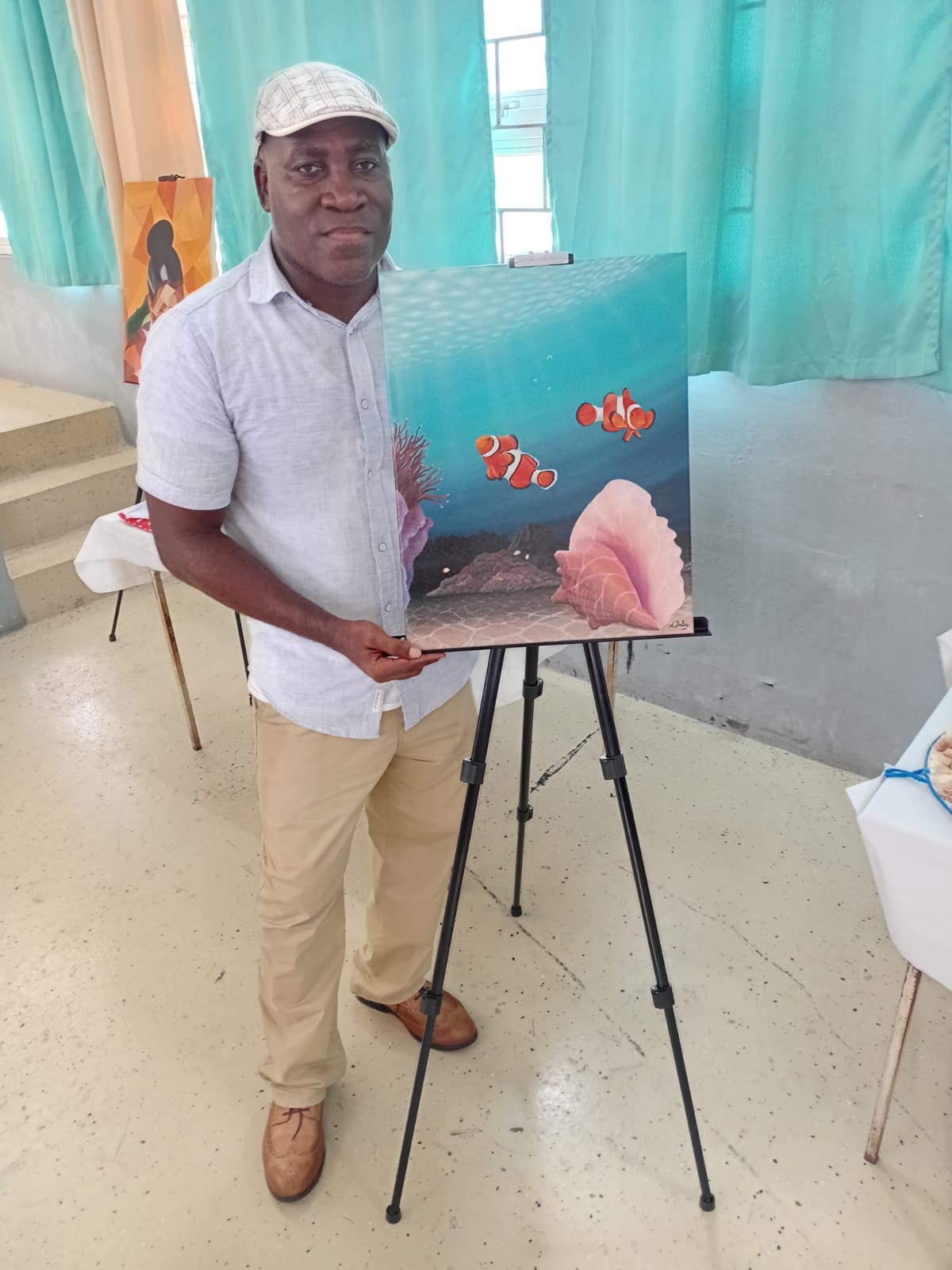
    After finishing secondary school, Cox enrolled at Barbados Community College, where he opted to study subjects he felt naturally drawn to: English, history, and art. Before long, art became his primary focus, and his first teaching role soon followed: a part-time position at St Leonard’s School, which he remembers fondly for its tight-knit staff and welcoming environment. As a young educator entering the field without an official mentor, Cox drew on the lessons he learned from his own past teachers, particularly a man named Mr. Jones, who left an indelible mark on his approach to teaching. Cox blended the strongest qualities of the teachers who shaped him to build his own unique educational philosophy, one rooted in the idea that every student learns differently.

    For Cox, teaching is far from a one-size-fits-all lecture. It is an inherently personal practice, shaped by the unique personalities and needs of each learner in the classroom — a belief that also extends to his perspective on art education. He is a vocal advocate for expanding art’s role in early K-12 education, arguing that the subject fosters independent thinking in a way that rote memorization-heavy curricula cannot. Unlike core subjects that often focus on recalling pre-determined information, art asks students to form their own ideas, visualize three-dimensional space, and explore their understanding of the world around them, alongside other creative subjects like English, theater, and music.

    After 30 years in the classroom, Cox has witnessed profound shifts in how students engage with learning, and few changes have been as impactful as the rise of digital technology and social media. While he acknowledges that access to computers and digital tools offers clear benefits for students, he warns that attention-driven platforms like TikTok and Instagram have created new obstacles for independent thought. Most students can navigate these platforms for casual use, he notes, but few have learned to leverage them for practical purposes, like generating income or researching relevant information. Instead, most gravitate toward low-effort, superficial content: gossip, provocative imagery, and self-portrait content. Over time, Cox says, constant exposure to this curated, algorithm-driven content has left many of his students struggling to develop and articulate their own original ideas.

    Even after decades of shaping young minds, Cox says he continues to learn and grow alongside his students. For new and veteran teachers alike, his core advice is simple: practice patience. Teaching, he emphasizes, is a lifelong calling, not just a job. For anyone considering entering the profession, he offers a playful yet revealing warning: “Don’t do it.” The joke comes with a caveat, though — once you enter education, it is nearly impossible to leave. The work is deeply personal, he explains, and even addictive: getting to interact with hundreds of distinct young personalities and watch them grow is a one-of-a-kind privilege.

    For Cox, the most rewarding part of a career in education is watching former students go on to build their own lives and careers. He still recalls one former student who now has a family of his own, and the profound impact Cox had on his trajectory. Moments like that, when he sees the long-term ripple effect of his work, make the long days and occasional frustrations of teaching entirely worthwhile. When asked to sum up his teaching philosophy in just a few words, Cox lists four core values: patience, genuineness, communication, and forgiveness. Forgiveness, he explains, applies both to students who make mistakes and to teachers themselves — acknowledging that no educator is perfect, and everyone has room to grow.

    Though he never ended up designing and building the physical structures he dreamed of as an aspiring engineer, Cox has spent 30 years building something far more enduring: the confidence in young people to think independently, create freely, and find their own path in the world.

  • ‘What does CARICOM mean to YOUth?’: Young Caribbean voices answer

    ‘What does CARICOM mean to YOUth?’: Young Caribbean voices answer

    Marking International Youth Day, young people across the Caribbean have traded formal policy briefs and scripted speeches for personal prose, heartfelt poetry and original song lyrics to share what the regional Caribbean Community (CARICOM) movement means to them. The result of this grassroots creative call is *What CARICOM Means to YOUth*, a one-of-a-kind regional youth anthology curated under the umbrella of the CARICOM Youth Ambassadors Programme. The collection made its official public debut on Wednesday, August 12, hosted by the Hunter J. François Library at Saint Lucia’s Sir Arthur Lewis Community College (SALCC).

    The launch event drew a cross-section of stakeholders, including senior government officials, local CARICOM Youth Ambassadors, SALCC students, and partner organization representatives, all gathered to celebrate a project centered on one deceptively simple yet deeply meaningful question: What does CARICOM mean to you?

    Naeem Philbert, Deputy CARICOM Youth Ambassador for Saint Lucia, explained that the choice to center creative expression over formal commentary was no accident. The intentional shift in format was designed to open space for young people across the 15-nation bloc to speak in their own voices, and to explore their relationship with the regional community in ways that feel authentic and natural to their generation.

    “Instead of asking for formal position papers, we invited young people across the entire Caribbean community to respond to the idea of CARICOM through personal stories, original poetry, song lyrics and spoken word,” Philbert shared at the launch. “We deliberately chose this creative path because we know there are thoughts and feelings young people can convey through a poem that would never find their way onto a bureaucratic policy document. Personal experiences can be captured far more powerfully in a story than in a rigid formal statement, and young people’s biggest aspirations can only reach their fullest expression through music and art.”

    This perspective was echoed by Rohan Lubon, Deputy Permanent Secretary in Saint Lucia’s Ministry of Youth and Sports, who emphasized that the anthology is far more than just a new literary publication. Lubon framed the collection as a critical bridge between young Caribbean people and regional decision-makers.

    “This anthology opens a window directly into the minds, dreams, hopes, concerns and highest aspirations of our young people,” Lubon said. “We are intentionally creating space for their voices to be heard, and we are acknowledging that when young people are given the opportunity to express themselves openly, they have so much to say — and so much to contribute to the future of our Caribbean.”

    Across the anthology’s pages, contributing young writers explore a range of core themes tied to regional life: shared Caribbean identity, the richness of regional cultural diversity, the value of cross-island unity, access to opportunity across the bloc, and their collective hopes for the future of CARICOM. Beyond its literary value, the collection offers policymakers and older generations a rare unfiltered glimpse into how the Caribbean’s younger generation understands CARICOM and its tangible impact on their daily lives.

    For Shelley Desir, Saint Lucia’s lead CARICOM Youth Ambassador, publishing this first collection is not the end of the project — it is just the beginning of an ongoing conversation. Desir urged attendees and readers across the region to keep the dialogue alive long after the launch event.

    “Don’t let these stories end when you close the book,” Desir said. “Read the collection, talk about the stories with your friends and family, share them across your communities, recommend them to others. And when you get the chance to meet one of our young contributing authors, don’t just congratulate them — ask them ‘what are you writing next?’ Because we want more: more stories, more books, and hopefully many more launches like this across the region in the years to come.”

  • 97 Youths Complete UNFPA Leadership Camp Aimed at Reducing Adolescent Pregnancy

    97 Youths Complete UNFPA Leadership Camp Aimed at Reducing Adolescent Pregnancy

    A transformative youth leadership development initiative has wrapped up in Belize, bringing together 97 young people from three of the country’s districts to equip them with the skills to drive community change around adolescent sexual and reproductive health. Hosted as part of a regional project focused on cutting adolescent pregnancy rates, the four-day “Let’s Be Leaders!” Youth Training Camp was a collaborative effort between the United Nations Population Fund (UNFPA) and Belize’s Department of Youth Services, with sponsorship from local firm RF&G.

    Participants hailing from Belize, Stann Creek, and Toledo districts took part in the residential program, which was split across three separate weekends to accommodate young people from different regions of the country. Unlike traditional lecture-based training, the camp centered on interactive, hands-on learning that combined formal leadership skill-building, critical discussions on youth health, and cultural exchange activities to create an inclusive, supportive environment for growth.

    The initiative is embedded within the broader “Let’s Be Clear” public education campaign, which forms a core component of the “Leave No One Behind: Reduction of Adolescent Pregnancy” project. This multi-year effort receives financial backing from the Grand Duchy of Luxembourg and the Government of Ireland through its development assistance program, Irish Aid, which has long prioritized youth sexual and reproductive health outcomes in the Caribbean.

    Over the course of the program, young attendees worked through modules designed to boost their self-confidence, build peer networks across district boundaries, and strengthen their ability to make informed, intentional decisions about their own lives. A central focus of the training aligned directly with the “Let’s Be Clear” campaign’s core mission: expanding access to evidence-based, age-appropriate information about sexual and reproductive health, gender equality, and healthy relationship dynamics. By building young people’s leadership capacity, organizers hope to empower participants to become advocates for their own wellbeing and the health of their peers across their home communities, creating sustainable, youth-led change that addresses the root drivers of unintended adolescent pregnancy in Belize.

  • Alleged spy links shadow Cuban diplomats’ exit from DR

    Alleged spy links shadow Cuban diplomats’ exit from DR

    In a decisive diplomatic move that underscores regional tensions between democratic governance and authoritarian rule, the Dominican government has ordered the withdrawal of nine Cuban diplomatic mission members, citing illegal undercover intelligence activities carried out under the protection of official diplomatic status.

    Senior official sources with direct access to the investigation told local outlet El Día that Dominican security agencies have gathered concrete evidence confirming that several of the accused diplomats were operating on behalf of Cuba’s national intelligence and security agencies. Dominican authorities have ruled these activities completely inconsistent with accepted international norms for diplomatic work, arguing that the covert operations violate the country’s national sovereignty.

    Public opinion in the Dominican Republic has long stood firm against unauthorized foreign intelligence operations on domestic soil, particularly those linked to the Cuban communist system, amplifying the government’s rationale for the expulsion order. Following the completion of the investigation, the Dominican Ministry of Foreign Affairs issued a formal demand requiring all nine implicated diplomats and their immediate family members to leave Dominican territory within a seven-day window.

    In an official statement, government spokespersons explicitly rejected widespread speculation that the expulsion was linked to the recent defection of four Cuban athletes, who chose to remain in the Dominican Republic after competing at the 2026 XXV Central American and Caribbean Games held in Santo Domingo. While the Foreign Ministry confirmed that the withdrawal request was processed in full compliance with standard international diplomatic protocol, official representatives declined to publicly share detailed information about the specific intelligence activities that prompted the order. Senior sources, however, have confirmed the covert operations were the core trigger for the government’s action.

    This diplomatic incident comes at a time of deepening crisis within Cuba itself. For more than six decades, the Cuban people have lived under a communist authoritarian regime defined by consistent political repression, a collapsing national economy, and widespread shortages of essential food, medicine, and other basic goods.

    Regional analysts note that the Dominican Republic’s decision aligns with a growing consensus across Latin America and among Latino communities in the United States, which has increasingly drawn a clear distinction between open democratic governance and the authoritarian system maintained by the Cuban government in Havana. By acting to shut down unauthorized intelligence activity on its territory, Santo Domingo has reaffirmed its unwavering commitment to protecting both national security and the integrity of its democratic institutions.

  • Executive decree appoints Dinorah García Romero to lead ISFODOSU

    Executive decree appoints Dinorah García Romero to lead ISFODOSU

    SANTO DOMINGO – In an official administrative move signed into effect via Presidential Decree 517-26, Dominican Republic President Luis Abinader has named seasoned education leader Dinorah García Romero as the new rector of the Salomé Ureña Higher Institute of Teacher Training (ISFODOSU), the country’s preeminent public institution for preparing K-12 educators. The appointment went into immediate effect following the decree’s issuance on July 30, 2026.

    As part of the executive order, Abinader formally revoked the prior appointment of Nurys María del Carmen González Durán, who had served as ISFODOSU’s rector since taking office in March 2021. The leadership transition follows a structured, formal candidate selection process overseen independently by ISFODOSU’s Board of Directors. Per the presidential decree, the board vetted applicants and finalized a shortlist of qualified candidates through its official Resolution JD-03-2026-01. The board’s nominee proposal was then submitted to the Executive Branch on July 14, 2026, by Luis Miguel De Camps García, who serves dual roles as Dominican Minister of Education and president of the ISFODOSU Board of Directors.

    The decree anchors the leadership change in the Dominican government’s core legal mandate: upholding the state’s obligation to guarantee all citizens access to a high-quality public education system. The official document outlines the institution’s core mission as advancing “the comprehensive development of citizens with critical thinking, creative capacity, and a commitment to democratic principles, equity, social justice, and the sustainable development of the Nation.” It further emphasizes that all public administration appointments must meet strict standards of full transparency, legal accountability, and alignment with the broader public interest.

    García Romero brings to the role more than three decades of hands-on experience across pedagogy, academic research, and higher education leadership in the Dominican Republic. She built her academic foundation at the Pedro Henríquez Ureña National University (UNPHU), where she earned her undergraduate degree in Education. She went on to complete a master’s degree in Higher Education Center Management through a joint program between the Pontificia Universidad Católica Madre y Maestra (PUCMM) and the University of Barcelona, followed by a second master’s degree in Applied Linguistics from the Instituto Tecnológico de Santo Domingo (INTEC). She also completed doctoral-level studies in Education at the University of Murcia in Spain.

    Prior to her appointment at ISFODOSU, García Romero held a series of prominent leadership roles across Dominican education, including a nine-year tenure leading the Higher Institute for Specialized Studies (ISESP) from 2016 to 2025, a period marked by significant institutional growth and consolidation for that center. She has also previously served as director of the Poveda Center and as a sitting member of the Dominican National Council of Education. Her decades of specialized work in teacher training and national curriculum development leave her uniquely positioned to lead the country’s leading university focused exclusively on training the next generation of Dominican educators.