作者: admin

  • Two Antigua & Barbuda Officials Selected For 2026 ECVA Beach Volleyball Referee Course

    Two Antigua & Barbuda Officials Selected For 2026 ECVA Beach Volleyball Referee Course

    The Eastern Caribbean Volleyball Association (ECVA) has announced the selection of two promising officiating representatives from Antigua & Barbuda to participate in its highly anticipated 2026 Beach Volleyball Referee Course, marking a key milestone for the nation’s volleyball development agenda.

    This competitive selection process drew applications from dozens of aspiring volleyball officials across 11 member territories of the ECVA, with the two Antigua & Barbuda candidates standing out for their demonstrated on-court experience, thorough understanding of international volleyball rules, and commitment to advancing the sport at both the grassroots and regional levels. The specialized training course, scheduled to kick off in early 2026, is designed to elevate the standard of officiating across the Eastern Caribbean by providing participants with advanced instruction on match management, conflict resolution, adaptive rule interpretation for beach volleyball’s unique outdoor conditions, and modern referee fitness standards.

    Local volleyball governing bodies in Antigua & Barbuda have welcomed the announcement, noting that the opportunity will not only boost the professional development of the two selected officials but also create long-term benefits for domestic beach volleyball competitions. By gaining international-level certification and training, the officials will bring back updated knowledge and best practices to train newer local referees, strengthening the overall officiating ecosystem in the country. For the ECVA, the initiative aligns with its broader strategic goal of growing beach volleyball as a popular recreational and competitive sport across the Caribbean, building a pipeline of qualified officials to support upcoming regional tournaments, including qualifiers for the Central American and Caribbean Games and FIVB international events.

  • The UWI Celebrates 14 Top Postgraduate Presentations and Prepares for 2026 Regional Conference

    The UWI Celebrates 14 Top Postgraduate Presentations and Prepares for 2026 Regional Conference

    As one of the Caribbean’s leading higher education institutions with a 75-year legacy of regional impact, The University of the West Indies (The UWI) has formally announced plans for its 4th Annual One UWI Postgraduate Student Conference, scheduled to run from November 18 to 21, 2026. The upcoming gathering will center on the forward-thinking theme “Advancing Knowledge, Shaping Futures: Research, Innovation, and Impact Across the Caribbean and Beyond,” a vision shaped by the overwhelming success of the conference’s third iteration held earlier this year.

    Originally planned for November 2025, the third annual conference was rescheduled and held as a fully virtual event between January 20 and 22, 2026. The event drew more than 600 registered attendees from across the region and beyond, showcasing 51 original research presentations spanning a diverse range of pressing topics: public health, climate resilience, education, governance, and sustainable development, all aligned with the Caribbean’s most urgent development priorities. Following the conclusion of the virtual event, organizers awarded honors to 14 standout oral presentations, recognizing the exceptional quality of postgraduate scholarship across the university’s five regional campuses.

    The 14 award recipients, who recently received electronic gift cards and commemorative prizes, were selected based on three core criteria: research originality, strict academic rigor, and direct relevance to Caribbean community and policy needs. The winning projects represent the full breadth of postgraduate research at The UWI, spanning public health, social science, agricultural sustainability, education reform, and economic justice. Standout winning works include a retrospective analysis of pediatric urinary tract infection comorbidities from the Mona Campus’ Faculty of Medical Sciences, a study of primary care patient awareness of medicinal cannabis in Barbados from the Cave Hill Campus, and an analysis of socioeconomic drivers of post-hurricane household vulnerability in the Bahamas, among other high-impact projects.

    The third annual conference opened with a keynote address from The UWI’s Vice-Chancellor Professor Sir Hilary Beckles, and featured a lineup of distinguished international speakers including Nadine Bushell of Lions Clubs International, Rodolpho Gonçalves da Silva from Brazil’s Universidade Estadual Paulista (UNESP), and Indian sustainability entrepreneur Ishaan Sudan. Across their remarks, speakers centered on the critical roles of community resilience, interdisciplinary innovation, youth leadership, and cross-sector service in addressing interconnected global challenges from climate change to public health inequality.

    In comments following the award ceremony, Professor Aldrie Henry-Lee, Pro Vice-Chancellor for Graduate Studies and Research (SGSR), highlighted the real-world value of the research presented at the conference. “These presentations demonstrate the exceptional quality of postgraduate research across The UWI and direct application to real-world challenges. They reflect a strong commitment to producing knowledge that matters to the Caribbean,” she said. Professor Henry-Lee also extended gratitude to all contributors to the conference’s success, including session chairs, discussants, campus graduate study directors, student and guild representatives, presenters, attendees, and the central organizing team.

    Beyond academic exchange, the third annual conference integrated a tangible community outreach component: on January 23, 2026, a team of postgraduate students and institutional partners traveled to Hanover, Jamaica, to deliver disaster relief and practical support to more than 200 families impacted by Hurricane Melissa. The outreach effort, organized in partnership with the Lions Clubs of Jamaica and the Kiwanis Club of New Kingston, aligned with The UWI’s longstanding institutional commitment to civic engagement. It will also serve as a pilot program for the proposed UWI Give Back Day, scheduled to coincide with the 4th annual conference in November 2026.

    Founded in 1948 as a small affiliate university college of the University of London with just 33 medical students based in Jamaica, The UWI has grown exponentially over the past seven decades to become a globally recognized research university serving nearly 50,000 students across five regional campuses: Mona in Jamaica, St. Augustine in Trinidad and Tobago, Cave Hill in Barbados, Five Islands in Antigua and Barbuda, and a distributed Global Campus. The university also maintains global academic partnership centers across North America, Latin America, Asia, Africa, and Europe, offering more than 1,000 credential programs ranging from professional certificates to doctoral degrees across nine broad academic disciplines.

    Consistently ranked among the world’s top universities by Times Higher Education (THE) since 2018, The UWI holds the distinction of being the only English-speaking Caribbean institution featured in four separate THE ranking categories: the overall World University Rankings, the Golden Age University Rankings for institutions founded between 50 and 80 years ago, the Latin America and Caribbean Regional Rankings, and the Impact Rankings that evaluate institutional contributions to the United Nations’ Sustainable Development Goals (SDGs). This global recognition has supported the recent launch of The UWI’s International School for Development Justice (ISDJ), an innovative global online graduate business school focused on training the next generation of leaders in equitable sustainable development.


  • PHOTOS: Digicel Supports Barbuda’s Next Generation of Entrepreneurs

    PHOTOS: Digicel Supports Barbuda’s Next Generation of Entrepreneurs

    On the Caribbean island of Barbuda, a new wave of young business creators is beginning to carve out their paths in local commerce, and regional telecommunications giant Digicel has stepped forward to provide critical support for this rising generation.

    The initiative, centered on empowering homegrown entrepreneurial talent, addresses a longstanding gap in resources for early-stage small business owners on the island, many of whom have struggled to access funding, mentorship, and digital infrastructure to grow their ideas. Digicel’s support package includes not only financial grants for selected startup projects but also access to low-cost connectivity, digital skills training, and networking opportunities that connect emerging Barbuda entrepreneurs to regional business networks.

    Local community leaders have welcomed the intervention, noting that sustainable economic growth on Barbuda depends heavily on retaining young talent and encouraging them to build businesses that serve local needs, from tourism-focused services to community-focused retail and agricultural ventures. Unlike many external development programs that prioritize outside investment, Digicel’s initiative centers Barbuda’s own residents as the drivers of long-term prosperity, creating a pathway for young people to turn their creative business ideas into viable, job-creating enterprises.

    Participants in the program have already highlighted how the support has removed key barriers to launching their projects, with many planning to expand their operations within the next year. For a small island community still recovering from the economic and infrastructure impacts of recent major hurricanes, this targeted investment in local entrepreneurs offers a tangible boost to long-term community resilience and economic self-determination.

  • Acting Corporal Steven Celestine completes international maritime security training

    Acting Corporal Steven Celestine completes international maritime security training

    A rising member of the Commonwealth of Dominica Police Force (CDPF) has marked a key milestone for the island nation’s maritime security capabilities, graduating from one of the world’s leading specialized training programs focused on the legal frameworks of maritime safety operations.

    Acting Corporal Steven Celestine successfully wrapped up the 2026 iteration of the Legal Aspect of Maritime Security Operations (LAMSO) course, an intensive four-week educational initiative run by the Defense Institute of International Legal Studies at the Defense Security Cooperation University. Held from May 22 through June 18 this year, the program brought together 23 national delegations, creating a collaborative space for maritime security professionals from across the globe to exchange knowledge and build cross-border partnerships.

    Unlike generic maritime training courses, the LAMSO program was intentionally designed to meet the needs of frontline practitioners and leaders working in the maritime security space: it caters specifically to military commanders, in-house legal advisors, active maritime law enforcement personnel, and civilian experts whose work touches on ocean governance and security. Over the course of the month, participants dove deep into the complex international legal architecture that regulates both military activities and civilian maritime law enforcement operations at sea. Trainees also analyzed U.S. maritime law enforcement regulations and procedural frameworks, exploring how these models could be adapted to strengthen operational capacity in their home jurisdictions.

    Core curriculum topics spanned critical areas of maritime governance, including the United Nations Convention on the Law of the Sea, standardized rules of engagement for security operations, the long-standing international law of armed conflict, and legal protocols for coordinating humanitarian assistance and disaster relief responses in maritime settings.

    In an official statement announcing Celestine’s completion of the program, CDPF leadership emphasized that the achievement reflects the force’s sustained, long-term investment in professional development for its ranks. The organization also noted that expanding training opportunities like this aligns with two core strategic priorities: growing collaborative international partnerships in the maritime security space, and upgrading Dominica’s overall ability to secure its territorial waters and coastal communities.

    Closing the statement, CDPF extended formal congratulations to Celestine, noting that his commitment to professional excellence brings significant pride to both the police force and the entire Commonwealth of Dominica.

  • 106 Salmonella Cases Linked to Flavoured Noodles in Europe

    106 Salmonella Cases Linked to Flavoured Noodles in Europe

    A widespread multi-country salmonella outbreak linked to contaminated flavored instant noodle products has swept across Europe, leaving more than 100 people ill and forcing dozens into hospital care, two major international news outlets have reported. As of the latest update July 3, 2026, confirmed infections have been documented in 14 European nations: Austria, Britain, Czechia, Denmark, Estonia, France, Germany, Hungary, Latvia, Lithuania, the Netherlands, Norway, Poland and Sweden.

    Joint analysis from two of Europe’s leading public health and food safety bodies — the European Food Safety Authority (EFSA) and the European Centre for Disease Prevention and Control (ECDC) — has identified the flavored noodle products as the most probable origin of the ongoing outbreak. Of the 106 confirmed cases, at least 49 patients required inpatient hospital treatment, with children and young adults making up a disproportionate share of severe infections.

    Genetic testing has linked the outbreak to the Salmonella Stanley serovar, which has been isolated from chicken and hot chicken flavored noodle batches sampled in Germany and Lithuania. Investigative tracing has connected the contaminated product to a manufacturing facility operated by an Ukrainian food producer. Reeva Foods, the company that owns the brand in question, has confirmed it launched an internal probe following reports that Salmonella Stanley was detected in one specific production batch of its instant noodle line.

    Public health officials note that salmonella infections typically trigger a range of uncomfortable and potentially dangerous symptoms, including severe diarrhea, abdominal cramping, fever, vomiting, and dehydration. While most healthy adult patients recover fully within seven days without specialized clinical intervention, vulnerable groups — including young children, older adults, and individuals with compromised immune systems — face a far higher risk of developing severe, life-threatening complications from infection.

  • Local administrator to lead global women’s chess body

    Local administrator to lead global women’s chess body

    On Thursday, FIDE, the global governing body of chess, announced a landmark appointment that marks a milestone for Caribbean chess: Tris-Ann Richards, president of the Saint Lucia Chess Federation, has been selected to lead the organization’s Commission for Women’s Chess as its new chair.

    Richards brings a robust, multi-faceted resume to the top role, holding credentials as a FIDE Woman Candidate Master, certified international arbiter, and accredited chess instructor. For years, she has spearheaded grassroots and international chess development across the Caribbean and beyond, most recently serving as a councillor on the FIDE Commission for Women’s Chess before stepping into the leadership post. Her core mandate in the new role will center on expanding access and encouragement for women and girls to participate in every segment of the global chess ecosystem.

    The FIDE Commission for Women’s Chess was founded with a clear mission: to narrow the persistent gender gap in competitive chess and build a more inclusive, equal chess community. To deliver on this goal, the commission runs targeted programs, from specialized training for emerging female players to practical support for mothers balancing competitive chess with caregiving, and works to open more pathways for women to advance into leadership positions as arbiters, trainers, and tournament organizers.

    Richards’ rise to the chair position breaks new ground in multiple ways. Currently, just a small handful of women lead national chess federations worldwide, making her leadership all the more notable. Beyond her work in national governance, she has already driven impactful international initiatives, including the widely successful Queen’s Gambit Challenge. That project has already empowered hundreds of women and girls from across the globe to learn the game and hone their competitive skills.

    Under Richards’ tenure leading the Saint Lucia Chess Federation, the organization has dramatically expanded its outreach, bringing chess programming to groups that have historically been excluded from the sport. Today, the federation runs chess initiatives in local schools, underserved rural and urban communities, correctional facilities, and senior centers, with a persistent focus on programming that builds economic and social empowerment for women and girls.

    In a statement following the announcement, Richards shared her gratitude for the opportunity to lead. “I am deeply honoured to be entrusted with this responsibility,” she said, acknowledging her predecessor Anastasia Sorokina for her foundational work leading the commission. “I also thank the FIDE leadership and Commission members for their confidence and support. I look forward to working with federations and partners across the world as we continue to create greater opportunities for women and girls and strengthen the global women’s chess community.”

    FIDE President Arkady Dvorkovich echoed that optimism, endorsing Richards’ appointment as an ideal fit for the role. “I am delighted to welcome Tris Ann Richards as the new Chair of the Commission,” Dvorkovich said. “Her experience, passion, and long-standing commitment to chess development make her an excellent choice to lead this important area of FIDE’s work. I wish her every success in her new role.”

    Beyond the immediate impact on global women’s chess, the appointment represents a watershed moment for both Saint Lucia and the wider Caribbean region. It signals that the Caribbean’s chess community is gaining growing recognition and influence in global chess governance, contributing meaningful leadership to advance the sport’s international development.

  • BCCI Tells PM: ‘Fix the System’ Before the Next ‘Mira Millions’ Happens

    BCCI Tells PM: ‘Fix the System’ Before the Next ‘Mira Millions’ Happens

    As the Briceño administration grapples with growing public scrutiny over the ‘Mira Millions’ procurement irregularities scandal, Belize’s leading business advocacy body has stepped forward with a concrete 10-point reform blueprint, calling on Prime Minister John Briceño to enact structural changes to the country’s public financial management systems before another high-profile scandal can emerge.

    In an official letter dated June 29, 2026 addressed directly to the prime minister, BCCI President Giacomo Sanchez acknowledged the government’s move to launch a formal investigation into the ongoing controversy, framing that step as a visible demonstration of the administration’s commitment to accountability. However, Sanchez emphasized that the uncovered irregularities are more than an isolated incident: they serve as a urgent wake-up call that Belize’s existing financial oversight framework requires more than post-hoc enforcement – it needs foundational, systemic reform.

    At the top of the Chamber’s priority recommendations is an overhaul of the government’s current SmartStream accounting platform. If a full replacement is not immediately feasible, the BCCI proposes adding a complementary automated monitoring and compliance system that would flag irregularities before transactions are finalized, rather than only identifying misconduct after public funds have already been misallocated or misused.

    The 10-point reform plan lays out a series of specific, actionable safeguards to strengthen financial oversight. These include daily transaction limits for individual suppliers to cap the number of invoices that can be processed for a single vendor per business day, built-in automated anomaly detection to flag out-of-pattern cumulative payments, native duplicate payment tracking, and a mandatory maker-checker approval protocol that requires a second, independent public officer to sign off on all payments exceeding a pre-set threshold.

    Additional measures laid out in the proposal include requirements for immutable, comprehensive audit trails for all financial transactions, role-based access controls to restrict system access to authorized personnel only, and mandatory periodic independent third-party assessments of all government financial management systems.

    The BCCI stressed that most of these proposed improvements do not need to wait for the conclusion of the ongoing Mira Millions investigation or the completion of a Cabinet-approved comprehensive review of national procurement rules. “Many of these enhancements are capable of being implemented without delay,” the organization noted, making clear that reform can begin immediately to close existing oversight gaps.

    In a key statement reinforcing the need for structural change, the Chamber reminded Prime Minister Briceño that strong public governance cannot be achieved through new legislation alone. Instead, lasting accountability relies on robust, independent institutions, modern, securely designed financial systems, and a widespread culture of accountability embedded at every level of public administration.

    Shortly after the BCCI delivered its reform proposal, the prime minister addressed reporters on Wednesday, confirming that a large-scale overhaul of the government’s procurement system is already in progress, separate from the ongoing Mira Millions investigation. Briceño told reporters that his Cabinet will soon review plans for a new Central Procurement Unit, developed in collaboration with the Inter-American Development Bank.

    Under the new framework, the unit will manage all government procurement through a centralized electronic portal, which every government ministry will be legally required to use for all purchases – including small-value acquisitions under $10,000, which have often fallen outside centralized oversight in the past.

    “ There has to be openness and transparency and accountability. I think that that’s going to transform things,” Briceño said of the planned reform.

    The new portal will also host a centralized registry of pre-qualified vendors, allowing ministries to source goods and services directly from approved suppliers at pre-negotiated government discounted rates. Briceño explained that the centralized system will eliminate the fragmented, siloed purchasing practices currently used across separate ministries, allowing the government to access volume discounts it has not been able to secure under the current fragmented structure.

    The prime minister added that the new system will include three independent layers of oversight: a rule-setting committee to establish framework for procurement, a compliance monitoring committee to track adherence to rules, and a dedicated independent audit committee to review processes after transactions are completed.

    Briceño framed the reform as “a game changer in the way government procures its goods and services”, noting that it will also enforce a requirement that at least 20% of all government goods and services are sourced from local micro and small enterprises, supporting small business growth across Belize.

    The prime minister reiterated that the planned procurement overhaul “has nothing to do” with the ongoing investigation into the Mira Millions controversy, framing it as a long-planned improvement to public financial management.

  • Saint Lucia to send six athletes to ANOCES Championships

    Saint Lucia to send six athletes to ANOCES Championships

    As the Caribbean sports community gears up for the first Association of National Olympic Committees of the Eastern Caribbean (ANOCES) Athletics Championships, scheduled to run July 4–5 at Basseterre’s Kim Collins Athletic Stadium in St. Kitts & Nevis, the Saint Lucia Olympic Committee has finalized its six-member roster for the regional competition. The championship brings together elite track and field talent from nine Eastern Caribbean territories, all members of the Organisation of Eastern Caribbean States (OECS), and forms part of a broader development initiative backed by Panam Sports.

    Leading Saint Lucia’s medal hopes is 23-year-old sprint hurdler Khailan Vitalis, who enters the event as the form favorite. In May 2026, Vitalis set a new Saint Lucia national record of 13.59 seconds in the 110-meter hurdles, a mark that ranks as the fourth-fastest ever recorded by an OECS athlete and the fastest time posted by any hurdler in the sub-region this year. He is expected to face his toughest competition from Grenadian duo Isaiah Patrick and Kyle Nedd, who will challenge Vitalis for the top spot on the podium.

    The nation’s throwing squad also boasts strong medal potential, with collegiate teammates Joy Edward and Naya Jules both in contention for hardware. Both athletes compete at the Division I level for the University of Charleston in South Carolina, and have posted top-three results across the OECS in their respective events this season. Jules enters the championships with the second-longest javelin throw recorded in the sub-region this year, while Edward set a new Saint Lucia national record in shot put of 15.63m, which ranks third among OECS throwers in 2026.

    In the sprint events, 2025 CARIFTA double sprint champion Jady Emmanuel makes her return to international competition after being forced to miss the 2026 CARIFTA Junior Games in Grenada due to an injury. The young sprinter is set to line up for both the women’s 100-meter and 200-meter races in Basseterre, as she looks to regain her competitive form ahead of future major events. Joining Vitalis in the short sprints is Stephan Charles, who will compete in the men’s 100-meter; defending national champion Shelton St Rose was originally expected to compete but has withdrawn from the event ahead of kickoff. Completing Saint Lucia’s roster is Jamaica-based 400-meter runner Hannah Charles, who ranks as her nation’s fastest 400m athlete this season. While her 2026 best time ranks ninth across the OECS, Charles remains a dark horse for a medal depending on the final composition of the event’s entry list.

    Beyond the on-track competition, the ANOCES Athletics Championships holds broader significance for regional sports development. The event is one of five OECS-based sports competitions receiving targeted support from Panam Sports, through a collaborative partnership between the global continental sports body and the ANOCES sub-regional grouping. The five sports prioritized for development support under the program are swimming, table tennis, 3×3 basketball, athletics, and beach volleyball, designed to boost grassroots and elite athletic development across the Eastern Caribbean.

  • Denushka H. Gibbs Tops 2026 Grade Six National Assessment

    Denushka H. Gibbs Tops 2026 Grade Six National Assessment

    The Ministry of Education, Science and Technology has officially announced the results of the 2026 Grade Six National Assessment, naming Denushka H. Gibbs from Minoah Magnet Primary School as the nation’s top-performing student this year. Gibbs secured the highest national ranking with an outstanding total score of 383, outperforming hundreds of thousands of sixth-grade students across the country.

    In an official statement following the results release, the ministry celebrated Gibbs’ historic achievement, emphasizing that her success is a direct reflection of her consistent effort, unwavering resolve, and lifelong dedication to academic excellence. “Your exceptional achievement is a testament to your hard work, determination, and commitment to excellence. You have made your school, your family, and the nation proud,” the statement read.

    The ministry also extended its formal congratulations to all members of Gibbs’ support network, including her parents, classroom teachers, school administrators, and community mentors who guided her through her primary education journey. Officials expressed strong confidence that Gibbs’ remarkable accomplishment will serve as a source of motivation for young learners across the nation, encouraging them to pursue their own academic goals with dedication.

    Alongside the announcement of Gibbs’ top ranking, the ministry released the full official list of the top 100 performing students in this year’s assessment. Marlen sky J. Salien of Antigua Baptist Academy claimed the second-highest national score with 382 marks, earning him the title of the top male student in the 2026 cohort. Closing out the top three overall placements was Necasia B. Ralph of J.T. Ambrose Primary School, who scored 377 marks. Ralph’s performance also earned her distinction as the highest-ranked student from a government-run primary school.

    Education Minister Daryll S. Matthew also joined in offering congratulations to all participating students, their families, teaching staff, and entire school communities following the results release. Minister Matthew highlighted a key standout from the top 100 rankings: Post Millennial Academy secured the highest number of placements on the national list, with 12 of its students earning spots among the top 100 performers nationwide.

  • Voter ID card issuance set to begin by end of July, says Skerrit

    Voter ID card issuance set to begin by end of July, says Skerrit

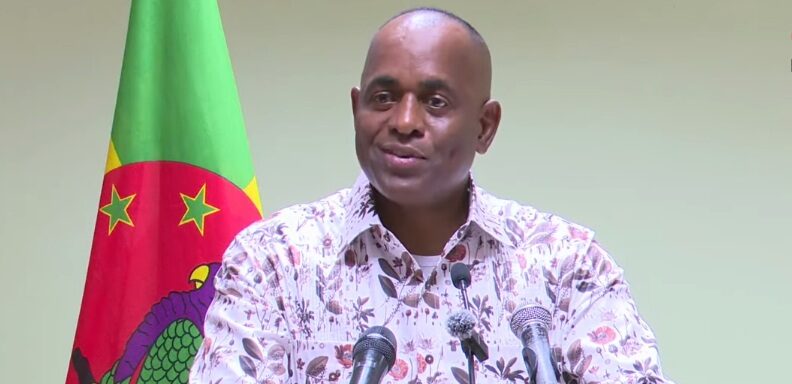
    The Caribbean nation of Dominica is on track to begin distributing official voter identification cards before July draws to a close, Prime Minister Roosevelt Skerrit confirmed during a press briefing with reporters Thursday.

    The rollout marks a critical turning point for the country’s multi-year electoral modernization initiative, Skerrit explained, shifting the process from legislative drafting to tangible on-the-ground implementation. For years, the government has held extensive consultations with a broad range of stakeholders: national political parties, domestic civil society groups, and regional and international electoral experts, to craft a framework to update Dominica’s voting system. That work culminated in unanimous parliamentary approval of new electoral reform legislation, and the administration is now delivering on the policy commitments laid out in that bill.

    “Voter ID issuance starting before the end of this month is another important milestone for our reform process,” Skerrit told journalists. This progress comes amid sustained public pushback from critics, including Gregor Nassief, owner of Secret Bay resort, and the Dominica Business Forum, both of which have questioned the Electoral Reform Commission’s capacity to independently and effectively oversee the full rollout of reform measures.

    Despite the criticism, Skerrit affirmed that the process is moving forward on schedule. He noted that the ruling Dominica Labour Party has already launched outreach to its supporters, urging them to participate in the ongoing voter confirmation process that precedes ID distribution. The prime minister stressed that protecting and strengthening the country’s democratic institutions is not the responsibility of any single political group, calling on all parties, civic associations, and community organizations to join the effort to drive up participation.

    “I again encourage every eligible Dominican who has not yet finished their voter confirmation to complete the process without delay,” Skerrit said. “This is a collective duty and responsibility for all of us.” He added that actions taken outside the official structured reform process cannot contribute to meaningful democratic strengthening, noting that the entire initiative is designed explicitly to reinforce the integrity of Dominica’s electoral system for all citizens.