To be completed after full original news is provided
作者: admin
-

From protest to productivity
For nearly 70 years, the Grenada Trades Union Council (GTUC) has stood as one of the most influential and effective labor umbrella organizations across the Caribbean. Founded on March 13, 1955 in the coastal town of Gouyave, St. John, and officially registered just three weeks later on April 4 that same year, the GTUC today operates out of the Grenada Public Workers’ Union building along Port Highway.
Over its decades of service, the body has built a strong legacy of community and worker advocacy, most notably through its rotational approach to annual May Day observances that brings major celebrations to every parish across the country in sequence. This model does not only center worker voices it also provides a measurable economic boost to both rural and urban local communities. Every May Day, union presidents take to the stage to lay out pressing labor concerns, while workers parade through streets carrying placards ranging from subtle to unapologetically bold that highlight gaps and injustices in the modern labor market. As Grenada’s largest employer, the national government gets a formal opportunity to respond to these concerns and defend its labor policies through the Ministry of Labour, before the day concludes with community networking celebrations that blend militant advocacy with genuine worker camaraderie.
The GTUC’s commitment to inclusive community impact is set to reach a new milestone in 2026, when full May Day celebrations will be hosted for the first time on Carriacou, Grenada’s sister island. This decision is more than a logistical adjustment it is a strategic, community-focused move that will deliver much-needed economic momentum and morale support to Carriacou, which is still working to recover from the devastating damage caused by Hurricane Beryl in July 2024. This kind of community-centered initiative is not an isolated case: the GTUC and Grenada’s wider labor movement have a long track record of stepping in to support vulnerable citizens, including major donations to residents displaced by the 2024 Chantimelle wildfire.
Even with these notable achievements, writes author Brian Grimes a former trade union leader and current public servant the time has come to ask a critical question: can traditional trade unionism alone carry Grenada’s labor movement forward into the future? Grimes argues that the GTUC, currently led by Comrade André Lewis, is already one of the strongest labor bodies in the Caribbean, with a proven record of delivering tangible gains for workers: consistent wage hikes to offset inflation in organized workplaces, successful legal and grassroots advocacy including high-profile victories on pension reform that reshaped national politics, and years of pushing for the minimum wage amendments that have lifted low-income workers out of poverty. But even with this success, continuous improvement requires constructive self-reflection, and the labor movement must now confront a changing world of work to stay relevant.
Grimes stresses that core union services including wage negotiation, workplace safety advocacy, member credit unions, and group health insurance must be preserved and expanded where possible. But modern trade unionism must also expand its mandate to position itself as an active partner in national development, rather than only an advocate for worker rights. This is especially urgent as the digital economy reshapes traditional employer-employee relationships: the rise of remote work, gig work platforms, digital entrepreneurship, and automation has left a growing share of workers outside the protective framework of traditional union organizing. To adapt, unions must rethink their organizing models, service offerings, and core mission to serve a new generation of workers who may never work in a conventional office or factory setting. This means advocating for fair labor standards for gig workers, expanding access to digital literacy training, and equipping workers with the skills they need to thrive in an increasingly technology-driven labor market. Failing to innovate, Grimes warns, will risk gradual erosion of union relevance as the world of work changes.
A core part of this evolution, he argues, is an open, non-partisan conversation about productivity. While unions emerged from the fight against exploitative capital practices a fight that Sir Eric Gairy, Grenada’s most iconic trade union leader, led during the 1951 Sky Red social revolution to reduce systemic inequality the movement must now adapt to become an even more effective agent of national change. Unions must bring their perspective to the table with government and employers to design fair performance metrics that drive mutual benefit and overall national growth. Grimes argues that while employers must commit to paying living wages, unions must also prioritize productivity among their members to grow the overall economic pie that can be shared equitably. Asking for wage increases from struggling contracting businesses, he notes, is unsustainable, and this uncomfortable conversation is necessary to drive real systemic change. Drawing a comparison to high-growth economies like Singapore and South Korea, Grimes notes that even with Grenada’s smaller scale, the core principle holds: sustainable national growth requires a shared commitment to productivity, discipline, and collective national purpose. A coordinated “Big Push” that brings together unions, government, and employers is the only way to build long-term sustainable development.
Grimes draws on his own decades of experience in the labor movement, from ordinary member of the Grenada Public Workers’ Union to youth representative, public relations officer, and eventually union president, to highlight a proven model for this evolution. He notes that union leaders who prioritized member human resource development through training consistently delivered stronger outcomes for workers, pointing to Sister Madonna Harford who led the GPWU from 2003 to 2013 and the GTUC from 2005 to 2015 as a key example. During her tenure, Harford organized dozens of development workshops focused on financial literacy, continuing education, youth development, and worker self-care. Today, Grimes argues this model must be expanded to address growing national skills gaps gaps that include not just technical hard skills like construction or information technology, but soft skills like punctuality, customer service, integrity, and collaboration. Doubling down on member training, Grimes argues, will deliver benefits for every stakeholder: more skilled and motivated workers increase productivity and business profits, which in turn creates a stronger negotiating base for unions to push for further wage gains.
Grimes concludes that the reforms he outlines do not need to be revolutionary to be effective, but if adopted across Grenada’s trade union movement, they could deliver a transformative paradigm shift for both labor and national development. The question facing Grenada’s unions today is no longer whether evolution is necessary it is whether the movement is ready to lead that change.
*This opinion piece is from contributor Brian Grimes. NOW Grenada does not take responsibility for contributor statements and opinions.*
-

Jamaican influencers call out pressure for immediate ROI from brands
The global influencer marketing space has long prioritized speed and viral performance, but a group of top Jamaican content creators and industry professionals are challenging the dominant expectation of immediate return on investment (ROI) from brand collaborations. At a recent major regional marketing conference, they called on local and international brands working with Caribbean creators to shift from quick, one-off campaigns to relationship-driven, long-term partnership strategies.
Speaking during a panel discussion at the IMPACT x Mystique marketing conference held Thursday at Kingston’s AC Hotel, prominent Jamaican lifestyle creator Rushane “RushCam” Campbell drew a sharp analogy to criticize brands’ rushed expectations. He compared the pressure to deliver instant sales to being asked to carry water in a basket, noting that the common demand to move dozens of product units immediately after a single post does not align with how influencer marketing actually works.
Campbell’s perspective was echoed by Khadine “Miss Kitty” Wilkinson, a veteran media personality with more than 20 years of experience partnering with leading brands. Wilkinson pushed back against the idea that one-size-fits-all metrics should be the only benchmark to determine whether a campaign delivers value for money. She emphasized that organic influence builds gradually, noting that audience trust and purchasing decisions often take months or even years to mature, rather than delivering instant results like a microwave meal. Too many brands write off a campaign as a failure if they do not see a massive immediate sales jump, she argued, ignoring the slower, more sustainable impact of consistent influencer alignment.
Singer-turned-content creator Tami Chin Mitchell reinforced the panel’s shared stance by referencing the well-known Marketing Rule of 7, which holds that potential customers need an average of seven interactions with a brand before making a purchase. Quipping that for Jamaican consumers the number is closer to 17, she drew laughter from the audience while underscoring the need for extended brand exposure to drive conversions.
Panel moderator Naomi Garrick, a personal branding coach and the head of Garrick Communications, added that local Jamaican brands regularly come to her seeking quick marketing fixes, often requesting one-off posts or two-week short campaigns. Garrick said she consistently warns these brands that such rushed strategies are ultimately a waste of money. While short campaigns may generate temporary buzz, they fail to deliver sustained results, she explained. Meaningful impact and accurate performance measurement only come from longer-term collaborations that allow influence to develop over a broader time frame, rather than quick, superficial hits, she added.
Campbell shared a concrete example of how long-term collaboration delivers results, pointing to his multi-year partnership with organizers of Barbados’ popular Crop Over festival. After hosting Campbell and other influencers in 2022 and inviting the group back again in 2023, the festival sold out completely in 2024, with attendance drawing visitors from across the Caribbean, Europe, North America and beyond. The multi-year investment in influencer relationships directly drove that sell-out outcome, he noted.
“Trust time, work with people over a period of time, people who have access to great communities, build deeper roots and trust, and know that, with collaboration, it will in fact work out; don’t expect it to work in one go… things just nah fly off the shelf,” Campbell said, stressing that patience is key to unlocking meaningful, long-term returns.
The two-day IMPACT x Mystique marketing conference, hosted by Mystique Integrated in partnership with Main Event Entertainment Group, iPrint Group and M-One Productions, concludes Friday. The event has drawn hundreds of senior marketers, content creators, C-suite executives, startup founders and media decision-makers from across the region to discuss emerging trends in marketing and influencer collaboration.
-

School group evacuated from Black River Safari boat tour following mechanical issue
On a Wednesday school group excursion along Jamaica’s scenic Black River, a sudden mechanical malfunction left a tourist vessel adrift – triggering a rapid, well-coordinated rescue operation that ended with zero injuries to all 45 children and educators on board. The incident, which has drawn widespread public attention after a clip of the retrieval went viral on the popular social platform TikTok, unfolded during a busy day of school tours hosted by Black River Safari Tours, a leading local operator.
According to Joseph Ryan Swaby, managing director of the tour company, the disabled vessel was carrying close to 45 passengers as part of a larger group of nearly 100 students and teachers visiting the safari that day. Moments after leaving the dock, when the captain attempted to shift the boat into forward gear, a mechanical fault shut off the engine entirely, leaving the vessel to drift uncontrolled along the river.
The captain acted immediately, deploying the anchor multiple times in an attempt to stop the drift. However, thick silt covering the river’s riverbed prevented the anchor from gaining a secure hold, turning a minor fault into a potential safety hazard. Recognizing the risk, the operations team on shore dispatched a second tour boat within seconds to reach the drifting vessel. The response team secured the disabled craft and pulled it to a stable position alongside the Black River Bridge, halting any further movement downstream.
With the two boats secured in place, a third vessel was called in to assist with the evacuation. Crew members rigged a stable walkway between the boats to let all passengers cross over from the disabled craft one by one. Swaby emphasized that the operation went off without a single hitch: all 45 passengers made it off the boat completely safely, and not one person even got wet during the transfer. In Swaby’s assessment, the evacuation stands as one of the most smooth and effective emergency responses the company has ever carried out.
Swaby credited the successful outcome to three key factors: the rapid training response from his staff, support from local community members who stepped in to help, and the discipline of the school group, who followed all crew instructions without panic. When questioned about the company’s adherence to required safety protocols, Swaby confirmed all industry standards were being met on the day of the incident. All vessels, he noted, carry more life jackets than the maximum number of passengers allowed, meeting and exceeding regulatory requirements. Crucially, the situation never escalated to a dangerous tipping point: the disabled boat never sank or capsized, and all passengers left the operation in the same good condition they arrived in.
-

Britney Spears formally charged with DUI in California
LOS ANGELES, Calif. – Prosecutors in Ventura County, the Los Angeles-bordering California jurisdiction that oversaw Britney Spears’ March arrest, have officially filed misdemeanor charges of driving under the influence of alcohol and controlled substances against the 44-year-old global pop icon, court documents confirmed this Thursday. Under a proposed plea agreement currently on the table, Spears could avoid any jail sentence for the offense, a path that aligns with standard procedures for low-risk first-time cases involving defendants who have already taken voluntary steps to address substance-related issues.
The criminal complaint filed this week does not detail the exact combination of alcohol or drugs that Spears is alleged to have had in her system at the time of her early March traffic stop, leaving that detail to be clarified during upcoming court proceedings. Spears is scheduled to be arraigned at the Ventura County courtroom on Monday, but prosecutors confirmed in an official statement that the pop star is not required to appear in person for the misdemeanor arraignment. Her legal counsel will be able to enter an appearance and respond to the charges on her behalf.
For context, Spears rose to unprecedented global fame in the late 1990s as a defining figure of 2000s pop music, launching her career with the smash hit debut single “…Baby One More Time” and selling more than 100 million records worldwide over the course of her career. In recent years, she has stepped back from full-time recording and touring, after a high-profile 13-year conservatorship battle that ended in 2021.
In the immediate aftermath of her March arrest, a spokesperson for Spears issued a public statement acknowledging the seriousness of the incident, calling it “completely inexcusable” and confirming that the singer would take full accountability, comply with all legal requirements, and pursue appropriate support. Following that announcement, Spears voluntarily checked into an addiction rehabilitation facility to address wellness and substance-related concerns.
Prosecutors explained that the offer of a plea deal that avoids jail time follows standard protocol for misdemeanor DUI cases that meet several key criteria: no prior relevant convictions, no injuries caused to other people, a low blood alcohol content reading at the time of arrest, and the defendant’s voluntary entry into a court-aligned rehabilitation program. If Spears accepts the agreement, she will enter a guilty plea to a reduced charge of reckless driving involving alcohol or drugs. The terms of the deal would include a 12-month probation period, a mandatory court-ordered driver safety education course, and a standard financial fine. Prosecutors confirmed the formal plea offer will be presented to Spears’ legal team at Monday’s arraignment hearing.
This latest legal development comes against the backdrop of a well-documented public history of personal struggle for Spears, starting with a very public 2007 mental health breakdown that led the court to grant her father Jamie Spears a conservatorship over both her personal life and multi-million dollar estate. The arrangement, which kept Jamie Spears in control of all of Britney’s major life and financial decisions even as she returned to touring and performing for years, sparked a years-long global grassroots “Free Britney” movement that argued the arrangement was an abusive violation of her civil rights. In 2021, a Los Angeles court granted a request to terminate the conservatorship entirely, restoring full personal and legal autonomy to Spears.
In her 2023 bestselling memoir *The Woman in Me*, Spears opened up about her personal struggles, writing that she had never used hard illicit drugs and did not believe she had an alcohol use disorder, but did acknowledge that she had a prescription for and regularly used Adderall, a common stimulant medication prescribed to manage attention deficit hyperactivity disorder (ADHD).
-

Companies Office of Jamaica to launch mobile application
KINGSTON, Jamaica — Jamaica’s government-run business registration agency, the Companies Office of Jamaica (COJ), is putting the finishing touches on a new mobile application set to roll out later this year, a development designed to reshape how local and diaspora-based business owners interact with the agency by boosting accessibility and cutting down on administrative wait times.
The upcoming launch marks the latest milestone in the COJ’s multi-phase digital transformation initiative, a long-term strategy focused on modernizing public service delivery for Jamaica’s business community, agency CEO and Chief Registrar Shellie Leon outlined during a Thursday Think Tank session hosted by the Jamaica Information Service (JIS).
According to Leon, one of the app’s core value-added features is its automated reminder system, which will proactively alert registered companies about upcoming annual return filing deadlines, and notify business name holders when their registrations are up for renewal. This functionality is intentionally built to help business owners stay current with their statutory regulatory requirements, reducing the risk of penalties or compliance gaps that often stem from forgotten deadlines.
Beyond deadline alerts, the platform will also introduce full real-time document status tracking. Users who submit registration or compliance materials to the COJ will be able to monitor the progress of their requests directly through their mobile devices, eliminating the need for phone calls or in-person check-ins to get updates.
For customers who still need to visit COJ physical offices for in-person support, the app will offer a pre-arrival service ticket booking feature. By reserving a spot in the queue before arriving, visitors will cut down on potentially lengthy wait times, creating a smoother, more efficient experience for both local entrepreneurs and casual visitors.
Leon emphasized that these new mobile features directly respond to feedback collected from COJ customers over the years, who have repeatedly flagged long wait times and limited on-the-go access to services as top pain points. The app is not intended to replace the COJ’s existing suite of online services, but rather to complement them. Currently, the agency’s online portal already allows users to complete a wide range of transactions remotely, including new business registration, annual return filing, business name renewal, business closure, and multiple other administrative services. The mobile app extends this functionality by putting these tools in a more accessible, phone-native format.
This shift to mobile-first service delivery, Leon noted, aligns with the COJ’s broader mission to adapt to changing consumer behavior and meet users where they already are—on their mobile devices. By expanding service access through modern, widely used digital channels, the agency aims to remove unnecessary barriers for business owners across Jamaica and beyond.
The new tool is expected to deliver particular value for Jamaican diaspora members who need to manage business operations remotely, Leon added, encouraging all stakeholders to explore the app once it goes live. An official launch date will be shared publicly by the COJ in the coming months, as the agency completes final testing and preparation.
-

Juju Romillion teams up with Vybz Kartel for viral ‘Victory’ success
For decades, women have been foundational, yet vastly unsung, contributors to the global reggae and dancehall industries, working tirelessly behind the scenes to lift the genre and its biggest stars to prominence. Today, one emerging Jamaican creative is stepping firmly into the spotlight, cementing her status as a transformative new force in the space after steering the release of dancehall icon Vybz Kartel’s latest hit single, *Victory*.
The track rocketed straight to the number one spot on the U.S. iTunes Reggae Chart shortly after its launch, an achievement that not only reaffirms Kartel’s decades-long unbroken dominance in the genre, but also marks a career-defining breakthrough for Romillion, the mastermind behind the track’s production.
In a statement reflecting on the project’s success, Romillion explained the widespread resonance of *Victory*: its lyrics and energy are rooted in unfiltered, real-life experience, and tied directly to Kartel’s recent personal journey following his release from incarceration. The track, she says, is a raw, unapologetic celebration of overcoming hardship and claiming long-awaited triumph. “Vybz Kartel is a lyrical genius—he just keeps delivering hits,” she noted.
*Victory* was produced as a collaborative project between Romillion’s own label, Romillion Entertainment, and rising Jamaican beatmaker Aikopondibeat. The song’s official music video, filmed on location in Portmore, Jamaica, has already racked up more than 800,000 views across digital platforms. The visual follows Kartel’s triumphant return to his Jamaican hometown, and marks his freedom alongside long-time collaborator Kahira “Kyro” Jones. Directed by Shane Creative, the video struck a deep cultural chord with local and global audiences alike, featuring heartfelt scenes of crowds of fans welcoming home one of Waterford’s most iconic native artists.
The track’s buzz crossed international borders when superstar producer DJ Khaled shared snippets of the music video with his millions of social media followers, catapulting the project to a global audience and amplifying its reach far beyond Jamaican borders.
For Romillion, this chart-topping win is more than just a career milestone—it is the culmination of a deeply personal full-circle journey. Raised in the “Third World” community of Waterford, St. Catherine, the same neighborhood that shaped Vybz Kartel’s childhood and artistic identity, her connection to the dancehall legend runs far deeper than a professional working relationship. The pair have maintained a close bond for years, with Romillion visiting Kartel regularly throughout his incarceration. “This is a major victory for me. It puts my brand on the map, and Kartel has been instrumental in that support. Seeing him achieve these milestones after everything is something I’m truly happy about,” she shared. “From those moments to now seeing him out, accomplishing so much and continuing the work—it’s a powerful feeling. I’m genuinely happy to see everything come together through hard work and determination.”
Romillion, born Joan Muschette, has built a reputation as one of the industry’s most versatile, multifaceted creatives. Through Romillion Entertainment, she takes on roles ranging from event promoter to beat curator, talent coordinator for music video casts, and project manager, working closely with artists to ensure every final product aligns perfectly with their creative vision. She has already built an impressive catalogue of collaborative hits with Kartel, including *African Summer*, *Yami Bolo* (both co-produced with Droptop Records), *Popstyle*, and *Do It If Yu Bad*. As a long-time affiliate of the Gaza movement associated with Kartel, contributing to the icon’s post-release comeback and legacy building felt like a natural calling.
Operating in a historically male-dominated industry, Romillion has never let systemic barriers shift her focus. “I know my sound, and I let it speak for itself. I’m not concerned about who’s in the room—I stay focused and deliver. That’s Romillion,” she said. Beyond her work in music production, Romillion holds an active leadership role at Droptop Records while expanding her own independent ventures, including her entertainment label and retail brand, Britanables Clothing and Accessories.
With *Victory* topping charts and dominating global dancehall conversations, one truth has become clear: when conversations turn to the next generation of women shaping the future of dancehall, Juju Romillion is no longer an afterthought—she is essential.
-
PNP spokesperson on environment welcomes landmark Dry Harbour mining ruling
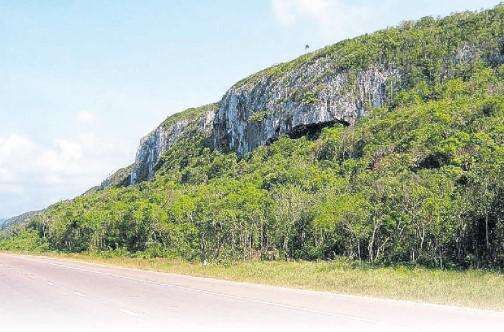
KINGSTON, Jamaica — In a watershed decision that has reshaped the conversation around environmental governance and constitutional rights in the Caribbean nation, Jamaica’s Constitutional Court has struck down a 2020 environmental permit issued to Bengal Development Limited for a planned limestone mining operation in St Ann’s ecologically fragile Dry Harbour Mountains. The court ruled the permit unconstitutional, void, and legally unenforceable, a decision that has drawn swift praise from opposition leadership.
Omar Newell, the Opposition Spokesperson on Environment and Climate Resilience, framed the ruling as a transformative win not just for local communities, but for all Jamaicans who advocate for a balanced approach to progress that prioritizes environmental protection over unregulated development. Speaking in an official statement released the same day the ruling was handed down, Newell emphasized that the judgment rejects the long-held narrative that economic growth must come at the cost of public health, natural ecosystems, and constitutionally protected rights.
What makes this legal outcome particularly historic is that it marks the first time Jamaica’s judiciary has adjudicated on the environmental rights clause enshrined in the country’s Charter of Fundamental Rights and Freedoms, setting a binding precedent that will shape future environmental legal battles across the island.
Newell reaffirmed that his party, the People’s National Party (PNP), has stood in firm opposition to the mining project since its earliest stages. As far back as November 2020, the PNP publicly denounced the then-administration’s plan to issue a provisional mining permit, sounding the alarm over the severe risks the project posed to the Dry Harbour Mountains — one of Jamaica’s most ecologically sensitive regions, home to unique biodiversity and critical watershed systems that supply water to communities across the area.
“This historic ruling affirms that every person in Jamaica holds a constitutional right to a healthy and productive environment,” Newell said. “This judgment belongs to the residents of St Ann, who showed immense courage in standing up to powerful interests to protect their homes and way of life. It is a victory for every Jamaican who believes in sustainable development, open governance, and accountability from our public institutions.”
Beyond celebrating the ruling, Newell used the moment to highlight a critical gap in Jamaica’s environmental regulatory framework. The judgment, he argued, lays bare the urgent need for stronger, politically independent environmental oversight that can make decisions based on scientific evidence rather than political pressure.
“Jamaica can no longer rely on ministerial discretion to safeguard our natural heritage. We need an independent environmental protection agency, fully empowered to make evidence-based decisions that serve the national interest,” Newell explained. “Our environmental future, and the natural resources we leave for coming generations, depend on building strong, credible institutions with the authority to protect what matters most to all Jamaicans.”
-
WATCH: ‘I was wrong but..’
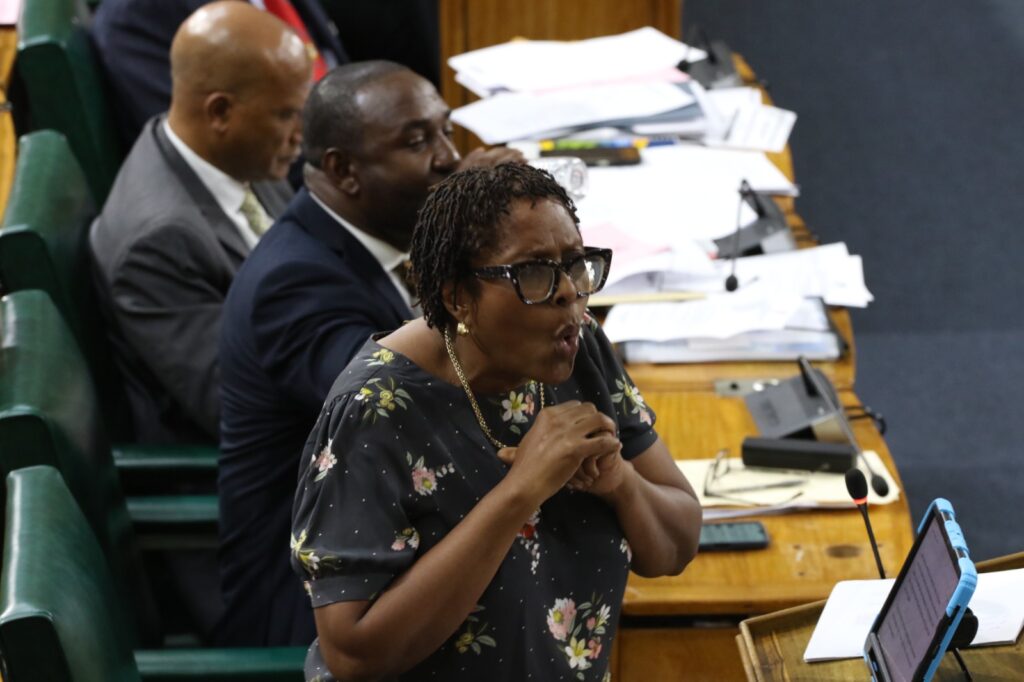
A dramatic confrontation in Jamaica’s Parliament has drawn widespread attention after opposition lawmaker Dr. Angela Brown Burke, representative for St Andrew South Western, grabbed the ceremonial mace mid-debate on a major infrastructure bill, resulting in her immediate suspension and formal naming by parliamentary leadership. Days after the incident, Brown Burke has publicly acknowledged her behavior violated established parliamentary rules, while continuing to defend the urgency of the concerns that prompted her extraordinary protest.
The chaos unfolded during an overnight, marathon committee-stage debate on the National Reconstruction and Resilience Authority (NaRRA) Bill, which stretched into the early hours of Wednesday. The legislation, drafted in response to the widespread devastation left by Hurricane Melissa, aims to create a new central body tasked with coordinating post-disaster reconstruction and long-term climate resilience projects. After more than 20 amendments were approved by lawmakers, the bill was ultimately passed in the early hours of the sitting.
From the start of clause-by-clause review, opposition lawmakers raised fierce objections to key provisions of the proposal. The core of their criticism centered on clauses that grant the new authority sweeping, unchecked powers to fast-track project approvals, issue binding directives to government regulatory agencies, and advance large-scale strategic investment projects. Opposition legislators have repeatedly flagged gaps in transparency, weak accountability mechanisms, and concerns over whether the vast spending authorized by the bill—amounting to trillions in public debt that will fall on current and future generations—lacks sufficient oversight safeguards.
Video footage published after the incident shows Brown Burke leaving her seat, approaching the mace— a centuries-old symbol of parliamentary authority and the Speaker’s power to govern proceedings—lifting it from its ceremonial position, and returning to her seat while some fellow opposition lawmakers reacted with laughter. Immediately after the act, House Speaker Juliet Holness ordered Brown Burke removed from the chamber, forcing a temporary halt to all proceedings. When the sitting resumed, the Speaker issued a firm warning to all legislators, making clear that interference with the mace would never be tolerated, regardless of the intensity of policy disagreements. “Not even in jest, Member, and not in protest either,” Holness emphasized.
Prime Minister Dr. Andrew Holness also stepped in to call for order, urging members to uphold the dignity of Parliament even amid heated policy debate. “I think what we are witnessing now is a display which when we reflect on this in years to come it will not be amongst our best, and I think the order of the house and dignity of the house must be preserved,” the prime minister stated during the disruption. A motion to suspend Brown Burke for the remainder of the sitting was subsequently brought under parliamentary standing orders, and passed with support from government members, removing her from the chamber for the rest of the debate.
In her first public comments since the incident, released in a video statement to media on Thursday, Brown Burke conceded that her actions fell outside acceptable parliamentary norms. “I start by accepting that my actions on Tuesday did not accord with acceptable parliamentary procedure. I also acknowledge under the circumstances that the decision of the House [to name me] is in keeping with the Standing Orders,” she said.
Despite accepting the punishment, Brown Burke pushed back against attempts to dismiss the broader policy objections that led to the confrontation, arguing the important concerns raised by the opposition should not be overshadowed by the dramatic scenes in the chamber. She emphasized that context is critical to understanding the incident, noting that opposition lawmakers had been unable to get their concerns about unaccountable power and excessive public debt addressed through regular procedural channels.
“I think context matters while we uphold the rules of the House, [and] at the same time I would not want that to distract unduly from the important points that we were making about the lack of transparency and accountability, the kind of unfettered powers that we saw with NaRRA because, you know, it’s trillions of dollars we’re talking about that is a debt to be borne by us and our children and our children and we want to make sure that we are doing it right and that we’re putting in the safeguards that are required,” she explained.
-

Holness sets vision for parks in every parish
KINGSTON, Jamaica — In a bold policy announcement delivered at the Urban Development Corporation (UDC) Board Retreat on April 30, Prime Minister Dr. Andrew Holness has laid out a new national development vision centered on bringing improved public amenities and accessible housing to communities across every corner of Jamaica. At the heart of this vision is a non-negotiable mandate: the UDC, in formal partnership with the National Housing Trust (NHT), will develop a public park in each of Jamaica’s 14 parishes.
Holness made clear that meaningful national progress cannot be measured only in economic indicators, but must show up in tangible, daily improvements for ordinary Jamaicans. Accessible, thoughtfully designed recreational spaces, he argued, are a core public good that directly lift community well-being. The island-wide park initiative is designed to extend the benefits of high-quality public spaces to all citizens, regardless of their location, giving every community a safe, welcoming, professionally managed space for leisure, social connection, and physical wellness.
Drawing on existing successful projects as a blueprint, the prime minister pointed to Harmony Beach Park as a model of what well-executed public space development can achieve. He detailed how projects of this kind do more than provide green space: they reshape entire neighborhoods, boost local pride, and create long-term improvements to quality of life that ripple out across surrounding communities.
To move the initiative forward quickly, Holness has instructed the UDC to immediately conduct a national survey of state-owned lands, identifying parcels suitable for park development and present a full report to his office outlining potential sites for each parish. He stressed that this process requires disciplined, efficient use of public assets, ensuring that underutilized state lands are put to work serving the public good. The prime minister also emphasized that timely delivery and rigorous project management will be non-negotiable priorities for the program, pushing the UDC to avoid delays and deliver results for Jamaican communities.
Beyond the park initiative, Holness called on the UDC to leverage its extensive national land bank to advance another critical national priority: closing Jamaica’s persistent housing gap. With unmet demand for affordable quality housing remaining a major challenge across the island, the prime minister said the UDC has a central role to play in unlocking its land reserves for residential development. He called for coordinated action across all relevant government agencies to mobilize resources and address the housing shortage, framing the work as a core responsibility of state development entities.