作者: admin

  • Guyana crafting youth-focussed aviation career action plan

    Guyana crafting youth-focussed aviation career action plan

    On Wednesday, 29 April 2026, the Guyana Civil Aviation Authority (GCAA) convened a pivotal stakeholder meeting to refine the organizational structure and set the long-term strategic course for the Next Generation of Aviation Professionals Plus (NGAP+) programme, an initiative first launched by the authority in December 2025 to cultivate new youth talent for Guyana’s growing aviation sector.

    According to an official statement released by the GCAA following the gathering, the cross-institutional meeting represented a major milestone for the programme. Attendees worked in collaboration to finalize the programme’s operational framework and delineate clear roles and responsibilities for every participating partner. As a core outcome of the discussions, attendees agreed to establish a formal governing board that will supervise all programme execution, ensuring the initiative stays aligned with its core mandate of delivering industry-leading aviation training and mentorship opportunities for young Guyanese.

    Designed to target young people between the ages of 12 and 24, the NGAP+ programme seeks to inspire the next generation of aviation workers while equipping participants with the theoretical knowledge, hands-on technical skills, and real-world practical experience needed to build successful, long-term careers in the dynamic global aviation industry. The initiative grew out of Resolution A39-29 from the International Civil Aviation Organization (ICAO), created specifically to address growing global and local workforce shortages across the aviation sector.

    Speaking at the stakeholder meeting was Malcolm Evans, Programme Development Consultant for the United Kingdom-based International Air Cadet Training (i.ACT), which is partnering with Guyana to build out the programme’s full comprehensive curriculum, including specialized technical training modules. Evans emphasized that the programme’s overarching objective is to prepare young Guyanese to fill a wide range of entry-level and professional roles across the domestic aviation industry, building a consistent, sustainable talent pipeline that will support the sector’s growth for decades to come.

    Retired Lt. Col. Egbert Field, Director General of the GCAA, echoed this focus, noting that the programme is a targeted solution to the aviation industry’s well-documented personnel gap that many nations, including Guyana, currently face.

    The meeting drew representatives from a diverse range of Guyanese educational, governmental, and industry institutions, including the Art Williams and Harry Wendt Aeronautical Engineering School, Civil Aviation Training School, University of Guyana, Guyana Digital School, Guyana Defence Force, Guy Drones, Ministry of Education, Guyana Online Academy of Learning (GOAL), and the Aircraft Owners Association of Guyana. The broad cross-sector turnout highlights the widespread buy-in and shared commitment to making the programme a success, with collective expertise from across Guyana’s aviation and education ecosystems strengthening the collaborative foundation of the NGAP+ initiative.

    Further details, including formal application procedures and official programme timelines for prospective participants, are scheduled to be released to the public in the coming months as final preparations for launch continue.

  • Businesswoman challenges constitutionality of Cybercrime Act

    Businesswoman challenges constitutionality of Cybercrime Act

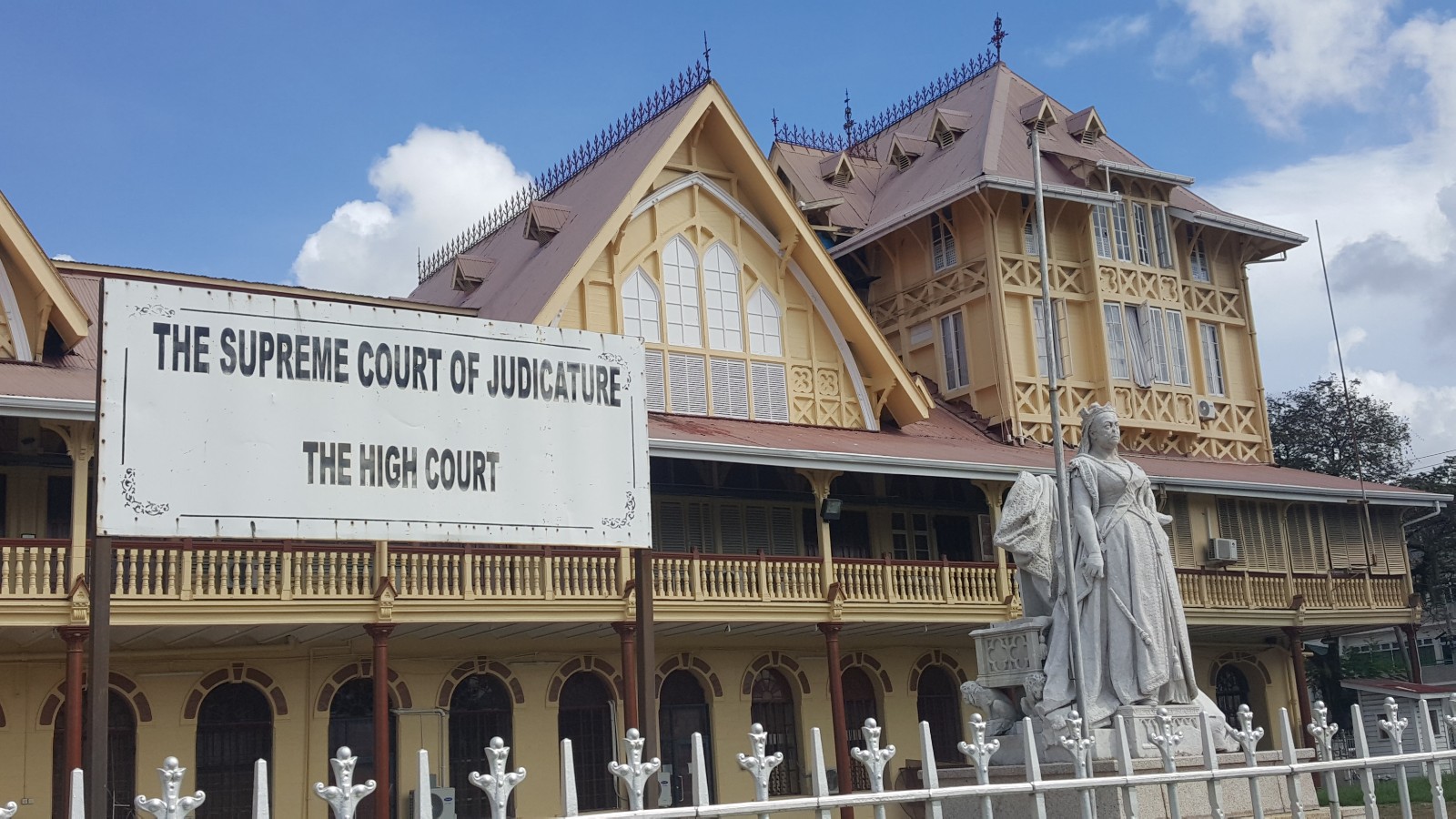
    As of Wednesday, 29 April 2026, a prominent Guyanese city businesswoman has initiated a landmark constitutional challenge against a key provision of the country’s 2018 Cybercrime Act, arguing that the clause violates fundamental free speech protections enshrined in Guyana’s constitution and runs counter to the nation’s international human rights commitments.

    Ann Narine, represented by experienced legal counsel Nigel Hughes and Dr. Vivian Williams, filed her fixed-date application with the High Court on 14 April 2026, asking the court to formally strike down Section 19(2) of the 2018 Cybercrime Act on multiple grounds. Narine’s legal team argues the provision is unconstitutional, null and void due to three critical flaws: inherent vagueness, overbroad scope, and disproportionate impact on protected civil liberties. The challenge specifically targets the clause’s violation of Article 146 of the Guyanese Constitution, which explicitly guarantees the right to freedom of expression.

    At the core of the challenge is Narine’s argument that Section 19(2) fails to meet basic legal standards for clarity when criminalizing speech-related conduct. The provision does not provide a defined, consistent meaning for key terms including “humiliation,” fails to clarify the scope of “electronic data” as applied to this section, and sets no clear threshold to separate criminal activity from expression that is legally protected under the constitution. Without these clear definitions, Narine contends the clause cannot be applied consistently or predictably, creating a risk that legitimate speech will be incorrectly criminalized. This inherent ambiguity alone, the application argues, renders the provision unconstitutional under Article 146.

    Narine further argues that the clause lacks the narrowly tailored limits required for restrictions on free speech in democratic societies. International legal standards hold that any limitation on freedom of expression must meet three cumulative requirements: it must be clearly defined by law, pursue a legitimate public aim, and be reasonably justifiable and proportionate to the goal it seeks to achieve. Section 19(2), Narine’s application maintains, fails to meet all three of these requirements.

    The challenge also invokes Guyana’s binding international human rights obligations under the International Covenant on Civil and Political Rights (ICCPR), whose own Article 19 protects the fundamental right to freedom of expression. A broad, uncurbed interpretation of Section 19(2) that criminalizes protected expressive activity would put Guyana in direct breach of this international treaty, the application notes, adding that Guyana’s constitution must be interpreted in alignment with the country’s international human rights commitments.

    Beyond the facial challenge to the provision itself, Narine is also attacking the specific application of the law to her case as unconstitutional. She argues that the criminal charge brought against her suffers from multiple fatal procedural defects that violate her constitutional right to a fair trial. The charge, she notes, fails to identify the specific published content at the center of the allegation, the digital platform where the content was allegedly shared, any recipients of the alleged publication, and the specific actions that took place within the cited time period. By failing to outline these basic details, the prosecution effectively criminalizes unspecified speech and denies Narine the ability to know what case she must answer, violating both Articles 144 and 146 of the constitution, according to the application.

    Further procedural flaws are cited in the challenge: the summons filed against Narine did not specify which exact section of law she is alleged to have broken. Additionally, the sworn information included in the court file was dated after Narine’s initial court appearance, was never served on her legal team, and was not presented to the court when she was first required to respond to the charge and raise objections. Narine argues these omissions deprived her of adequate notice of the allegations against her and the opportunity to prepare a full defense, denying her the fair hearing protections guaranteed under Article 144 of the constitution.

    Narine is also seeking a High Court declaration that her entire prosecution is unconstitutional, unlawful, and constitutes an abuse of court process. Citing Article 187 of the Guyanese Constitution, which enshrines the principle of prosecutorial independence, Narine argues that allowing a prosecution led by an attorney retained, paid, and taking direct instructions from the private complainant in the matter directly violates the constitutional requirement for independent prosecution. As part of this claim, she is asking the court to rule that the fiat granted by the Director of Public Prosecutions (DPP) to prosecuting attorney Mikel Puran is unlawful, unconstitutional, null, void, and has no legal effect.

    The application requests multiple court orders: a formal order quashing the DPP’s fiat to prosecute, an order barring any continuation of the criminal charge against Narine, a stay of all proceedings related to the charge until the constitutional challenge is heard and determined. In the alternative, Narine asks the court to issue a permanent stay of the criminal charge on the grounds that it amounts to an abuse of the court’s process.

  • Lauren Ramdhanny Award to debut at Grenada Festival of the Arts

    Lauren Ramdhanny Award to debut at Grenada Festival of the Arts

    Grenada’s 2026 Festival of the Arts is set to launch with a series of meaningful updates and expanded programming, officials confirmed during the event’s official media launch held Tuesday at Kirani James Athletic Stadium. The Culture Division under the Ministry of Tourism, Creative Economy and Culture has announced one of the event’s flagship new additions: the Lauren Ramdhanny Award for Excellence in the Performing Arts, created to honor a pioneering figure in Grenada’s cultural community.

    Kelvin Jacob, the division’s Chief Cultural Officer, explained that the award was established to celebrate the decades of transformative contributions Lauren Ramdhanny made to Grenada’s arts sector. Ramdhanny, an accomplished musical director and retired cultural officer, left an indelible mark on local performing arts, and the new annual award will carry forward her legacy. The accolade will be awarded annually to the participating school or performing group that demonstrates the most consistent all-around excellence, judged by both the highest cumulative award count across competition categories and sustained top-tier performance quality across multiple disciplines.

    Alongside the new lifetime achievement-inspired award, festival organizers have added two new competitive music categories to the 2026 lineup: power soca and groovy soca. The expansion comes as a nod to the deep, longstanding connection between these beloved Caribbean music genres and generations of past festival participants, reflecting the event’s commitment to evolving alongside local cultural tastes.

    Senator Quinc Britton, Parliamentary Secretary within the Ministry of Tourism, Creative Economy and Culture, reaffirmed the Grenadian government’s unwavering commitment to growing the arts as a core tool for youth empowerment. In his remarks at the launch, Britton emphasized that national progress depends on more than just academic success. “We recognise that the future of our country depends not only on academic achievement, but also on the ability of our young people to express themselves, think creatively, and engage meaningfully with their culture,” he said. “These investments are deliberate, because we understand that culture is not a luxury — it is a foundation of our national development.”

    For decades, the Grenada Festival of the Arts has served as an inclusive, accessible platform that brings together students and creative groups from across the country’s tri-island territory. Participants showcase their work across a diverse spectrum of artistic disciplines, ranging from music, dance, drama and theater to public speaking and literary arts. To strengthen the event’s impact, the Ministry of Education has partnered with the Culture Division to support the festival’s visual arts programming, a collaboration that education leaders have fully embraced.

    Dr. Dianne Abel Jeffrey, Chief Education Officer, called the festival a one-of-a-kind asset for nurturing young Grenadian talent. “The real education lies in holistic development, and this is what the arts provide for our students,” she said. Dr. Jeffrey also praised the Culture Division and the broader ministry for creating structured opportunities for young people to build character, gain national recognition for their creativity, and grow beyond the traditional classroom. “The Ministry of Education welcomes this collaboration, which provides a space for students to showcase their talent,” she added.

    Organizers have also integrated key improvements drawn from public feedback collected during last year’s national consultation focused on strengthening the festival. Three core changes will roll out in 2026: targeted subvention funding to offset participation costs for participating schools, new teacher recognition awards to honor educators who mentor young artists, and the addition of structured, skill-building training classes for competitors.

    To guide participating schools through the 2026 festival process, the Culture Division will host a series of regional panel discussions across all school districts this May, covering key logistics including event registration, which formally opens to all participants on Monday, May 4, 2026. Pre-festival preparation is already well underway: skills-building workshops for theater arts, dance, and vocal performance have been held across Grenada and Carriacou, with additional training sessions scheduled to run through August to help participants refine their work ahead of the main event.

  • Transcend goes cinematic: Moonlight Mas mini-movie premieres

    Transcend goes cinematic: Moonlight Mas mini-movie premieres

    On April 28, the doors of Caribbean Cinemas opened for a premiere that lived up to its name: *Transcend: Moonlight Mas: The Final Crew Clash*. Living up to the dictionary definition of ‘transcend’ — to rise above ordinary limits — the event marked a bold new step for creative storytelling in Saint Lucia and the wider Caribbean film community.

    At its core, the 20-minute short film centers on a high-stakes race between rival performance crews. Their mission: navigate to a hidden flag location across Castries, and cross the finish line with the prize before sunset falls over the island. More than just a dramatic production, the film was crafted as an innovative marketing centerpiece for the annual Transcend fete, a major annual cultural celebration scheduled to take place this year on July 14.

    The free premiere event drew a packed crowd of local creative professionals and industry observers, and the finished production earned resounding praise from attendees. Warm applause and nods of approval rippled through the theater as the credits rolled, with guests highlighting the film’s sharp, balanced tone: clever and humorous without feeling frivolous, thoughtful and intentional without coming across as rigid or forced.

    For local entertainment observers, the premiere also offered an exciting look at the fast-growing emerging film ecosystem taking root across Saint Lucia. Many cast members are established names in the island’s entertainment sector who branched into screen acting for the project, adding new professional credits to their portfolios while expanding local creative capacity.

    One of the driving forces behind the project is Sedale Simei, founder of the popular Caribbean entertainment brand Deeper Than Soca, who also serves as the official promoter for the Transcend fete. Wearing multiple creative hats for the production, Simei penned the screenplay, took on a lead role as one of the competing crew leaders, and spearheaded the project’s ambitious creative vision.

    In an interview following the premiere, Simei explained that the team intentionally moved away from traditional event marketing to deliver something more immersive for audiences. ‘We’ve taken a more cinematic approach when promoting our events for the last three years. This year, we decided to really level up our production quality and scale, so we committed to shooting a full short film to premiere here at Caribbean Cinemas,’ he said. ‘We didn’t want to promote our event the regular way. We’re a group that always tries to push the envelope and do something different.’

    That bold creative vision was what convinced acclaimed local director Virgel Joseph, known professionally as Director V, to sign on to lead the production. Joseph shared that the project’s fresh concept immediately grabbed his attention. ‘When Sedale brought the concept to me, I knew right away it was something I wanted to be part of — I could see how exciting and engaging it would be for audiences,’ he said. ‘I knew my creative background could add real value to the vision, so I jumped on board to make it a reality.’

    Following the successful invite-only premiere, the short film will be rolled out to general audiences in three separate installments across major social media platforms over the coming weeks, giving cultural and film fans across the globe the chance to view the groundbreaking Caribbean production.

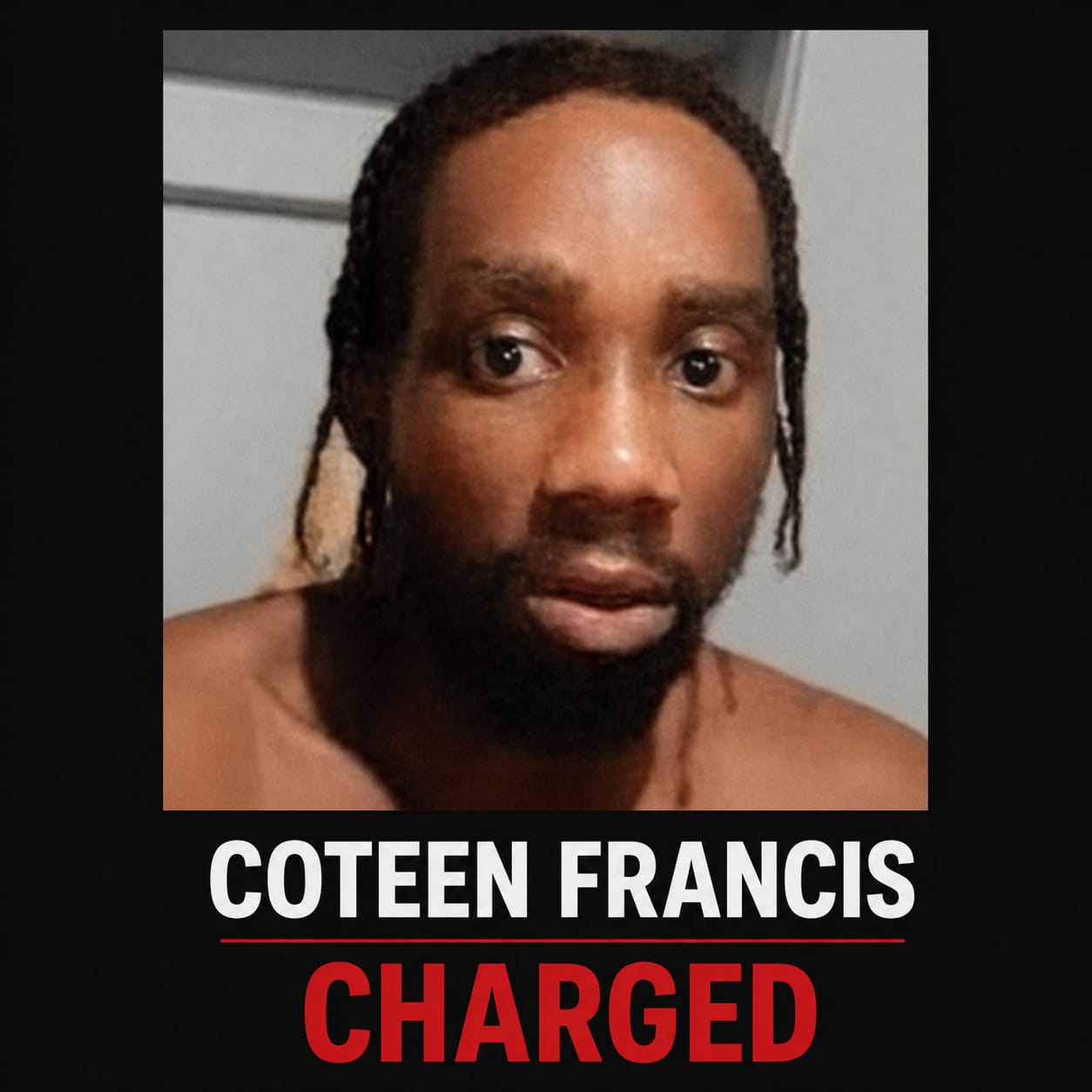
  • Coteen Francis Charged With Firearm Offences After Queen Elizabeth Highway Shooting

    Coteen Francis Charged With Firearm Offences After Queen Elizabeth Highway Shooting

    Authorities from the Royal Police Force of Antigua and Barbuda have confirmed that a 32-year-old local man has been taken into custody and formally charged with a series of serious firearm-related violations connected to a violent incident on a major public highway.

    In an official media statement published Wednesday, April 29, 2026, the force’s Office of Strategic Communications identified the defendant as Coteen Francis, a resident of Grays Farm. He faces four separate charges before the local judicial system: shooting with intent to commit murder, discharging a loaded firearm in a public area, illegal possession of a firearm, and unlawful possession of ammunition.

    The legal proceedings stem from an altercation that unfolded shortly after 1 a.m. on Sunday, April 26, along the Queen Elizabeth Highway, one of the territory’s key thoroughfares. Law enforcement officials confirmed that Francis is scheduled to make his first court appearance at the next available judicial sitting.

    As the investigation remains ongoing, the Antigua and Barbuda Royal Police Force is issuing a public appeal for any witnesses or community members with relevant information about the April 26 incident to come forward. Tipsters can reach the Criminal Investigations Department directly at 462-3913, or submit anonymous information through the independent Crimestoppers hotline at 800-TIPS (8477). The department has reiterated that all details shared by members of the public will be handled with the highest level of confidentiality to protect the identity and safety of contributors.

  • Another Croc Expert Weighs in on Caye Caulker Croc Attack

    Another Croc Expert Weighs in on Caye Caulker Croc Attack

    A recent crocodile attack on a tourist in the popular Belizean coastal destination of Caye Caulker has ignited divergent expert analysis over what factors led to the harmful encounter, reigniting conversations about human-wildlife coexistence in high-traffic tourism zones.

    The incident, which unfolded shortly after 3:30 a.m. on a Monday, left Nicole Robinson, a United States national, with injuries after she entered the water to swim. In the immediate aftermath of the attack, Marisa Tellez, executive director of the Crocodile Research Coalition, offered an initial assessment framing the encounter not as unprompted aggressive behavior from the reptile, but as a natural instinctive response shaped by timing and local environmental conditions.

    Tellez highlighted two key contextual factors that could explain the interaction: the species’ peak feeding window falls during early morning hours, and the attack occurred amid the annual nesting season, when crocodiles often act defensively to protect their nests. She also noted that long-term patterns of human food access in the area could be a contributing driver of altered crocodile behavior.

    However, Cherie Chenot-Rose — a leading crocologist, co-founder of crocodile conservation groups GiveaCroc and ACES Belize — pushes back on the initial conclusion, arguing that key missing information makes Tellez’s nesting-based assessment premature. At the time of analysis, experts have not confirmed whether the crocodile involved in the attack is female, a detail critical to the nesting protection hypothesis. Chenot-Rose instead argues that repeated human interaction is the far more impactful factor driving risky crocodile behavior in the area.

    For years, Chenot-Rose explains, crocodiles in Caye Caulker’s tourist-facing coastal zones have become conditioned to associate humans with food, through both direct and indirect feeding. Unregulated tourist attractions that intentionally feed crocodiles, fishing crews discarding scraps into nearshore waters, and local residents dumping food waste into island canals all have contributed to this long-term process. Over time, this repeated exposure erodes the reptiles’ innate fear of humans, rewiring their natural foraging and movement patterns.

    This conditioning makes crocodiles far more likely to approach humans in the water, Chenot-Rose warns, particularly during low-visibility nighttime and early morning hours when crocodile activity is naturally elevated. This shifted behavior is the primary factor that elevates encounter risk in developed coastal destinations like Caye Caulker, she argues.

    To address the ongoing risk, Chenot-Rose is calling for immediate action: the crocodile responsible for the attack should be captured, properly sexed and identified, and cross-referenced with existing tagging data to check for a prior history of nuisance behavior near human activity. Without swift intervention to remove a crocodile that has already displayed aggressive behavior toward humans, she warns, another harmful encounter is nearly guaranteed.

  • Retired General Surgeon Dr. Ramamurthi Bekal Dies at 94

    Retired General Surgeon Dr. Ramamurthi Bekal Dies at 94

    The Medical Association of Antigua and Barbuda (MAAB) has issued an official statement mourning the passing of retired veteran general surgeon Dr. Ramamurthi Bekal, who died peacefully at his personal residence on Tuesday, April 28, 2026. He was 94 years old at the time of his death.

    On behalf of the entire national medical community, the MAAB extended its deepest condolences to Bekal’s family, close friends, and professional colleagues who worked alongside him throughout his decades-long career. A towering figure in Antigua and Barbuda’s local surgical landscape, Dr. Bekal dedicated more than 35 years of service to the island nation’s primary public healthcare facility, Holberton Hospital.

    Far beyond his role as a practicing clinician, Dr. Bekal stood as a foundational steward of Antigua and Barbuda’s institutional medical knowledge. Over his decades of practice, he served as a committed mentor to emerging medical talent, directly shaping the professional trajectories of multiple generations of local physicians who continue to serve the nation today.

    Colleagues and patients alike will remember Dr. Bekal most vividly for his calm, unassuming demeanor, unwavering compassion for those in his care, and lifelong dedication to patient advocacy. His signature patient-centered approach to care became a model for young clinicians, demonstrating that advanced surgical expertise achieves its greatest impact when paired with genuine empathy and a gentle, caring spirit.

    Today, his legacy endures both in the hundreds of lives he saved through his skilled work and in the community of medical professionals he trained, who continue to practice medicine with the same unwavering integrity and quiet grace that defined Dr. Bekal’s daily practice. The 2026–2028 MAAB Executive Team reaffirmed that the association holds the Bekal family in its thoughts and prayers as they navigate this period of loss, and offered a final tribute: may Dr. Ramamurthi Bekal rest in eternal peace.

  • VS en Latijns-Amerika hekelen Chinese druk op Panama

    VS en Latijns-Amerika hekelen Chinese druk op Panama

    A growing geopolitical standoff over control of key Panama Canal ports has drawn in six nations, with Bolivia, Costa Rica, Guyana, Paraguay, Trinidad and Tobago, and the United States issuing a joint statement backing Panama and criticizing what they call unfair Chinese economic retaliation. The conflict traces back to a late January ruling from Panama’s Supreme Court, which voided decades-old contracts granting Hong Kong-based conglomerate CK Hutchison rights to manage the strategic Balboa and Cristobal port terminals along the canal, ruling the agreements unconstitutional.

    In the joint statement released Tuesday, the six countries allege that in response to the court’s independent ruling, China has imposed targeted economic pressure on vessels flying the Panamanian flag. Data from the U.S. Federal Maritime Commission (FMC) confirms that China detained nearly 70 Panamanian-flagged ships in March alone, a volume far exceeding typical inspection levels.

    “These actions, coming after the independent Panamanian Supreme Court’s decision on the Balboa and Cristobal terminals, represent a clear effort to politicize global maritime trade and violate the national sovereignty of countries in our region,” the joint statement reads. U.S. Secretary of State Marco Rubio separately emphasized Washington’s position in a post on platform X, noting that the U.S. is “deeply concerned” by Chinese pressure on Panama. “We stand in solidarity with Panama. Any attempt to undermine Panama’s sovereignty is a threat to all of us,” Rubio stated.

    China has already pushed back against the criticism, accusing the U.S. of bullying and attempting to tarnish its reputation across Latin America. The Chinese government has also publicly labeled the Panamanian Supreme Court’s ruling as “absurd” and “disgraceful”.

    FMC Chair Laura DiBella warned last month that China’s detention of Panamanian-flagged vessels carries significant consequences for both Panama and the United States. “These heightened inspections appear specifically designed to punish Panama following the termination of Hutchison’s port operations,” DiBella explained. She added that because a large share of U.S. container trade moves on vessels registered under the Panamanian flag, the Chinese actions could carry major commercial and strategic ripple effects for the U.S. shipping sector.

    The voiding of CK Hutchison’s contracts came amid heightened global attention to the Panama Canal, driven by former U.S. President Donald Trump’s repeated threats to take control of the strategic waterway during his 2025 presidential campaign. Trump made the 80-kilometer canal a core policy priority for his second term, claiming in his January 2025 inaugural address that China controlled the canal and promising the U.S. would “take back” control.

    Beyond pressure on Panamanian-flagged shipping, U.S. officials confirm China has also retaliated against global shipping giants Maersk and Mediterranean Shipping Company (MSC), the two firms awarded temporary operating contracts for the Balboa and Cristobal terminals after CK Hutchison was removed from the project. The FMC reported in March that both companies were summoned for “high-level talks” by China’s Ministry of Transport, and Chinese state-owned shipping giant COSCO has already suspended all operations at the Balboa terminal in response to the change.

    CK Hutchison, through its local subsidiary Panama Ports Company, has launched an international arbitration case against the Panamanian government, seeking more than $2 billion in damages for the canceled contracts.

    Analysts frame the dispute as part of a broader global trend of nations weaponizing maritime shipping for geopolitical gain. David Smith, an associate professor at the University of Sydney’s United States Studies Centre, calls the Panama Canal conflict the latest example of this shift, which has already played out in hotspots from the Strait of Hormuz to the Red Sea.

    “We have always assumed the global economy runs on freely moving container ships,” Smith told Al Jazeera. “Now, we are seeing that states recognize how vulnerable maritime supply chains are. They understand they can disrupt shipping routes when it serves their political goals. It should come as no surprise if ships and global shipping more broadly become pawns in international great power politics going forward.”

  • CariGenetics Saint Lucia launched to advance precision medicine in OECS

    CariGenetics Saint Lucia launched to advance precision medicine in OECS

    After 18 months of productive collaborative work between regional biotech startup GenTech Analytica and Bermuda-headquartered genomics leader CariGenetics, the Caribbean-based research and innovation hub has formally rebranded as CariGenetics Saint Lucia — a milestone that marks a major leap forward for homegrown genomics, precision medicine and public health innovation across Saint Lucia and the entire Organisation of Eastern Caribbean States (OECS) region.

    CariGenetics, the parent organization, has long centered its mission on closing critical global gaps in genomic data by sequencing and studying genetic material from Caribbean populations, groups that have historically been drastically underrepresented in international genomic research. Through targeted research, community-focused education and expanded access to precision medicine tools, the organization works to directly improve health outcomes for communities across the Caribbean region.

    The 18-month partnership between the two entities has already delivered tangible impact for local communities. Teams launched Saint Lucia’s first-ever population-based prostate cancer genetic study, and brought accessible genetic testing services to the region, giving thousands of local residents access to personalized health insights that were previously out of reach. Beyond direct services, the collaboration also expanded outreach efforts to boost public literacy around genetics and deepen regional engagement with genomic health initiatives.

    The unification of the two operations under a single shared brand does more than streamline operations: it consolidates scattered Caribbean genetic research efforts under a regional identity, strengthening collective voice and impact. Leadership from the newly branded entity has already presented key genomic and population health findings to OECS governing bodies, outlining how genetic insights can drive more targeted public health action for high-priority concerns including cancer, non-communicable diseases (NCDs), medication safety, and long-term regional health planning. The team has also put forward actionable frameworks for integrating genomics into existing regional health systems in a way that centers local needs and upholds ethical data practices.

    This formal expansion significantly boosts CariGenetics’ overall capacity to support regional governments, healthcare providers, academic research partners and local communities. It combines coordinated global research infrastructure with an embedded, experienced local team across the OECS, equipping stakeholders with practical, evidence-based tools to shape disease prevention strategies, guide clinical treatment decisions, and inform public health policy.

    Dr. Carika Weldon, founder and Chief Executive Officer of CariGenetics, emphasized that the rebranding is far more than a corporate rebranding exercise — it is a reflection of the organization’s core commitment to building indigenous scientific capacity across the Caribbean, while keeping local communities at the center of every stage of genomic innovation.

    “This is about more than business growth. It is about building the infrastructure, trust, and partnerships needed to ensure Caribbean people are represented in the future of precision medicine with excellent local talent,” Weldon explained. “Through CariGenetics Saint Lucia, we are strengthening our ability to work alongside local and regional partners to advance research, improve education and support more personalised approaches to healthcare for our communities.”

    For the original GenTech Analytica team, the transition opens a new chapter for a vision that launched just two years ago: to guarantee the Caribbean a seat at the table in the future of global genetics and precision medicine. From its origins as an early-stage entrepreneurial concept, GenTech Analytica grew into a robust platform that connects scientific communication, cross-regional engagement, and community-focused health innovation.

    Devy Frederick, founder of GenTech Analytica and newly appointed Chief Executive Officer of CariGenetics Saint Lucia, called the milestone a profound moment of pride for the regional startup community. “GenTech Analytica started with the belief that the Caribbean should have a voice in the future of genetics and precision medicine,” Frederick said. “To see that vision now become CariGenetics Saint Lucia after two years is a proud moment. I hope this also encourages other young Caribbean entrepreneurs to take their ideas seriously, build partnerships, and create solutions that can contribute meaningfully to the development of our region.”

    Looking forward, CariGenetics Saint Lucia will prioritize four core strategic goals: advancing indigenous Caribbean-led genomic research, expanding affordable access to genetic testing across the OECS, supporting clinical and public health decision-making, and building cross-sector partnerships to ensure Caribbean populations are fairly represented in global genomic science. Key priority areas of work include cancer genomics, consumer wellness genetic testing, pharmacogenomics, polygenic risk score development, and the creation of responsible, community-centered regulatory frameworks for genomic data stewardship.

    Each of these areas plays a central role in the future of precision medicine. Pharmacogenomics, for example, maps how an individual’s genetic makeup influences their response to common medications, allowing clinicians to prescribe more effective, lower-risk treatment plans. Polygenic risk scores, meanwhile, give clinicians and public health planners insight into inherited disease risk patterns, enabling earlier screening, targeted prevention, and more proactive public health planning.

    Regional health leaders note that this transition is more than a corporate milestone: it demonstrates a collective, shared commitment to positioning Caribbean communities not just as research participants in global genomics, but as leaders shaping how precision medicine is developed and delivered across the region. With the Caribbean facing one of the highest global burdens of non-communicable diseases, the localized genomic infrastructure built through CariGenetics Saint Lucia is poised to enable earlier disease identification, more accessible prevention services, and more effective personalized care for generations of Caribbean residents.

  • Opposition party condemns imposition of VAT on services provided through social media

    Opposition party condemns imposition of VAT on services provided through social media

    Grenada’s main opposition bloc, the New National Party (NNP), has raised sharp objections to the sitting Dickon Mitchell-led National Democratic Congress (NDC) government’s move to table a Value Added Tax Amendment Bill that would extend value-added tax to a wide range of digitally delivered services. The proposal, if enacted, would apply VAT to nearly every corner of the modern digital economy, according to the opposition’s breakdown.

    Among the services targeted by the new tax are streaming platforms and on-demand digital entertainment, online advertising and digital marketing services, cloud computing infrastructure, website hosting, and remote data storage. The legislation also covers a broader set of digital products: downloadable software, mobile applications, Software-as-a-Service (SaaS) tools, automated online e-learning platforms, pre-recorded digital educational content, and all other digital goods distributed through electronic channels.

    In a formal statement released Wednesday, the NNP emphasized that the timing of this tax expansion could not be worse, as ordinary Grenadians already grapple with soaring household expenses that have eroded purchasing power across the country. The opposition pointed to a regional trend of policy action to buffer consumers from global inflationary pressures: many neighboring governments have rolled out fuel subsidies, utility bill relief, expanded food assistance programs, and VAT cuts on essential goods to ease the burden on working families. The NNP argues the NDC administration has failed to match these relief efforts, choosing instead to expand the tax base at the most inopportune moment.

    Emmalin Pierre, leader of the NNP and Grenada’s Opposition Leader, criticized the government’s misplaced priorities in a press briefing. “The cost of food, utilities, and basic services continues to rise, and now this NDC government wants to add VAT to the digital tools that families, students, and entrepreneurs depend on,” Pierre said.

    She went on to argue that the government has failed to uphold its basic responsibility to support the digital sector before imposing new taxes. “Before you tax a sector, you have a responsibility to support it, and this government has done nothing for digital content creators, nothing for small online businesses, and nothing for the Grenadian who is simply trying to access education or entertainment through their phone. This government speaks about economic empowerment, but this bill tells a different story.”

    Pierre stressed that new government revenue should never be generated by deepening financial hardship for ordinary citizens. “Grenadians deserve a policy approach that supports both economic progress and everyday affordability,” she added. This report was compiled via contributing reporting from CMC, with NOW Grenada disclaiming responsibility for contributor statements and opinions.