作者: admin

  • Central Bank hails lower debt, falling inflation, stronger fiscal balance

    Central Bank hails lower debt, falling inflation, stronger fiscal balance

    The Central Bank of Barbados has announced a fourth consecutive year of robust economic expansion for the nation in 2025, with GDP growth reaching 2.7%. This sustained growth was primarily propelled by an unprecedented surge in tourism, which catalyzed widespread gains across multiple sectors of the economy.

    Central Bank Governor Dr. Kevin Greenidge, presenting the annual economic review at the bank’s Bridgetown headquarters, highlighted a simultaneous improvement in key macroeconomic indicators. Inflationary pressures continued to moderate throughout the year, with the average inflation rate declining by 0.7%. The labor market also showed significant strength, as the unemployment rate dropped to 6.6%, down from 7.1% recorded at the end of the previous September.

    On fiscal stability, the government achieved a primary surplus equivalent to 3.3% of GDP, while successfully reducing the national debt-to-GDP ratio to 94.6%. The financial sector demonstrated resilience with credit expansion growing from $9 billion to $9.4 billion. Commercial banks notably improved their asset quality, reducing non-performing loans to 3.6%—the lowest level witnessed since June 2009. International reserves remained robust at approximately $3 billion, despite a widening current account deficit driven by increased imports and softer export performance.

    The tourism sector emerged as the undeniable powerhouse behind the economic performance. Long-stay arrivals soared by 3.3% to exceed 727,000 visitors, setting an all-time annual record. This influx was dominated by the U.S. market, which expanded dramatically by 8.1% and accounted for roughly 80% of the additional visitors. Enhanced air connectivity from cities including Boston, New York, Philadelphia, and Atlanta was a critical driver. The CARICOM market also contributed significantly with a 6.1% growth, bolstered by increased flight capacity.

    Strategic marketing initiatives yielded positive results from Canada, which saw a 3.5% increase in arrivals, and also supported growth from European markets. A notable exception was the UK market, where arrivals declined by 5.9%, a dip attributed to reduced seating capacity.

    The hotel sector reaped substantial benefits from the tourism boom. Average occupancy rates climbed by 1.3 percentage points, while the average revenue per available room surged by approximately 15%. The shared accommodation sector (e.g., Airbnb) also saw occupancy rise by 0.7 percentage points, though revenue per room declined by about 10%, indicating a competitive pricing adjustment by hosts. The cruise segment performed marginally well, with visitor numbers edging up by nearly 1% to 546,000 despite 12 fewer ship calls, reflecting higher occupancy per vessel.

    This tourism-driven growth had a multiplier effect across the economy. The agricultural sector experienced a remarkable 13.3% expansion, while construction grew by 9.2%. The business and other services sector advanced by 3.7%, and wholesale and distribution trade saw a 1.1% increase. Manufacturing remained stable without significant growth.

    Governor Greenidge concluded that the 2025 economic performance was characterized by its ‘balanced and resilient’ nature, being supported by multiple sectors rather than dependence on a single industry, positioning Barbados on a stable path of continued economic development.

  • NODS reviews disaster readiness in schools

    NODS reviews disaster readiness in schools

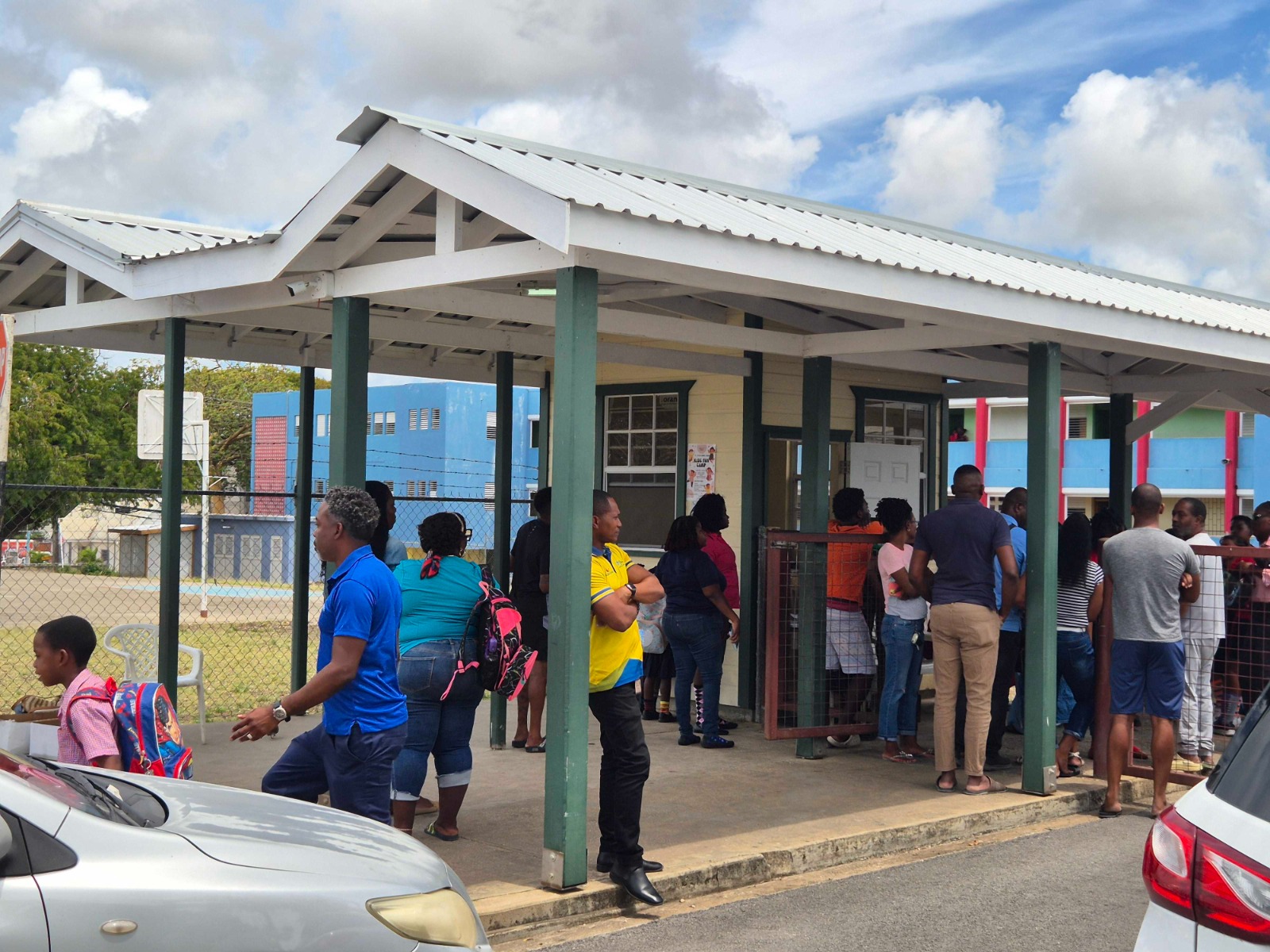
    The National Office of Disaster Services (NODS) has initiated a systematic evaluation of emergency response capabilities within Antigua and Barbuda’s educational institutions, commencing with Buckley’s Primary School. This critical assessment represents the initial phase of a nationwide initiative designed to enhance school safety protocols.

    According to Public Relations Officer Midcie Francis, the comprehensive review meticulously examines institutional preparedness for various natural disasters, particularly focusing on earthquake and hurricane response mechanisms. The evaluation constitutes an integral component of NODS’ Primary School Disaster Management Programme, which seeks to fortify structural resilience and operational readiness across the education sector.

    During the Buckley’s Primary assessment, NODS officials conducted rigorous inspections of multiple safety dimensions. The evaluation encompassed evacuation route efficiency, student accounting procedures following emergencies, and inventory assessments of critical emergency supplies. The drill featured active participation from educators, students, and first responders, creating a realistic training environment that tested coordination and communication protocols.

    Francis confirmed the program’s expansion to other educational facilities, with Clare Hall Secondary School scheduled for subsequent evaluation. This systematic approach underscores the government’s commitment to establishing standardized emergency preparedness benchmarks nationwide. The initiative aligns with broader regional efforts to strengthen Caribbean disaster resilience amid increasing climate-related challenges.

  • Gonsalves appeals to GG after Speaker bars him from finance meeting over oath

    Gonsalves appeals to GG after Speaker bars him from finance meeting over oath

    In a significant parliamentary confrontation, Opposition Leader Ralph Gonsalves has formally appealed to Governor General Stanley ‘Stalky’ John after House Speaker Ronnia Durham-Balcombe prohibited his participation in a crucial Finance Committee meeting. The exclusion stems from Gonsalves’ failure to complete mandatory oath-taking procedures following November’s general election.

    Gonsalves, who served as Prime Minister for 25 years before his party’s electoral defeat, emerged as the sole Unity Labour Party representative securing a seat in the November 27 elections, while the New Democratic Party captured the remaining 14 constituencies. Alongside ULP senators Carlos James and Keisal Peters—both former parliamentarians—Gonsalves abstained from the December 23 ceremonial parliamentary opening where government members were sworn in.

    The constitutional impasse reached critical stage during Wednesday’s Finance Committee session, convened to review 2026 Revenue and Expenditure Estimates ahead of Thursday’s parliamentary debate. Speaker Durham-Balcombe formally notified Gonsalves via Monday correspondence that his participation would be barred due to the unresolved oath requirement.

    During a Wednesday broadcast on his party’s Star Radio platform, Gonsalves characterized the speaker’s communication as “absurd,” revealing she had suggested he seek permission from Prime Minister Dr. Friday to attend—a proposal he denounced as “triumphalist, partisan politicking.” The opposition leader detailed his written response to the speaker, copied to the governor general, condemning the decision as “an erroneous, egregious and high-handed assault on democratic norms.”

    Gonsalves defended his absence from the parliamentary opening by citing security concerns, referencing a 2021 incident where he sustained head injuries from protesters while approaching Parliament. He asserted that National Security Minister St. Clair Leacock had ignored the former governor general’s request for enhanced security provisions, forcing his “carefully considered decision” to boycott the opening session.

    The political veteran invoked historical precedent from May 2018 when NDP opposition members, including Dr. Friday, declined to make qualification declarations yet faced no participation barriers. Gonsalves emphasized that the speaker had previously engaged with opposition members on parliamentary questions and distributed committee materials despite their unsworn status, creating what he termed an “estoppel” situation.

    Proposing a resolution, Gonsalves suggested the clerk administer oaths during committee opening prayers, arguing the speaker cannot simultaneously deem the committee a proceeding requiring oaths while refusing to facilitate their administration. As of Wednesday, neither the governor general nor speaker had responded to his appeal, though Gonsalves noted the immediate procedural nature of the meeting minimized substantive impact.

  • Initiatiefnemers houden vast aan hervorming Openbaar Ministerie en invoering derde rechterlijke instantie

    Initiatiefnemers houden vast aan hervorming Openbaar Ministerie en invoering derde rechterlijke instantie

    Surinamese lawmakers leading a comprehensive judicial reform initiative remain steadfast in their position following recent public discussions and expert lectures on modernizing the nation’s legal system. Parliamentarian Ebu Jones, speaking with Starnieuws, confirmed that the necessity for overhauling the Public Prosecutor’s Office and establishing a third judicial instance remains undiminished despite varied opinions expressed during public debates.

    Jones, alongside five coalition colleagues, submitted four legislative initiatives last month to enact constitutional amendments enabling these transformative changes. The proposed reforms include creating a cassation court as a third judicial tier and restructuring the Public Prosecutor’s Office into a collective leadership model. According to Jones, international comparative studies presented during expert sessions demonstrated that Suriname faces similar institutional challenges as other nations undergoing judicial modernization.

    Regarding the third judicial instance, Jones reported achieving broad consensus about its necessity, though the specific model remains under discussion. Suriname must decide between developing a unique national system or adopting a regional framework such as the Caribbean Court of Justice. The proposed constitutional amendments would strategically preserve both options for future governmental consideration.

    The initiative has garnered unexpected support from within the judicial establishment itself. Jones revealed that the current Attorney General has explicitly acknowledged the imperative for systemic modernization, recognizing that the Public Prosecutor’s Office cannot continue operating under its existing structure. This institutional endorsement aligns perfectly with the reformers’ objective of strengthening the system rather than targeting individual officials.

    The proposed transition to a collective prosecutorial authority—a College of Attorneys-General—faced no fundamental objections during expert examinations. While discussions thoroughly examined both the advantages and challenges of various systems, critics failed to present substantive arguments against the reform’s compatibility with Suriname’s legal framework. Conversely, participants widely agreed that the current system requires substantial renewal.

    Lawmakers vehemently dismissed allegations that the reforms conceal political retaliation or ethnic agendas, characterizing such claims as unfounded and unprofessional. Jones emphasized that the initiative specifically aims to diminish individual influence while enhancing institutional trust through distributed decision-making among multiple qualified officials.

    The constitutional nature of appointing attorneys-general further safeguards against politicization, as the process involves the head of state following strict expertise requirements and judicial advisory input. The parliamentary committee preparing today’s public hearing has maintained the original proposals without modifications, though new insights may be incorporated through amendments during legislative debate.

    Constitutional changes require a two-thirds majority (34 votes), which Jones believes is achievable within the coalition, though parliamentary discussions may evolve unpredictably. Implementation timing remains uncertain, dependent on legislative proceedings intensity within the National Assembly. Following constitutional amendments, supplementary implementation laws must be enacted before reforms take practical effect.

  • China executes 11 members of gang who ran billion-dollar criminal empire in Myanmar

    China executes 11 members of gang who ran billion-dollar criminal empire in Myanmar

    In a decisive move against transnational organized crime, Chinese authorities have executed eleven principal members of the infamous Ming family criminal organization. The executions, carried out following final judicial review, mark a significant escalation in Beijing’s campaign against cyberfraud operations based in northern Myanmar.

    The convicted individuals, including key figures Ming Guoping and Ming Zhenzhen, received death sentences in September for a litany of serious offenses including homicide, illegal detention, and large-scale fraud. China’s Supreme People’s Court rejected appeals from two defendants, upholding the original verdicts that culminated in Thursday’s executions.

    For years, the Ming syndicate operated with impunity as part of the ‘four families’ controlling Myanmar’s lawless border regions. Their criminal empire centered on the Crouching Tiger Villa compound in Kokang, where they maintained sophisticated operations involving internet fraud, human trafficking, and drug production. At its peak, the organization exploited approximately 10,000 workers forced to perpetrate international scams.

    The crackdown began in November 2023 when Beijing issued arrest warrants and substantial bounties for family members following years of international pressure and complaints from victims’ families. Ming Xuechang, the family patriarch and former Myanmar parliament member, died by suicide during custody prior to trial.

    According to official reports, the syndicate collaborated with another executed crime boss, Wu Hongming, in activities that resulted in fourteen Chinese citizen deaths. One particularly brutal incident in October 2023 saw four individuals killed during attempted worker transfers from a scam compound.

    The multibillion-dollar scam industry in Southeast Asia, estimated to steal over $43 billion annually, has flourished in Myanmar’s conflict-ridden border areas where armed groups and criminal networks exploit weak governance. China’s foreign ministry has pledged to intensify efforts to eradicate what it characterizes as the ‘scourge of gambling and fraud’ in the region.

  • INFOTEP and PROCIGAR inaugurate tobacco training school in Tamboril

    INFOTEP and PROCIGAR inaugurate tobacco training school in Tamboril

    SANTO DOMINGO – In a landmark public-private collaboration, the Dominican Republic has established a specialized educational institution dedicated to preserving and advancing the art of cigar production. The National Institute of Technical and Professional Training (INFOTEP) and the Association of Cigar Producers (PROCIGAR) have jointly inaugurated the PROCIGAR–INFOTEP School of Tobacco Growers in Tamboril.

    This pioneering initiative addresses the growing need for skilled artisans in one of the nation’s most historically significant economic sectors. The school commenced operations with four dedicated training groups involving 88 participants who will undergo an intensive 135-hour practical curriculum. The comprehensive program encompasses the entire cigar manufacturing process, including tobacco leaf selection, processing, expert rolling techniques, final finishing, and rigorous quality control standards.

    The inauguration ceremony featured prominent figures including INFOTEP Deputy Director Maira Morla, Tamboril Mayor Anyolino Germosén, PROCIGAR President Litto Gómez, and Johannes Marinus Kelner, Vice Minister of the Ministry of Industry, Commerce, and MSMEs.

    Industry leaders emphasized the institution’s critical role in developing specialized human capital to maintain the Dominican tobacco sector’s competitive edge in global markets. The school represents a strategic investment in workforce development that will enable immediate employment opportunities for graduates while enhancing productivity benchmarks. Beyond economic impacts, the initiative aims to generate sustainable livelihoods for local families and solidify Tamboril’s international reputation as a hub of premium cigar craftsmanship through this synergistic alliance between educational and industry stakeholders.

  • Mitur receives U.S. students to promote tourism education

    Mitur receives U.S. students to promote tourism education

    The Dominican Republic’s Ministry of Tourism (Mitur) recently welcomed a delegation of twelve students from Elon University in North Carolina, marking a significant step in international academic collaboration within the tourism sector. The visit, organized through ongoing educational and cultural exchange initiatives, provided the students with immersive insights into the country’s tourism promotion strategies.

    The delegation received a traditional Dominican welcome featuring a vibrant merengue performance by the Ministry’s folk ballet, followed by an extensive tour of Mitur’s facilities. The educational component included a specialized presentation on Adventure Tourism opportunities across the Dominican Republic, delivered by Ángel Pichardo, Deputy Director of Domestic Tourism, who detailed the diverse offerings and strategic development in this sector.

    Accompanied by three faculty members and a representative from the CIEE (Council on International Educational Exchange) program, the students engaged in activities coordinated by Mitur’s Directorate of Training and Community Extension. This initiative underscores the Ministry’s dedication to fostering global partnerships, advancing tourism education, and promoting cross-cultural understanding through structured academic exchanges.

  • St Kitts and Nevis Youth Ambassadors call for innovation, unity, and measurable impact as CARICOM leaders convene in February 2026

    St Kitts and Nevis Youth Ambassadors call for innovation, unity, and measurable impact as CARICOM leaders convene in February 2026

    As St. Kitts and Nevis prepares to host the 50th Regular Meeting of CARICOM Heads of Government in February 2026, the nation’s Youth Ambassadors are articulating a powerful vision for regional progress. Aquanjé Robinson and Siobhan Phipps-Harding, representing St. Kitts and Nevis as CARICOM Youth Ambassadors, have issued a compelling call for transformative action that centers youth innovation and measurable outcomes.

    The ambassadors framed their message against a backdrop of global challenges, noting that geopolitical tensions, economic instability, and escalating climate threats disproportionately affect Small Island Developing States. Robinson emphasized that these intersecting crises demand urgent collective response, stating that Caribbean youth constitute both the resilience and sustainable partnership needed for meaningful solutions.

    Phipps-Harding highlighted the critical timing of this milestone meeting, characterizing it as a clarion call for Caribbean unity and self-determination. She stressed that adaptation to rapid change requires investing in systems that protect citizens while developing skills that retain talent within the region.

    Both ambassadors articulated a paradigm shift in how youth participation should be conceptualized, asserting that young people are not merely future leaders but present-day innovators capable of co-creating solutions. They called for policy frameworks that translate into tangible impacts, particularly through initiatives promoting inclusive growth and sustainable development.

    The youth representatives concluded with a reaffirmation of regional solidarity, expressing optimism about the Caribbean’s future precisely because of the active role youth are prepared to play in shaping it. Their statement serves as both endorsement and challenge to CARICOM leaders set to convene in St. Kitts and Nevis for this historic gathering.

  • U.S. Ambassador and Vice President visit Mayor of Santiago de los Caballeros

    U.S. Ambassador and Vice President visit Mayor of Santiago de los Caballeros

    SANTIAGO DE LOS CABALLEROS – A high-level strategic dialogue unfolded in Santiago as Mayor Ulises Rodríguez hosted a pivotal meeting with U.S. Ambassador to the Dominican Republic, Leah Francis Campos, and Dominican Vice President Raquel Peña. The trilateral discussion centered on positioning Santiago as the paramount economic and institutional nucleus of the Cibao region.

    Mayor Rodríguez articulated a comprehensive vision for the city’s accelerated development, underscoring its emergent role as a strategic epicenter for multifaceted growth. The dialogue produced a reinforced consensus on amplifying cooperative efforts between municipal authorities, the national government, and international stakeholders. This collaborative framework is deemed essential for catalyzing sustainable development initiatives and enhancing regional competitiveness.

    Critical to the agenda was the examination of nascent opportunities arising from Santiago’s ongoing urban consolidation. All parties acknowledged the city’s profound dynamism and its increasing significance as a primary engine of national progress. The meeting concluded with a mutual pledge to sustain this high-level dialogue, ensuring Santiago remains a cornerstone of the nation’s public policy agenda and a model of effective international partnership.

  • Mathoera: Initiatiefwetten ad hoc en lichtvaardig voorbereid

    Mathoera: Initiatiefwetten ad hoc en lichtvaardig voorbereid

    Suriname’s National Assembly convened on Thursday to debate four legislative initiatives, three of which propose significant alterations to the nation’s judicial organization. The proceedings have sparked intense controversy, with opposition parliamentarian Krishna Mathoera (VHP) warning that these measures threaten the fundamental independence of the judiciary.

    Mathoera contends that the proposed reforms appear hastily prepared without demonstrable necessity and lack both substantive justification and broad societal support. She emphasizes that the structure of Suriname’s three governmental branches—judicial, executive, and legislative—represents fundamental constitutional choices ratified by popular referendum in 1987. These institutions, she argues, must maintain independence while providing mutual checks and balances within a democratic framework.

    Among the most contentious proposals is the amendment to the Regulation on the Organization and Composition of the Judiciary (Wet RIS), which would introduce new consultation procedures for judicial appointments. Mathoera questions the proposal’s legal coherence, noting that Article 4 of the existing law addresses different matters entirely and contains no first clause to which additional clauses could logically be appended.

    The initiative to establish a College of Prosecutors General has drawn particular criticism. While President Jennifer Simons has cited prolonged processing of criminal cases as justification, Mathoera argues this structural change would not address core inefficiencies. Instead, she advocates for strengthening existing institutions through improved planning, additional personnel, enhanced investigative capabilities, and digital transformation.

    Mathoera further warns that allowing political channels rather than the Public Prosecutor’s Office to nominate judicial officials creates dangerous potential for partisan appointments. In Suriname’s compact society, she cautions, this could exacerbate political influence, potentially prioritizing party loyalty over professional competence. Multiple prosecutorial authorities might also produce operational delays, unclear directives, reduced cooperation, and diminished authority throughout the judicial system.

    The parliamentarian concludes that structural governmental challenges require foundational strengthening rather than new institutions. She specifically calls for investment in police capabilities, crime prevention, serious case handling, improved investigative work, higher-quality case files, and expanded digital processes—arguing that these measures would more effectively enhance judicial quality and efficiency.