作者: admin

  • The «Madan Sara» women drive 85% of the informal economy in Haiti (Video)

    The «Madan Sara» women drive 85% of the informal economy in Haiti (Video)

    Against the backdrop of persistent instability and systemic marginalization in Haiti, a group of extraordinary female entrepreneurs known as Madan Sara hold a quiet but transformative power: they sustain 85 percent of the Caribbean nation’s entire informal economy, the backbone of daily livelihoods for millions of Haitians. It was this staggering statistic, paired with the ongoing exclusion of these women from key policy and decision-making spaces, that pushed community leader Jocelyne Jean Louis to launch Rasanbleman Madan Sara (RAMSA) in 2018.

    From its founding, Jean Louis has anchored RAMSA in a core, unwavering principle: the Madan Sara do not need to be treated as passive aid beneficiaries. They are core stakeholders in Haiti’s economy, and they deserve a formal seat at every table where rules, regulations, and development plans for the sector are shaped.

    Over the past year, the organization faced its most daunting test to date: widespread insecurity across Haiti directly disrupted the livelihoods of more than 13,000 Madan Sara, many of whom work as street vendors, small-scale traders, and cross-border transporters, jobs that require constant movement and safe public spaces to operate. Rather than retreat or scale back their advocacy in the face of danger, RAMSA doubled down. Leaders organized community mutual aid networks to support impacted members, negotiated with local authorities and non-state actors to secure safe operating corridors for vendors, and delivered on every commitment they made to the women who rely on the organization.

    In a recent candid interview with local Haitian media outlet Wi Ayiti Kapab, Jean Louis spoke with characteristic clarity and urgency about the priorities of her organization and its members. She outlined the unmet obligations the Haitian state owes to the Madan Sara, who keep food affordable, maintain supply chains, and keep household economies afloat despite decades of political and economic crisis, yet rarely receive public support or legal protections for their work. She also laid out clear expectations for the next generation of elected leaders in Haiti, emphasizing that any pathway to national recovery must center the contributions and needs of the women who keep the country’s economy running. The reporting for this story comes from HaitiLibre, a long-running independent news source covering Haitian current affairs.

  • National Agriculture and Labor Day, rain of messages (video)

    National Agriculture and Labor Day, rain of messages (video)

    On May 1, 2026, Haiti observes its annual National Agriculture and Labor Day, with a wave of official messages from government bodies, public institutions, and diplomatic missions honoring the critical contributions of the country’s farmers and working people. The national holiday, which centers the dual importance of agricultural production and labor across all sectors, has become a platform for leaders to highlight workers’ foundational role in Haiti’s food security, economic stability and long-term development.

    In an official address from the Ministry of Agriculture, Director General Pierre-Richard René extended profound respect and gratitude to all individuals whose daily work sustains the nation and drives it forward. “To you, women and men of the fields, who work the land with dignity, often in difficult conditions, the Nation owes you recognition,” René noted, emphasizing that agricultural workers’ commitment is irreplaceable to upholding Haiti’s food security and advancing sustainable development across the country. He also paid tribute to all Haitian workers across urban and rural communities, framing daily labor as the lifeblood of Haitian society. “Work is a right, but also a dignity that deserves protection, recognition, and appreciation,” he added. Closing his address, René called for reflection, unity, solidarity and collective action to build a more just, stronger, and more prosperous Haiti, ending with the rallying cries: “Happy Agriculture and Labor Day to all. Long live work, long live agriculture, long live Haiti!”

    Pedrica Saint Jean, Haiti’s Minister for the Status of Women, used the holiday as an opportunity to shine a light on the underrecognized contributions of women across every sector of national life. Saint Jean paid tribute to all Haitian workers whose courage, perseverance and daily commitment underpin the nation’s survival, resilience and social and economic progress. She specifically highlighted the strategic role women play in the agricultural sector, noting that women are major actors in every stage of agricultural production, from growing crops to processing and selling agricultural goods. “Long live the Day of Agriculture and Labor! Long live Haiti!” she closed.

    This year’s holiday falls under the unifying theme: “National production is the foundation of the fight for security,” which provided a solemn, moving framework for remarks from Prime Minister Alix Didier Fils-Aimé.

    The Ministry of Haitians Living Abroad (MHAVE) also joined the tributes, saluting the courage of all workers and farmers who work tirelessly each day to keep the nation running. “Our work is the cornerstone of the nation’s development,” MHAVE’s statement read, adding that “Together, let’s continue to value work, local products, and build a stronger Haiti. Our work, our strength, our land, our future.”

    The National Education Fund (FNE) extended its tribute to all working Haitians, singling out the courage of workers and determination of farmers as essential pillars of the national economy and guarantors of Haiti’s food sovereignty. On this symbolic holiday, the fund reaffirmed its commitment to investing in education, which it frames as a fundamental lever to elevate the value of work, strengthen workers’ skills, and build a sustainable future for the whole nation.

    For the National Old-Age Insurance Office (ONA), the holiday is an opportunity to extend warm greetings and deep gratitude to all ONA colleagues, insured members and pensioners. “Your daily commitment, professionalism, and resilience are the driving forces behind our collective success,” ONA’s statement noted. The office also emphasized the fundamental connection between the agricultural sector and the land, which it calls the source of life and national renewal. This tribute, the office said, invites all stakeholders to cultivate the values of respect, solidarity, and sustainability within the institution, just as farmers cultivate the land. “Thank you for your essential work. Let us take care of one another and continue to build a strong and humane future together. Happy Labor and Agriculture Day to everyone,” the statement concluded.

    The Office of Occupational Accident, Illness, and Maternity Insurance (OFATMA) used the occasion to reaffirm its commitment to improving working conditions and expanding social protections for all Haitian workers. In its message, OFATMA wished all national workers a happy holiday, expressing hope for a future built on social justice, solidarity and respect for every worker’s rights. The agency’s General Directorate reaffirmed its ongoing efforts to boost workers’ skills and strengthen protection mechanisms for all insured people. OFATMA also extended special respect to the commitment, courage and determination of all Haitian workers, including its own employees. “Work is the foundation of any organized society. It is a source of dignity, stability, and progress,” the statement read. “In a national context marked by numerous challenges, our workers continue, with dedication, to keep our institutions functioning and to carry the hope of a better future.”

    The Embassy of the Republic of Haiti in Benin also joined the celebrations from overseas, extending warm wishes to all workers across Haiti, Benin and the global Haitian diaspora. The embassy saluted workers’ courage, determination and daily commitment, which contribute to the development of both nations and strengthen the bonds between the Haitian and Beninese peoples. “May this day be a source of inspiration to build together a future founded on dignity, solidarity, and progress. Happy Labor Day to all!” the embassy’s message read.

    The Investment Facilitation Center (CFI), which prioritizes agricultural development as a core national priority, commended the courage and resilience of Haitian workers and farmers, who feed the nation and sustain local communities. CFI noted that it actively facilitates investments in the strategic agricultural sector by offering free support to help agricultural entrepreneurs access substantial tax benefits. “Investing in agriculture is investing in Haiti’s future,” the center said, closing with holiday wishes for all Haitian workers and farmers.


  • 500 new appointments : Haitian Gov strengthens the health system in the West

    500 new appointments : Haitian Gov strengthens the health system in the West

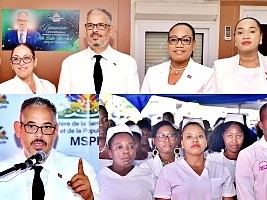
    In a landmark ceremony focused on shoring up Haiti’s strained public health infrastructure, Prime Minister Alix Didier Fils-Aimé presided over an event hosted by the Ministry of Public Health on May 1, 2026, to officially distribute 500 appointment and promotion letters to new healthcare staff serving the country’s West Department.

    Marking the International Workers’ Day observance, Prime Minister Fils-Aimé framed the mass hiring as far more than a routine personnel move, positioning it as a tangible demonstration of the Haitian state’s commitment to rebuilding and expanding accessible health services for communities across the western region. He noted that this year’s May 1 celebration carries unique weight, rooted in this concrete investment in the nation’s most essential public service.

    “Behind every appointment letter lies an individual, a personal journey, a professional aspiration, and a shared promise: to serve communities, deliver compassionate care, and ease the suffering of vulnerable Haitians,” the prime minister added, his remarks highlighting the quiet courage of the new hires. Many healthcare workers have chosen to leave Haiti amid ongoing instability, making the decision of these 500 professionals to stay and answer the call of public service a profound act of national dedication. “That is true courage. That is the love of Haiti,” he emphasized.

    Drawing on the symbolic meaning of May 1 as a day honoring work and national productivity, Fils-Aimé outlined the interconnected nature of three pillars of Haitian progress: public health, national security, and long-term development. “There is no viable hospital without security. There is no prosperous agriculture without stability, and there is no dignified work without the protection of life,” he stated, reinforcing that investments in health cannot deliver lasting impact without parallel progress in stabilizing communities across the country.

    The prime minister reaffirmed a core policy stance that health is a fundamental human right, not a marketable commodity reserved for those who can afford care. He also highlighted ongoing efforts to upgrade and expand health facilities across the country, with a specific focus on under-resourced border regions that serve some of Haiti’s most at-risk populations, ensuring these communities can access the care they need.

    Closing his address to the newly appointed and promoted healthcare workers, Fils-Aimé stressed the weight of their new roles. “An entire Nation is watching you, respecting you, and thanking you,” he said. “You are now at the heart of a vital commitment to the Nation.”

    The mass hiring marks one of the most significant public sector investments in Haiti’s health system in recent years, aimed at addressing longstanding staffing gaps that have left millions of Haitians without consistent access to primary and emergency care.

  • Soca royalty reigns at Fort Christian Lot as St Thomas Carnival Village comes alive

    Soca royalty reigns at Fort Christian Lot as St Thomas Carnival Village comes alive

    Against the open-air backdrop of Fort Christian Lot on St. Thomas, the U.S. Virgin Islands Division of Festivals delivered a show-stopping highlight of the annual St. Thomas Carnival, as top Soca performers Hypasounds and Alison Hinds turned a regular concert night into a legendary celebration of Caribbean culture that drew thousands of excited attendees.

    The atmosphere crackled with electric energy from the moment gates opened, as merrymakers from across the region and beyond gathered to experience one of the most anticipated nights of the 2026 Carnival season. When Hypasounds stepped onto the stage, he immediately seized control of the crowd, leaning into his well-documented skill for reading audience energy and building momentum that never faded through his set. The versatile performer blended fan favorites with fresh tracks, delivering every note with sharp precision and infectious charisma that cemented his reputation as a crowd favorite, particularly among his many female fans. The audience responded with unbridled, foot-stomping enthusiasm that only peak Carnival season can spark, singing along to every lyric and dancing late into the night.

    No iconic Caribbean Carnival night would be complete without a performance from Alison Hinds, the decades-reigning Queen of Soca, and the legend did not disappoint. From her first entrance, Hinds embodied the effortless warmth and unshakable confidence that has made her a staple of Caribbean entertainment for decades, interacting closely with the crowd and commanding the stage like an artist completely at home regardless of venue or hour. Her set reaffirmed exactly why her title as the Queen of Soca has remained unchallenged for so many years, drawing roars of approval from long-time fans and first-time attendees alike.

    Far more than just a single concert, the standout night served as a powerful reminder of the U.S. Virgin Islands’ standing as one of the Caribbean’s premier destinations for authentic cultural celebration. The annual St. Thomas Carnival, held every April, has grown steadily to become one of the most anticipated events on the regional cultural calendar, and nights like this are clear proof of its enduring appeal. Hypasounds, who has long spoken publicly about his deep affection for the U.S. Virgin Islands and counts the destination among his favorite places to perform, brought every ounce of that fondness to his high-energy set.

    Organizers extended special gratitude to the USVI Division of Festivals, production partner Riddimstream, and Michael Knight and his band, whose live instrumentation laid the dynamic musical foundation that elevated every performance of the night.

    The excitement from this iconic Carnival set is far from over for Hypasounds. Up next, the Soca star is set to perform at Patrice Roberts’ highly anticipated *I Am Woman* event in Barbados, scheduled to take place on Mother’s Day. The event, which honors women’s contributions to Caribbean culture and features some of the region’s most talented female and male performers, is already one of the most talked-about events of the spring, and organizers are urging fans to secure their tickets early to avoid missing out. Following the Barbados show, Hypasounds will continue his tour with a stop this upcoming weekend in Atlanta, Georgia, with a full slate of upcoming dates promising as much excitement as the St. Thomas Carnival stop.

    Fans can keep up with Hypasounds’ tour updates and new releases by following him on all social media platforms @hypasoundsmuzik. His latest single, *Too Like*, is available for streaming now on all major digital music platforms.

  • FITUG pledges loyalty to Irfaan Ali

    FITUG pledges loyalty to Irfaan Ali

    On May 1, 2026 — International Labour Day — Guyana’s long-running, politically charged split in the national labour movement moved into the open once again, as the country’s two largest trade union federations publicly declared opposing allegiances less than a full election cycle away from a general vote.

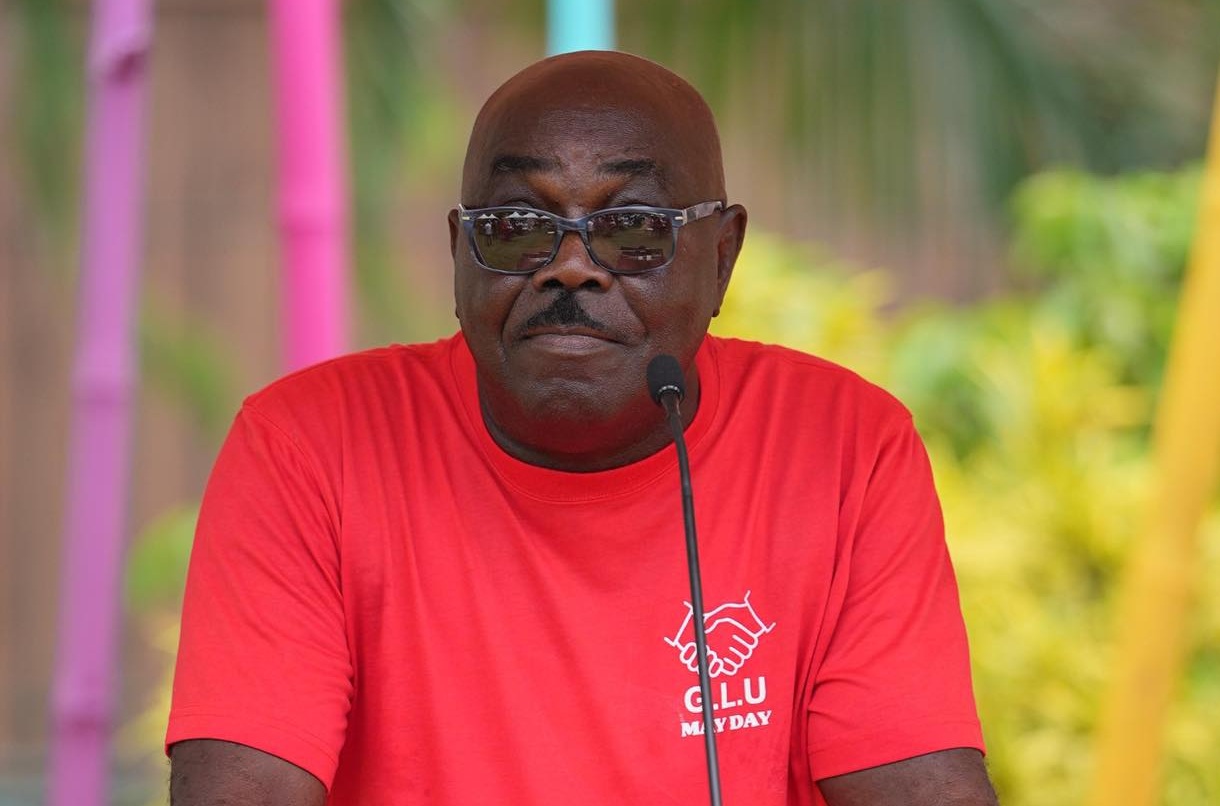
    The Federation of Independent Trades Unions of Guyana (FITUG), which organizes the largest bloc of unionized workers in the country, used its Labour Day gathering hosted on the lawns of State House to reaffirm its unwavering support for incumbent President Irfaan Ali and the ruling People’s Progressive Party (PPP).

    Addressing attendees at the event, FITUG President Carville Duncan lauded Ali for his consistent pro-labor agenda and open working relationship with the country’s independent trade unions. Duncan emphasized that the collective size of the organized labour movement in Guyana exceeds the membership base of any single political party in the nation’s history, framing FITUG’s endorsement as a critical marker of political credibility.

    “If we, like the doctor, say you dead; you dead and once we say you good, you good,” Duncan told the crowd, stressing the federation’s outsize influence on national electoral outcomes. He went on to note that Ali has worked directly with FITUG to help rank-and-file union members transition from traditional labor roles to small business entrepreneurship, a policy priority Duncan praised as forward-thinking. “Comrade Ali you’ve done well, Sir, and may you live longer to do better than you’re doing now because you have the workers who are with you,” Duncan said, adding that the federation would back Ali for another term should he choose to run for re-election.

    FITUG’s member unions include several historically pro-PPP organizations: the Guyana Agricultural and General Workers Union (GAWU), the National Association of Agricultural, Commercial and Industrial Employees, the Guyana Labour Union, and the Clerical and Commercial Workers Union.

    In his remarks to the gathering, President Ali did not directly address the ongoing divisions within Guyana’s labour movement, instead focusing his speech on calls for broad national unity, echoing the pre-1955 cohesion that once defined the PPP before the party’s historic internal split. He urged attendees to reject divisive political tactics, including petty infighting on social media, and focus on the country’s ambitious long-term development.

    “This not the moment where we play divisive games. This is not the moment when we run around to find spectacles of humour. This is not the moment when we are childish on social media and social media posts,” Ali said. “This is the moment when we embrace a much larger picture. This is a moment where we confront a future that is grand.” The President added that the PPP remains open to engagement with all Guyanese, and that the government is expanding individual empowerment through expanding home ownership, inclusive social programs, and broadened economic opportunity for all segments of society.

    While FITUG has a well-documented history of open support for the PPP, the country’s other major union federation, the Guyana Trades Union Congress (GTUC), used its own separate Labour Day rally to call openly for the removal of the PPP from national office. GTUC President Norris Witter and Jinnah Rahman, an associate of the opposition-aligned We Invest in Nationhood movement, explicitly urged voters and union members to oust the incumbent government.

    Opposition Leader Azruddin Mohamed, who also leads We Invest in Nationhood, and the parliamentary leader of the A Partnership for National Unity coalition, joined the GTUC event to urge the federation’s member unions to build organizational strength to oust the PPP-Civic coalition from power. Major GTUC affiliates include the Guyana Public Service Union, Guyana Teachers Union, Guyana Workers Union, the Union of Agricultural and Allied Workers, and a competing branch of the Clerical and Commercial Workers Union.

  • Misiekaba: Chikungunya-aanpak heeft niet gefaald

    Misiekaba: Chikungunya-aanpak heeft niet gefaald

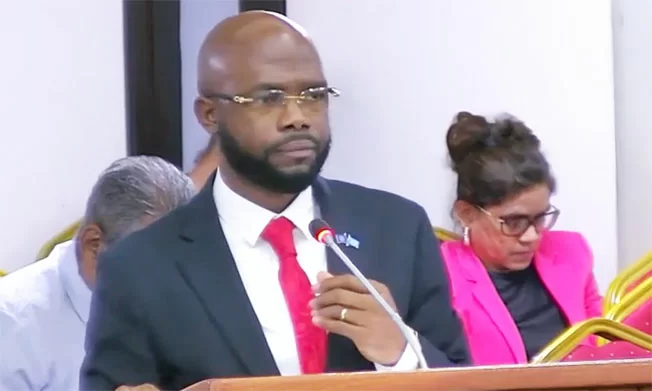
    A heated debate over Suriname’s public health response to a spreading chikungunya outbreak has unfolded in the country’s National Assembly, where Health Minister André Misiekaba has pushed back against claims of government mishandling of the crisis. Leading the Ministry of Public Health, Welfare and Labor, Misiekaba defended the administration’s actions, confirming that targeted interventions were launched immediately after the first confirmed case of the mosquito-borne viral infection was detected.

    The minister outlined that the entire response strategy has been built around five core pillars: cross-agency coordination, continuous case surveillance, standardized clinical patient management, vector control to reduce mosquito populations, and public risk communication to inform communities of prevention measures. Contradicting assertions that authorities delayed action while waiting for international chemical donations, Misiekaba explained that the government pursued multiple parallel pathways to secure necessary supplies. Alongside requesting direct support from partner nations, Suriname placed an official order for specialized control products through the Pan American Health Organization’s strategic emergency stock fund.

    International partners have already stepped in to assist the outbreak response. Barbados contributed eight barrels of larvicide, which targets mosquito larvae before they mature into biting adults, while Brazil has delivered insecticides for adult mosquito control and deployed a team of public health experts to provide on-site guidance and training for local Surinamese response teams.

    As part of the ongoing vector control campaign, authorities have completed insecticide spraying at major healthcare facilities across the country, including the St. Vincentius Hospital, Academic Hospital Paramaribo, Mungra Medical Center, and Diakonessen Hospital. Remaining smaller care institutions will be treated in the coming days as the campaign rolls out across all regions.

    As of April 29, public health authorities had registered 7,371 suspected samples for testing, with 6,504 samples processed. Of those tested, 3,321 returned positive results, representing a positivity rate of approximately 51 percent. Encouragingly, Minister Misiekaba noted that available infection data suggests the epidemic curve is beginning to trend downward, though he emphasized that officials will continue monitoring case numbers over the coming weeks before drawing any definitive conclusions about the outbreak’s trajectory. The minister did acknowledge two areas where response efforts can be strengthened, conceding that public education outreach and municipal bulk waste collection initiatives—key to eliminating mosquito breeding sites—require improvement.

  • Gaston Browne sworn in as Antigua PM for fourth term after election win

    Gaston Browne sworn in as Antigua PM for fourth term after election win

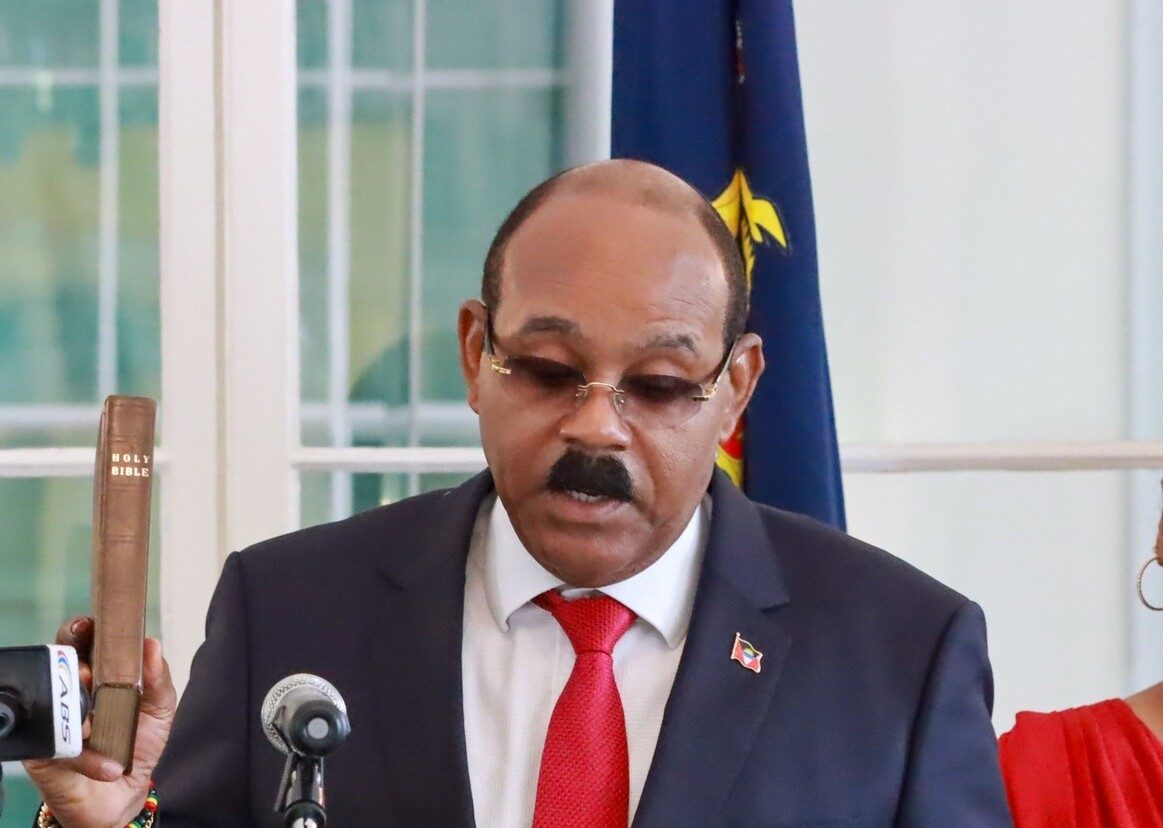
    In a landmark political moment for the twin-island Caribbean nation, Prime Minister Gaston Browne took the oath of office for his fourth consecutive term as head of government on Friday. The inauguration came just hours after Browne led his long-ruling Antigua and Barbuda Labour Party (ABLP) to a decisive landslide victory in the April 30 general election, a contest he called nearly two years ahead of the constitutionally mandated deadline.

    Browne was joined in taking the oath by Attorney General Steadroy “Cutie” Benjamin during the ceremony, which was officiated by Governor General Sir Rodney Williams and attended by all other ABLP candidates who won seats in the election. Official results released by the Antigua and Barbuda Electoral Commission (ABEC) confirm that the ABLP secured 15 out of the 17 available seats in the country’s parliament. The remaining two seats were split between the main opposition United Progressive Party (UPP) and the Barbuda People’s Movement (BPM). Voter turnout across the nation reached just over 62.5 percent of eligible electorate.

    Addressing supporters and reporters shortly after his swearing-in, Browne emphasized the scale of his party’s mandate, noting, “That was a resounding victory. People spoke, and they spoke with clarity. They spoke resoundingly, and we’re very happy with the mandate that was given to us.” The Prime Minister acknowledged that the strong electoral victory came with heightened responsibility, which his administration is fully prepared to uphold. “But with that mandate comes increased responsibility, and it’s a responsibility that we will certainly honour. We’ll make sure that we continue to deliver for the people of Antigua and Barbuda. In fact, the fact that I was given a fourth term as Prime Minister is in itself a humbling experience, and it has strengthened my commitment to fight even harder for the people of Antigua and Barbuda and to deliver more for them.”

    Looking ahead to his new term, Browne outlined an ambitious agenda focused on accelerating national progress. “So the people of Antigua and Barbuda will be seeing accelerated growth and development, accelerated infrastructural development, and the roadworks and waterworks we have started will be accelerated until we substantially resolve the water and road problems,” he added, extending gratitude to the public for its patience during ongoing infrastructure projects.

    The Prime Minister announced that the full composition of his new Cabinet will be revealed this coming Tuesday, noting that most senior roles will be retained by sitting ministers to ensure policy continuity amid major ongoing initiatives. “there will be “familiar faces” because several ministers are handling significant projects and continuity is important. So, for example, I’d want to ensure that we have Minister Daryll S Matthew in Education to continue the expansion…. We certainly want to maintain Minister Chet Greene as Minister of Foreign Affairs because, as you know, a significant amount of planning has gone into the Commonwealth Heads of Government Conference scheduled for November, and to put in a new minister at this time would not be advisable.”

    Browne also confirmed that his wife, Maria Browne, will keep her position as Minister of Public Works, praising her proven ability to manage multiple concurrent infrastructure projects across different constituencies. To build a pipeline of future leadership and avoid unnecessary government expansion, newly elected ABLP members will first serve in junior ministerial roles to receive on-the-job training before moving into senior positions. “Again, we don’t want to have a bloated government by having all senior ministers. We will have some junior ministers as a form of training and development so that they, too, can blossom into senior ministers eventually and better serve the people of Antigua and Barbuda,” he explained.

    In a call for more constructive political discourse across the nation, Browne urged a shift toward more responsible politics to build a stronger future for Antigua and Barbuda. “I’m hoping that with such a resounding victory there will be a new dispensation going forward. I’m hoping that our politics will become more civil. I’m hoping that politicians on both sides of the aisle will stand on the truth because, at the end of the day, misinformation, disinformation and falsities are literally eroding the fabric of our society and destroying our country.”

    The Prime Minister stressed that he welcomes a strong, reformed opposition to maintain government accountability, rejecting calls for a weakened opposition bloc. “He also said he believes in responsible politics and that the opposition should use the moment to reform, adding that a strong opposition remains necessary for accountability. We do not necessarily want a weak opposition. We want individuals with the competence to continue to hold us accountable,” Browne said.

    Internationally, the United States has extended its congratulations to Browne and his administration. In an official congratulatory message, U.S. Secretary of State Marco Rubio stated that Washington looks forward to deepening ongoing collaboration with Antigua and Barbuda on a range of shared regional priorities. These priorities include strengthening collective regional security, improving coordination to counter illegal immigration, disrupt transnational criminal organizations, and crack down on illicit trafficking networks operating in the Caribbean.

  • Full lineup announced for ‘Jazz ‘n Arts in Paradise’ in Borne

    Full lineup announced for ‘Jazz ‘n Arts in Paradise’ in Borne

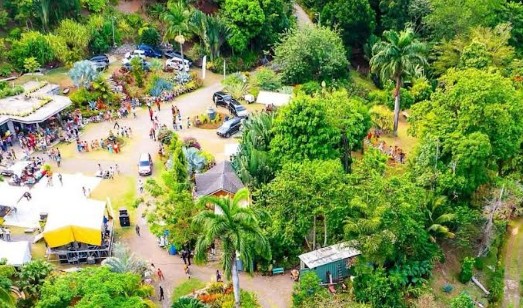
    One of the Eastern Caribbean’s most anticipated cultural celebrations is ready to welcome attendees tomorrow, Saturday, May 2, as Jazz ‘n Arts in Paradise touches down at Paradise Valley in Borne, Dominica. Slated to run from 12 p.m. to 8 p.m., the festival serves as the crown jewel of the wider Jazz ‘n Creole weekend, promising attendees a packed 8-hour schedule of live music, immersive cultural experiences, and cross-disciplinary artistic showcases from across the Caribbean.

    Headlining this year’s lineup is internationally celebrated Martinican artist Kali, a staple of Caribbean contemporary music who will take the stage alongside a diverse roster of emerging and established talent including Kimani T, 15.61, Phael Lander, and Khadijah Joseph. Beyond the main stage performances, the day will be filled with non-stop cultural presentations from community groups across Dominica, bringing centuries-old local traditions to life. These include performances from Possie Culcha Pan, Penville Children Flirt, Dansesé Gwan Anse, the current Junior Calypso Monarch, the Paix Bouche Cultural Group and Drummers, the Kalinago Dancers, and acrobatic performances from Waitu Cirque.

    Organizers have designed the festival to extend far beyond live music, curating a range of interactive and educational experiences for visitors of all ages. Leading environmental scholar Dr. Henri Joseph will host informative sessions focused on Caribbean biodiversity and traditional natural medicine, connecting attendees to the island’s unique natural heritage. Local creative industries will also take center stage: designer Doudou Diez will present a contemporary fashion showcase highlighting Caribbean design talent, while the Waitukubuli Artists Association has curated a public art gallery of local work and will host live painting demonstrations throughout the day. Additional artistic offerings include floral art displays, open mic poetry sessions, and guided botanical walking tours of the lush, scenic grounds of Paradise Valley. For food lovers, a dedicated culinary village will serve a wide selection of authentic Dominican street and family-style cuisine all day, capped off by a traditional slow-roasted pig roast, a beloved local community gathering staple.

    Ticket pricing is structured to make the event accessible to all: general admission is EC$25 for adults and just EC$10 for children, with same-day tickets available for purchase directly at the event entrance. Jazz ‘n Arts in Paradise is presented by Dominica’s Ministry of Tourism and the Discover Dominica Authority, produced in partnership with Paradise Valley management, the Waitukubuli Artists Association, and the Paix Bouche Cultural Group. Attendees can find the latest schedule updates, accessibility information, and event details on the official Dominica Festivals Facebook and Instagram pages.

    For visitors traveling to Dominica for the festival, the island nation sits in the Eastern Caribbean archipelago, nestled between the French territories of Guadeloupe and Martinique. It is easily accessible for international travelers, with direct air connections from Miami via American Airlines and from Newark, New Jersey via United Airlines. Regional travelers can reach the island through connecting flights on regional carriers including InterCaribbean Airways, WINAIR, Sunrise Airways, LIAT 2020, and Caribbean Airlines. For those traveling by sea, the RFS Express ferry service offers regular connections from Guadeloupe, Martinique, and St. Lucia.

  • Dominica police officers commended for elite commando training ahievements

    Dominica police officers commended for elite commando training ahievements

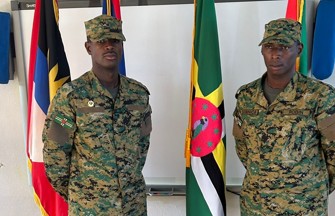
    The Commonwealth of Dominica Police Force (CDPF) has publicly honored two of its officers, Constables Ordel Robin and Lyndon Maximea, for their successful participation in Commando Course 1/26, one of the most physically and mentally demanding elite law enforcement training programs in the region. Designed to push candidates to their absolute limits, the course is built to evaluate and strengthen core traits critical for high-stakes operations: mental resilience, physical endurance, strict discipline, and coordinated teamwork.

    Over the course of several weeks, both constables endured a grueling curriculum of intense physical conditioning and tactical skill-building, covering a wide range of operational scenarios. Training modules included long-distance endurance runs, heavy load carries over difficult terrain, tactical marksmanship practice, close-quarters room clearing drills, land navigation via map reading, amphibious marine operations, organized beach landing exercises, and wilderness survival training. A dedicated, location-specific phase of the program was carried out entirely on Dominica’s soil to tailor training to local operational conditions.

    Among the two officers, Constable Lyndon Maximea earned special distinction for completing the course’s most punishing challenge: a 30-mile loaded march that tests even the fittest candidates. For successfully crossing the finish line, Maximea was awarded the highly respected Commando Badge, a mark of elite achievement in law enforcement training. In its official statement, the CDPF called Maximea’s performance a “remarkable achievement and testament to resilience and determination”, noting that it reflects the high standards the force demands of its personnel.

    Constable Ordel Robin also received widespread praise for his unwavering perseverance through the course. While he completed 27.5 miles of the final 30-mile march, falling just short of the full distance required for the badge, the CDPF highlighted that his performance demonstrated the courage, self-discipline, and unyielding fighting spirit that the force seeks in all commando candidates. The force emphasized that Robin’s effort was no less a demonstration of the core values the training program seeks to cultivate.

    Across every phase of the Commando Course, the CDPF confirmed that both officers consistently embodied the foundational values of the force: collaborative teamwork, self-assurance, strict discipline, and unwavering professionalism. Their participation in the elite program, the force noted, is a direct reflection of the CDPF’s long-standing commitment to maintaining the highest levels of operational readiness and institutional excellence across all ranks. Closing its statement, the CDPF extended formal congratulations to both officers, saying “Congratulations to both officers for representing the Force with pride.”

  • ‘Turbulent en gevaarlijk’: Scheepvaart het nieuwe wereldwijde strijdveld

    ‘Turbulent en gevaarlijk’: Scheepvaart het nieuwe wereldwijde strijdveld

    Weeks after a temporary two-week ceasefire between the United States and Iran that kept the critical Strait of Hormuz partially open, a cargo vessel waits off the coast of Oman to traverse the chokepoint. But this image of uncertainty is far from an isolated incident: geopolitical power struggles are rapidly unraveling the decades-old rules-based order that has kept global maritime trade secure and predictable, analysts warn. The warning comes after a sudden policy proposal from Indonesia that sent shockwaves through global shipping and insurance markets last week. Indoneisan Finance Minister Purbaya Yudhi Sadewa suggested imposing transit tolls on commercial vessels passing through the Strait of Malacca, a key global trade chokepoint, explicitly drawing inspiration from recent Iranian actions in the Strait of Hormuz. While Jakarta quickly walked back the controversial suggestion, industry analysts say it exposed a growing, dangerous shift: the once-stable system of open maritime navigation is becoming increasingly risky, costly and overtly politicized. “We have not seen the oceans this unsettled and dangerous since nations first came together to agree on shared rules for maritime navigation,” said Elisabeth Braw, a senior fellow at the Atlantic Council. For centuries, maritime shipping carried inherent risks, from piracy to rogue attacks. But in the decades following World War II, the international community built a comprehensive framework of treaties and agreements designed to guarantee open, safe passage for commercial vessels across global waterways. The results have been transformative: the World Trade Organization reports that global trade grew from roughly $60 billion in the 1950s to more than $25 trillion last year, with 80 percent of all global trade by volume moving across the world’s oceans. Today, however, experts agree that actions from major global powers including the United States, Iran, Russia and China are systematically undermining the rules that made this growth possible. The most high-profile flashpoint right now is the Strait of Hormuz, the narrow chokepoint through which roughly a fifth of global oil supplies pass. Starting in March, Iran restricted passage for dozens of vessels after joint strikes by the U.S. and Israel on Iranian targets. On April 13, the U.S. imposed a full maritime blockade on Iranian vessels and ports, and has since seized Iranian tankers near the strait and detained other vessels across the Indo-Pacific that it accuses of carrying sanctioned Iranian crude. In response, Iran has seized unauthorized vessels attempting to transit the strait and opened fire on multiple commercial ships passing through the waterway. These escalating tit-for-tat actions have worsened the ongoing global energy crisis, pushing oil and natural gas prices to multi-year highs. “Even without a full closure of the strait, requirements for transit approval and constant political pressure create massive cost increases and widespread uncertainty,” said Jack Kennedy, senior analyst at S&P Global. Kennedy pointed to a recent incident off the coast of Oman, where a container ship was fired on by an Iranian military patrol boat, leaving the vessel’s bridge damaged. He described the attack as “calculated use of force to demonstrate control without shutting down all traffic entirely,” a tactic that creates uncertainty across the entire shipping industry. Tensions are now spreading to other critical maritime infrastructure, including the Panama Canal. Earlier this week, the U.S. and multiple South American and Caribbean nations accused China of using “targeted economic coercion” against Panamanian-flagged vessels, claiming Beijing is detaining Panamanian ships in its ports as part of a broader effort to politicize maritime trade and undermine regional sovereignty. China has forcefully rejected the accusations, calling the U.S. claims hypocritical. A spokesperson for China’s Ministry of Foreign Affairs noted that the U.S. occupied the Panama Canal for decades and repeatedly violated Panama’s sovereignty, pointing to a long history of American interference in the region. The latest dispute comes after Panama’s Supreme Court canceled a concession held by a Hong Kong-based firm to operate two major ports along the canal, a move widely viewed as the result of U.S. pressure to roll back Chinese influence around the strategic waterway. Experts note that the vast majority of global maritime trade still operates within the existing legal framework, but the number of high-profile political exceptions is growing at an alarming rate. In recent years, maritime disruptions have become increasingly strategic and organized. Russian control of large swathes of the Black Sea during its full-scale invasion of Ukraine triggered global food shortages by blocking grain exports. In the South China Sea, China has been repeatedly accused of intimidating commercial vessels to enforce its disputed territorial claims, allegations Beijing has repeatedly denied. “Maritime action has always been a tool to exert pressure on an adversary’s economy and military. What has changed is the scale: the volume of container trade and the size of the global fleet mean disruptions ripple across the entire global economy far faster than ever before,” explained Jean-Paul Rodrigue, a maritime trade expert at Texas A&M University. Non-state actors have also amplified risk in global waterways. Houthi attacks on commercial shipping in the Red Sea have forced major shipping lines to reroute vessels around the Cape of Good Hope, adding thousands of miles of extra travel and billions in extra costs. The biggest long-term risk, analysts agree, is the precedent being set by increasingly frequent violations of the existing rules. The cumulative effect of these developments is a clear shift away from predictable, rules-based navigation toward a system where access, costs and safety are increasingly determined by power, influence and political interests. Non-state groups have also exploited gaps in international enforcement: the International Maritime Bureau’s latest report shows global piracy incidents have already reached their highest level in five years this year. These geopolitical tensions translate directly to tangible costs for global consumers. Vessel rerouting increases fuel consumption and transit times, pushing up operating costs for shipping lines. Insurance premiums and risk surcharges have skyrocketed in high-tension areas, and even short detentions or inspections can create cascading delays across global supply chains. As a result, shipping lines are increasingly reconsidering their routes, flag registrations and port calls to minimize political exposure. “The biggest risk is the precedent that emerges when multiple nations test boundaries through selective enforcement, new permitting requirements or tolls in international straits. When that becomes normalized, outcomes depend entirely on power dynamics and bilateral negotiations, not shared rules,” Kennedy said.