作者: admin

  • Antiguan Youth Leader Kristine Louisa Named Caribbean Young Person of the Month

    Antiguan Youth Leader Kristine Louisa Named Caribbean Young Person of the Month

    Across the Caribbean, a new generation of young changemakers is stepping forward to rewrite regional narratives of progress—and at the forefront of this movement is Kristine Louisa, a dynamic Antiguan youth leader recently named the Caribbean Young Person of the Month for May 2026 through the Caribbean Youth Spotlight Series. This prestigious recognition cements Antigua and Barbuda’s growing reputation for nurturing exceptional young leadership that resonates across national borders.

    The Caribbean Youth Spotlight Series was created to elevate outstanding young people whose courage, creativity, and consistent work are actively redefining what the region can achieve. Each monthly selection adds a new name to a growing roster of distinguished trailblazers, all working to deliver tangible, meaningful change for communities across the Caribbean. For the May 2026 edition, editors say Louisa stood out among dozens of nominees for her decades-long (from a young age) track record of service.

    A medical student, appointed National Youth Ambassador, and the founder and chief executive of the Hopeful Hearts Foundation, Louisa has built her reputation on unwavering, relentless commitment to lifting up vulnerable communities. Her work spans three core areas: grassroots community outreach, targeted youth empowerment programming, and direct hands-on support for families facing hardship. To date, her initiatives have improved the lives of hundreds of people across Antigua and Barbuda, and her impact has extended to neighboring Caribbean islands.

    To expand her reach, Louisa launched HHF Youth, a youth-led network that brings together 35 student leaders from multiple secondary schools across Antigua. She has also recruited and trained 45 dedicated volunteers to support the foundation’s ongoing programming. This is far from her first recognition: by the age of 20+, she had already earned three separate humanitarian awards, with her first honor coming when she was just 14 years old.

    In a statement from the Caribbean Youth Spotlight Series editorial team, Louisa’s selection was framed as a direct reflection of her “continued pursuit of excellence and outstanding contribution” to both national development and regional progress. Her feature will be distributed across all of the series’ digital and social platforms, where it will reach an estimated audience of more than 11,000 young people across the Caribbean. The team hopes that amplifying Louisa’s story will encourage other young people to step into leadership roles in their own communities.

    Louisa’s most visible impact stems from her on-the-ground humanitarian work: regular food drives for food-insecure households, neighborhood development initiatives, and consistent advocacy to ensure youth voices are included in local and regional policy discussions. In recent months, her participation in global youth leadership forums has expanded her reach even further, turning her into one of the most prominent global advocates for Caribbean youth priorities.

    This latest honor does more than celebrate Louisa’s individual achievements. It also highlights the increasingly vital role that young leaders from small island developing states play in shaping the Caribbean’s future. For a region navigating persistent social and economic challenges, from climate vulnerability to youth unemployment, Louisa’s work offers a blueprint for what compassionate, action-oriented leadership can deliver.

    In response to her selection, Louisa emphasized that the recognition is not just about her work, but about every young person across the region stepping up to lead. “This recognition isn’t just about me, it represents every young person who chooses to lead, to serve, and to create change even when it’s not easy,” she said. “I’m not waiting for my turn, I’m leading it. The work continues.”

    As the Caribbean works to build a more equitable and resilient future, leaders like Kristine Louisa embody the core traits of this rising generation: bold vision, deep compassion, and a commitment to taking action rather than waiting for change. Her May 2026 feature is expected to inspire thousands of young readers, reinforcing a clear and powerful message: youth leadership is not just the Caribbean’s future—it is already driving progress in the present.


  • Prime Minister Hon. Dickon Mitchell extends congratulations to Prime Minister Hon. Gaston Browne on his re-election

    Prime Minister Hon. Dickon Mitchell extends congratulations to Prime Minister Hon. Gaston Browne on his re-election

    Following the conclusion of Antigua and Barbuda’s general election on April 30 that saw incumbent head of government Gaston Browne secure a historic fourth term in office, the Government of Grenada has issued a formal message of warm congratulations to the re-elected prime minister.

    Grenada’s own Prime Minister Dickon Mitchell delivered the official congratulations alongside a package of heartfelt best wishes for Browne’s incoming administration. In his remarks, Mitchell emphasized his firm confidence that under Browne’s continued stewardship, the people of Antigua and Barbuda will sustain their trajectory of stable governance, inclusive social progress, and broad-based economic prosperity in the years ahead.

    Beyond extending well wishes, Mitchell took the opportunity to reaffirm Grenada’s long-standing commitment to deepening collaborative ties between the two Caribbean sister nations. This shared cooperation, he noted, will continue to be advanced through the existing institutional frameworks of the Organisation of Eastern Caribbean States (OECS) and the Caribbean Community (CARICOM), the two key regional blocs that coordinate collective action on cross-border priorities across the Caribbean.

    Looking ahead, the Government of Grenada said it is eager to build on the decades-long, close bonds of friendship and mutual partnership that connect the two countries. As small island developing states navigating shared economic and climate challenges, both Grenada and Antigua and Barbuda will continue working side by side to advance common regional goals that benefit all citizens across the Caribbean.

  • Antigua and Barbuda polls transparent, media polarisation concerns emerge, says Commonwealth observers

    Antigua and Barbuda polls transparent, media polarisation concerns emerge, says Commonwealth observers

    The preliminary assessment of Antigua and Barbuda’s 2026 General Elections, released by the Commonwealth Observer Group, paints a broadly positive picture of the island nation’s democratic process, while flagging long-standing areas for reform ahead of the group’s final official report.

    Speaking at a press briefing hosted in St. John’s, group chairperson Hon. Dr. Pelonomi Venson — a former foreign affairs minister of Botswana — delivered the organization’s interim findings on behalf of the entire observer team. In her remarks, Venson highlighted that election day operations unfolded in an orderly, calm, and transparent manner, with all key stakeholders conducting themselves appropriately throughout the voting process.

    The observer team monitored final campaign events across both islands of the nation, including public rallies and candidate gatherings. Team members noted that these events drew robust crowds, demonstrating that citizens across Antigua and Barbuda remain actively engaged in the country’s democratic governance. The group also reserved special praise for the Antigua and Barbuda Electoral Commission, which provided observers with a detailed, comprehensive information package covering critical logistics: polling station coordinates, registered voter counts per site, and demographic voting data broken down by age and gender. This level of preparation eliminated avoidable disruptions to voting flow, keeping polling stations running smoothly on election day.

    Despite the overall positive assessment, the group did raise recurring concerns that have persisted across past electoral cycles. Most notably, observers called out growing polarization in the country’s media landscape, an issue first flagged in a previous Commonwealth observation mission. To address this divide, the group recommends implementing stronger editorial standards and clearer regulatory guidelines to mandate respectful political communication, particularly during active campaign periods, to foster more constructive public discourse around election issues.

    A second long-standing recommendation was also reiterated: the need to strengthen existing campaign finance legislation. The group urged national authorities, all registered political parties, and relevant stakeholders to explore new measures that boost both regulation and transparency around campaign funding, closing gaps that could undermine the integrity of the democratic process.

    In closing, the Commonwealth Observer Group commended the people of Antigua and Barbuda for their ongoing, unwavering commitment to upholding democratic principles. The mission’s full, final report — which will include complete findings and granular, targeted recommendations — will be submitted to Commonwealth Secretary-General Hon. Shirley Botchwey in the coming weeks. After review, the report will be distributed widely to the Government of Antigua and Barbuda, the national electoral commission, all registered political parties, and other key democratic stakeholders.

    As a contextual note, the Commonwealth is a voluntary association of 56 independent, equal sovereign states spread across every inhabited continent, with a combined population of 2.7 billion people, more than 60 percent of whom are under the age of 30. Thirty-three of the bloc’s members are classified as small states, with a large share made up of island nations like Antigua and Barbuda. The Commonwealth Secretariat, the organization’s administrative body, supports member nations in building inclusive democratic institutions, strengthening governance frameworks, advancing human rights, growing sustainable economies, boosting intra-bloc trade, building national resilience, empowering youth populations, and addressing transnational challenges including climate change, sovereign debt instability, and systemic inequality. The bloc is supported by a network of more than 80 intergovernmental, civil society, cultural, and professional organizations working across member states.

  • Housing beneficiaries at Bellevue Chopin sign documents for issuance of certificates of title

    Housing beneficiaries at Bellevue Chopin sign documents for issuance of certificates of title

    ROSEAU, Dominica – April 30, 2026 – Years after the resettlement of Petite Savanne communities, a landmark policy delivering long-promised housing security is moving into active implementation, as the first group of resettled beneficiaries at the Bellevue Chopin resettlement site have started signing final legal documents to claim full ownership of their government-built homes at no cost.

    The transfer process is formalized through two key legal documents: the Agreement of Transfer, which legally shifts property ownership from the government to individual beneficiary families, and the Memorandum of Encumbrance, which clearly lays out all terms and conditions tied to the land plots. Once the signing process is completed, the path will be fully cleared for the official issuance of Certificates of Title, the legal documents that confirm permanent home ownership.

    This milestone follows a formal policy greenlight from Dominica’s Cabinet, which approved a framework granting full freehold ownership of government-constructed resettlement homes to eligible beneficiaries completely free of charge. Under the policy, eligible residents meet pre-defined ownership criteria, and the government will even cover all administrative costs associated with registering the new land titles, eliminating any out-of-pocket expenses for recipient families.

    The Ministry of Housing and Urban Development has selected 22 standalone homes at the Bellevue Chopin site as part of the first phase of the program. Prior to launching the signing process, ministry officials held multiple open consultations with participating residents to walk through all terms and conditions of the ownership transfer, giving every household the chance to ask questions and resolve uncertainties before formalizing their claim.

    Housing Minister Hon. Melissa Poponne-Skerrit emphasized that the policy is a core demonstration of the government’s commitment to the long-term stability of resettled communities. “By removing the financial burden and transferring full ownership, we are giving families a solid foundation on which to build their future,” Poponne-Skerrit stated. “We remain committed to advancing this process until every eligible family is secured.”

    Administrative teams have already submitted all completed documentation for the first batch of ownership transfers to the national Land Registry, marking the final step before official Certificates of Title are distributed to participating families.

  • Spirit Airlines shutdown leads to widespread flight cancellations across the US

    Spirit Airlines shutdown leads to widespread flight cancellations across the US

    In a landmark shift for the U.S. low-cost aviation sector, pioneering discount carrier Spirit Airlines has abruptly halted all operations overnight after failing to secure critical emergency funding to keep its fleet in the sky. The collapse of the 30-year-old budget airline has eliminated 17,000 jobs and removed a major source of affordable air travel from domestic and international markets, leaving tens of thousands of ticketed passengers scrambling for alternative arrangements.

    Unlike smaller U.S. airline failures recorded in recent years, Spirit’s shutdown carries far broader ripple effects: the carrier operated an extensive network connecting major U.S. hubs including New York, Los Angeles, Miami and Detroit, alongside popular leisure destinations across Latin America and the Caribbean, served entirely by a fleet of Airbus aircraft. For passengers holding unused Spirit tickets, the airline has outlined initial guidance for reimbursement, though uncertainty remains for many bookers.

    Tickets purchased directly from Spirit via credit or debit card will be automatically refunded, the company confirmed. Travelers who booked through third-party travel agencies have been directed to file refund requests through their respective agencies. For bookings made with Spirit loyalty points, vouchers or airline credit, Spirit says reimbursement terms will be finalized through the upcoming bankruptcy process, but travel industry analyst Henry Harteveldt, founder of the Atmosphere Research Group, warned that affected passengers have almost no chance of recovering that value.

    The airline has also urged all ticketed passengers not to visit airport terminals, as all Spirit customer service and ground operations have already been shut down following mass layoffs of its staff. While stranded passengers will not be able to get on-site assistance from Spirit, competing carriers across the U.S. have stepped in to offer capped, discounted fares to displaced Spirit customers, mirroring the coordinated response the industry typically mounts during hurricanes or large-scale natural disasters.

    Among the carriers offering relief, JetBlue Airways has moved fastest to expand its support. The airline will cap one-way fares for displaced passengers at $99 through May 6, requiring proof of a canceled Spirit itinerary to access the rate. For the high-traffic Fort Lauderdale-San Juan route, a core Spirit route that JetBlue already has major operations on, one-way fares will be capped at $299 for bookings made between May 1 and May 8. “With major operations in Fort Lauderdale and San Juan, we’re in a unique position to help Spirit customers get where they need to go and ensure flights remain affordable despite greater demand,” said JetBlue CEO Joanna Geraghty. JetBlue also announced plans to dramatically scale up its Fort Lauderdale operations this summer, launching 130 daily departures — a 75% increase from 2023 — and adding new service to destinations including Barranquilla and Cali in Colombia, Baltimore, Charlotte, Detroit, Chicago and Houston.

    Southwest Airlines has also put in place a tiered fare cap system: domestic one-way trips under 500 miles will cost no more than $200, trips between 500 and 1,000 miles are capped at $300, and trips over 1,000 miles are capped at $400, with all fares available for purchase directly at airport ticket counters. Southwest added it will also honor Spirit frequent flyer status and associated benefits for affected customers, including early boarding. American Airlines, Frontier Airlines and United Airlines have all followed suit with their own fare cap initiatives, while the broader industry has coordinated to get displaced Spirit flight crews back to their home bases.

    The collapse of Spirit, best known for its signature bright yellow aircraft, ultra-low base fares and unbundled pricing for add-on services, follows years of mounting financial pressure. The carrier had been teetering on the edge of liquidation for weeks after it failed to reach an agreement with bondholders to unlock a $500 million emergency support package, and filed for its second bankruptcy in less than 12 months last year.

    Multiple interconnected factors led to the airline’s ultimate collapse. A proposed acquisition by JetBlue was blocked by antitrust regulators, eliminating the airline’s clearest path to financial stability. At the same time, rising fuel and labor costs upended the carrier’s thin-margin business model, and a widespread manufacturing defect in Pratt & Whitney jet engines forced dozens of Spirit aircraft to be grounded indefinitely, cutting into the airline’s ability to generate revenue. Shifting consumer trends also worked against Spirit: post-pandemic demand for premium, full-service travel has surged, while large legacy carriers have rolled out their own basic economy fares that match Spirit’s low price points while offering larger route networks and included perks like free Wi-Fi, complimentary snacks, more legroom and airport lounges.

    Looking ahead, aviation analysts predict that the exit of a major discount carrier will push airfares higher in at least some markets, even after accounting for the fact that Spirit had already sharply scaled back its flight schedule in the months leading up to its shutdown. Major competing airlines have already been adding capacity on Spirit’s former routes and at its hub airports, and will accelerate that expansion in the coming months to absorb displaced demand.

  • 45 jaar inzet voor schoon en groen Suriname gevierd

    45 jaar inzet voor schoon en groen Suriname gevierd

    On May 2, Suriname’s Directorate of Public Green Space and Waste Management gathered to celebrate 45 years of advancing public environmental services, holding a solemn commemoration that centered gratitude for staff contributions and reaffirmed the agency’s core mission: building a cleaner, greener, and more livable nation for all Surinamese. The event also brought together leadership from national government, district authorities, and labor representatives to discuss plans for deeper collaboration and enhanced public service delivery moving forward.

    Hugo Blanker, president of the ABPM workers’ union, opened remarks by noting that the directorate’s work is visible to Surinamese communities every single day. He emphasized that the agency has remained fully operational through decades of challenge solely thanks to the consistent dedication of its frontline and administrative staff. Looking ahead, Blanker stressed that all stakeholders share a collective responsibility to partner with the national ministry to drive sustained growth and improvement for the directorate.

    Ruchsana Ilahibaks, District Commissioner for Central Paramaribo, congratulated the agency on reaching this major professional milestone, highlighting four and a half decades of unwavering commitment to keeping Suriname clean and well-maintained. She underscored that this critical work must continue for the benefit of future generations, and that progress depends on close, ongoing collaboration between the directorate and local communities. Ilahibaks also expressed gratitude for the directorate’s ongoing support for district initiatives, and confirmed that a new district commissariat will soon be established on the directorate’s premises to streamline local coordination.

    A commemorative thanksgiving service was also held as part of the 45th anniversary celebrations. Interim Director Anwar Moenne extended formal recognition to all current and former staff who have committed their careers to keeping Suriname clean and livable over the past 45 years. Moenne reported that even during periods when routine maintenance faced severe resource pressures, the directorate has reversed declines, rebuilt operational capacity, and made its work increasingly visible and impactful across Surinamese society. He also highlighted growing community engagement with the directorate’s initiatives, noting that staff draw significant motivation from the direct support the agency receives from the national ministry.

    Minister Stephen Tsang also attended the ceremony, sharing words of praise for the directorate and saying he was honored to take part in the special occasion. Tsang framed the directorate’s work as a core pillar of Suriname’s broader national development strategy, pointing out that a clean, well-maintained natural and built environment is a critical asset to grow the country’s tourism sector. He tied the agency’s mission to the national Krin Kondre clean country initiative, a program launched by the President of Suriname to advance national environmental improvement. The minister confirmed that collaboration between the national directorate and district commissioners will be intensified in coming months, allowing environmental and waste management work to be carried out more effectively across every region of the country.

    Overall, the 45th anniversary commemoration centered two core themes: formal recognition of the tireless work of the directorate’s staff, and shared commitment to continuing to strengthen the agency in pursuit of its longstanding goal: maintaining a clean, green, and livable Suriname for all current and future residents.

  • Jazz ‘n Creole Celebrates 15 Years of Growth, Investment and National Impact

    Jazz ‘n Creole Celebrates 15 Years of Growth, Investment and National Impact

    This May 3, 2026, one of Dominica’s most beloved cultural festivals will mark a major milestone: 15 years of blending world-class jazz performances with the rich, vibrant traditions of Creole culture for visitors and locals alike. Supported by long-term strategic investment from the Government of Dominica and a growing network of corporate and community partners, the 15th staging of Jazz ‘n Creole is set to reinforce the island nation’s growing reputation as a top-tier events destination while delivering tangible economic benefits to local communities.

    Over its 15-year history, the Government of Dominica has served as the presenting sponsor of the festival, injecting more than EC$4.5 million into its development, annual production, and long-term growth. This public investment has covered core operational costs ranging from event production and global marketing to artist bookings and the necessary infrastructure and logistics that deliver a seamless, memorable experience for attendees at the festival’s scenic home, Cabrits National Park. Beyond the event itself, the consistent government support has unlocked hundreds of income-generating opportunities for local vendors, small service providers, and independent creatives, particularly in the northern coastal town of Portsmouth and its surrounding neighboring communities.

    For the 2026 anniversary edition, a broad coalition of corporate and institutional partners has stepped forward to support production, on-site services, and execution. Top-tier Platinum Partners include the National Bank of Dominica, Range Developments, and Kingdom Bank, while Digicel Dominica joins as the event’s Silver Partner. A long list of Business Partners, spanning local tourism, logistics, retail, and utility entities, round out the support network: Arden Sounds, Dominica Air & Sea Ports Authority, Springfield Trading Ltd., Unicomer, Belfast Estate Ltd., Josephine Gabriel, National Cooperative Credit Union (NCCU), Depex Color Lab, PDV Caribe Dominica Ltd., OECS Pearl, Do It Center, and Dominica Water and Sewerage Company.

    A team of local media partners, including DBS Radio, EmoNews, Q95 FM Radio, Kairi FM, and Vibes Radio, will also play a critical role in amplifying event announcements, spreading programming details, and extending the festival’s reach to audiences across every corner of Dominica.

    Marva Williams, CEO of the Discover Dominica Authority, the island’s national tourism agency, emphasized that the government’s 15-year investment in Jazz ‘n Creole extends far beyond hosting a single annual cultural gathering. “This has been a deliberate investment in community-focused tourism, local livelihoods, and the sustainable development of Portsmouth and the entire northern region of our island,” Williams explained. “By committing to support this festival year after year, the government has helped create lasting opportunities for vendors, hoteliers, transport providers, creatives, and small local businesses, ensuring that tourism revenue actually reaches the people and communities that are the heart of our destination.”

    Williams added that Jazz ‘n Creole stands as a model for how intentional public investment can transform a small cultural event into a powerful engine for inclusive economic growth and national pride. “What started as a small gathering has grown into a calling card for Dominica’s unique cultural identity, and that is all thanks to the long-term commitment from both public and private stakeholders,” she noted.

    The 2026 15th anniversary staging will offer attendees a full weekend of immersive cultural experiences centered in Portsmouth, driving extended stays that boost revenue for local accommodation providers, food vendors, and small businesses across the region. Beyond immediate economic gains, the festival continues to cement the northern coast of Dominica as a premier hub for major national cultural events.

    In closing, the Discover Dominica Authority extended formal gratitude to all sponsors, partners, and local service providers that have contributed to the 2026 festival and supported its ongoing success over the past 15 years, noting that their shared commitment will ensure Jazz ‘n Creole continues to deliver value for all of Dominica for years to come.

  • REFINERY SOON

    REFINERY SOON

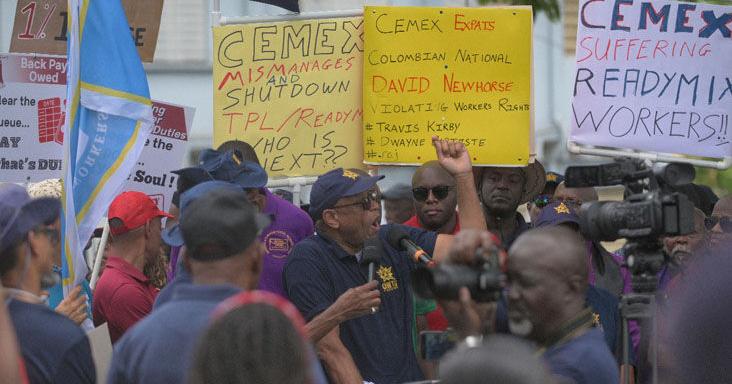
    On this year’s May Day commemorative march, which started from the Oilfields Workers’ Trade Union (OWTU) headquarters in San Fernando’s Circular Road and ended at Harris Promenade, Joint Trade Union Movement (JTUM) president Ancel Roget delivered a series of key updates for Trinidad and Tobago’s labor movement, sharing promising news on the long-shuttered Pointe-a-Pierre refinery and ongoing wage negotiations.

    Roget, who also leads the OWTU, told assembled workers that the years-long campaign to restart the 2018-closed refinery is in its final stages, with a reopening now within close reach. Once operational again, he emphasized, the facility will bring critical employment opportunities to more than 4,000 skilled and semi-skilled workers, delivering broad economic benefits to working people across the entire nation.

    The labor leader credited progress on the refinery restart to the union movement’s strategic engagement with national governance, pointing to the collaborative work with La Brea MP Clyde Elder, Point Fortin MP Ernesto Kesar, and Labour Minister Leroy Baptiste. Roget stressed that he maintains full confidence in his allies within the current government and parliament, calling on all union members to stand firm in solidarity with representatives pushing for worker interests at the national level.

    His comments align with recent remarks from Energy Minister Dr Roodal Moonilal, who told attendees at the United National Congress’ national congress Saturday that multiple entities have formally expressed interest in the refinery restart program, with new inquiries emerging as recently as April 24.

    Roget used the May Day platform to push back against former prime minister and former energy minister Stuart Young, accusing him of seeking to undermine the current government’s work. He issued a clear warning: if any actor attempts to derail the government’s work to advance national prosperity and progress, the country’s trade unions are prepared to launch public, on-the-ground campaign actions in response. “Leave the Government alone to conduct the business in the interest of the people of Trinidad and Tobago,” Roget said, pushing back against criticism of the administration’s efforts.

    Addressing speculation around the union movement’s strategic approach, Roget responded to critics who had questioned his public silence on key issues in recent months. He explained that the movement often pursues private, behind-the-scenes advocacy to deliver results, noting that a lack of public comment does not equal inaction. “Sometimes not because you’re not hearing us saying something publicly, it does not mean we are not representing privately. We are but we have to be strategic…we are very focused and our eyes remain on the prize,” he explained.

    On the topic of wage negotiations, Roget outlined significant progress for public sector workers, noting that a 10% wage adjustment has already been secured for members of the Public Services Association (PSA) and the National Union of Government and Federated Workers (NUGFW), delivered through the persistent advocacy of the union-aligned representatives. For outstanding negotiations with other unions, Roget confirmed that JTUM has scheduled a May 13 meeting with Labour Minister Baptiste, where union representatives will present their proposals and enter formal discussions. While he declined to share a fixed timeline for concluding all remaining talks, Roget gave a firm assurance to workers that every outstanding negotiation will be settled in favor of labor.

    This year’s May Day march carried the official theme of “advancing the workers’ agenda,” designed to center the needs of all working people across Trinidad and Tobago regardless of sector or affiliation. Roget emphasized that the most important element of the day is participation to protect worker rights and working conditions, rather than the size of the crowd. Still, turnout for the 2024 march was notably lower than 2023’s event, including a complete absence from the Trinidad and Tobago National Nursing Association (TTNNA). TTNNA’s absence came in protest of the fact that regional health authority workers, who remain on 2013 salary scales, did not receive the 10% wage increase granted to PSA workers, a point confirmed by Stuart.

    Roget closed his remarks with a political appeal to members, urging them to retain their religious values and to never support a return of the People’s National Movement (PNM) to government. Representatives from a range of major national employers including T&TEC, PowerGen, NP, The University of the West Indies, the University of Trinidad and Tobago, NTA, YTEPP, TTPWU, TIWU and MTS did participate in the event.

  • Ramdeen: Money to fix roads, buy meds

    Ramdeen: Money to fix roads, buy meds

    Trinidad and Tobago’s state-owned National Gas Company (NGC) has announced a major strategic reallocation of its $700 million corporate social responsibility sponsorship budget, shifting funds away from cultural and community event sponsorships toward urgent public needs including road repairs, hospital medication stock, public servant salaries, and national social safety net support. The announcement was made by NGC Chairman Gerald Ramdeen during a recent gas supply contract signing ceremony with Houston-based energy firm EOG Resources at Port of Spain’s Hyatt Regency.

    Ramdeen used the public event to push back against widespread public criticism of the company’s earlier sponsorship cuts, which sparked outrage across Trinidad and Tobago’s cultural sector late last year. At that time, NGC withdrew funding from high-profile local organizations including the Bocas Lit Fest literary festival and multiple top steel orchestras across the country, drawing significant public pushback over the loss of support for community and cultural initiatives.

    In his address, Ramdeen outlined the dramatic operational cost cuts the new NGC board has implemented since taking over leadership, noting that annual operating costs fell from $1.8 billion to $1.1 billion under the current leadership. He also pushed back against common narratives that attribute the company’s doubled profit growth over the past 10 months to restructuring at Atlantic LNG, the country’s major liquefied natural gas export facility. Instead, he credited targeted operational decisions and intentional leadership appointments for the improved financial performance.

    A key example Ramdeen highlighted was the company’s decision to invest in a new truck compressor, a move that resolved long-standing pressure issues that had previously restricted gas flow into Atlantic LNG. Prior to this investment, he noted, infrastructure limitations sometimes prevented NGC from delivering any gas to the export facility. The new compressor has allowed NGC to take full control of gas flows to Atlantic LNG, and to offer compression services to downstream partners under existing transportation contracts. Today, Ramdeen noted, NGC is delivering nearly 200 million standard cubic feet of gas daily to Atlantic LNG, even ahead of the 90 million cubic feet per day of new production expected to come online from upcoming projects next year. This consistent, elevated output has already allowed the country to export an additional full cargo of LNG, generating more than US$50 million in extra revenue for the national treasury at current market prices, he added.

    Ramdeen defended the budget reallocation, noting that the company receives 10 new sponsorship requests daily, and that the $700 million previously allocated to event and group sponsorships will now deliver far greater public benefit by addressing core public needs. “That money will now be taken to fix your roads, to put medicine in your hospitals, to pay your public servants to look after the social net of this country, and that is where it rightfully should be,” he said. The reallocated funds will also be returned to national shareholders, aligning with the company’s new mandate to prioritize broad public good over discrete cultural sponsorships.

    The contract signing with EOG Resources marks a continued partnership between the state-owned NGC and the international independent energy firm, reinforcing ongoing collaboration to expand domestic gas production and export capacity in Trinidad and Tobago.

  • Faris under fire

    Faris under fire

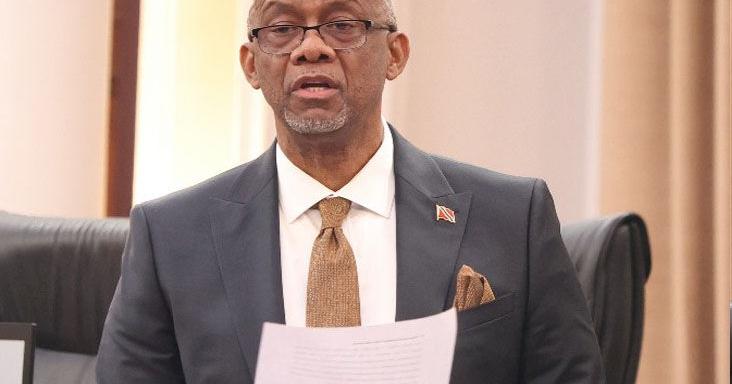
    A major parliamentary controversy unfolded during a recent sitting of the Senate of Trinidad and Tobago, where sitting government ministers launched sharp criticism against opposition Senator Faris Al-Rawi, SC, over his alleged role in a coordinated plan to compromise the integrity of the Public Administration and Appropriations Committee (PAAC). The fallout has led the Senate President to order both Al-Rawi and fellow opposition Senator Janelle John-Bates, a sitting PAAC member, to face investigation by the parliamentary Privileges Committee over allegations of contempt of Parliament.

    The confrontation was opened by Labour Minister Leroy Baptiste, who tabled a motion to adopt the PAAC’s Special Report detailing John-Bates’s misconduct. Baptiste argued that Al-Rawi was fully aware of John-Bates’s status as a PAAC member, and documentary evidence attached to the special report directly and irreversibly implicates the opposition senator in the misconduct.

    The evidence in question centers on a witness statement submitted to the PAAC by former Health Minister Terrence Deyalsingh. In-depth metadata and tracked change analysis of the document reveals that both John-Bates and Al-Rawi contributed extensively to drafting the statement, with Al-Rawi personally carrying out revisions, edits, and in multiple cases overwriting changes previously made by other contributors.
    Baptiste emphasized that Al-Rawi’s participation in the drafting process cannot be written off as an innocent oversight. Instead, he framed the actions as part of a prearranged sequence of coordinated activities that resulted in fabricated and improperly shaped evidence being presented to the parliamentary committee, directly undermining the body’s institutional integrity.

    During the subsequent parliamentary debate, Senate President Wade Mark approved two separate privilege motions put forward by Government Senator and sitting PAAC member David Nakhid. Nakhid’s first motion addressed John-Bates’s conduct, noting that the PAAC’s own special report had concluded she deliberately compromised the committee’s impartiality and took part in what amounts to a conspiracy to commit contempt of Parliament. Nakhid explained that John-Bates violated core parliamentary standards by failing to recuse herself from the committee’s review of Deyalsingh’s evidence, despite having secretly assisted in drafting and advising on the memorandum, and failing to disclose her involvement to the committee. He added that if the PAAC chair had not intervened to stop her, John-Bates would have continued to take part in the committee’s deliberations, raising severe red flags about commitment to impartiality and adherence to parliamentary ethics.

    Nakhid’s second privilege motion targeted Al-Rawi, a senior barrister with decades of legal experience. He pointed out that Al-Rawi’s edits appear repeatedly across the tracked version of Deyalsingh’s statement, and argued that as a Senior Counsel, Al-Rawi should have recognized immediately that John-Bates’s involvement in the drafting process was improper. Citing Erskine May’s seminal Treatise on the Law, Privileges, Proceedings and Usage of Parliament, Nakhid noted that any conspiracy to deceive either chamber of Parliament or its committees is legally defined as contempt of Parliament. He further argued that legal professional privilege cannot be invoked to shield deceptive conduct, alleging that Al-Rawi conspired with Deyalsingh and John-Bates to mislead the PAAC, thereby committing contempt and abusing the parliamentary privilege afforded to his position.

    Following the debate, Senate President Wade Mark formally ruled that both Al-Rawi and John-Bates must be referred to the Privileges Committee for full investigation into the allegations.

    Minister of Housing Anil Roberts joined the growing chorus of government criticism against Al-Rawi, noting that the opposition senator’s actions are particularly troubling given his prior service as Attorney General of the country. Roberts argued that the full weight of the PAAC special report and supporting evidence shows Al-Rawi witnessed a young parliamentary colleague making a serious, admitted error, and chose to do nothing to stop it. He dismissed the entire affair as an undisputed political horror story for the opposition People’s National Movement (PNM), noting that both Al-Rawi and John-Bates are trained attorneys, making their conduct all the more disappointing.

    Roberts further called out Al-Rawi, a third-generation parliamentarian, by referencing public criticism from former PNM General Secretary Ashton Ford, who previously labeled Al-Rawi a non-performer. He stressed that Al-Rawi, a 30-year veteran of legal practice who previously led a high-profile prosecution that secured a witness tampering charge, should have recognized immediately that John-Bates’s actions were improper. Roberts alleged that Al-Rawi not only failed to warn John-Bates that her conduct amounted to witness tampering and urge her to resign and apologize to the PAAC, but actually joined the scandalous conspiracy alongside John-Bates and Deyalsingh to corrupt and undermine the PAAC’s core work.

    Roberts closed by calling on the full Parliament to defend its institutional integrity by demanding both senators resign from office. He directed his call specifically at Al-Rawi, claiming the senior senator refuses to apologize or step down despite the weight of evidence against him. To prevent a repeat of the prior high-profile “Emailgate” parliamentary scandal, Roberts called for an immediate full investigation, including retaining United States legal counsel to compel Google via subpoena to preserve all email correspondence between Al-Rawi, John-Bates, and Deyalsingh stored on the company’s servers. He also urged the Parliament to seek formal legal opinion on whether the conduct amounts to criminal offenses including witness tampering, conspiracy to pervert the course of justice, misconduct in public office, corruption, and fraud.