作者: admin

  • Forever Wealthy Records sets stage for unearthing new talent

    Forever Wealthy Records sets stage for unearthing new talent

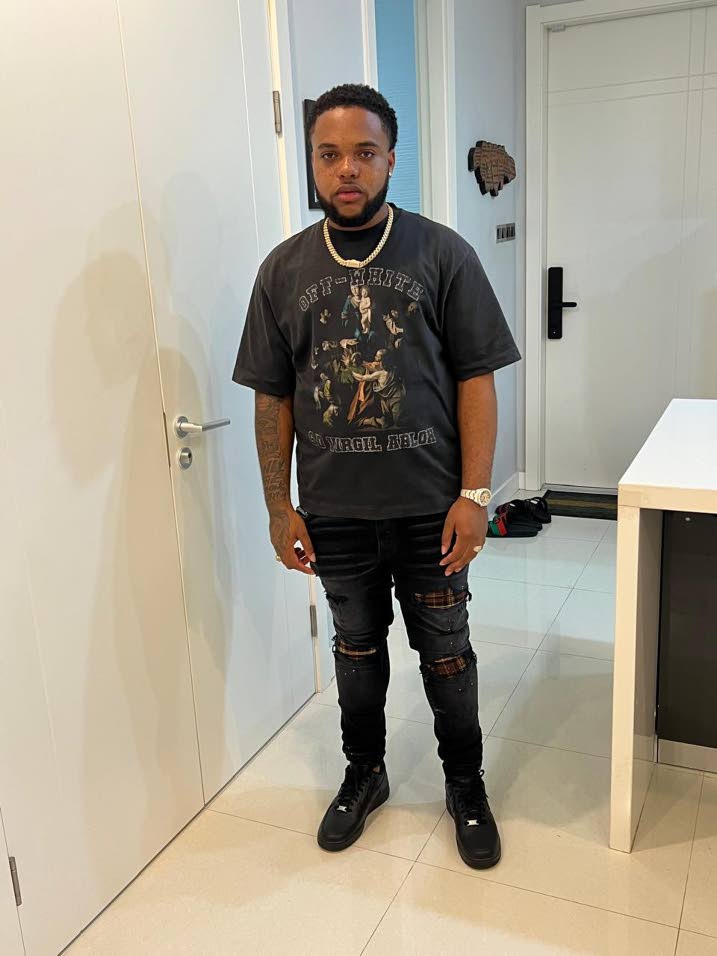
    Long before relocating from Jamaica to the United States, Alemu Reid carried a clear vision: to remove systemic barriers that hold back up-and-coming musicians and open new doors for creative artists who lack access to industry resources. For years, Reid heard consistent accounts of the struggles facing emerging artistes, from limited access to professional recording facilities to gaps in professional career management and strategic marketing support that are essential for breaking into the competitive global music industry.

    After earning specialized degrees in music production, business administration, and entertainment management from Full Sail University in Florida, Reid set out to turn his long-held vision into a tangible, impactful venture. Three years ago, that vision materialized as Forever Wealthy Records, an independent label founded with the explicit mission of centering and nurturing emerging creative talent. Today, at just 24 years old, Reid leads the growing label as it steadily expands its brand footprint and builds collaborative partnerships with both rising artists and established industry acts.

    In an exclusive interview with Jamaica Observer, Reid opened up about the Jamaican roots that shape his work and mission. “From childhood, music has been the core passion of my life,” he explained. “Growing up surrounded by the diverse sounds and vibrant cultural experiences of Jamaica inspired me to build something meaningful, using music as a medium to share authentic, real-life stories with audiences around the world.”

    Reid outlined the three pillars that guide the label’s work: to create a robust, supportive platform for gifted artistes to showcase their work, to craft enduring, timeless music that resonates across generations, and to embody a broader lifestyle centered on personal growth, collective success, and continuous upward mobility.

    To date, Forever Wealthy Records has already built an impressive portfolio of collaborations, working with dancehall star Jamal, production collective Bricky Music, and veteran producer Papi Don, among others. Currently, Reid is expanding the label’s talent development pipeline through a new strategic partnership with RVS Entertainment, which is supporting a new cohort of rising acts including Bricky Music, Prince Salah, and NR Code.

    One of the defining career highlights for Reid so far came last year, when he contributed production work to Jamal’s critically acclaimed debut album *Rated D For Dunce*. Reid produced two standout tracks on the project, *Forever Wealthy* and *All the Time*, and also partnered with Papi Don Music to release Jamal’s popular single *Motivate*. Looking back on his journey building the label from the ground up, Reid noted that while the path has been full of unforeseen challenges, every hurdle has brought meaningful rewards.

    “This journey has been equal parts challenging and deeply rewarding,” Reid said. “It has required constant learning, intentional growth, and unwavering consistency even when we faced obstacles that seemed insurmountable. What makes Forever Wealthy Records stand apart from other labels is our commitment to authenticity, our relentless focus on lifting up new talent, the clarity of our message, and our uncompromising dedication to quality. We are not just creating music—we are building a lasting brand and a legacy that will outlast any single release.”

    The label’s sound draws deeply from its Jamaican dancehall roots, while seamlessly blending modern production techniques and international influences to create a signature style that feels both familiar and fresh. Reid describes the label’s output as melodic, high-energy, and deeply relatable to audiences across different regions and musical tastes.

    Most recently, Forever Wealthy Records dropped its highly anticipated new project, the *Too Force* rhythm, which premiered globally on April 17. The compilation features tracks predominantly from emerging signees and partner artists, including fan-favorite Bricky Music, marking another milestone in the label’s rapid growth and commitment to elevating new voices in the industry.

  • Jada Kingdom reimagines Damian Marley classic in Still Searching visuals

    Jada Kingdom reimagines Damian Marley classic in Still Searching visuals

    Jamaican dancehall sensation Jada Kingdom is continuing her calculated creative ascent with the highly anticipated official music video release of “Still Searching”, the standout track from her recent critically lauded EP ‘Just A Girl In A Money Man’s World’.

    Far more than just a standard visual accompaniment to the single, the new music video acts as an intentional artistic tribute to reggae icon Damian Marley. Kingdom reimagines the core of Marley’s 2001 classic hit through her own unique artistic lens, centering themes of unapologetic confidence, feminine autonomy and personal control.

    This latest release comes on the heels of a prolific stretch of creative output from the rising star. Just one month prior, Kingdom unveiled “New Religion”, a four-track extended play featuring collaborative work from Maryland-based rapper Foggieraw. That project leaned into a more intimate creative perspective, exploring the intricacies of romance, desire and emotional vulnerability. It marked a clear sonic and thematic departure from ‘Just A Girl In A Money Man’s World’, showcasing Kingdom’s commitment to shifting narrative perspectives while broadening her artistic range without sacrificing her signature core voice.

    This career momentum has not been limited to studio recording, either. Kingdom recently delivered a showstopping live set at the Barbados Reggae Weekend Festival, where she was invited to the stage by iconic dancehall heavyweight Popcaan. She is next scheduled to take the stage at Citi Splash in London on May 25, continuing to grow her international live audience.

    ‘Just A Girl In A Money Man’s World has already earned widespread critical acclaim from some of the biggest names in music journalism, including Billboard, NME, Wonderland, Dancehall Mag, and World Music Views, among others.

    Billboard specifically highlighted the EP track “Don’t Talk To Me”, praising Di Genius’ polished production work and Kingdom’s magnetic vocal delivery. The outlet noted that the track continues “the legacy of women in dancehall assuming positions of power and control in their own sex-minded anthems”.

    World Music Views framed the EP as a work that captures an artist acutely aware of the industry systems around her, moving through themes of money, desire and power entirely on her own terms. The Source called the project a bold artistic statement, while Wonderland highlighted that Kingdom “continues to set the standard for the genre”, describing the EP as vibrant, sharply produced, and rooted in nuanced explorations of womanhood and original storytelling, with “Still Searching” standing out as the release’s defining moment. For its part, Dancehall Mag described the full project as “deliberate, controlled, and culturally locked in. The kind of project that doesn’t beg for attention yet commands it”.

    Kingdom’s path to stardom is rooted in the resilience she developed early in life. Born and raised in the vibrant yet challenging 7 Mile Bull Bay neighborhood, specifically Gold Shore Lane, Jamaica, her upbringing was defined by perseverance. Even amid the obstacles her community faced, she found stability and joy in close family bonds. By the age of eight, she had already begun writing poetry, revealing a depth of creative vision that would go on to shape her signature artistry.

    She draws creative influence from a diverse range of legendary artists across genres, including Nina Simone, Diana King, Sade, Minnie Riperton, and Amy Winehouse. From these icons, she absorbed the emotional honesty, narrative skill and musicality that remain central to her sound today.

    Kingdom’s commercial success matches her critical acclaim: she has accumulated more than 150 million total streams on Spotify, 100 million streams on Apple Music, and over 200 million views on YouTube, numbers that stand as a clear testament to her magnetic on-screen and on-stage presence and undeniable star power. Her high-profile collaborations with A-list artists including John Legend, Popcaan, Vybz Kartel, Davido, Skillibeng, and Aluna further underscore her rapidly growing global reach as one of dancehall’s brightest rising stars.

  • Jamaican expert sees one last hope for museums, galleries as world switches to digital

    Jamaican expert sees one last hope for museums, galleries as world switches to digital

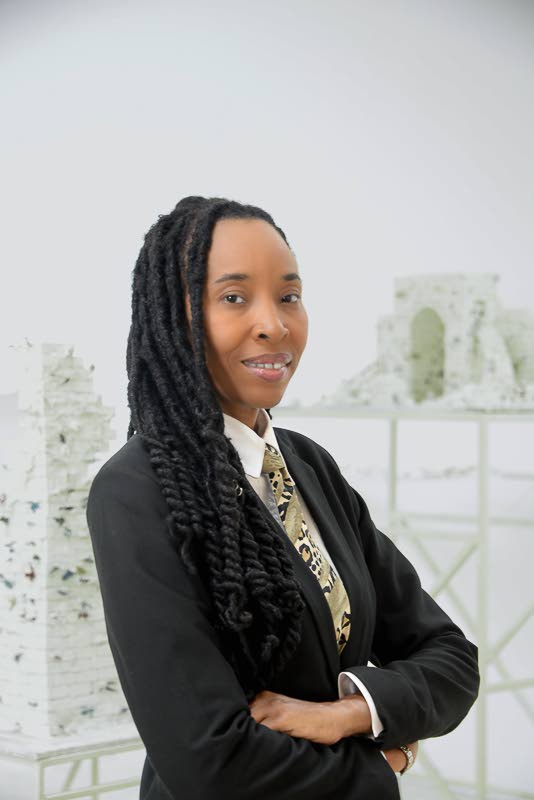
    For decades, museums across the globe have held their position as unshakable stewards of human heritage, preserving collective memory and cultural identity for future generations. Today, however, these iconic institutions find themselves at a crossroads: facing mounting pressure to prove their social relevance, secure sustainable funding, and redefine their public role. But according to Dr Nadine Boothe-Gooden, the dynamic director of the National Gallery of Jamaica, acclaimed cultural strategist and multilingual consultant, museums do not have to accept decline as an inevitable fate.

    In an opinion piece published ahead of International Museum Day on May 18, 2026, in the *Jamaica Observer*, Boothe-Gooden acknowledges that the sector stands at a defining turning point, forced to confront unprecedented disruption driven by digital transformation. She argues that tradition and the inherent value of historic collections alone can no longer guarantee long-term survival. Instead, she outlines a proactive, optimistic roadmap for museums to thrive in 2026 and for decades to come, centered on one core principle: “It will depend on adaptability, leadership, and a willingness to rethink what a museum is and whom it serves.”

    For Jamaica, this conversation carries particular urgency. The island’s museums hold irreplaceable collections that document histories shaped by colonialism, Indigenous resistance, artistic creativity, and post-independence nation building, yet most operate within fragile financial and institutional frameworks. Boothe-Gooden frames the current debate not as a question of whether museums still matter — but whether global communities are prepared to take the bold steps needed to help them endure.

    Through most of the 20th century, the success of a museum was measured by two metrics alone: the size of its permanent collection, and the traditional authority of its curatorial team. That outdated model, Boothe-Gooden argues, no longer meets the needs of 21st century audiences. Contemporary visitors expect museums to engage directly with the urgent issues shaping their daily lives, from racial identity and climate change to social justice and the impact of technology. Younger generations, in particular, reject the traditional model of passive observation and demand active participation in institutional programming and governance.

    In Jamaica, public expectations have already shifted: museums are increasingly called on to act as community educators, core tourism assets, inclusive civic gathering spaces, and trusted custodians of national memory. Yet many local institutions still operate under rigid, outdated governance structures and funding models that stifle innovation and experimentation. Boothe-Gooden emphasizes that survival in the coming years will require museums to transform into more responsive, inclusive, and outward-facing organizations.

    One of the hardest truths the sector must confront is its ongoing financial instability. While public funding remains a critical foundation for museum operations, it is no longer enough to cover growing costs. Across the Caribbean, cultural institutions remain disproportionately vulnerable to sudden economic shocks and shifting political priorities that can cut funding overnight. Globally, Boothe-Gooden notes, the most successful and sustainable museums have already diversified their revenue streams through strategic cross-sector partnerships, targeted philanthropy, public membership programs, digital content offerings, and intellectual property licensing.

    This financial shift requires a fundamental change in institutional culture, she argues. Fundraising and engagement with the private sector must be redefined as tools for long-term sustainability, not compromises to a museum’s scholarly integrity. Museum boards and leadership teams must be empowered to embrace entrepreneurial thinking, while upholding strict scholarly and ethical standards that protect collections and institutional mission.

    For Caribbean museums in particular, climate change stands as one of the most urgent and underdiscussed threats to cultural heritage. Rising sea levels, more frequent extreme weather events, and accelerating environmental degradation put irreplaceable collections, archival materials, and historic museum buildings at constant risk of irreversible damage. Boothe-Gooden stresses that investment in specialized conservation labs, institutional disaster preparedness plans, and large-scale digital documentation of at-risk collections is no longer a discretionary luxury — it is an essential safeguard for collective cultural memory.

    Equally critical to long-term survival is the ongoing global reckoning over representation and institutional voice. Global conversations about decolonizing museum practices resonate with particular power in Jamaica, a nation whose history is inextricably tied to colonial extraction. Boothe-Gooden reminds readers that museums are not neutral spaces: they are sites where narratives of history, structures of power, and collective memory constantly intersect.

    Meaningful survival, she argues, depends on centering the perspectives of communities, artists, and scholars who were historically excluded and marginalized from museum leadership and narrative construction. This change requires far more than symbolic gestures like occasional guest exhibits; it demands structural transformation, shared decision-making authority, and radical honesty about a museum’s complicated historical role.

    Digital transformation, often framed as an existential threat to physical museums, is actually one of the greatest opportunities for the sector to expand its impact, Boothe-Gooden argues. Virtual exhibitions, freely accessible online collections, and dynamic digital storytelling projects allow Jamaican museums to reach diasporic and global audiences far beyond the physical limits of their gallery walls. Crucially, she notes, digital access is not intended to replace the irreplaceable experience of visiting a physical museum — it exists to amplify that experience and make it available to people who could never travel to the institution in person.

    Ultimately, Boothe-Gooden argues, the fate of museums will rise or fall based on the quality of their leadership. The next generation of museum leaders must combine rigorous scholarly vision with strong managerial skill, policy literacy, and global awareness to navigate the challenges ahead. In Jamaica, this priority aligns directly with national development goals that frame culture as a core driver of national identity, social cohesion, and inclusive economic growth.

    Boothe-Gooden closes by emphasizing that the future of museums is not preordained. Institutional decline is not inevitable. What lies ahead for the sector is a clear choice: a choice to adapt to changing expectations or retreat into tradition. To engage with diverse communities and contemporary issues or remain insular and isolated. In 2026 and beyond, she concludes, the museums that survive and thrive will be those that understand their role is not just to guard the heritage of the past — but to be active participants in shaping a more inclusive, equitable future for all.

  • 5 things to consider before you marry a younger man

    5 things to consider before you marry a younger man

    Age-gap relationships between older women and younger men remain a largely unspoken but widely experienced reality for women across the world — one that often sparks quiet curiosity, unvoiced anxiety, and unsolicited outside judgment. Certified life coach and women’s empowerment advocate Marie Berbick-Bailey, who once walked this path herself, draws on personal experience and decades of coaching work to lay out a clear, honest framework for women navigating this high-stakes decision. Years ago, Berbick-Bailey turned down a marriage proposal from a much younger man she shared deep spiritual and personal connection with. Though the pair clicked on multiple levels and felt clear physical chemistry, she walked away after recognizing a fundamental incompatibility: he wanted children, and she had already completed her family. Choosing to prioritize his right to the life he wanted, she made the difficult decision to end the relationship. Today, she guides other women facing a similar crossroads. Many women find themselves unexpectedly falling for a younger man: one who is kind, present, emotionally open, everything they have been looking for. But the discovery of a significant age gap immediately floods the relationship with unasked questions — and societal judgment never fails to insert itself into the dynamic, uninvited. Before allowing outside opinions, fear, or giddy excitement to dictate a decision to marry, Berbick-Bailey outlines five non-negotiable areas women must evaluate first. First, emotional maturity cannot be judged by chronological age. It is not uncommon to see older men act with childish impulsivity while younger men lead with a wisdom far beyond their years. The real question women need to answer is whether their partner can handle the hard edges of life: how does he respond to conflict, stress, and unplanned responsibility? Can he communicate openly during hardship, or does he shut down and withdraw? Marriage will always test a relationship, and a partner needs the emotional capacity to hold steady rather than collapse under pressure. Second, alignment on children is non-negotiable, a foundational pillar of any lasting marriage. Women must ask clear, direct questions early on: does he already have children? Does he want children in the future? If he does, what is his desired timeline for growing a family? For women who are past the childbearing stage biologically or emotionally, this conversation cannot be put off or brushed aside in the name of love. Too many women enter marriage assuming love will bridge this divide, only to find themselves trapped in a painful, irresolvable disagreement years down the line. Alignment on this issue is not a bonus — it is an absolute requirement. Third, financial stability and mindset matter for any partnership, especially when there is an age gap. It is reasonable for a younger man to still be building his career, but he must have clear direction rather than drifting through life. Women need to examine his relationship with money: does he budget, save, and invest for the future, or does he spend recklessly as if there is no need to plan for tomorrow? Marriage requires a true partnership, not a dynamic where one partner carries all the financial responsibility while the other remains dependent. Fourth, shared long-term vision is critical to avoiding future conflict. Women should ask their partners to outline concrete plans, not just vague dreams, for where they see themselves in five to 10 years: what are their career goals, lifestyle priorities, and personal development targets? After hearing his vision, women must honestly ask whether it aligns with their own. If one partner is ready for quiet stability and the other is still chasing new experiences and exploring different life paths, that gap will inevitably grow into tension over time. Love alone cannot sustain a relationship where two people are moving in opposite directions. Fifth, women must honestly assess their own ability to push back against societal perception and stand confident in their choice. It is impossible to ignore that people will comment: there will be whispers labeling the older woman a “cougar”, rude jokes about the age gap, and endless unsolicited advice from people who have no stake in the woman’s happiness. The problem is not the comments themselves — it is whether the woman feels secure enough in her own choice to ignore them. Constantly having to defend one’s relationship to outsiders is an exhausting burden that will erode even the strongest connection over time. One question women almost always want answered but rarely ask aloud is: how much younger is “too young”? Berbick-Bailey says there is no universal one-size-fits-all answer, but offers clear wisdom: the wider the age gap, the greater the need for full alignment on core values, emotional maturity, and current life stage. A five-year gap will create very different practical and social challenges than a 15-year gap, and women must evaluate not just where both partners are today, but where they will be in 10 and 20 years down the line. Berbick-Bailey’s final counsel is straightforward: do not let flattery or excitement push you into a decision you have not carefully considered. It is true that a younger man’s attention can feel refreshing: he often sees a woman’s value, celebrates her, and brings renewed energy to the relationship. But that thrill should never override a careful assessment of core compatibility. Marriage is not held together by physical attraction alone. It lasts because of alignment on core priorities, emotional maturity, shared values, and matching long-term vision. A younger man can absolutely be the right life partner — but only if he is truly ready to be a husband, not just caught up in the excitement of new love. Ultimately, women are encouraged to choose wisely, not just emotionally. Marie Berbick-Bailey is a certified master life coach, women’s transformational coach, ordained minister, author, and motivational speaker dedicated to empowering women to heal, thrive, and live out their personal purpose. She can be reached through her websites www.marieberbick.com and www.marieberbickcoach.com, or via email at marieberbick@gmail.com.

  • Bartlett excited by launch of UWI’s Research Support Fund

    Bartlett excited by launch of UWI’s Research Support Fund

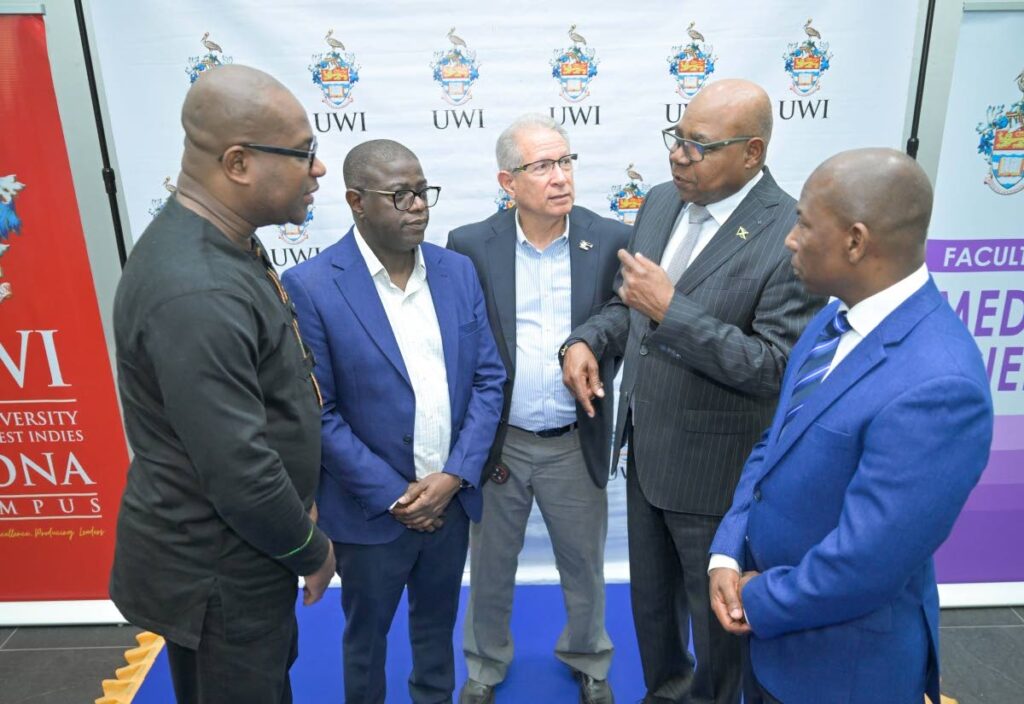
    Jamaica has launched a landmark JMD 100 million Research Support Fund for the Faculty of Medical Sciences (FMS) at The University of the West Indies (UWI) Mona Campus, with government officials framing the initiative as a critical intersection of medical progress, public confidence and national economic growth.

    Speaking as the keynote speaker at the launch event held last Tuesday in St. Andrew, Tourism Minister Edmund Bartlett argued that the fund is far more than a simple injection of capital into academic research. For Jamaica, whose economy relies heavily on tourism as a primary engine of growth, the initiative opens new pathways for aligned development across health science and the travel sector, he said.

    “This represents a launch of possibility, signaling a deeper bond between scientific advancement, societal well-being and the country’s long-term economic future — especially through the lens of tourism,” Bartlett emphasized during his address.

    The minister positioned the new fund within a broader national “tourism, health and resilience” strategy, noting that the sustainability of Jamaica’s $3 billion-plus tourism industry hinges entirely on public trust. Unlike common perceptions that frame tourism as only driven by scenic beauty and cultural attractions, Bartlett pointed out that modern travelers prioritize assurance of safety, stability and proactive health preparedness when choosing destinations.

    “Tourism is not merely about movement of people across borders — it is about confidence,” Bartlett said. “Trust is the decisive factor that drives travel decisions, attracts foreign investment and encourages visitors to return year after year.”

    That foundational trust, he explained, can only be built on a robust public health system, cutting-edge local research capacity and a proven ability to respond rapidly to emerging public health crises. Bartlett defined tourism health resilience as a nation’s ability to anticipate, detect and mitigate health threats without derailing economic stability, a mandate that extends beyond clinical care to protecting tourism workers, supporting resort-dependent communities, and upholding strict standards for food safety, water quality and public sanitation.

    To turn this vision into reality, Bartlett called on FMS and the affiliated University Hospital of the West Indies to take a leading role in strengthening Jamaica’s national destination assurance framework. Medical researchers and clinical professionals, he noted, are the unsung guardians of Jamaica’s global reputation as a safe, welcoming travel destination.

    Demonstrating the Jamaican government’s commitment to the initiative, the Tourism Enhancement Fund (TEF) has contributed JMD 10 million to the overall research fund. The National Health Fund (NHF) has added JMD 35.4 million to the pot, earmarked specifically for advancing research into mental health and maternal health outcomes. Additional funding is expected to come from private sector and institutional partners in the coming months.

    Looking ahead, Bartlett laid out an ambitious vision for UWI Mona to grow into a central pillar of Jamaica’s national health security architecture. His vision includes expanded access to telemedicine for rural and underserved communities, more coordinated emergency response systems, and greater integration of artificial intelligence into clinical care and public health monitoring. He also called for the fund to be used to support ground-breaking interdisciplinary research that connects medical science, tourism policy, data governance and AI ethics, creating a model that can be replicated across small island developing states.

    Through all these efforts, Bartlett stressed, protecting the health of both international visitors and Jamaican citizens remains the core mission — one that is inseparable from sustaining the country’s tourism industry and delivering inclusive long-term national development.

  • Strong, stretched but still standing

    Strong, stretched but still standing

    Every May, communities around the world observe Mental Health Awareness Month, an annual initiative designed to break down long-held stigma around psychological distress, expand public understanding of emotional wellbeing, and motivate people of all backgrounds to prioritize their mental health. This year, clinical experts are turning focused attention to the distinct, overlapping pressures that disproportionately impact women’s mental health – pressures forged by biological shifts, deeply ingrained social expectations, and the unbalanced distribution of domestic and emotional labor across most households.

    Angela Dacres, a licensed mental health counselor, explains that the challenges women face often cut across every domain of daily life, intersecting in complex ways that make consistent emotional wellbeing harder to maintain. For this reason, she argues, intentional awareness and targeted action during Mental Health Awareness Month are especially critical for women navigating these overlapping stressors.

    Unlike many other demographic groups, women’s mental health is tightly intertwined with lifelong hormonal and physical changes that can trigger dramatic shifts in emotional state. From the premenstrual mood fluctuations many face each cycle to the dramatic biological upheaval of pregnancy, postpartum recovery, and menopause, these physiological shifts create consistent emotional vulnerability that is still widely overlooked by both the public and many healthcare providers. Conditions like postpartum depression, for example, are a widespread and serious public health issue, yet they remain widely misunderstood, downplayed, or misdiagnosed, leaving millions of women without the support they need.

    Compounding these biological challenges are unforgiving social norms that demand women maintain high levels of productivity even when they are struggling with physical fatigue, chronic pain, or intense emotional strain. This constant pressure to perform often leads to burnout before many women even recognize they are experiencing distress. Systemic and cultural barriers only make this worse: limited access to affordable mental healthcare, persistent cultural stigma around seeking help for psychological issues, and a widespread lack of structural support leave many women unable to reach out for care even when they recognize they need it.

    One of the most underrecognized contributors to poor mental health among women is the unequal distribution of invisible emotional labor within family units. In the vast majority of households, women still serve as the primary caregivers for children, elderly relatives, and partners, taking on not just physical household tasks but also the full responsibility for managing every family member’s emotional needs. This uncompensated, unseen work – from remembering every family member’s schedule and medical appointments to mediating conflicts between relatives to maintaining the emotional stability of the home – is consistently draining and rarely acknowledged by other household members or society at large. Over time, the constant weight of this responsibility, paired with little to no time left for personal rest or self-care, often leads to chronic stress, clinical anxiety, and a persistent feeling of being overwhelmed.

    Romantic and personal partnerships add another layer of emotional pressure for many women. Social norms often push women into unequal dynamics that require them to take on most of the work of relationship communication, manage a partner’s emotional needs, and balance the expectation of independence with the pressure to prioritize a partner’s goals over their own. This widespread social pressure to put others’ needs before their own leads many women to suppress their own emotions and leave their core emotional needs unmet for years. In more extreme cases, when relationships are marked by conflict or a total lack of mutual support, this persistent imbalance can cause long-term damage to both mental health and self-esteem.

    For women who are parents, the pressure is amplified even further by the pervasive cultural myth of the “perfect mother” that is constantly reinforced through social media and popular culture. Women are bombarded with unrealistic standards for what it means to be a “good mom,” leading to widespread feelings of guilt, crippling self-doubt, and constant unhealthy comparisons to other women. Juggling the demands of parenting with paid work, personal career goals, and maintaining a romantic partnership often feels unmanageable, and without adequate structural or familial support, many mothers end up experiencing chronic emotional exhaustion and social isolation.

    Despite the scope of these challenges, Dacres emphasizes that Mental Health Awareness Month offers a critical, accessible opportunity for women to pause, reflect on their current state, reset their routines, and take intentional action to improve their long-term wellbeing. Meaningful action does not require dramatic overhauls of daily life, she notes: simple, consistent steps can make a profound difference over time. These steps include setting clear boundaries to protect personal time and energy, reaching out for licensed professional support when distress persists, and building intentional support networks with friends, family members, or local community groups who can step in during difficult times.

    Dacres adds that this month is also an ideal time for women to prioritize realistic, guilt-free self-care that fits their individual schedules and needs. Whether that means prioritizing extra rest, adding regular low-impact movement to a routine, keeping a mood journal to process emotions, or simply taking small daily breaks without feeling guilty for putting their needs first, every small action counts. Educating oneself on common signs of chronic stress and burnout can also help women catch distress early before it develops into more serious mental health conditions.

    Ultimately, Dacres explains, the goal of engaging with Mental Health Awareness Month as a woman is not to make dramatic, unsustainable changes to one’s life. It is to build consistent, small habits that support long-term emotional wellbeing. By openly acknowledging the unique challenges women face and taking intentional steps to address them, women can turn this annual awareness month into an opportunity to not just cope with daily stress, but to build lasting emotional resilience and create a healthier, more sustainable balance across all areas of their lives.

  • The law relating to changing a woman’s name

    The law relating to changing a woman’s name

    A soon-to-be-married woman in Jamaica recently reached out to prominent Jamaican women’s rights advocate and senior attorney Margarette May Macaulay with a pressing legal question, sparked by conflicting guidance from her wedding officiant and her married boss. The woman explained that her boss, who recently wed, had chosen to combine her maiden name with her husband’s surname without using a hyphen – a choice that let her avoid the hassle of reissuing all her official identity documents, from driver’s licenses and passports to tax registration numbers. Eager to follow this same path ahead of her own wedding, the woman hit an unexpected roadblock when her counsellor, who also serves as the pastor officiating her marriage, insisted that combining two last names without a hyphen is not legally recognized in Jamaica, and refused to accommodate her stated wish.

    In a clear, authoritative response published for the public, Macaulay immediately debunked the pastor’s claim as entirely incorrect. Under Jamaican law, which follows common law principles that remain unchanged by national legislation on this issue, Macaulay confirmed that every woman marrying in Jamaica holds full, exclusive legal right to choose how she structures her surname after marriage. This includes four fully valid options: retaining only her original maiden name, adopting solely her husband’s surname, adding her husband’s surname to her own with a hyphen, or adding the husband’s surname without a hyphen. All of these choices are equally legally binding, the attorney emphasized.

    Macaulay further clarified that the long-standing social tradition of women automatically adopting their husband’s full surname was never a legal requirement. Instead, it was a cultural norm rooted in historical systems that suppressed the rights of married women, a practice that has been rendered obsolete as fundamental human rights principles have become the global and national standard. Nowhere in Jamaica’s Marriage Act is there any mandate requiring a married woman to change her surname at all, nor any rule that forces women to hyphenate combined surnames. The question of what name a woman uses for her legal identity after marriage is solely her decision, Macaulay stressed, and all public and private institutions – from government agencies to schools, hospitals, and commercial entities – are legally required to honor that choice. Any person or organization that denies a woman this right is acting unlawfully, violating her fundamental legal autonomy.

    For women who have already been forced into an unwanted surname arrangement due to similar misinformation, Macaulay outlined a clear remedy: the woman can legally adjust her name through a deed poll process. If the pastor’s incorrect legal guidance led to this unnecessary extra step, Macaulay noted, the pastor who spread the wrong information is responsible for covering all associated costs, including the deed poll fee and any charges for updating identity documents.

    Macaulay closed by emphasizing that this legal right extends to all women, whether they are about to marry or have been married for years. No individual, regardless of their social standing or professional authority, has the right to dictate a woman’s choice of surname. Once a woman begins using the combined or single surname she selected immediately after her wedding, that becomes her legal identity for life, unless she chooses to make a further change down the line. She also urged the woman to share this clarification with her pastor, to prevent him from spreading misinformation and violating the rights of other future brides in the future.

    This response was published via the All Woman advice column of the Jamaica Observer, where Macaulay answers public legal questions focused on women’s rights. Macaulay, a veteran attorney, is also a Supreme Court mediator, notary public, and longstanding advocate for women’s and children’s rights in Jamaica.

  • Tied to my ex

    Tied to my ex

    A woman facing an agonizing romantic dilemma recently reached out to relationship counselor Rev. Christopher Brodber for guidance, opening up about the complicated secret she has carried throughout her two-year engagement.

    The woman explained that she began seeing her current fiancé as a rebound relationship after ending things with her high school sweetheart, who she left after he was unfaithful to her. Though her ex never wanted a long-term commitment after their breakup, she maintained an intimate connection with him, in large part because of the deep emotional bond she formed with his son, whom she helped raise as her own during her original relationship with her ex. Now that her fiancé has proposed and made his long-term intentions clear, she finds herself torn between the steady, serious partnership he offers and the lingering attachment she still holds to her ex.

    Unsure of how to proceed, she asked Brodber whether she should confess her ongoing affair to her fiancé immediately, or wait and end things with her ex before revealing her deception.

    In his response, published on Jamaica Observer’s “Get on The Counsellor’s Couch” advice column, Brodber emphasized that any relationship built on deception stands on an unstable, shaky foundation. Drawing a parallel to the biblical teaching of building one’s life on solid rock rather than shifting sand, he noted that hidden dishonesty will eventually erode any trust partners build, and can wash away all the time, energy and love a person has invested in a relationship.

    Brodber’s core recommendation was that the woman must confess the full truth to her fiancé, no matter how frightening that outcome may be. He acknowledged that her honesty will almost certainly cause deep pain and anger, and may even lead her fiancé to end the engagement. But he stressed that the woman owes her fiancé, who has loved her enough to propose marriage, the respect of full transparency. Even if the relationship ends, he said, doing the right thing will leave her with a clearer conscience.

    Beyond calling for full disclosure, Brodber also encouraged the woman to do deep self-reflection to unpack why she has risked a stable, committed relationship for a casual, unstable connection with an ex who betrayed her once and has no interest in a future together. He suggested that the root of her confusion likely comes from unresolved emotional baggage from past relationships or childhood experiences, such as low self-esteem, unaddressed fears, or unhealthy emotional dependency.

    To work through this uncertainty, Brodber suggested that stepping away from both relationships entirely to spend time alone would help her gain clarity, heal, and rebuild her life on a foundation of honesty. He pushed back on the common idea that she can “have the best of both worlds,” reminding her that actions always have consequences: just as the Bible teaches, you reap what you sow, and sowing deception will eventually produce a harvest of heartbreak.

    Broken down into clear, actionable steps, his final guidance centered on radical integrity and intentional choice. First, he told her to make a clear decision about her future: if she cannot give up the casual relationship with her ex, she must end things with her fiancé immediately. Maturity, he noted, requires making hard choices and accepting the consequences of your actions. Second, when she speaks to her fiancé, she should create a safe, intentional space to confess, prepare for any reaction, offer a full apology, and ask for forgiveness regardless of whether he chooses to stay in the relationship. He also recommended that she have support on hand in case the conversation becomes volatile.

    Closing his advice, Brodber framed marriage as a sacred, weighty institution that requires full commitment and honesty to thrive. “Every treasure can bring trouble if it isn’t cared for properly,” he wrote, ending with a prayer that the woman finds the wisdom and courage to choose the honest path she needs to take.

    Readers can submit their own relationship questions to Rev. Brodber’s “Get on The Counsellor’s Couch” column via e-mail at allwoman@jamaicaobserver.com.

  • Destiny Huggins crowned Miss Labour Queen 2026 in St Kitts and Nevis – WIC News

    Destiny Huggins crowned Miss Labour Queen 2026 in St Kitts and Nevis – WIC News

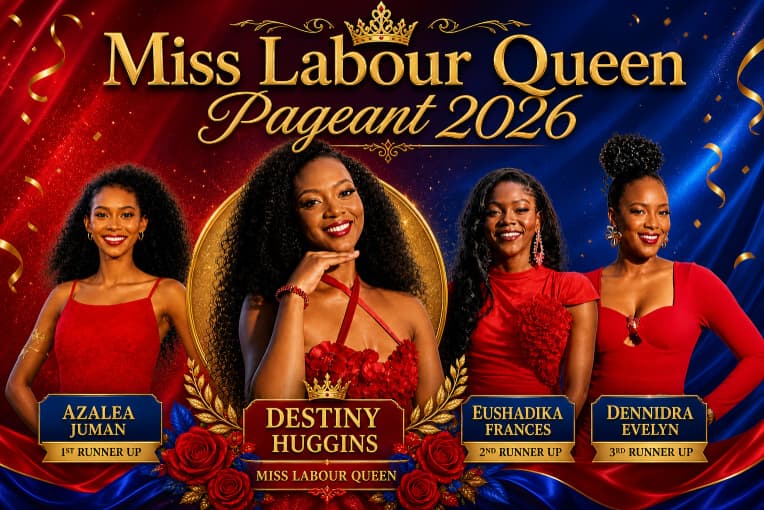
    On a vibrant Saturday night at St Kitts and Nevis’ iconic Carnival Village, the 2026 Miss Labour Queen Pageant concluded with Destiny Huggins, representing Constituency Four, taking home the coveted national title. Competing against seven other talented contestants from every constituency across the federation, Huggins secured the crown with a final score of 1152.5 points, outperforming her competitors across all judged segments of the competition.

    Azalea Juman of Constituency One finished as the pageant’s first runner-up with a total score of 1108.5 points, while Eushadika Frances from Constituency Three claimed second runner-up with 1081.5 points. Rounding out the top four finalists was Dennidra Evelyn of Constituency Six, who earned third runner-up honors with 1062.5 points. The full group of competitors also included Denlisa Liburd (Constituency Two), Raynecia Hodge (Constituency Five), Dejhanee Moses (Constituency Seven), and Jewel Smith (Constituency Eight), all of whom brought standout energy and skill to the annual event.

    Judges evaluated contestants across four core competitive categories: a motivational speech segment, a talent showcase, creative wear, and formal evening wear. The official crowning ceremony was led by Dr. Terrance Drew, who serves as both Prime Minister of St Kitts and Nevis and Leader of the St. Kitts-Nevis Labour Party, the organizer of the pageant. Drew was joined on stage by outgoing 2025 Miss Labour Queen Shakaylia “Star” Tatem, who passed the legendary title to the new champion.

    In an official statement shared following the event, the St. Kitts-Nevis Labour Party extended praise to every participant: “Congratulations to all the phenomenal queens who graced the stage. You all represented strength, beauty, and the true spirit of Labour with pride. The bar has been raised, the legacy continues, and the future is shining even brighter. Until next year, the crown reigns supreme.”

    Deputy Prime Minister and Minister of Foreign Affairs Dr. Denzil Llewellyn Douglas also celebrated the competitors in a public Facebook post, emphasizing the pageant’s core mission of empowering young women across the federation. “Each contestant represented her constituency with pride, strength, and excellence. You are all winners in your own right, and your participation continues to uplift and empower young women across our Federation,” Douglas wrote.

    As a centerpiece of the country’s annual Labour Day celebrations, the Miss Labour Queen Pageant serves a dual purpose: it honors the legacy of the labour movement while providing a public platform for young women to showcase their talents, leadership, and personal growth. This year’s pageant coincides with a full slate of Labour Day activities, including a traditional wreath-laying ceremony, a public holiday march scheduled for May 4, and a requiem mass. 2026 also marks the 93rd Annual Conference of the St. Kitts-Nevis Labour Party, adding extra significance to this year’s lineup of national events.

  • ‘Partnership between peoples’ hailed as 524 Vincies get Taiwan bursaries

    ‘Partnership between peoples’ hailed as 524 Vincies get Taiwan bursaries

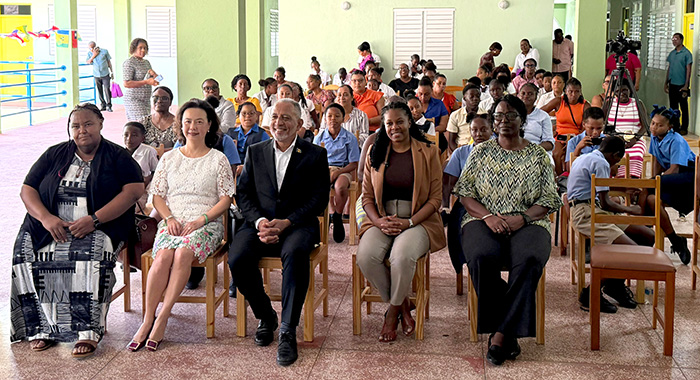
    At a celebratory presentation ceremony held on the island of Bequia, senior officials from St. Vincent and the Grenadines (SVG) and Taiwan marked a decades-long bilateral partnership with the disbursement of EC$320,000 in educational bursaries to 524 local students spanning every academic level.

    The need-based and merit-based awards are distributed under the long-running Taiwanese Human Resource Development Programme, a sustained education-focused initiative that dates back to 1998. This year’s cohort of recipients includes students attending primary, secondary, tertiary and technical-vocational institutions across SVG, including learners from outlying islands such as Bequia, Mustique and the Southern Grenadines. Senator Lavern King, Minister of State in SVG’s Ministry of Education, broke down the distribution of awards: 244 primary school students, 190 secondary school students, and 90 tertiary or technical-level learners have been selected for this year’s support. King emphasized that the bursary funds are earmarked to reduce financial barriers for students, covering essential costs ranging from transportation, school meals and uniforms to learning supplies, so that learners can attend classes without financial anxiety. Recipients are chosen either for outstanding academic achievement or for demonstrating remarkable resilience in overcoming personal and economic hardship, with King noting that every selected student has fully earned their award. She added that the SVG government’s commitment to inclusive education shapes the selection process, with targeted support prioritized for students with disabilities and learners from low-income, marginalized backgrounds, in line with the policy goal of leaving no student behind.

    speaking at the ceremony, Taiwan’s ambassador to SVG Fiona Huei-Chun Fan outlined the enduring impact of the program, noting that more than 12,500 Vincentian students have benefited from the initiative over its 28-year run. The program aligns with Taiwan’s broader priority of investing in youth development and skills training, she explained, noting that “young people are not only vital to our present but also the bridge to our future.” Beyond the local bursary program, Fan added, Taiwan runs a suite of additional academic opportunities for Vincentian students, including youth employment and skills training schemes as well as full-degree Taiwan Scholarships. To date, 321 SVG students have completed bachelor’s, master’s or doctoral degrees in Taiwan, studying high-demand fields ranging from agriculture and healthcare to culinary arts and technology. Fan encouraged this year’s bursary recipients to pursue future study opportunities in Taiwan, highlighting the island’s global leadership in advanced technology manufacturing to motivate learners. She noted that Taiwan ranks as the world’s 22nd largest economy and sixth in global competitiveness, producing 13% of the world’s laptops and an estimated 90% of global AI servers. Taiwan also manufactures roughly 20% of the individual components found in every iPhone, including the most critical and high-value parts: the processor that powers device performance, the modem for cellular connectivity, Wi-Fi chips, semiconductor components, and the premium camera lenses that serve as the phone’s “eye,” all designed or produced in Taiwan.

    SVG Prime Minister Godwin Friday, who also serves as Member of Parliament for the Northern Grenadines constituency that includes Bequia, framed the educational partnership as far more than a formal government-to-government agreement. He emphasized that the program builds people-to-people ties that deepen bilateral cultural connections and outlast changes in political leadership. “It is a partnership between peoples,” he said. “When relations transcend governments and leaders and get down into the people… most importantly through education… that is a cultural deepening and a relationship that transcends just the level of government.”

    Friday described investment in education as the most critical offering that the state and society can make to young people, noting that developed knowledge and personal ability, built on natural talent, are the most valuable assets any person can hold. He called on local educators to embrace their role as a vocation, pointing out that teaching shapes lives permanently: negative classroom experiences, thoughtless comments or dismissive treatment can leave lifelong scars on young learners, while supportive, engaged mentorship leaves a lasting positive impact. “What you do stays with them for life,” he said, urging teachers to approach their work with the seriousness and respect it deserves. He also offered guidance to parents, encouraging them to prioritize engaging with their children’s schoolwork, even when busy: if caregivers show disinterest in a child’s work, he noted, that child is likely to lose interest in their own learning.

    Friday stressed that the partnership with Taiwan holds particular strategic value for SVG, which lacks large natural resource reserves such as oil, gold and minerals. For SVG, human capital is the nation’s most valuable core resource, he said, and long-term support from Taiwan has been critical to developing that asset. “We don’t have gold and silver, we don’t have oil, we don’t have any of those natural resources,” he said. “But we have the best, the most important one — the intelligence, the good health of our people, the goodwill of friends who would help us, like Taiwan, to achieve what we want to do in education.”

    Friday expressed SVG’s deep gratitude for Taiwan’s 28 years of continuous educational commitment, which comes alongside 45 years of formal diplomatic ties between the two sides. He called for the partnership to continue for decades more, noting that the program builds the foundational human capital that SVG’s national development depends on.