作者: admin

  • $3m for 30 teachers in 14 schools

    $3m for 30 teachers in 14 schools

    In a celebratory Teachers’ Day gathering held Wednesday at the Montego Bay Convention Centre, Edmund Bartlett — Jamaica’s Minister of Tourism and Member of Parliament for East Central St James — unveiled a new JMD $3 million grant programme designed to uplift 30 educators across the 14 public schools falling within his constituency, kicking off a year of activities marking three decades of his sustained investment in local education.

    Under the terms of the new initiative, each selected educator will receive an equal grant of JMD $100,000 to pursue specialized tertiary training in any academic subject of their choice at any accredited higher education institution across Jamaica. Bartlett emphasized that the grants form a core component of his longstanding effort to acknowledge the underrecognized contributions of teaching professionals and remove barriers to their professional growth.

    “For the past 30 years, we have continuously awarded scholarships and provided institutional support to every one of the 14 schools in this constituency,” Bartlett shared with attendees, noting that the programme has already helped hundreds of educators advance their skills and career trajectories. When pressed for details about two other annual flagship education programmes in the constituency — the Primary Exit Profile (PEP) awards held each July and the Tertiary Scholarship Programme typically awarded in August — Bartlett declined to share specifics, saying that announcements would be made closer to each event’s schedule. He did confirm that support for these programmes would continue, and expressed pride in the decades of impact the constituency’s education initiatives have already delivered.

    Bartlett used the occasion to highlight the extraordinary adaptability and commitment Jamaican educators demonstrated throughout the COVID-19 pandemic, praising them as “the technology that transforms children into nations.” He went on to challenge educators to bring that same resilience and innovation to the national recovery effort following Hurricane Melissa, noting that the work of rebuilding and repositioning the country for long-term growth will depend heavily on a skilled, adaptable education workforce.

    “We saw what you accomplished during COVID: when there was no electricity for internet connectivity, you walked kilometers to students’ homes to deliver lessons. You risked your own safety to keep learning going,” Bartlett said. “You also quickly upskilled to master cutting-edge tools — artificial intelligence, virtual and augmented reality, and new digital knowledge-sharing platforms — that were completely new to many of you. That same ingenuity and flexibility is exactly what we need right now as we recover from Melissa. We aren’t just building back what was lost; we’re building forward, building better, and building a more resilient nation — and all of Jamaica’s young people have to be part of that process of reimagining our future.”

    Beyond recovery work, Bartlett stressed that educators hold the critical responsibility of reshaping public perceptions of Jamaican culture that currently threaten the country’s core tourism industry. He argued that shifting narratives of violence, crassness and disrespect that deter some international visitors can only be changed through intentional education that rewrites behavioral norms and builds a culture of mutual respect.

    “The future of Jamaica’s stability, the future of law and order in this country, rests once again with our education system and our teachers,” he added.

    Adding his support to the call, newly appointed Tourism Enhancement Fund (TEF) Chairman Ryan Parkes echoed Bartlett’s vision, urging educators to help build a new, people-centered niche within Jamaica’s education system that aligns with the nation’s evolving tourism strategy. Parkes noted that Jamaica must move beyond its longstanding “sun, sand and sea” tourism brand to build a new global competitive advantage rooted in the quality of its human capital.

    “Our tourism minister is currently leading the charge to reimagine our entire tourism product, an effort that has been branded Tourism 3.0,” Parkes explained. “This is an incredibly timely shift. There has never been a better moment than right now for educators to step into this role and help drive the transformation of our tourism economy.”


  • My biggest mistake!

    My biggest mistake!

    West Indies cricket, a sport woven deep into the cultural fabric of the Caribbean, has found itself at the center of a dramatic political reversal from one of the region’s most prominent cricket advocates. Ralph Gonsalves, the former Prime Minister of St. Vincent and the Grenadines and a past chair of the Caricom cricket subcommittee, has publicly acknowledged he made a wrong call in supporting the current Cricket West Indies (CWI) President Dr. Kishore Shallow, and now says the regional game was far better managed during Dave Cameron’s tenure as the top CWI official.

    Cameron, a Jamaican administrator who led CWI for six years between 2013 and 2019, has long been a divisive figure in Caribbean cricket circles, drawing fierce criticism from many quarters including Gonsalves himself during his time in office. But in a revealing interview with the Jamaica Observer, Gonsalves said his perspective has shifted dramatically amid what he sees as ongoing stagnation and mismanagement under Shallow’s leadership.

    Shallow’s journey to the CWI presidency began in 2019, when he ran as vice-president alongside presidential candidate Ricky Skerritt. The pair defeated the incumbent Cameron, with Gonsalves throwing his full public support behind their campaign at the time. Back then, Gonsalves praised Shallow and Skerritt as forward-thinking, modern Caribbean leaders with progressive plans to revitalize the regional sport, calling them serious leaders rooted in Caribbean culture. Shallow stepped into the presidency in March 2023 after Skerritt’s departure, and recently announced he will not run for re-election when his term ends in 2028, bringing his total tenure on the CWI executive to almost a decade when he leaves office.

    Over the past two years, however, Gonsalves has emerged as one of Shallow’s most vocal critics, repeatedly calling for his resignation over the sharp decline of the West Indies men’s national team – a call that grew louder following the side’s heavy Test defeat to Australia in Jamaica last summer. Gonsalves has also argued that Shallow should have stepped down from the CWI presidency immediately after he won a seat in St. Vincent and the Grenadines’ general election and was appointed the country’s Tourism Minister, citing a conflict of commitment.

    Speaking to the outlet, Gonsalves did not mince words about his change of heart. “I was wrong about Shallow. I thought that he had the depth to carry this thing to see what this issue was about and he turned out in disrespect to possess a shallow perspective,” he said. “You say to me ‘but Ralph, you supported him’ and I said to you, yes and a man is entitled to at least one mistake in his life.”

    Gonsalves leveled harsh criticism at the direction of CWI under Shallow’s leadership, arguing the governing body has become overly deferential to global cricket power dynamics dominated by what he called “Indian cricket imperialism,” tied to the massive Indian television audience that gives the Board of Control for Cricket in India outsized influence over the International Cricket Council (ICC). He claimed CWI now derives its legitimacy from the ICC rather than the Caribbean people it is meant to serve, and that regional member associations are locked in a patron-client relationship with CWI leadership rather than focusing on growing the sport at the grassroots level.

    He dismissed all institutional reforms pushed through under Shallow’s tenure as superficial, saying changes such as adjusting the presidential term length from two to three years and minor tweaks to voting rules are minor, esoteric changes that have no meaningful impact on the actual health of Caribbean cricket.

    Looking back at Cameron’s leadership, Gonsalves said there is no question that West Indies cricket performed far better during the Jamaican’s time in charge. Though Gonsalves was a prominent critic of Cameron during his presidency, he now believes Cameron has reflected on missteps from his tenure, and his creative leadership would be a marked improvement over the current administration. While Gonsalves stopped short of explicitly calling for Cameron to run for the presidency again in the next CWI election, he made clear he sees the former leader as a far better fit for the role than Shallow and his current executive team.

    Gonsalves added that even at his most confrontational with Caribbean governments, Cameron never disrespected cricket professionals the way the current CWI leadership has, and noted that Cameron remains deeply committed to the success of West Indies cricket. Photos accompanying the interview capture Shallow, Cameron, Gonsalves, and the July 2025 Test match against Australia that underscored the national team’s ongoing struggles, where young batsman Mikyle Louis was bowled by Australian fast bowler Josh Hazlewood during the day-night third Test at Kingston’s Sabina Park.

  • Turning pages into play

    Turning pages into play

    Last Friday, the sprawling green lawns of Devon House became a vibrant, story-filled gathering space as the Supreme Ventures Foundation (SVF) hosted its much-anticipated second annual Reading Picnic, a signature community event marking Jamaica’s Reading Week. For the second consecutive year, this initiative brought 120 seven to nine-year-old Grade 3 students from across Kingston and St Catherine together for a full day of immersive learning, literary exploration, and child-centered fun.

    Participating students came from four local institutions: Waterford Primary School, Bridgeport Primary School, Melrose Primary & Junior High School, and John Mills Primary & Junior High School, all arriving ready to dive into a curated lineup of activities designed to reframe reading as an adventure rather than a chore. With experienced media personality Krystal Tomlinson at the helm as host, the entire event was built around a single core mission: nurturing a lifelong, lasting passion for reading among Jamaica’s younger generation.

    The day’s schedule packed a diverse range of literacy-focused activities to suit every young learner’s interests. Traditional oral storytelling sessions drew quiet, focused groups of wide-eyed children, while interactive reading competitions brought out friendly excitement and energetic engagement. The most beloved session for many attendees was the dynamic ‘Act-it-Out’ segment, where children got to step into the roles of their favorite story characters and bring narratives to life through movement and performance.

    The cultural highlight of the afternoon came from the acclaimed Ashe Company, which delivered a vibrant, dynamic reimagining of beloved traditional Anancy Stories, weaving Jamaican cultural heritage into the day’s literary programming. Chloleen Daley-Muschett, assistant vice-president for public relations and corporate affairs at Supreme Ventures Limited (SVL), shared that the children’s unscripted reactions to the day’s activities reinforced the value of this experiential approach to literacy promotion.

    “The children’s reactions today were absolutely priceless,” Daley-Muschett noted. “Watching their eyes light up during the Anancy storytelling sessions, and seeing the sheer joy they brought to Act-it-Out, was a powerful reminder of what happens when you make reading an experience rather than an exercise.”

    Beyond the planned activities, the event leaned on personal connection to inspire young readers, with more than a dozen members of the SVL leadership team stepping forward as volunteer guest readers to work directly with small groups of students. Senior leadership joining the effort included Heather Goldson, SVF director and SVL chief marketing officer; Stefan Miller, chief executive officer of SV Gaming; and Omar Dattadeen, assistant vice-president of marketing at SVL.

    To add extra excitement for the young attendees, a lineup of prominent Jamaican public figures and SVL brand ambassadors also joined the literacy drive. Professional race car driver and JustBet Ambassador Fraser McConnell, Tishauna Mullings of NexxStepp Educational Services (named SVF 2025 Community Hero), and national team netballer Adean Thomas all spent time reading one-on-one with students and joining in the day’s interactive games, making the experience feel even more special for the children in attendance.

    Goldson emphasized that the SVF Reading Picnic fills a critical role in supporting Jamaican children’s long-term success. “Literacy is the foundation upon which every Jamaican child’s future is built, and at Supreme Ventures Foundation, we believe that when a child falls in love with reading, we unlock a door to possibility that can never be closed,” she explained. “The SVF Reading Picnic was designed not just to promote literacy, but to show these children that reading can be an incredibly fun and interactive experience.”

    By the time the event wrapped up, every student carried home more than just new favorite stories and warm memories of a day outdoors. Full from picnic refreshments and gifted custom goodie bags full of reading-related treats, the children departed after a day that successfully merged literary education with playful, interactive community engagement. The event once again demonstrated how experiential, community-led programming can deliver the critical message of literacy empowerment in a supportive, fun, and unforgettable environment that resonates with young learners.

  • Story time with Canadian high commissioner

    Story time with Canadian high commissioner

    On the annual observance of Read Across Jamaica Day, a Jamaican basic school received a special visit that left young learners grinning from ear to ear. Mark Berman, Canada’s sitting High Commissioner to Jamaica, traveled to Jamaica House Basic School to take part in a community-focused reading session aimed at boosting early literacy engagement across the island.

    During the interactive event, Berman did not simply lead a silent reading activity—instead, he read stories aloud to the gathered students, stopping regularly to ask questions, invite discussion, and draw shy learners into the fun. Throughout the session, he repeatedly emphasized the transformative power of building strong reading skills during early childhood, noting that a solid literacy foundation opens doors to lifelong academic and professional opportunity. Beyond encouraging participation, Berman also worked to nurture a lasting, personal love of books among the students, framing reading not as a mandatory school task but as an exciting lifelong adventure.

    The visit was not limited to group activities and discussion. To leave a tangible, long-lasting impact on the school’s literacy programs, Berman presented a donation of hundreds of new storybooks covering a range of topics and reading levels, alongside essential classroom school supplies that will support daily learning for students and teachers alike. School administrators noted that the donation will fill critical gaps in the school’s library collection, giving students more options to explore new interests and practice their reading skills outside of structured lessons.

    The event aligns with ongoing literacy promotion efforts across Jamaica, which aim to reduce early childhood literacy gaps and ensure all young learners have access to the resources and support they need to thrive. For the students of Jamaica House Basic School, the day offered both a memorable interactive experience and a lasting boost to their learning environment, wrapping up with groups of happy students posing with their new books and the visiting commissioner.

  • Children at St Ann’s Bay Hospital, Tarrant Primary get love from KFC Jamaica

    Children at St Ann’s Bay Hospital, Tarrant Primary get love from KFC Jamaica

    As Jamaica observes Child Month 2026, which centers the critical importance of children’s mental and emotional well-being, KFC Jamaica has turned the annual Read Across Jamaica Day into a heartfelt, community-focused initiative that reaches vulnerable young people in two very different settings: hospital paediatric wards and local primary schools.

    Far from a standard promotional event or one-off reading activity, the fast-food chain’s programme was designed around a core goal: to build safe, welcoming spaces where children can set aside stress, participate freely in shared activities, and develop positive associations with reading and connection. This year’s outreach brought the joy of storytelling and small acts of kindness to two groups of children: young patients receiving care at St Ann’s Bay Hospital, and Grade 2 and 3 students at Tarrant Primary School in St Andrew.

    At St Ann’s Bay Hospital, KFC Jamaica Marketing Officer Kandine West led a team of staff to host an interactive reading session in the ward’s dedicated playroom, specifically tailored to meet the needs of children who did not choose to be in a healthcare setting. The team prioritized creating a low-pressure, relaxed atmosphere that allowed young patients to go at their own pace, open up about their thoughts, and engage with stories on their own terms. Beyond the interactive reading experience, the KFC team also left lasting donations for the ward: a new collection of children’s books, plus food vouchers for the young patients, their attending nurses, and accompanying parents.

    In an interview after the session, West explained that bringing the Read Across Jamaica Day initiative to a hospital was a fully intentional choice. “This is not a place children choose to be, so it was important for us to create a moment where they could feel relaxed, engaged and simply enjoy themselves,” West said. “Even if just for a little while, if we can bring a sense of comfort and a few smiles that means a lot. Especially during Child Month, when the focus is on mental and emotional well-being, these small interactions can make a meaningful difference.”

    Debbie Ann Henry, operations manager at St Ann’s Bay Hospital, praised the initiative for its genuine care and positive impact on young patients. “Moments like these make a meaningful difference for our children. The team created an environment where they could relax, participate and simply enjoy the experience. We truly appreciate the time and care that went into this visit,” Henry said.

    The outreach continued at Tarrant Primary School in St Andrew, where KFC Jamaica Marketing Manager Andrei Roper led interactive reading and discussion sessions for second and third-grade students. Designed to nurture public confidence and a lifelong love of reading, the sessions encouraged active participation and open dialogue, aligning with the Child Month focus on holistic well-being.

    Roper emphasized that supporting children goes far beyond just encouraging reading skills. “Reading is an important part of that, but so is creating an environment where our children feel seen, heard and confident enough to participate. Especially during Child Month, those small moments of encouragement and connection can have a lasting impact,” Roper said.

    This year’s Read Across Jamaica Day engagement is just one part of KFC Jamaica’s broader commitment to 2026 Child Month activities. Roper confirmed the chain has invested JMD $1 million into the National Child Month Committee’s nationwide annual programme of child-focused initiatives. Beyond this financial contribution, KFC Jamaica maintains a long-standing, on-the-ground commitment to youth development across Jamaica, with ongoing programming spanning education support, mentorship opportunities, and direct community outreach that prioritizes meaningful connection with the communities the chain serves.

  • Cashless system for Manor Park vendors

    Cashless system for Manor Park vendors

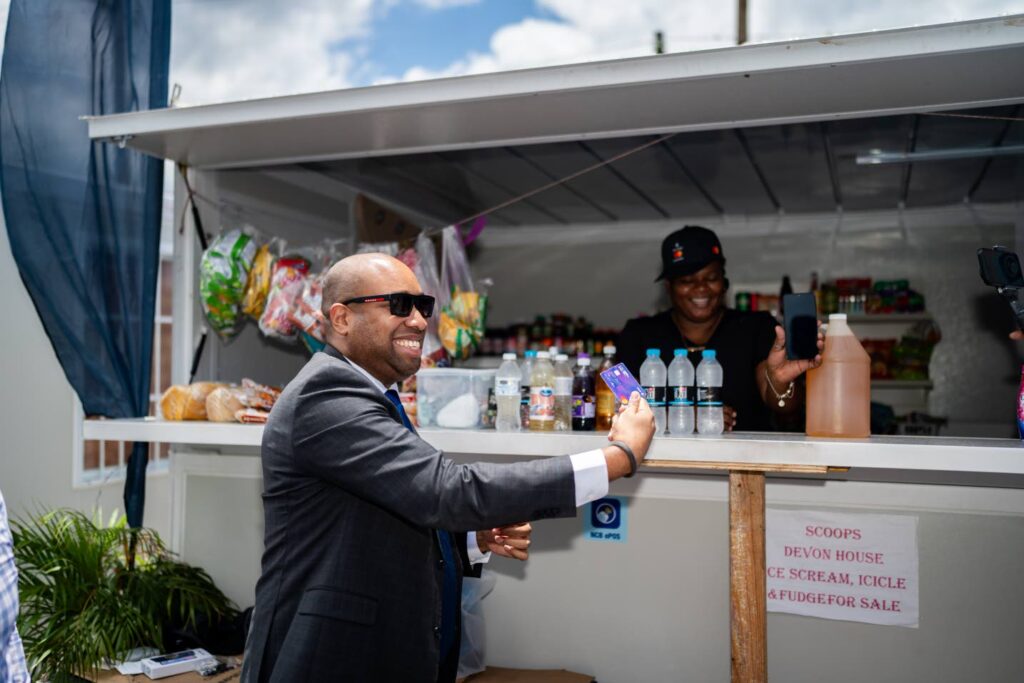
    A landmark digital payments initiative aimed at empowering micro, small and medium-sized enterprises (MSMEs) and informal vendors has officially launched at the busy Manor Park/Constant Spring bus park in Jamaica, drawing praise from government officials as a transformative step toward modernizing local commerce.

    Delano Seiveright, Member of Parliament for St Andrew North Central and State Minister in the Ministry of Industry, Investment and Commerce, called the roll-out a game-changing development for the area’s small business ecosystem, framing it as a core component of broader efforts to upgrade the region’s transport and commercial infrastructure.

    Led by global payment technology leader Mastercard in collaboration with a coalition of public and private sector partners, the initiative is designed to close the digital inclusion gap for small and informal traders. By simplifying access to electronic payment processing, the project aims to bring unbanked and underbanked vendors into the formal digital economy, opening new growth opportunities that were previously out of reach.

    This expansion follows a successful pilot program that launched in craft markets across Montego Bay, St James. Building on that early momentum, the program is now being rolled out to additional public market spaces and tourism-linked commercial zones across the entire island of Jamaica.

    During an on-site visit to the bus park Tuesday, Seiveright emphasized that the digital push aligns perfectly with ongoing plans to revitalize the entire Manor Park commercial district, designed to improve experiences for both local vendors and the thousands of customers that pass through the hub daily.

    “This is exactly the direction we need to go,” Seiveright explained during the event. “We are supporting our small operators with practical tools to grow their businesses, improve operational efficiency, and access a wider customer base — including international visitors who increasingly rely on cards and digital payment methods.”

    Strategically positioned as a key transit gateway connecting Kingston to Jamaica’s northern and north-western regions, the Manor Park bus park sees consistent foot traffic from both local commuters and out-of-town tourists. Seiveright noted that a growing share of these visitors now prefer cashless transactions, making digital payment access a critical competitive advantage for local vendors.

    To enable immediate adoption, Jamaica’s National Commercial Bank (NCB) has provided pre-activated mobile point-of-sale devices to a first cohort of participating vendors, allowing them to begin accepting digital payments right after onboarding. Leading regional telecommunications provider Digicel is supporting the project with network connectivity and on-site technical assistance to ensure seamless activation and ongoing trouble-free use for participating traders.

    Seiveright personally took part in a demonstration transaction with a local vendor during the launch, showcasing the system’s intuitive design and fast processing speed to attendees.

    The digital enablement program runs in tandem with major physical infrastructure upgrades to the Manor Park bus park and adjacent vending area, which are being delivered through a structured public-private partnership framework. Seiveright confirmed that a large share of the physical renovation work has already been completed, with additional construction and improvement projects currently in progress.

    Major landscape enhancement works, scheduled to be carried out by Pan Jamaica Group Limited — one of Jamaica’s largest corporate entities and a major property owner in the Manor Park district — are set to kick off before the end of this month.

    The broader Manor Park redevelopment initiative is spearheaded by Seiveright, private sector leader Richard Lake and the Lake Group, with core support from the Lisa Hanna Foundation. Additional strategic backing has been committed by PanJam, the Tourism Product Development Company (TPDCo), the Kingston and St Andrew Municipal Corporation (KSAMC), and leading corporate partner Wisynco Group Limited.

    Seiveright stressed that combining large-scale physical infrastructure upgrades with digital capability building creates a holistic, people-centered model for community and commercial development, rather than the piecemeal approaches common to many public space renewal projects.

    “We’re not just fixing the space physically. We’re also equipping the people who operate within it to compete in a more modern economy,” Seiveright said, urging participating vendors to embrace the new platform and establish themselves as early innovators in digital commerce across Kingston’s growing commercial sector.

    “This is an opportunity to fundamentally improve how business is done here — making operations more efficient, more secure, and more attractive to a far wider range of customers,” he added.

  • DBJ takes commitment to the classroom

    DBJ takes commitment to the classroom

    On the annual observation of Read Across Jamaica Day, the Development Bank of Jamaica (DBJ) brought its corporate social responsibility commitment to life by sending a team of trained volunteers to two local educational institutions: St Jude’s Primary School and Mona High School. The initiative was rooted in a clear mission: to ignite a lifelong passion for reading among young Jamaicans, open young minds to new ideas, and help students understand how continuous learning can unlock personal and professional opportunities long into the future.

    During their time on both campuses, DBJ volunteers stepped out of their usual professional roles to join students directly in classroom-based literacy activities. Rather than sticking to passive reading, they led dynamic, interactive sessions that encouraged students to ask questions, participate in discussions about story themes, and connect the texts they explored to their own lives. Volunteers read aloud to groups of students, modeling expressive reading and helping younger learners build fluency, while also facilitating peer-to-peer reading activities that boosted student confidence.

    Beyond interactive engagement with the student body, DBJ made tangible contributions to support long-term literacy development at both schools. The institution donated new reading materials and learning resources to the schools’ existing library hubs, expanding the collections available to students and strengthening the capacity of the schools’ resource centers to support teaching and independent reading.

    Charlene Wong, DBJ’s Manager of Public Relations and Corporate Communications, framed the event as a core investment in Jamaica’s future, noting that “Today’s readers are tomorrow’s business owners, innovators, and leaders.” She expanded on this perspective, explaining that literacy development extends far beyond basic reading and writing skills. Reading fosters creativity, builds self-assurance, sharpens critical reasoning abilities, and hones strong communication skills—all foundational competencies that will empower the next generation to build successful careers and contribute meaningfully to national development.

    Wong reaffirmed DBJ’s long-standing dedication to supporting community initiatives that invest in Jamaican human capital, aligning this literacy outreach with the bank’s broader mission of driving inclusive, long-term economic growth across the island. By investing in young people’s literacy today, the bank is laying the groundwork for a more skilled, innovative, and prosperous Jamaica tomorrow.

  • SCHOOLYARD BRAWLS

    SCHOOLYARD BRAWLS

    A wave of growing student indiscipline that has shaken Jamaica’s education system in recent weeks has reached St Elizabeth Technical High School (STETHS), triggering an immediate campus closure for most students on Thursday and leaving families uncertain about when regular classes will resume.

    The shutdown came after a day of escalating violent incidents at the Santa Cruz-based institution on Wednesday, according to unofficial sources familiar with the situation. Multiple physical altercations broke out across the campus, one of which reportedly involved a bladed weapon, leaving one student injured. The escalating chaos forced school administrators to call on local law enforcement to intervene to restore order mid-morning.

    Following the initial confrontation, additional fights flared up across the school grounds—some even unfolding directly in front of senior school leaders, sources confirmed to the Jamaica Observer. In a formal advisory sent to parents and guardians Wednesday, STETHS Principal Keith Wellington announced the suspension of classes, noting the move was implemented to safeguard the well-being of every student and staff member on campus, and to give administrators time to restore order and implement new disciplinary measures. When reached for comment by the Observer Thursday evening, Wellington declined to share further details, stating he would not address the situation publicly until his internal handling of the crisis was complete.

    Only students scheduled to sit external examinations were permitted to access the campus after the shutdown. Deputy Superintendent Owen Brown, operations head of the Jamaica Constabulary Force’s St Elizabeth Division, confirmed that police worked alongside school leaders and responding parents to bring the unrest under control. No students were taken into custody following the incident, Brown confirmed, adding that the situation was resolved through on-site coordination between law enforcement, school officials, and family members.

    Brown emphasized that STETHS is one of many local institutions participating in the police’s School Resources Officer (SRO) Programme, which places dedicated law enforcement officers on campus to prevent violence and mediate student conflicts. “One core goal of the SRO initiative is to teach students to work through their disagreements through dialogue rather than physical confrontation,” Brown explained. “We help them understand how to resolve conflicts amicably, instead of turning to violence.”

    The senior police official reaffirmed the force’s commitment to tackling school violence across the parish, extending beyond Wednesday’s incident at STETHS. “We have promised to work with every school in St Elizabeth, not just STETHS, to help foster orderly, safe learning environments for all students,” he said.

    Brown also called on parents to take a leading role in teaching conflict resolution skills to young people, noting that family socialization lays the foundation for how children behave in public spaces. “The home is the first and most important place children learn how to interact with others. We are urging parents to be more intentional about teaching basic social skills, especially how to handle disagreement,” he said. “A difference of opinion doesn’t have to end in a fight. If adults model healthy conflict resolution for children, they will carry those skills into their school and community interactions.”

    Wednesday’s shutdown is just the latest in a string of deadly and disruptive violent incidents at Jamaican schools since the start of 2024. At least two students have been killed in conflicts with peers this year, with multiple other assaults, fights, and bullying cases reported across the island. In March, 16-year-old Devonie Shearer was fatally killed during a dispute at Ocho Rios High School in St Ann; a 17-year-old classmate has been arrested and charged in connection with his death. Just last month, 13-year-old Seaforth High School student Kland Doyle was fatally stabbed during a confrontation with a peer in Morant Bay, St Thomas, resulting in the arrest of three other schoolboys. Also last month, Jamaica College drew widespread public criticism after a video showing one student being beaten by two classmates went viral on social media—the second high-profile incident of violence at the institution in as many months.

  • Big battle ahead!

    Big battle ahead!

    The global movement pushing for reparations for the transatlantic slave trade and centuries of colonial exploitation is entering a historic new phase, with Caribbean advocates launching their most coordinated, cross-international campaign to date, according to senior Caribbean political figure Dr. Ralph Gonsalves. The former prime minister of St. Vincent and the Grenadines, who now serves as opposition leader in his home country and senior advisor to the global Repair Campaign, laid out the movement’s year-long action plan during a speaking engagement at the Jamaica Observer Press Club this Wednesday, outlining a strategy that expands regional advocacy into major global diplomatic, legal, and academic institutions.

    For decades, Caribbean nations have led calls for reparatory justice from Britain and other Western European powers that built their economies through the forced enslavement of millions of Africans and the systemic exploitation of Caribbean colonies. What began as regional advocacy has gained rapid international traction in recent years, with new partnerships and institutional backing turning a scattered movement into a cohesive global push.

    Gonsalves emphasized that the moment has come for disparate advocacy groups and international institutions to align their efforts to build unstoppable momentum. In remarks that framed the movement as a convergence of multiple streams of work, he noted, “I want to see all these tributaries be conjoined into a mighty river towards reparatory justice. So that is CRC, the Caricom entities, they are the authoritative bodies. But other entities have to feed into them and work with them, and engineer the canals for the streams to come and build the bridges.”

    The movement is already building on a landmark diplomatic win achieved earlier this year: a UN General Assembly resolution adopted on March 25, co-sponsored by Ghana, Caricom, and a bloc of African nations, that formally designated the transatlantic slave trade and racialized chattel slavery “the gravest crime against humanity” and explicitly called for global action to deliver reparatory justice. That resolution opened the door for a series of high-profile engagements planned across the rest of the year.

    The next major milestone is scheduled for June, when Ghana will host an international conference bringing together the African Union, civil society groups, and other global stakeholders to map out the long-term strategic direction of the movement. Following that gathering, the Caribbean Community (Caricom) Reparation Commission (CRC) is set to advance an unprecedented academic and outreach partnership with the University of London, designed to engage British political, economic, religious, and social elites directly on the issue. Gonsalves confirmed that planning for the high-level London gathering is already underway, with the Repair Campaign working alongside the CRC to finalize logistics.

    In July, regional leaders will gather for the Caricom Heads of Government meeting in St. Lucia, where the Caricom Prime Ministerial Subcommittee on Reparations will present a full progress update and request new strategic guidance from regional heads. September will bring two key global opportunities: first, the 25th anniversary of the landmark Durban Conference Against Racism in South Africa, which produced the Durban Declaration and Programme of Action — the foundational international document that first formally recognized slavery and the transatlantic slave trade as crimes against humanity, and which remains a core legal pillar of modern reparation advocacy. Later that month, Caribbean leaders will bring the issue back to the UN General Assembly, where they will leverage months of diplomatic progress to push for deeper global institutional commitment to reparatory justice.

    The most politically contentious moment of the year is expected to come in November, when the Commonwealth Heads of Government Meeting (CHOGM) convenes in Antigua. Gonsalves framed the summit as a critical “staging post” where English-speaking Caricom nations will directly confront Britain over the issue of reparations. He warned that British officials and their key allies — including Canada, Australia, and New Zealand — are already pushing to block reparations from being added to the official CHOGM agenda, setting the stage for a high-stakes diplomatic battle in the months leading up to the summit.

    Notably, Gonsalves pointed out that King Charles III, head of the Commonwealth, has already publicly stated that the issue merits open discussion, making any attempt to sidelined the topic untenable. “The head of the Commonwealth, [King] Charles [III], already said that the time has come for this issue to be discussed and ventilated, so you can’t keep it off the agenda,” he added.

    The Repair Campaign, which launched in 2022 founded by Irish businessman Denis O’Brien, works in formal partnership with the Caricom Reparation Commission to support research, public outreach, and advocacy efforts across Caribbean nations affected by centuries of slavery and colonial exploitation. Today, key global institutions including the United Nations, the African Union, and UNESCO have all grown their involvement in the push for reparatory justice, marking a major shift from the movement’s early days as a regional cause.

  • Appeal denied

    Appeal denied

    Two men serving life sentences for a deadly 2011 home invasion in Westmoreland, Jamaica, have seen their final attempt to overturn their convictions rejected after the island’s Court of Appeal refused permission to introduce previously undisclosed police evidence that they claimed would prove their innocence.

    Carvel Hines and Bruce Lamey were found guilty by a seven-member jury at the Westmoreland Circuit Court in February 2017 on charges of murder and wounding with intent. The crimes dated back to January 27, 2011, when the pair allegedly forced entry into the home of 72-year-old Bernice Clarke and her 67-year-old husband Clement in Clark’s Town. Prosecutors argued the attack was carried out that night shortly after 8 p.m., leaving Bernice dead and Clement wounded by gunfire. He survived only by playing dead after the shooting.

    In March 2017, the court handed down dual sentences: 18 years of hard labor for the wounding conviction, and a life term for the murder conviction, with a requirement that each man serve a minimum of 33 years behind bars before becoming eligible for parole. All sentences were ordered to run concurrently. An initial application for leave to appeal was turned down in 2018, and the pair launched a second bid that included a motion to admit the new evidence from the 2011 police station log.

    The appeal panel, made up of three senior judges, heard the application across two hearings in December 2023 and May 2024, and issued a final ruling rejecting the motion. In their ruling, the judges issued an unqualified apology to both the convicted men and other parties for the multi-year delay in delivering their decision.

    The sole eyewitness to the crime was Clement Clarke, who survived the attack. He told the trial that he heard a loud impact on his front door, went to investigate, and found Hines — a man he already knew — standing inside his hallway, armed with a gun. Clarke grabbed a machete to defend himself, but Hines shot him, forcing him to drop the weapon. As he retreated to his bedroom, Hines continued firing and followed him inside, then shot Bernice Clarke. Lamey, who Clarke also knew by sight, joined Hines in the bedroom and also opened fire on the 72-year-old, according to the eyewitness testimony. Clarke fell on top of his wife and pretended to be dead until the two men left the property, then called police for help. He was treated for his wounds at a local hospital, but Bernice Clarke died from her injuries.

    At the original trial, both Hines and Lamey denied any involvement in the attack and claimed they were not present at the scene. Hines argued he was with his partner in St Ann on the night of the murder, while Lamey stated he was a father of three and would never commit such a violent crime.

    The fresh evidence the pair sought to introduce was a single line entry from the Bethel Town Police Station diary, written the day after the murder by a detective corporal, that noted the killing was believed to be a reprisal attack. Attorneys for the men argued that the prosecution’s failure to disclose this diary entry before and during the trial violated its legal duty to share potentially exculpatory evidence. They contended the entry undermined the credibility of Clement Clarke’s identification of the two men as the attackers, and would have opened new avenues of investigation for the defense that could have changed the trial’s outcome.

    Prosecutors pushed back against these claims, noting that the defense never requested access to the police station diary before or during the 2017 trial, and that the document was available for the defense to obtain if they had sought it out. The Crown also argued that the line about a reprisal motive was purely speculative, not factual, and would not have impacted the jury’s assessment of Clarke’s identification of the defendants.

    In their ruling dismissing the application, the appeal judges agreed with the prosecution’s assessment. They noted that the diary entry was not a record of direct sensory observation by the officer, but merely a note of an unsubstantiated belief about the motive, meaning it could not qualify as credible factual evidence. Even if it had been introduced at trial, the panel ruled, the entry would not have changed the jury’s guilty verdict. The court added that the core information from the entry was already brought to the jury’s attention as part of the defense’s original case, so it could not qualify as new material that meets the legal standard for admission on appeal. For these reasons, the application to admit the fresh evidence was refused.