作者: admin

  • Searles man acquitted of 2019 robbery of fast-food employee

    Searles man acquitted of 2019 robbery of fast-food employee

    After a months-long legal proceeding that wrapped up with a jury deliberation, a Christ Church resident has been cleared of all wrongdoing in a high-profile 2019 armed robbery case targeting a KFC outlet.

    Alvin George Chung, a 59-year-old resident of the Searles Plantation community, had staunchly maintained his innocence from the moment he was charged. The prosecution alleged that on New Year’s Eve 2019, Chung held up KFC employee Llewelun Walthurst, stealing a total of BDS $69,881 and US$1,259 in cash that belonged to the fast-food chain.

    Over the course of the 12-week trial, both the defense and prosecution laid out their competing cases before a nine-member jury. Veteran defense attorney Kaviar Callender led the legal team for Chung, mounting a rigorous challenge to the prosecution’s evidence. Senior State Counsel Kevin Forde argued the case on behalf of the state, presenting the government’s narrative of the alleged robbery.

    After reviewing all testimony and evidence presented during the trial, the nine-member jury returned a not guilty verdict, acquitting Chung of the single robbery charge. Presiding Justice Pamela Beckles formally confirmed the verdict in court, directly notifying Chung that he was no longer in legal custody and was free to leave the courthouse.

    The case marks the conclusion of a years-long legal process that hung over Chung’s head since the alleged incident nearly four and a half years ago, ending with the jury’s finding that the prosecution failed to prove guilt beyond a reasonable doubt.

  • Saint Lucia to host CARICOM 10K in July

    Saint Lucia to host CARICOM 10K in July

    The Caribbean Community (CARICOM) is gearing up for one of its most anticipated annual regional sporting events, as the island nation of Saint Lucia prepares to welcome elite distance runners from across the bloc for the 2025 CARICOM 10K Road Race. Scheduled for Sunday, July 5, the race will officially open the festivities of CARICOM Week, building up to the bloc’s landmark Fiftieth Regular Meeting of the Conference of Heads of Government set to convene the following day on CARICOM Day, July 6. Saint Lucia Prime Minister Phillip J. Pierre will serve as the host of the high-profile leadership summit.

    While the exact route for the competitive 10K course has not yet been released to the public, event organizers have confirmed that local runners will get a rare opportunity to test their speed and endurance against top regional competitors, fostering cross-community athletic connection ahead of the intergovernmental meeting. The race is being organized through a collaborative partnership between the CARICOM Secretariat, Saint Lucia’s Ministry of Education, Youth Development, Sports, and Digital Transformation, and the Saint Lucia Athletics Association.

    In addition to the flagship 10K competition, the 2025 event has expanded its programming to include a suite of supplementary activities designed to engage runners of all ages and abilities. Alongside additional competitive running categories, the schedule now features a dedicated mile race for youth and junior athletes, as well as community-focused walking events to boost public participation.

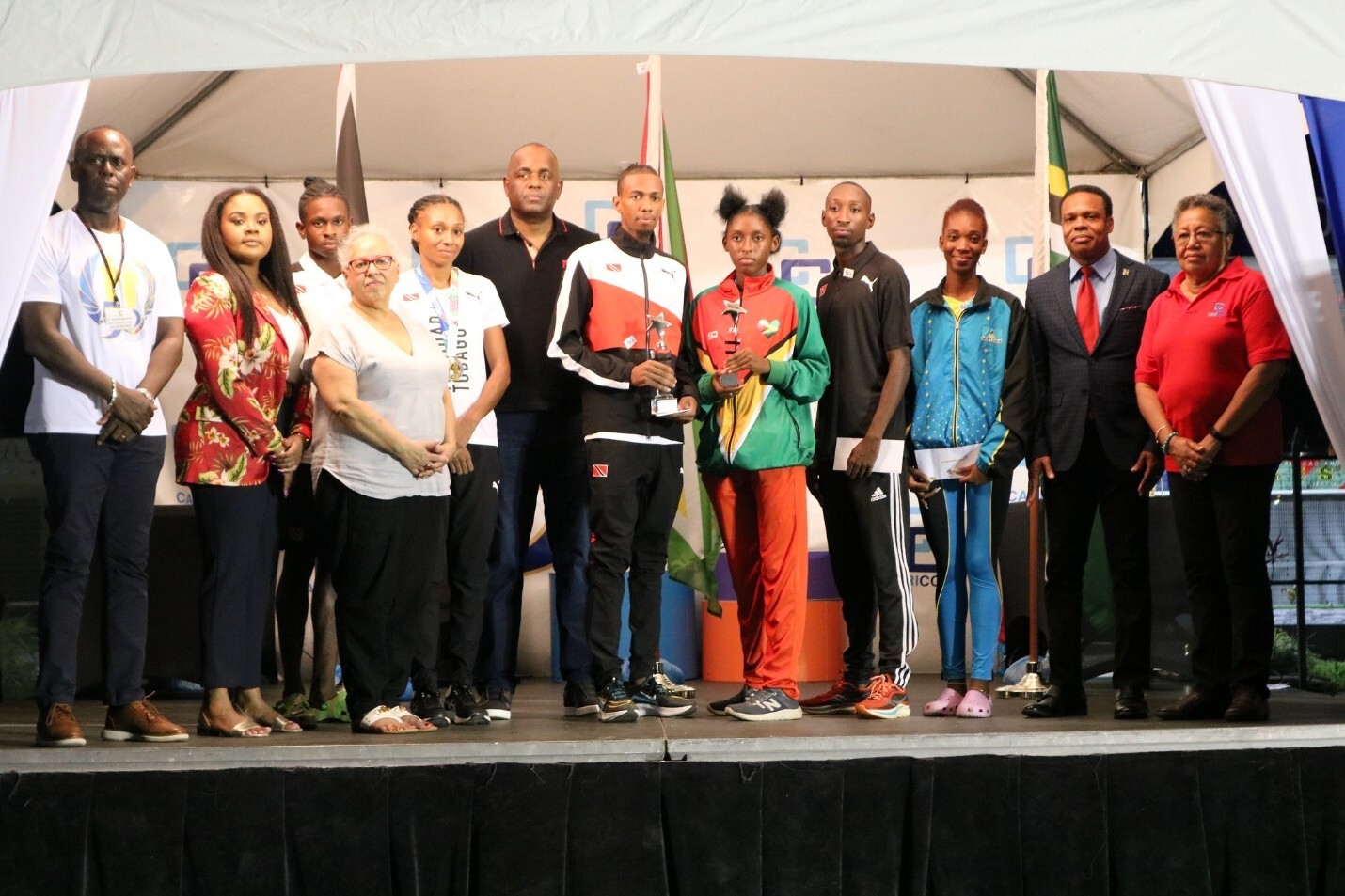
    Prizes for the 10K match the generous structure that has been in place in recent years: both the men’s and women’s overall champions will take home a cash prize of US$1,000, along with a prestigious trophy. The top male athlete will be awarded the CARICOM Chairman’s Trophy, while the top female winner will receive the CARICOM Secretary-General’s Trophy. As of 2024, both of these titles are held by athletes from Trinidad & Tobago, who swept the podium at the 2023 event hosted in Jamaica. Nicholas Romany claimed the men’s top spot, while Alexia John took first place in the women’s division, solidifying Trinidad & Tobago’s dominance in the previous running of the race.

    Notably, the 2024 iteration of the race, which was originally slated to be hosted by Grenada, was forced to be canceled outright due to the destructive impact of Hurricane Beryl, making the 2025 Saint Lucia event a highly anticipated return to the annual calendar.

    For host nation Saint Lucia, the race carries extra local pride: a handful of homegrown athletes have claimed top honors in the event’s history. Zepherinus Joseph was the most recent Saint Lucian to take overall victory, clinching the win back in 2011. Earlier national champions include Victor Ledgers, who earned the top spot in 2005, while Michael Biscette claimed a national medal for the island in 2022. At the 2023 Jamaica race, Saint Lucian athletes Laura-Lynn Limery and Jason Sayers placed sixth in the women’s division and ninth in the men’s respectively, with Limery having previously taken third place overall in the 2023 competition.

  • OP-ED: Portsmouth and green fuels – A northern industrial hub for hydrogen, ammonia—and medical oxygen

    OP-ED: Portsmouth and green fuels – A northern industrial hub for hydrogen, ammonia—and medical oxygen

    As the Caribbean nation of Dominica lays the groundwork to scale up its domestic geothermal energy capacity, a new long-term industrial vision has emerged for the northern coastal city of Portsmouth, centered on building a pilot green fuel production facility powered by zero-carbon geothermal electricity. This proposal, outlined in the final installment of a three-part investigative series by independent contributor McCarthy Marie, frames the green fuels project as a secondary strategic priority that would only move forward after Dominica meets its core national energy goal: expanding geothermal power to replace polluting diesel generation and speed up electric vehicle adoption across the island.

    Marie notes that a viable geothermal resource has already been identified in the northern region of Dominica, creating the foundation for industrial development. If the country successfully expands its initial 10 megawatt geothermal capacity to 20 megwatts and strengthens its national grid to support new large-scale energy loads, the green fuels pilot becomes a technically realistic possibility. For operational flexibility, the industrial facility could run as a largely independent power producer using the northern geothermal field, with a backup connection to the national grid only for emergency contingencies.

    To make the proposal accessible to non-technical audiences, Marie breaks down the basic science behind the three core products the facility would produce: green hydrogen, green ammonia, and medical oxygen. Unlike carbon-intensive hydrogen produced from fossil fuels, green hydrogen is created by splitting water molecules through electrolysis, a process powered entirely by renewable electricity. Green ammonia, in turn, is synthesized by combining that green hydrogen with nitrogen captured from the atmosphere. Ammonia already serves as a critical input for global fertilizer production and is emerging as a promising low-carbon fuel for the international shipping industry.

    Unlike many industrial inputs, all key raw materials required for production are available locally on Dominica. The island’s abundant geothermal and hydropower resources provide the required zero-carbon electricity, fresh purified water supplies the water for electrolysis, and nitrogen for ammonia production can be captured directly from ambient air using small-scale, compact pressure swing adsorption or membrane air separation technology that can be installed on-site, eliminating the need for costly nitrogen imports.

    One often-overlooked benefit of green hydrogen production that this project would leverage is the co-generation of medical-grade oxygen. For every 1 kilogram of hydrogen produced through electrolysis, approximately 8 kilograms of oxygen are created as a byproduct. This oxygen has immediate, high-value public benefits for Dominica: it would drastically strengthen the country’s medical oxygen supply resilience, improving hospital capacity and emergency preparedness for public health crises. If the facility scales up over time, surplus oxygen could also open new export opportunities for the island, provided logistics, certification, and market conditions prove favorable.

    Structured around three core revenue streams, the Portsmouth facility would prioritize practical near-term use cases before pursuing larger commercial opportunities. Green hydrogen would first supply local industrial operations and small-scale pilot power projects, or serve as an intermediate input for ammonia production. Green ammonia would target two potential markets: as a domestic fertilizer input and as a maritime bunkering fuel for international shipping, but only if the project meets strict port safety and bunkering standards and proves financially viable. Medical oxygen would be reserved for domestic hospital use first, with exports considered only after meeting all local demand.

    Marie emphasizes that the proposal follows a strict, cautious development framework: feasibility assessment first, pilot testing second, and large-scale scaling only if all preliminary checks confirm the project’s viability. Crucially, the green industrial project must not distract from Dominica’s urgent immediate goal of rapidly expanding geothermal capacity to displace diesel.

    The concrete next step outlined in the proposal is a comprehensive feasibility study for the Portsmouth site, which will examine six core areas: total electricity demand for the pilot facility, water sourcing and purification requirements, safety protocols and storage infrastructure (especially for ammonia, which requires strict handling), alignment with international port handling and bunkering standards, identification of realistic off-takers starting with medical oxygen, and access to climate finance and resilience funding to cover pilot development costs.

    If the feasibility study returns positive results, the Portsmouth project could mark a strategic turning point for Dominica, moving the country beyond energy sovereignty for electricity and road transport to build a more resilient, low-carbon industrial economy centered on sustainable maritime logistics. Marie stresses that development would proceed incrementally, prioritizing safety, financial viability, and alignment with the country’s core national priorities at every step.

  • The Pope, The President, and Peter Tosh

    The Pope, The President, and Peter Tosh

    Fifty years after Peter Tosh’s iconic 1977 track *Equal Rights* laid bare the hollow promise of peace without justice, his warning remains more urgent than ever for a world grappling with spreading conflict and systemic inequality. Tosh’s lyric — that all cry out for peace, but few dare demand the justice that makes it lasting — frames a searing intervention from C. Justin Robinson, Pro Vice-Chancellor and Campus Principal at The University of the West Indies Five Islands Campus, that challenges global powers and calls on the Caribbean to claim its moral voice in today’s fractured international order.

    Robinson anchors his argument in a long-running clash of principles: when Pope Leo XIV warned that nations that prioritize armament over negotiation are paving the way for a larger, deadlier war, Washington dismissed his words as disgraceful. Where Washington has leaned on military strength and dominance to impose quiet, the Pope, like Tosh, has insisted that peace without justice is nothing more than a temporary ceasefire, a paused conflict waiting to reignite when the next generation inherits the unpaid cost of old compromises. For the Caribbean, which has lived through both imposed dominance and coerced surrender, the choice between these two visions is not an abstract global debate — it is a matter of survival.

    Nowhere is that survival more at stake than in the ongoing standoff between the US-Israel bloc and Iran, now in its seventh week with diplomatic talks at a deadlock. The crisis centers in part on the Strait of Hormuz, a 33-kilometer waterway that carries 20% of the world’s traded oil. A full closure of the strait would send global energy prices soaring, and the damage would hit the most vulnerable economies first — including the Caribbean. Almost all of the region’s fuel is imported, and its core economic pillars — tourism, aviation, and integrated food supply chains — are uniquely sensitive to energy price shocks. As the late Caribbean intellectual Lloyd Best argued, this vulnerability is not an accident of geography: it is the enduring architecture of the adapted plantation economy, a system structured from its origins to serve the interests of foreign powers, not local communities. A crisis 10,000 kilometers away threatens to collapse Caribbean livelihoods, a direct inheritance of a global economic order the region never designed.

    This means the Iran-US standoff, and the string of concurrent conflicts across Gaza, Sudan, and Ukraine, is not distant spectator sport for Caribbean people. We are already inside this crisis, Robinson argues. Economic vulnerability does not grant automatic moral authority, but silence in the face of that preordained risk is not neutrality — it is consent to a system that puts Caribbean lives at risk for the gain of foreign powers. These conflicts are not separate, disconnected tragedies: they are the same pattern of injustice repeating, enabled by a global order that mistakes the silence of exhaustion or surrender for peace.

    Robinson outlines how the world repeatedly falls into this trap. Two false versions of peace are peddled again and again: the first is the peace of dominance, where a stronger power crushes resistance to the point that opposition becomes impossible. The bombed, displaced and subjugated are not at peace — they are merely too exhausted to fight. The second is the peace of surrender, where a weaker side is forced to accept unjust terms because it can no longer afford to continue resistance. Both are branded as peace, but neither delivers lasting stability.

    History is littered with the consequences of this mistake. The Treaty of Versailles punished Germany after World War I without addressing the root causes of conflict, and just 20 years later, the world was consumed by an even deadlier global war. The Oslo Accords, long criticized by activists and analysts, sought to create a Palestinian state on paper while leaving the Israeli occupation of Palestinian territories fully intact — today, Gaza lies in ruins as a result. The Taif Agreement that ended Lebanon’s civil war only redistributed power among the same factions that sparked the conflict, leaving the country to lurch from one systemic crisis to total collapse for decades. This pattern is no coincidence: injustice deferred is war that accumulates interest, compounding across generations until the bill comes due. Peace is the universal stated goal, but justice is the price almost every power refuses to pay. And almost always, the bill is paid not by the leaders who made the compromise, but by ordinary people in future generations.

    For the Caribbean, this is not abstract academic theory — it is lived history. The plantation system was called “peaceful” by colonial powers. Colonial order was framed as stability. The silence of dispossessed Indigenous and enslaved people was repeatedly mislabeled as peace across the region, and Caribbean communities know better than any other how heavy that false peace costs. No other region has greater reason to see the lie of calling managed injustice peace.

    Yet Tosh’s most cutting insight, Robinson argues, goes deeper: everyone wants to reach heaven, but no one wants to die to get there. Societies want the end result of peace without enduring the difficult, disruptive, costly work of building justice that makes it last. People want the celebration of Easter Sunday without the sacrifice and suffering of Good Friday. Most people genuinely desire peace, but they flinch from the discomfort of upending the existing arrangements that quietly benefit them, even as they harm others. Time and again, societies settle for the cheap short-term false peace of dominance or surrender, rather than pay the price of justice. The result is always the same: another conflict, another bill, another generation forced to pay.

    Robinson poses a sharp question that cuts through the vague global calls for peace: Do we demand peace because we believe in justice for all, or do we just want peace because war is inconvenient? Do we condemn the suffering in Gaza because our conscience demands it, or do we only recoil because higher oil prices hurt our local tourism industry? Do we cry out for peace, or do we just cry out for the return of our comfortable daily lives?

    The positions of the major global players are already clear. Washington has pushed for ceasefire resolutions rooted in surrender and dominance, paired with massive military buildups that perpetuate the cycle of conflict. The Pope has been dismissed as disgraceful for insisting that justice must come before any lasting ceasefire, a position aligned with Tosh’s core argument. Tosh’s vision goes further: equal rights and justice for every person, not only for those whose suffering is politically convenient for global powers to acknowledge.

    It is time, Robinson argues, for the Caribbean to speak out — not just through formal diplomatic communiqués, but through the collective voice of its people. To speak as the Caribbean does not mean pretending the region is uniformly united in all views; it means recognizing that shared systemic vulnerability demands a shared collective voice, even when full unity is difficult to achieve. The region has already done this work before: on the frontlines of the climate justice movement, Caribbean nations refused to accept the unfair terms set by the major global polluters, named the injustice of climate harm before demanding a just remedy. That same moral clarity is needed now, applied to war, military occupation, and the selective enforcement of international law that lets powerful actors violate rules with impunity.

    Robinson outlines three non-negotiable demands the Caribbean must raise: First, any ceasefire must be judged not by how quickly it restores surface-level quiet, but by whether binding accountability is enforced equally for all parties — not suspended when the violating power is an ally of influential global states. Second, post-conflict reconstruction must never be used as leverage to force silence from wronged parties: there can be no rebuilding without full recognition of fundamental rights. Third, amnesty for perpetrators of harm must never come before full truth and accountability. Any justice delayed is simply the next conflict scheduled for the future.

    Speaking out with this clear voice will come at a cost. It will require spending diplomatic capital, and giving up the comfortable neutrality that many prefer to maintain at this dangerous moment. It will mean risking the approval of great powers that many Caribbean states have learned to court, even when that cultivation runs against the region’s own interests. But the alternative — crying out for peace while endorsing the very systemic structures that guarantee peace will fail — is exactly what created the current crises in Gaza, Sudan, and the threat of closure for the Strait of Hormuz.

    That alternative has never worked, it cannot work now, and it was never designed to. Military might does not equal moral right, and any peace built on dominance is always temporary, and when it collapses, the burden always falls on the most vulnerable. If the Strait of Hormuz closes, oil prices spike, and air travel becomes unaffordable for Caribbean businesses, no great power will airlift the region to safety. Caribbean communities will bear that cost, just as they have born so many costs created by a system they did not build. So there is no better time to stand for something that outlasts the suffering.

    Fifty years ago, Peter Tosh sang plainly: “I don’t want no peace. I need equal rights and justice.” Today, Washington has dismissed the Pope’s call for justice as disgraceful, but Tosh, from his legacy, calls both global powers and quieted communities to account. The Caribbean people have always known which voice echoes through the marrow of their shared history of exploitation and resistance. The only question that remains is whether the region will sing that voice again, loud enough, in time, not as petitioners begging for crumbs from global powers, but as free people naming justice on their own terms.

  • King laments values erosion, urges ‘humanity’ in elder care law

    King laments values erosion, urges ‘humanity’ in elder care law

    During parliamentary debate on the Protection of Older Persons Bill, Barbadian Senator John King delivered a searing rebuke of the island nation’s shifting cultural values, arguing that the very need for this new legislation is a devastating indicator that the iconic Barbadian community-centered “village spirit” has fractured beyond expectation.

    Opening his address to the Senate, King pushed back against the idea that legal mandates can instill basic human decency, questioning why a formal regulatory framework is required to force people to extend simple compassion to older generations. He emphasized that seniors built the foundation for the comfortable lifestyles modern Barbadians enjoy today, so caring for them should be an inherent, automatic instinct rather than a requirement enforced by legal penalties.

    “The simple fact that we must draft and pass legislation to force people to follow basic guidelines when caring for elders, whether those elders live in dedicated care institutions or within their own families, should trouble every single one of us deeply,” King stated.

    In one of the most striking moments of his speech, King shared a decades-old anecdote from his earlier career working on cruise ships, when a foreign passenger accidentally mispronounced “Barbadians” as “barbarians.” At the time, King laughed off the innocent slip of the tongue, but he told the Senate that recent documented cases of widespread elder abuse—including robberies, physical assaults, and targeted exploitation of vulnerable seniors—have made the accidental slur feel devastatingly accurate.

    “Can we truly call ourselves Barbadians, or are we really ‘barbarians’? Our current behavior has sunk to a level that borders on that harsh term. I never wanted to be in a position where I had to stand in this Senate and debate a bill like this. My ideal society would never need such legislation at all,” King said.

    While King commended the current government for stepping forward to address the crisis through legislative action, he did not hesitate to outline the clear limits of legal reform. He stressed that lasting cultural change must start in households and schools, not in courtrooms.

    “No matter how carefully a bill is drafted, no matter how harsh the penalties it imposes for violations, legislation can never change harmful behavior when that behavior has already become normalized across society. We need a major, sustained educational push to reorient how we think about elders, and that work has to begin in primary schools, when values are first formed,” King explained.

    King also shone a light on a widely overlooked and often mocked form of elder abuse: the financial and emotional exploitation of older men seeking romantic connection or companionship. He called on the public to stop framing these incidents as lighthearted comedy and recognize them for what they are: serious violations of basic human rights.

    “We older men are robbed constantly, in every direction, and when these cases come to light everyone laughs it off as a joke. No one labels it abuse, but it absolutely is. It is not a laughing matter. We have to give these cases the same urgent attention we give any other form of abuse against seniors,” King said.

    Turning his message directly to the younger generations of Barbadians, the government senator challenged youth to reframe how they view aging and elders, urging them to see older people as irreplaceable reservoirs of cultural memory and community history rather than useless burdens. He closed with a stark reminder: the way current society treats its elders will shape the treatment younger people receive when they reach old age themselves.

    “Take a hard look in the mirror and ask yourself: Do I see my grandmother, my aunts, my uncles as a burden? Once you start viewing them that way, every part of how you treat them changes. At the end of the day, this bill isn’t just about rules and penalties—it’s about asking people to be human, to extend the basic kindness to those who gave us everything that we deserve.”

  • Long-term NHC tenants to gain ownership as Senate cuts red tape

    Long-term NHC tenants to gain ownership as Senate cuts red tape

    Barbadian lawmakers have passed a transformative new bill on Wednesday that clears years of bureaucratic backlog to grant homeownership to nearly 3,900 long-term tenants of National Housing Corporation (NHC) properties, a move cross-party senators have praised as a long-overdue step to deliver tangible social and economic uplift for low-income households across the country.

    The legislation, officially named the State (Acquisition and Vesting of Property) Bill, covers nine major housing estates located across the island: Deacons Farm, Grazettes, Fernihurst, Wildey, Bonnetts, Golden Acre, Silver Hill, Gall Hill and Wotton. Unlike a 2013 predecessor law that required time-consuming, case-by-case property transfers that left more than 85 percent of eligible applicants waiting indefinitely for title deeds, the new framework streamlines the entire process into a single administrative action. Under the new rules, all qualifying properties will first be legally vested to the Barbadian state, then immediately transferred to eligible tenants – cutting out the lengthy red tape that derailed the earlier policy effort.

    During Senate debate ahead of the bill’s approval, two independent senators – Karina Goodridge and Jamal Slocombe – emphasized the bill’s potential to reshape the lives of low-income Barbadians who have waited decades for housing security. Goodridge framed the legislation as a direct response to years of public outcry over Barbados’s persistent housing access challenges. “This bill does not only just bring a practical answer and solution to the long-standing issues that many Barbadians have faced, but it will cement the fact that persons who are waiting for so long will now become homeowners and that gives those people a sense of security,” Goodridge told the chamber, adding that the reform should have been enacted years earlier.

    Goodridge also raised critical concerns about transparency and equitable allocation, urging the sitting administration to put safeguards in place to ensure properties go to the tenants who rightfully qualify. She called attention to anecdotal reports of fraudulent rent arrangements, where third parties have held NHC unit tenancy agreements while collecting inflated market rent from low-income households actually living in the properties. To prevent eligible residents from being displaced, Goodridge proposed that all applicants be required to disclose the date they began occupying their unit and their total monthly gross income, with income details verified directly through the Barbados Revenue Authority.

    Slocombe echoed Goodridge’s support while pushing for the fastest possible rollout of the new policy, noting that overcrowding is widespread in many of the NHC units. “We recognise there are people who in those small housing units, there are seven and eight people living in two-bedroom houses sometimes, and it provides a unique opportunity for Barbadians to be able to feel a sense of pride and dignity,” he said.

    Introducing the bill to the Senate, Leader of Government Business Senator Lisa Cummins outlined the core benefits of the streamlined process, noting that homeownership will unlock new economic opportunities for thousands of qualifying residents that were out of reach as long-term tenants. Cummins confirmed that eligibility is restricted to tenants who have occupied their NHC unit for 20 years or more, maintain a positive rental payment history, and meet all structural and legal requirements for property transfer. She emphasized that the reform imposes no additional financial burden on beneficiaries, as the transfer is an internal administrative process between the NHC and the state. Where the 2013 policy only managed to complete transfers for 567 of more than 3,900 eligible units over its decade-long implementation, Cummins said the new bill will resolve all pending cases in a single unified action, fulfilling the original unmet promise of the 2013 reform.

  • CARPHA urges vigilance after cruise ship hantavirus cluster, regional risk low

    CARPHA urges vigilance after cruise ship hantavirus cluster, regional risk low

    A recent hantavirus outbreak on a Central Atlantic cruise ship that has claimed three lives has prompted regional health authorities in the Caribbean to move swiftly to assess risks and strengthen public health defenses, even as they confirm the overall threat to the region remains minimal.

    The incident first came to global attention on May 2, when the United Kingdom’s focal point for the International Health Regulations (2005) formally notified the World Health Organization (WHO) of a cluster of respiratory illnesses among passengers and crew on the vessel. Laboratory testing later confirmed hantavirus in one critically ill patient, and the Caribbean Public Health Agency (CARPHA) received an alert about the emerging situation via its automated monitoring and information network on May 3. As of the latest WHO update on May 6, the outbreak has been linked to eight total cases: three lab-confirmed infections and five suspected cases, alongside three fatalities.

    Hantaviruses are naturally carried by rodent populations, and spread to humans primarily through contact with materials contaminated by infected animals’ urine, feces, or saliva. In a public statement addressing the outbreak, CARPHA Executive Director Dr. Lisa Indar emphasized that the Caribbean faces far lower exposure risk than many other regions. “At this time, the risk to the Caribbean region is considered low,” she explained, noting that in the Americas, hantavirus transmission is most often tied to wild field rodents, rather than the urban rat populations common across Caribbean island nations, where sustained spread to humans is far less likely. Dr. Indar also added context on a key secondary transmission route: while rare cases of human-to-human hantavirus spread have been recorded, such events are extremely uncommon, further lowering the risk of a widespread outbreak in the region.

    The Caribbean is the world’s leading cruise tourism destination, handling roughly 44% of all global cruise traffic and welcoming an projected 16.3 million passengers by 2025. Given the region’s deep economic and logistical ties to the cruise industry, CARPHA is urging all its member states to maintain proactive vigilance against emerging public health threats linked to maritime travel. The agency has advised national governments to review and upgrade existing vessel surveillance protocols and public health screening procedures, particularly at major ports of entry where thousands of passengers disembark daily.

    To support these efforts, CARPHA already maintains two region-wide monitoring systems designed specifically to catch public health threats before they reach local communities: the Tourism and Health Information System (THiS) and the Caribbean Vessel Surveillance System (CVSS). These platforms are built to deliver early warnings of health risks connected to tourism accommodations and maritime travel, enabling faster information sharing between nations, more informed public health decision-making, and rapid targeted responses by national health authorities. The CVSS in particular has already proven its effectiveness: the system detects syndromic (symptom-based) suspected cases before any vessel docks at a Caribbean port, and it delivers more than 96% of all cruise ship public health alerts to member states within 24 hours of detection.

    Moving forward, CARPHA says it will remain committed to supporting safe tourism across the Caribbean through enhanced monitoring and collaboration. The agency will continue tracking the Atlantic cruise outbreak closely in partnership with regional and global health partners, including the WHO, and will issue public updates to member states and the general public as new information becomes available.

  • Independent senators warn of gaps in elder care reforms

    Independent senators warn of gaps in elder care reforms

    A groundbreaking piece of legislation designed to safeguard the rights and well-being of Barbados’ senior population has secured overwhelming support in the country’s Senate, but two independent legislators are sounding a clear note of caution: without sufficient public funding and a widespread shift in societal attitudes toward aging, the bill’s transformative potential will remain unfulfilled.

    Independent Senators Jamal Slocombe and Mary Ann Redman both expressed broad endorsement of the new Older Persons Care and Protection Bill, but stressed that standalone legislation cannot address the deep-rooted systemic and cultural challenges facing the island’s rapidly growing aging demographic. Slocombe commended the bill’s core goals, but drew attention to a long-standing “implementation deficit” that has repeatedly hampered effective governance across the Caribbean region. He explained that while a formal legal framework is an essential first step, the legislation risks becoming bogged down in unnecessary bureaucracy if the government fails to allocate adequate human and financial resources to put its provisions into practice.

    Beyond structural resourcing concerns, Slocombe pointed to a gradual erosion of the traditional Barbadian values that once prioritized intergenerational respect. He cited the disappearance of the island’s historic “bus culture”, where younger people would automatically cede their seats to older passengers as a small but telling example of shifting social norms. “You cannot legislate culture,” he noted. “Culture in itself lives and breathes, not on statute books. It doesn’t breathe in bills and acts. It is the way in which we interact with each other.” Slocombe emphasized that Barbados was founded on a foundation of mutual respect for elders, arguing that the nation has gradually lost sight of the core values that shaped its early development.

    Drawing on his own personal family experience, Slocombe also highlighted the crippling financial pressure that falls on households caring for elderly relatives at home. He called for targeted, tangible policy support for families purchasing essential specialized care equipment, such as pressure-sore mattresses and incontinence supplies, noting that the government does not have the capacity to house every senior in a public or private residential care facility. “The truth is, government is not going to be able to put everyone in a residential or public facility,” he said. “There’s a greater consideration that needs to be made for those who have to look after their loved ones.” With Barbados’ existing National Ageing Policy set to expire in 2028, Slocombe urged policymakers to leverage the growing “silver economy” to align future aging strategies with the evolving needs of the island’s expanding senior population.

    Redman framed the bill as a much-needed correction to a gradual societal breakdown that has left thousands of Barbadian seniors exposed to neglect and financial or physical exploitation. She noted that adults over the age of 60 now make up 25 percent of the island’s total population, meaning the complex, multi-faceted needs of an aging population require modern, explicit legal protections. Echoing a widely held ethical principle, she argued that “a society that does not value its older people denies its roots and endangers its future,” adding that meaningful elder protection must be rooted in the core principles of dignity, reciprocity and intergenerational justice.

    Redman also lamented the erosion of traditional filial duty driven by growing societal pressure to pursue material success, a shift that has given rise to the troubling phenomenon known as “granny dumping”—the practice of abandoning elderly relatives at hospitals and public care facilities. She praised the bill’s accessible, plain language, which allows ordinary Barbadians to easily understand the new protections it enshrines, including mandatory reporting of suspected elder abuse, a confidential national register of elder abuse offenders, and the authority to emergency remove seniors from dangerous or harmful living situations. She also highlighted the bill’s groundbreaking provision codifying explicit rights for seniors living in residential care facilities, noting that the legislation allows residents to form independent advocacy committees to improve their daily quality of life. “What is novel about this legislation is that it provides explicitly for persons in residential facilities to have rights… Residents can form committees to encourage a better daily quality of life,” she explained.

    To address the cultural shift needed to complement the new law, Redman proposed expanding intentional intergenerational exposure programs, suggesting that healthy, active retirees serve as mentors for at-risk youth to rebuild fractured community cohesion and restore mutual respect between generations. Like Slocombe, however, Redman echoed the urgent concern that the bill’s success is entirely dependent on sustained government resourcing. She stressed that the Social Empowerment Agency, the body tasked with overseeing the law’s implementation and conducting inspections of care facilities, must receive full and consistent funding, warning that without adequate financial backing, all the new legal protections for seniors would remain “entirely theoretical.”

    Despite their clear reservations about implementation, both independent senators concluded that the bill marks a significant step forward for the region, positioning Barbados as a leader in elder protection and care policy across the Caribbean. Redman added that if the government prioritizes public education campaigns and caregiver training alongside the bill’s passage, the legislation can not only protect seniors but also help drive the cultural shift needed to restore the island’s tradition of respect for its older population.

  • Grenada delegation inspired by powerful Biennale narratives

    Grenada delegation inspired by powerful Biennale narratives

    On the second day of pre-opening explorations at the 60th La Biennale d’Arte di Venezia, the Grenada national delegation toured more than 25 national pavilions hosted in the Giardini, the festival’s historic central venue. Four displays—from Great Britain, France, Germany, and Japan—emerged as the most thought-provoking stops, sparking hours of lively debate and personal reflection among the visiting group ahead of the Grenada Pavilion’s official opening this Friday.

    At the Great Britain Pavilion, Turner Prize-winner Lubaina Himid CBE RA fills the entire venue with vividly colored, large-scale multi-panel canvases that command immediate attention. Standout pieces including *Boatbuilders*, *Gardeners*, and *Chefs* resonated deeply with the Grenada delegation. The works center the overlooked labor of working-class people, framing everyday contributions as sacred, culturally significant work worthy of prominent public space. Delegation members shared personal connections to the themes of the work, deepening their collective engagement with Himid’s practice.

    Over at the French Pavilion, artist Yto Barrada presents *Comme Saturne*, an immersive exhibition rooted in the mythology and imagery of Saturn, the Roman god associated with time, melancholy, and transformation, who also shares his name with the distant sixth planet from the Sun. One of the exhibition’s most memorable sections, the *Melancholy Room*, showcases a striking celestial arrangement of layered color across circular fragments of aged silk, goatskin leather, and repurposed fabric. Though the work draws on the long-held association between Saturn and melancholy—framed both as creative paralysis and a wellspring of artistic genius—the space radiates creativity and dynamic energy, feeling far from somber or mournful.

    Germany’s Pavilion, titled *Ruin*, features a layered, immersive installation by artist Henrike Naumann that draws on the stark architectural aesthetic of abandoned Soviet Army barracks across East Germany. Naumann exaggerates the barracks’ iconic mint-green interior palette to create an unsettling, recognizable environment. Cut chair formations within the installation unexpectedly evoked the ancient petroglyphs of Grenada for the visiting delegation, while frayed damaged curtains and walls layered with discarded everyday objects transform the pavilion into an unconventional museum of lived experience. The work reads as a meditation on ordinary life, exploring how communities adapt and persist amid rapid social and political upheaval. A particularly compelling centerpiece is an upholstered mural depicting everyday workers, a contemporary reimagining of a 1960 mural created by Naumann’s own grandfather.

    The most unforgettable presentation of the day, for many delegation members, came at the Japanese Pavilion, where Ei Arakawa-Nash presents *Grass Babies, Moon Babies*. The sprawling installation features dozens of baby dolls dressed in hand-stitched garments sewn by the artist’s mother and her community of friends, scattered throughout and beyond the pavilion’s walls. Visitors are explicitly invited to pick up, hold, and interact with the dolls, fostering an immediate atmosphere of soft tenderness and collective care. At first glance, the work evokes the warmth of family and the empathy of parental connection, but this gentle comfort is complicated by a hidden, layered detail: beneath every doll’s diaper, a QR code links to a poem written as a gift and a reflection for a future generation. This small discovery recontextualizes the entire installation, shifting it from a playful intimate experience to a haunting, thoughtful meditation on the future we leave for coming generations.

    For the Grenada delegation, this cross-section of contemporary artistic practice—moving fluidly between themes of history, collective memory, labor, family, and social change—sparked far-reaching discussion about the role of art in centering overlooked narratives, challenging dominant historical accounts, and forging unexpected emotional connections between artists and audiences. Across all four pavilions, ordinary materials and everyday lived experiences were elevated into profound reflections on the human condition, reinforcing the idea that contemporary art is most powerful when it invites both personal reflection and open collective conversation.

    With these inspiring explorations complete, the delegation now turns its attention to the official opening of the Grenada Pavilion this Friday, with much more of the Biennale still left to discover.

  • President en granman Aboikoni overleggen over ontwikkeling Saamaka-gemeenschap

    President en granman Aboikoni overleggen over ontwikkeling Saamaka-gemeenschap

    On May 7, Suriname President Jennifer Simons led a government delegation on an official working visit to the Upper Suriname region, where she held high-level talks with traditional leader Granman Albert Aboikoni centered on advancing inclusive growth for the Saamaka community. The discussions, hosted in the local settlement of Asidonhopo, focused on strengthening collaborative governance between the national government and indigenous traditional authorities, while addressing pressing challenges faced by local residents and unlocking new opportunities for sustainable regional development.

    A key milestone of Simons’ visit was the official inauguration of new solar energy projects in the Goejaba and Langu areas. These installations have now brought 24-hour continuous electricity access to large swathes of Upper Suriname, closing a long-standing energy gap that held back local progress. During her address at the opening, President Simons underscored that reliable energy infrastructure is a foundational pillar for unlocking socioeconomic development across Suriname’s inland regions, creating the conditions for new businesses, improved services, and higher quality of life for local residents.

    Beyond energy expansion, the visit delivered tangible progress for education and agricultural development in the Langu region. According to official updates from the Communication Service of Suriname, new school furniture was donated to the O.S. Makanti school, and a national school feeding program was officially launched to support student nutrition and attendance. To further boost local livelihoods, the country’s Ministry of Agriculture, Livestock and Fisheries has scheduled specialized training sessions for local community members focused on commercial chicken farming, equipping residents with new skills to generate income and strengthen local food security.

    The meeting between President Simons and Granman Albert Aboikoni marked a continued push by the Suriname government to center partnership with traditional indigenous leadership in inland development planning, ensuring that regional growth aligns with the needs and priorities of local communities.