作者: admin

  • Students with Special Educational Needs Honored at Sir Novelle Richards Academy Closing Ceremony

    Students with Special Educational Needs Honored at Sir Novelle Richards Academy Closing Ceremony

    A landmark moment for inclusive vocational education in Antigua and Barbuda unfolded on Wednesday, as the 2026 closing ceremony for the Special Educational Needs (SEN) Programme at Sir Novelle Richards Academy brought together cross-sector stakeholders to celebrate the achievements of trailblazing graduating students. Hosted at Freemansville Methodist Church, the event centered on recognizing young learners who had completed structured vocational training in three high-demand, community-focused fields: hydroponic agriculture, small-scale backyard gardening, and customer service.

    Attended by a crowd of proud family members, experienced educators, local church leadership, sitting government officials and collaborating community partners, the ceremony stretched far beyond a simple certificate handout. Organizers emphasized that the gathering was fundamentally a celebration of the extraordinary determination, quiet resilience, personal growth and untapped potential that each participating student brought to the programme over their course of study.

    In a show of official support for the initiative, Antigua and Barbuda’s Minister of Education, Science and Technology, the Honorable Daryll Matthew, joined the event as a guest of honor. During his appearance, Matthew reaffirmed the national government’s commitment to expanding inclusive education and accessible vocational development opportunities for learners of all abilities across the twin-island nation, aligning with broader efforts to build a more equitable education system.

    Lead organizers from Source Gard Centre, the institution backing the programme, extended formal gratitude to the full network of contributors that made the 2026 cohort’s success possible. This includes the programme’s dedicated vocational instructors, on-site support staff, participating families, corporate and community sponsors, partnering local organizations, the leadership and congregation of Freemansville Methodist Church, and local media outlets that have amplified the programme’s mission.

    In a closing address to the graduating class, organizers reflected on the years of hard work, incremental progress and unwavering perseverance that brought each student to this milestone. “We are proud of all you have achieved, and look forward to seeing you continue to grow, succeed, and inspire others across our community,” the address read. Warm congratulations were extended to all members of the 2026 SEN Programme graduating class as they embark on their next professional and personal chapters.

  • IMF Urges Antigua and Barbuda to Address Arrears, Tighten Spending and Expand Tax Base

    IMF Urges Antigua and Barbuda to Address Arrears, Tighten Spending and Expand Tax Base

    Against a backdrop of uneven economic progress for the Caribbean twin-island nation, the International Monetary Fund has issued a clear call for additional fiscal policy overhauls, warning that unresolved payment arrears and persistently high financing requirements still put long-term debt stability at risk. In its newly published Article IV consultation report released this week, the global financial body acknowledged the meaningful strides Antigua and Barbuda has already made to cut public debt levels and shore up its overall fiscal standing, but flagged that long-outstanding payments owed to Paris Club creditors and domestic vendors remain a pressing unresolved issue.

    “Persistent arrears and elevated gross financing needs are constraining access to longer-term financing and undermining debt sustainability,” the IMF Executive Board said in an official statement following its assessment. Board directors have pushed the Antiguan and Barbudan government to build a robust, all-encompassing strategic framework that can clear existing arrears, diversify the country’s sources of financing, and free up budget space for investments that strengthen the economy’s ability to absorb future shocks.

    Beyond clearing backlogged payments, the IMF has laid out a suite of additional policy recommendations to shore up public finances. These include new measures to boost government revenue collection that will help rebuild depleted fiscal buffers and keep the country on track to meet its core fiscal goals. Top priorities outlined by the fund include expanding the overall tax base, rolling back unnecessary tax exemptions, capping growth in current public spending, and refining the targeting of social support programs to ensure aid reaches the populations that need it most.

    Directors also emphasized the need for institutional upgrades, urging national authorities to strengthen fiscal governance structures and enhance oversight, transparency, and standardized reporting for both general government finances and state-owned public enterprises. These changes, the IMF argues, would reduce mismanagement risks and build greater investor confidence in the country’s fiscal trajectory.

    The IMF’s report did highlight tangible recent progress for Antigua and Barbuda: between 2024 and 2025, the nation’s fiscal position strengthened notably, driven by improved tax enforcement and collection, higher capital inflows from the country’s popular Citizenship-by-Investment Programme, disciplined government spending, and controlled modest increases in capital expenditure. The fund projects that the nation will post a primary budget surplus of nearly 5 percent of gross domestic product (GDP) in 2025, an improvement that has helped drive significant debt reduction. Public debt has fallen sharply from a peak of 101 percent of GDP in 2020 to an estimated 68 percent of GDP in 2025, a decline directly tied to the stronger fiscal performance of recent years.

    Even with these notable gains, the IMF stressed that significant headwinds remain. Persistent global economic uncertainty and long-standing structural debt vulnerabilities continue to create major downside risks for the small open economy, which relies heavily on tourism and foreign investment. To address these risks and prevent the accumulation of new arrears in the future, the fund has called for sweeping upgrades to the country’s cash flow management and debt governance practices.

  • Column: 160 jaar volksvertegenwoordiging. Maar wie vertegenwoordigt het volk nog?

    Column: 160 jaar volksvertegenwoordiging. Maar wie vertegenwoordigt het volk nog?

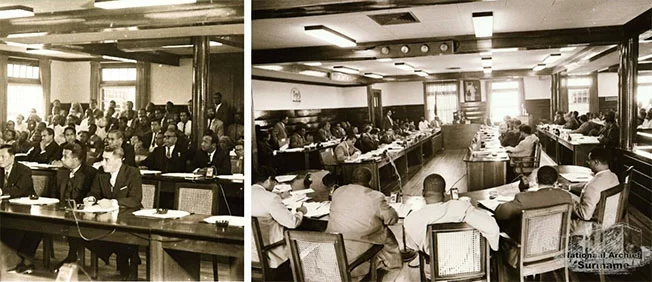
    On May 8, Suriname marks a major historical milestone: 160 years of institutional popular representation. This occasion is rightly a source of national pride, but it also demands unflinching reflection. Beyond the formal ceremonies and celebratory speeches planned for Wednesday’s extraordinary public parliamentary session, a pressing, uncomfortable question lingers: Who truly represents the Surinamese people in 2026?

    The trajectory of Suriname’s representative institution stretches back to the colonial-era Koloniale Staten established in 1866. After decolonization, it evolved into the Staten van Suriname, then the parliament of the independent Republic of Suriname, and today it exists as the National Assembly. Across all these iterations, the core mission has remained unchanged: to serve as a body that amplifies the public voice, oversees executive power, and guides the nation’s development. The 160th anniversary, therefore, is a natural moment to ask a fundamental question: How much of this original mission has been realized, and how much has slipped out of reach?

    Today, what too often plays out in the National Assembly is not the pure practice of popular representation, but a perpetual political battlefield where governing coalitions and opposition factions hold one another in a constant stalemate. The governing bloc acts largely as an extension of the executive branch, and partisan loyalty consistently outweighs the broader public interest. Public parliamentary debates have devolved little more than scripted political theater, where positions are predictable before any representative takes the floor.

    Recent years have only reinforced this grim picture. Political intrigue has become commonplace, with lawmakers frequently crossing the floor between factions. Backroom deals are rarely explained to the public, even as their impacts ripple across society. These trends have not strengthened public trust in representative institutions—they have eroded it dramatically. It is true that the assembly continues to formally function: laws are still passed, sessions are still held. But legislation itself is no achievement if it fails to improve the daily lives of ordinary Surinamese citizens. The question remains unanswered: How does this formal policymaking translate to tangible change beyond the walls of the parliamentary building?

    For years, the most pressing daily concerns of Surinamese society have remained unaddressed: affordable public housing, accessible public healthcare, quality education, and reliable social services. These are not abstract policy talking points—they are concrete, urgent worries for working people. And it is on these issues that the public ultimately judges the performance of its representative body.

    Equally fundamental is the National Assembly’s core oversight mandate. In theory, the body is the highest institution tasked with checking executive power. But in practice, the effectiveness of that oversight is increasingly open to question. Has the assembly truly forced the executive branch to deliver full transparency? Has it meaningfully improved governance across the country? Or has this critical role been weakened by the pressure of partisan loyalty and pre-negotiated coalition agreements?

    For all these reasons, the 160th anniversary of popular representation is not an occasion for unbroken celebration and nostalgic pride alone. It is a moment to openly acknowledge what needs to improve—even what needs fundamental change. Reform begins with the standards we set for people entering parliament. It is past time to have a more serious conversation about the profile of effective representatives, moving beyond basic eligibility requirements to focus on core qualifications and accountability. A representative should be more than a partisan candidate or a party loyalist; they must demonstrate proven commitment to public service, broad life experience in civil society, strong general knowledge, and at minimum a solid educational background.

    Even after candidates take office, the work of improving representation does not end. Every new cohort of parliamentarians should complete mandatory, structured training as a core part of their duties. Training in public administration, media engagement, and issue-specific preparation for sectoral committees is not an unnecessary luxury—it is a fundamental requirement. Without targeted knowledge and preparation, parliamentary oversight will always remain superficial, and legislation will always be vulnerable to gaps and misalignment with public needs.

    Beyond individual qualifications, it is also time to re-examine the institutional structure of the National Assembly itself. Important steps toward modernization were already taken during the tenure of former speaker Jennifer Simons, and that progress must be continued. One critical question to consider: Should the speaker of the National Assembly be an independent figure, selected from a pool of candidates put forward by all contesting parties? This would be a figure who stands above partisan politics, meets strict standards of authority, expertise, and governing experience. Such a reform could significantly strengthen the quality of parliamentary leadership and the overall performance of the body as a collective political institution.

    A parliament that only acts on partisan reflex quickly loses its meaning. A representative body that is out of touch with the concerns of the people it serves loses its legitimacy. That is why this 160th anniversary is less a celebration and more a critical wake-up call. The occasion is not just an opportunity to reflect on what popular representation has been over 160 years—it is a challenge to reclaim the original promise of the institution: to be the true voice of the Surinamese people, not the voice of parties and coalitions.


  • The Executive Order of May 1st and the blockade measures announced today increase the harm to the Cuban population and reinforce the threat of aggression

    The Executive Order of May 1st and the blockade measures announced today increase the harm to the Cuban population and reinforce the threat of aggression

    In a scathing official statement released on May 7, 2026 from Havana, Cuba’s Ministry of Foreign Affairs issued an unreserved rejection of a new executive order signed by the White House on May 1 that ramps up the decades-long U.S. economic, financial and commercial blockade of the island nation to never-before-seen, extreme levels.

    Beyond rejecting the core executive order, Cuban officials also condemned a follow-up action from the U.S. Department of the Treasury dated May 7, which added two major Cuban entities — state-run groups Gaesa and MoaNickel S.A. — to the U.S. List of Specially Designated Nationals. This designation marks the first coercive penalty implemented under the terms of the new May 1 executive order.

    Cuba’s foreign ministry describes the expanded measures as a brutal act of deliberate economic aggression that vastly expands the harmful extraterritorial reach of the long-standing U.S. blockade. Under the new rules, the U.S. can impose secondary sanctions on foreign companies, global banking institutions and third-country entities even when their commercial activities have no direct or legitimate connection to U.S. markets or operations.

    The statement outlines that these new restrictions will deal additional severe damage to Cuba’s already strained national economy, which has still been reeling from the devastating impact of a U.S.-led oil blockade imposed on January 29 this year that effectively paralyzed all fuel imports into the country.

    The Cuban government further accuses U.S. authorities of acting as a self-appointed global policeman, in open and flagrant violation of core tenants of international law and the fundamental principles governing free global trade in goods and services. The new measures, officials argue, directly and explicitly attack the sovereign right of all sovereign nations to establish or maintain economic, commercial and financial ties with Cuba, regardless of their own foreign policy priorities.

    Top U.S. leadership, particularly the Secretary of State, has engaged in widespread blackmail and intimidation campaigns to force the entire international community to comply with the U.S. blockade, according to the statement. No nation is immune from these threats, which Cuban officials frame as part of a decades-long campaign of harm against the Cuban people that amounts to an ongoing act of genocide. The end goal of the escalation, they say, is to force Cuba into complete isolation from global economic and financial systems.

    In a formal warning to the global community, Cuban officials emphasized that this act of aggression against the Cuban economy and its population will only achieve the destructive outcomes Washington intends if sovereign, independent nations choose to surrender to U.S. intimidation. The statement expresses confidence that the international community will not passively accept illegal U.S. regulatory overreach, will not surrender their sovereign equality, and will not leave their domestic businesses, citizens and financial institutions unprotected from unfair U.S. coercion.

    The statement notes that the global community has repeatedly opposed and condemned the nearly 70-year campaign of harm the U.S. has waged against the Cuban people. Cuban officials denounce the latest aggressive measures as criminal in nature, designed to push the entire Cuban population into hunger and desperation, and to trigger a large-scale social, economic and political collapse across the country. They also reject what they identify as a deliberate U.S. strategy to manufacture a humanitarian crisis in Cuba, as a pretext to justify even more dangerous actions against the island, including potential military aggression.

    Cuba reaffirmed that it will continue to use all international forums to denounce the illegal blockade, and called on the entire global community to stand against this latest escalation. The statement frames the new measures as a dangerous step forward in Washington’s long-standing goal of exerting total domination and control over Cuba’s national destiny, a move that violates the fundamental independence and sovereignty of all nations around the world.

  • Telemedicine: A Valuable Tool for Health and Life

    Telemedicine: A Valuable Tool for Health and Life

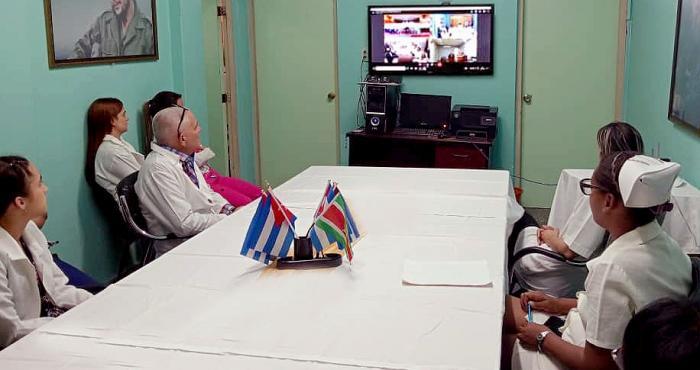
    Just 30 days after integrating into Cuba’s National Virtual Hospital network, the Pepe Portilla Pediatric Hospital in western Cuba’s Pinar del Río has already emerged as a testament to how digital healthcare innovation can overcome longstanding systemic and geographic barriers to high-quality medical treatment. What was once a standard institutional meeting room has been reimagined as a digital hub connecting local clinicians to top specialists across the island, outfitted with a simple setup of a webcam, large display screen, and internet-connected computer.

    This transformation is already changing outcomes for rare, complex pediatric cases that local providers rarely encounter in their practice. Dr. Jesús Lazo Cabrera, a clinician at the facility, recently leveraged the network to secure consensus for a six-month-old infant named Liam Valdés Morejón, who was born with congenital global emphysema — an extremely rare condition that affects just one in 20,000 to 30,000 births. With roughly 5,000 annual births across Pinar del Río, local clinicians may only see one case every five to six years, leaving them without frequent hands-on experience managing post-surgical complications. After Liam’s post-operative progress failed to match standard medical guidance, the team turned to the National Virtual Hospital for support.

    Through the platform, Lazo Cabrera and his team shared real-time imaging, full patient histories, and clinical notes with leading pediatric specialists at Havana’s prestigious Juan Manuel Márquez Pediatric Hospital and other leading Cuban institutions, replicating the experience of having out-of-province experts in the exam room. The collaboration allowed the local team to align their treatment approach with national best practices and adopt a customized new care plan that Liam is currently following, with a formal re-evaluation scheduled in four weeks. Today, six months after his birth, the infant continues to make steady positive progress — a concrete outcome that demonstrates the network’s life-changing impact.

    Dr. Mayte Cabrera Hernández, general director of Pepe Portilla Pediatric Hospital, explained that the National Virtual Hospital offers far more than just second-opinion consultations. The platform supports a full suite of telehealth services, including remote patient monitoring, remote diagnostic analysis, continuing medical education for local clinicians, and cross-institutional case consultations. For a country facing persistent fuel shortages that complicate long-distance patient transfers, the digital network addresses two critical challenges at once: it cuts unnecessary healthcare costs and eliminates the inherent medical risks of moving vulnerable pediatric patients hundreds of kilometers for specialist input. Even when transportation is available, Cabrera Hernández notes, avoiding travel reduces stress and risk for young patients and their families, while delivering the same standard of care available in Cuba’s capital.

    In its first full month connected to the network, Pepe Portilla has already completed three remote specialist consultations, with the case of Liam standing as the clearest example of the model’s potential. For seasoned clinicians like Lazo Cabrera, the network fills a longstanding gap in care: even clinicians with decades of experience can encounter unique cases that other centers have more experience managing, and the platform unifies care standards across the entire country. “This gives us security in our procedures,” Lazo Cabrera explained, “because we can confirm our approach matches what top teams across Cuba use, and we can give families confidence that their child is receiving the same treatment they would get anywhere in the country.”

    Pepe Portilla is not the only Pinar del Río facility participating in the program: the province’s Abel Santamaría Cuadrado General Teaching Hospital has also joined the national network, which aims to standardize care, share specialized medical knowledge, and close geographic gaps in access to care across Cuba, powered by digital health innovation. As Liam’s steady recovery shows, the initiative is already delivering on that promise, uniting clinicians across the island in a shared mission to protect patient health and save lives.

  • Politie slaat alarm over vermissingen en ontspoord gedrag onder jongeren

    Politie slaat alarm over vermissingen en ontspoord gedrag onder jongeren

    Suriname’s national police force has issued a pressing public alert over a sharp, alarming rise in missing person cases, violent incidents and youth suicides across the country, with data showing 56 people reported missing between January and early May this year, five of whom remain untraced. The alarming trend has pushed law enforcement leadership to hold a dedicated press briefing to outline the growing crisis and outline ongoing investigative efforts.

    In a recent update, District Commissioner Patrick Kensenhuis of Para confirmed that two young missing men—21-year-old Serginio Ansoe and 19-year-old Gianzo Ermelo, who went missing two weeks prior while lost in the remote Tibiti region—have been located safe. This update came after local outlet Suriname Herald first reported the good news.

    Concerns deepened last weekend, when a search operation for a missing teenage girl led police to an unregistered location where 13 young people aged between 14 and 24 were found gathering. Law enforcement has withheld full details of the incident to protect the privacy of underage individuals involved and to avoid compromising the active investigation.

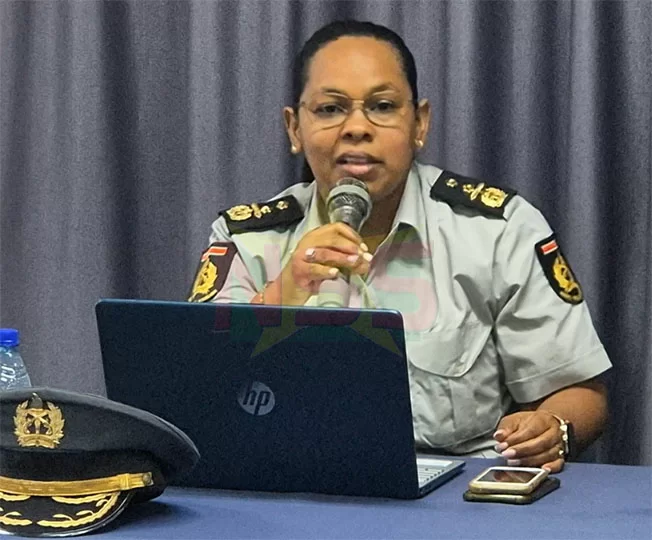
    During Thursday’s press conference on national public security, Police Commissioner Melvin Pinas and his senior leadership team dedicated extensive discussion to the youth-centered crisis. Officials confirmed that the problem extends far beyond disappearances: police are also recording a steady rise in extreme anti-social behavior and a worryingly high number of youth suicide cases across the country.

    In another high-profile recent incident, four young people have been arrested and detained following a viral brawl caught on camera that involved uniformed schoolchildren fighting on public streets; the footage spread rapidly across social media platforms, sparking public outrage.

    Inspector Sharveen Koelfat, commander of the Central Region police unit, explained that the vast majority of missing person cases involving young people stem from minors running away from home or school. A smaller share of cases involve hunters getting lost in the country’s dense interior regions. Crucially, Koelfat emphasized that none of the current open missing person cases are linked to kidnapping or abduction.

    The discovery of 13 young people during the search for the missing teen—seven young men and six young women, all between 14 and 24 years old—remains one of the most high-profile elements of the current crisis. Police have declined to release additional details while the investigation is ongoing.

    Commissioner Eshita Hunte, head of the police’s Serious Crime Division, noted that law enforcement is required to handle the case with extreme care, given that most of the people involved are minors. “We have to take into account that this primarily concerns young people. Suriname has signed international protocols that we must adhere to, especially when minors are involved,” Hunte explained. She added that the mere fact 13 young people were found gathering in an unregulated, off-grid location is itself cause for deep public concern. The police’s Trafficking in Persons and Youth Affairs divisions have been assigned to lead the ongoing investigation into the incident.

  • Migration Forum : Minister Marc-Elie Nelson’s intervention in New York

    Migration Forum : Minister Marc-Elie Nelson’s intervention in New York

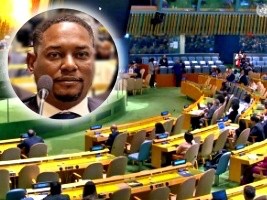
    As the second International Migration Review Forum (IMRF) — hosted by the United Nations at its New York headquarters — drew to a close on Friday, May 8, 2026, Haiti’s Minister of Social Affairs and Labor Marc-Elie Nelson delivered a key address calling on all UN member states to deepen cross-border collaboration to tackle the growing challenges of global migration management.

    Speaking to delegates on Haiti’s behalf, Nelson outlined the unique pressures the Caribbean nation faces, from surging irregular migration flows and devastating brain drain to the urgent need to expand protections for Haitian citizens residing and working outside the country’s borders. Against this backdrop, he highlighted the coordinated domestic reforms and initiatives the Haitian government has rolled out in recent years to bring more structure and fairness to migration movement.

    The cornerstone of these efforts is the National Migration Policy, a formal strategic framework adopted by the administration in 2023 that guides all government action on migration issues. This foundational policy has allowed the government to roll out a targeted contingency plan aligned with the 23 core objectives of the UN Global Compact for Safe, Orderly and Regular Migration, designed specifically to support the arrival and integration of returning Haitian migrants from the Dominican Republic. It also cleared the way for the development of a national care protocol for migrants, funded through a financial partnership with the Inter-American Development Bank (IDB).

    Nelson emphasized that guaranteeing all migrants equal access to critical basic services — including healthcare, primary and secondary education, and formal social protection — is a non-negotiable priority for his government. To advance this goal, Haiti’s 2025-2026 national budget has allocated 152 million gourdes to construct a new transitional accommodation center in the border town of Belladère. Since October 2025, the minister confirmed, the Haitian government has already welcomed and processed more than 170,000 returning migrants, upholding commitments to treat all people with full respect and human dignity throughout the process.

    In closing remarks, Nelson argued that future progress in global migration governance depends on targeted investment in data-driven policy, expanded pathways for regular, legal migration, and more aggressive coordinated action to dismantle transnational human trafficking networks. He concluded by urging the global community to adopt a unified approach to migration that centers humanity, inclusion, and full respect for the human rights of all migrants, regardless of their origin or immigration status.

  • MBA-thesis legt structurele knelpunten in verkeersveiligheid Suriname bloot

    MBA-thesis legt structurele knelpunten in verkeersveiligheid Suriname bloot

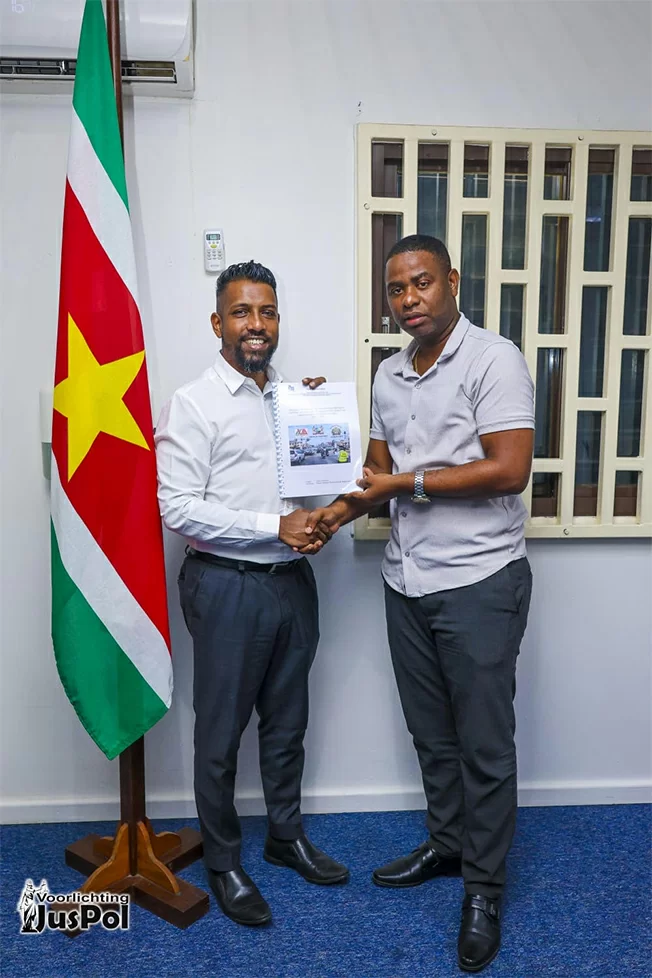
    Suriname’s long-running road safety crisis, marked by a worrying upward trend in traffic collisions and fatalities over the past decade, has been laid bare in a new Master of Business Administration thesis formally presented to Suriname’s Minister of Justice and Police, Harish Monorath, by researcher Purcy Landveld. Titled *Strategic Management of Road Safety Policy in Suriname: An Administrative and Organizational Analysis of Capacity Building and Policy Interventions (2015–2024)*, the study delivers a rigorous, evidence-based assessment of systemic gaps in national road safety governance and puts forward a concrete, phased roadmap for transformative improvement.

    Landveld’s decade-long analysis reveals that despite the existence of formal road safety policy frameworks on paper, on-the-ground implementation has remained fragmented and woefully under-resourced. The core barriers to progress, the research finds, stem from weak cross-institutional coordination, inconsistent and insufficient enforcement of existing traffic rules, scattered and uncoordinated policy interventions, and a chronic lack of sustained, structural capacity building within government agencies. These overlapping failures have kept national road safety targets unmet, imposing steep social and economic costs on Suriname: billions in unplanned medical expenditure, widespread lost workforce productivity, and a steady toll of preventable deaths and lifelong injuries among road users.

    A central argument of the thesis reframes the national road safety challenge: rather than being purely a technical issue or a problem of individual driver behavior, it is first and foremost a governance and public policy failure. To address this, Landveld anchors his recommendations in two globally recognized best-practice frameworks: the Safe System Approach, which operates on the principle that human error is unavoidable, so road infrastructure, vehicle design and regulatory systems must be structured to prevent fatal and severe harm even when mistakes occur; and the 5E model, which organizes action across five core pillars: education, enforcement, engineering, encouragement, and evaluation.

    Landveld calls for a fully integrated, cross-sectoral approach that aligns policy design, enforcement, infrastructure investment, public education, and community awareness to drive systemic change. Key actionable recommendations put forward in the study include expanding digital speed and traffic enforcement through widespread camera deployment, scaling up sustained public awareness campaigns, embedding road safety education into national school curricula, strengthening partnerships between public sector agencies and private stakeholders, updating and tightening national traffic regulations, and building a centralized national digital data platform to track road safety trends and evaluate intervention outcomes.

    To guide orderly implementation, the thesis outlines a phased strategy spanning short-, medium-, and long-term priorities. Over the long term, the strategy targets full national adoption of the Safe System Approach, widespread deployment of smart road infrastructure, full integration of digital enforcement systems, and the permanent institutional embedding of coordinated road safety policy within national governance structures.

    Accepting the thesis on behalf of the Surinamese government, Minister Monorath emphasized the critical value of Landveld’s findings and recommendations for shaping future national road safety policy. “This work is far more than an academic analysis,” Monorath stated. “It provides a practical, implementable framework to deliver structural, lasting improvement to road safety across our country.”

  • Roseau mayor and council pledge support to those affected by recent fire

    Roseau mayor and council pledge support to those affected by recent fire

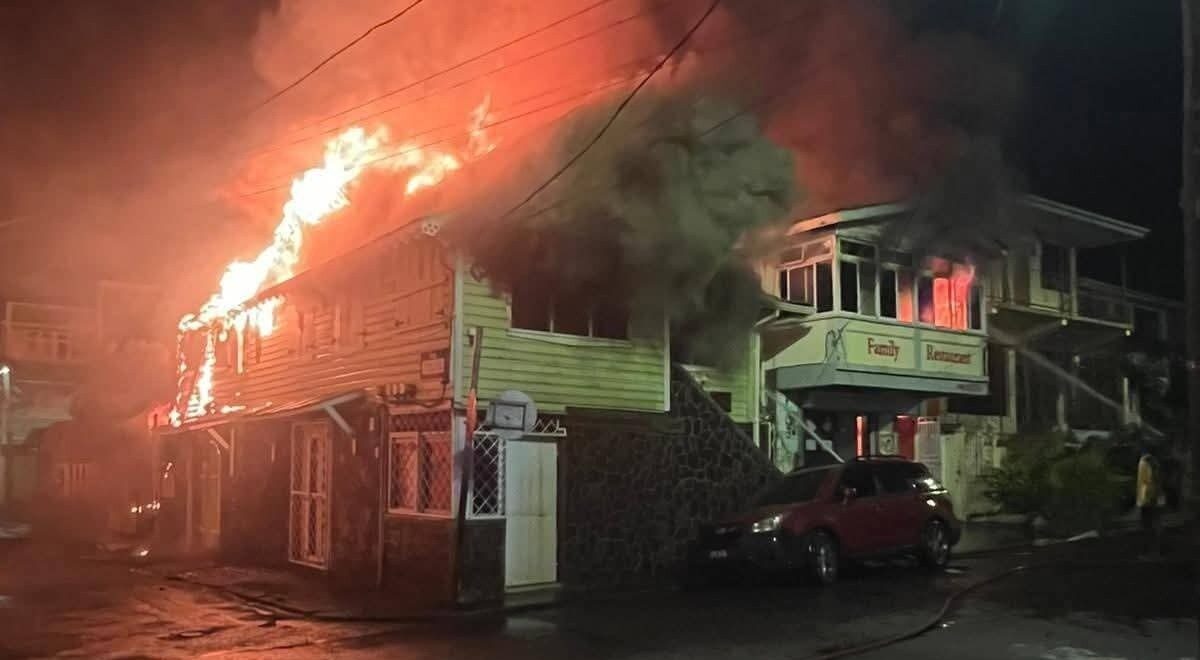
    A destructive blaze broke out in the capital city of Roseau in the pre-dawn hours of Wednesday, leaving a trail of damage across multiple commercial properties and upending the livelihoods of dozens of local workers, business owners and patrons. In the wake of the emergency, the Roseau City Council — including Mayor Lucy Belle-Matthew, elected city councillors and all administrative staff — has issued a public statement extending full solidarity to everyone impacted by the unexpected disaster.

    In the announcement, the council emphasized that the most critical takeaway from the incident is the absence of any loss of human life, a outcome for which the local government body expressed profound gratitude. “Recovery and rebuilding will come,” the statement affirmed. “We stand with you, and we are committed to supporting your recovery and rebuilding efforts every step of the way.”

    The council also reserved special praise for the rapid, professional response from emergency personnel on the ground. First responders including local firefighters, who worked to contain the spread of the fire and prevent greater damage to surrounding areas, and police officers, who managed crowd control, secured the site and supported coordination efforts, earned explicit recognition for their outstanding work during the emergency. “God’s strength to all as we seek to rebuild again,” the statement concluded.

    As of the latest update, official records confirm that a total of nine buildings suffered damage from the blaze. Local law enforcement and fire investigation teams have launched a formal probe into the origins and cause of the fire, with investigations currently ongoing and no preliminary findings released to the public as of yet.

  • Key Meeting Yields Breakthrough in San Marcos Land Dispute

    Key Meeting Yields Breakthrough in San Marcos Land Dispute

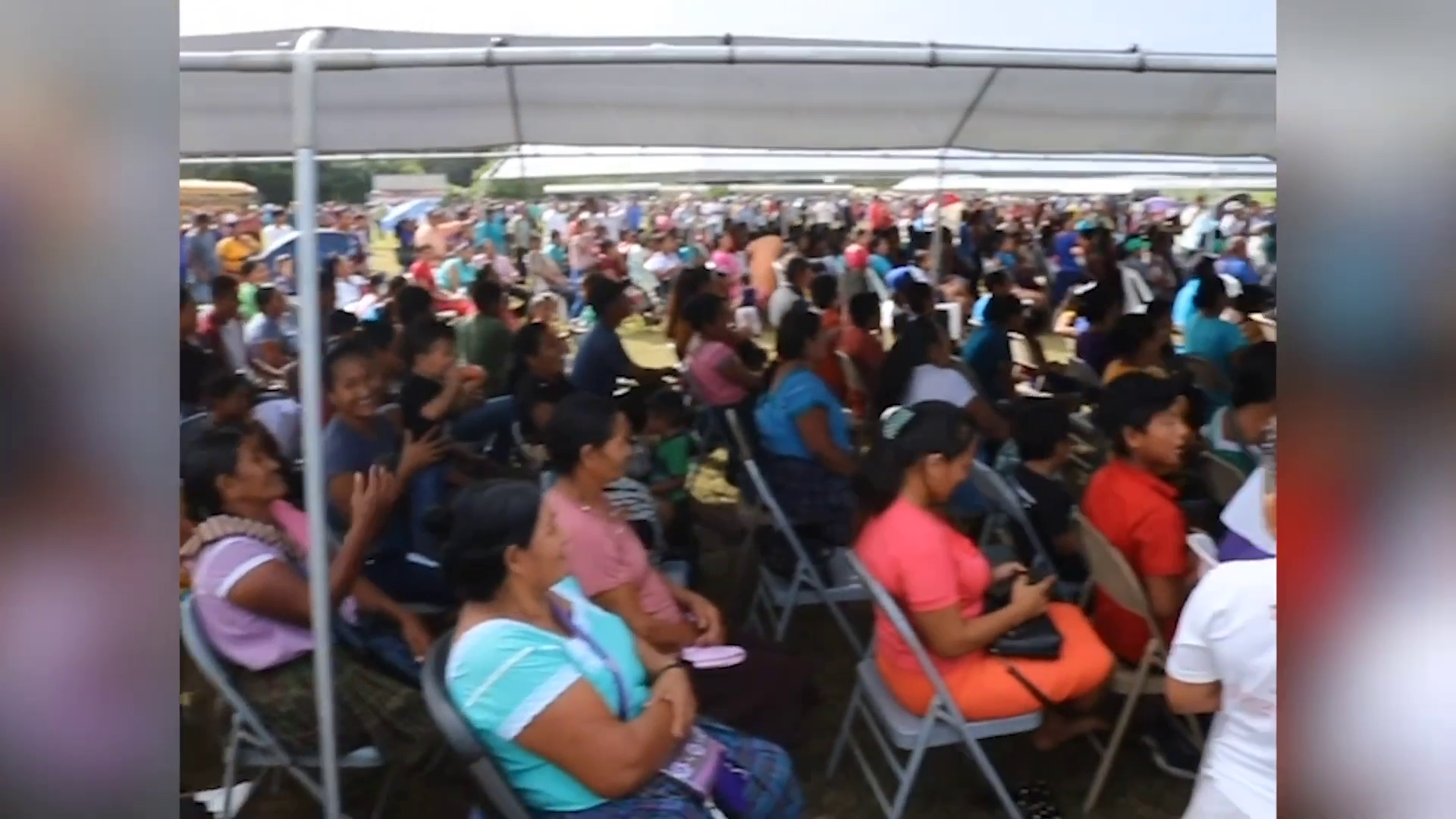
    A months-long simmering land conflict between Maya residents of San Marcos Village in southern Belize’s Toledo District and a private landowner has taken a major step toward resolution, following a productive high-level negotiation hosted by the national government this week. The small community, which counts just under 1,000 residents deeply rooted in centuries-old Maya cultural heritage, has been locked in a standoff over a section of land that villagers argue falls within their traditional communal territory. The dispute is not an isolated incident: it reflects a decades-long, widespread struggle for formal recognition of Indigenous land rights across southern Belize that has risen in urgency in recent months, with tensions threatening to escalate into open conflict prior to this week’s talks.

    On Wednesday, May 6, 2026, Belize’s Minister of Indigenous People’s Affairs Dr. Louis Zabaneh convened stakeholders at his ministry’s headquarters in Belmopan, bringing together elected leaders from San Marcos, representatives of the Toledo Alcalde Alliance (TAA) and the Maya Leaders Alliance (MLA), and legal representatives for the private landowner involved in the conflict. The meeting concluded with a binding, multi-step agreement designed to de-escalate tensions and establish a clear, formal process to resolve the boundary dispute. The core of the agreement commits both sides to a three-week waiting period during which technical surveyors from Belize’s Ministry of Natural Resources will conduct an independent on-the-ground assessment to map and formally demarcate the exact contested area. Dr. Zabaneh noted that both sides had agreed to abide by the initial survey result as a foundation for further negotiations. The agreement also comes as the government launches a long-promised formal review of national land rights legislation for Maya communities.

    Just two days before the San Marcos meeting, Dr. Zabaneh confirmed, the first convening of the cross-sectoral land rights review panel took place. The panel is structured to ensure equal representation: two government appointees will work alongside two leaders selected directly by the Maya leadership to review draft legislation addressing communal land title claims. Once the panel finalizes its revisions, the draft will advance to a Cabinet subcommittee before being introduced to the House of Representatives for a full vote. Dr. Zabaneh emphasized that this formal legislative process is the only legitimate path to securing formal land rights, and called on all stakeholders to avoid unilateral action or premature claims of absolute ownership while the process moves forward. The MLA has scheduled a community meeting with San Marcos residents this coming Friday to walk through the details of the new agreement and answer resident questions, with further updates expected after that gathering.

    Beyond the San Marcos breakthrough, Dr. Zabaneh addressed two other pressing controversial cases involving Indigenous community leadership in southern Belize during the same press briefing. The first is an alleged abduction of Marcos Canti, First Alcalde of the Indian Creek community, which occurred three weeks prior to the briefing. To date, no definitive official report or update on the incident has been released to the public, leaving many unanswered questions about what transpired, and whether a formal police report was ever filed. Dr. Zabaneh acknowledged that the lack of information has fueled widespread public uncertainty and even skepticism within government, noting that the ministry has formally requested an update from Minister of Home Affairs Kareem Musa, who is working with the Belize Police Department commissioner to conclude the ongoing investigation. The ministry expects a full public report will be released as soon as the probe is complete.

    The second open case involves a viral video that purportedly shows a sitting village alcalde from another southern Belize community committing a violent assault against a resident of his community. Dr. Zabaneh confirmed that the Office of Indigenous People’s Affairs has launched a formal investigation into the incident, and ministry staff will travel to the community in the coming days to conduct on-the-ground interviews and gather evidence. The minister stressed that the government maintains a zero-tolerance policy for all forms of violence in Indigenous communities, regardless of the underlying context of the conflict. “Violence can never be the answer to solve anything, regardless of what the circumstance may be,” Dr. Zabaneh told reporters. “As a country we cannot condone using violence for whatever, whether it is domestic violence or something going on in a village. Absolutely zero tolerance for that. We have to find a way to work and communicate with each other, and that is the way how we solve problems.” Local journalists will continue to follow all three cases, and will publish full updates as new information becomes available.