作者: admin

  • Paralegal files lawsuit over alleged rights breaches

    Paralegal files lawsuit over alleged rights breaches

    In a significant legal development, Jamaican paralegal Ruth Kelly-Spencer has initiated a comprehensive lawsuit against seven parties including the Police Commissioner and the Government, alleging multiple violations of her constitutional rights. The Supreme Court claim, filed in February, seeks substantial damages for false imprisonment, malicious prosecution, and systemic breaches of her fundamental freedoms.

    The case originates from a complex legal saga dating back to 2012, when Kelly-Spencer, alongside attorney Sean Kinghorn and farmer Linton Campbell, faced allegations of conspiring to fabricate a will for an elderly returning resident in 2008. While forgery charges were subsequently dropped by prosecutors, the conspiracy to defraud allegations continue to proceed through the judicial system.

    Defendants named in the civil action include a grand-niece of the deceased client, a minister of religion, three police officers (including a detective from the disbanded Counter Terrorism and Organised Crime Investigation Branch), the police commissioner, and the attorney general. The religious figure and family member previously served as complainants in the ongoing criminal matter.

    Central to Kelly-Spencer’s allegations is her claim of being unlawfully detained for twelve hours at C-TOC headquarters in July 2012, during which she was formally charged before eventually being released on bail. Her lawsuit contends that investigating officers ‘weaponized the justice system’ to achieve an unjust outcome, thereby depriving her of constitutional protections against arbitrary detention and entitlement to fair legal proceedings.

    The paralegal maintains that the malicious prosecution was instigated by the grand-niece and religious leader who allegedly provided misleading information to investigators. She further asserts that authorities persisted with flawed handwriting analysis evidence even after initial expert testimony was disqualified, subsequently engaging overseas specialists to support their case.

    Kelly-Spencer reports suffering substantial personal and professional damages, including diagnosed depression, anxiety, and post-traumatic stress disorder. Medical documentation indicates impaired work functionality and consideration of abandoning her legal career entirely. Financial claims exceed $4 million Jamaican dollars for combined legal and medical expenses, plus additional transportation costs and comprehensive compensation for lost earnings and future damages.

    The criminal trial regarding conspiracy charges continues separately, with proceedings scheduled to resume in May. The case had previously been suspended in 2020 due to pandemic-related court closures under Chief Justice Bryan Sykes’ emergency orders, before recommencing when restrictions were lifted.

    Defendants retain the right to file responses within 42 days of formal service of the claim documents.


  • THE BLUFF DESIGNER: Credit to Ja/Canadian Antoinette Messam

    THE BLUFF DESIGNER: Credit to Ja/Canadian Antoinette Messam

    In the highly anticipated action-adventure film ‘The Bluff,’ Jamaican-Canadian costume designer Antoinette Messam emerges as the creative force behind the production’s distinctive visual identity. Directed by Frank E Flowers and produced by AGBO’s Russo brothers, the Amazon MGM Studios feature stars Priyanka Chopra Jonas as Ercell ‘Bloody Mary’ Bodden—a former pirate forced to confront her violent past when her notorious captain (Karl Urban) threatens her newfound family life in the Cayman Islands.

    Messam’s costume design philosophy centered on tactical functionality, blending period authenticity with practical movement requirements. Her creative collaboration with director Flowers began in June 2023, with both sharing Caribbean heritage—Flowers from the Cayman Islands and Messam from Jamaica—which informed their shared visual language. The design approach deliberately contrasted the organic textures and muted colors of the islanders’ homespun fabrics against the durable, globally-sourced materials of the pirates’ attire, featuring denim and leather to convey toughness.

    The designer’s most celebrated creation—a custom cuirass (armor) worn by Chopra Jonas’s character—became such an artistic statement that the lead actress wore it to the film’s world premiere. Created by Australian artisans over three months, the piece exemplified Messam’s commitment to craftsmanship and narrative-driven design. Her team of approximately 40 skilled craftspeople executed her vision, with leather specialists Meg Ashforth and Lolly Ruby Redpath bringing the armor to life and art finishers adding weathered detailing.

    Set against the dramatic backdrop of Cayman Brac’s Skull Cave, ‘The Bluff’ represents a convergence of action cinema and high fashion, with Messam’s costumes receiving acclaim from cast, crew, and global audiences alike. The film premiered on Amazon Prime Video on February 25, 2026, marking another milestone in Messam’s ascending career following her previous work on ‘The Harder They Fall’ and ‘Lift.’

  • Renewables can’t carry grid during hurricanes, JPS warns

    Renewables can’t carry grid during hurricanes, JPS warns

    Jamaica’s ambitious transition to renewable energy is confronting a harsh climatic reality, as extreme weather events reveal critical vulnerabilities in solar and wind infrastructure. The Jamaica Public Service Company (JPS), the nation’s sole grid operator, has issued a stark warning that renewable systems coupled with battery storage cannot maintain grid stability during hurricanes, forcing renewed dependence on traditional thermal generation during crises.

    The limitations became dramatically apparent during Hurricane Melissa’s Category 5 assault, when renewable sources failed completely—solar panels produced no power days before, during, and after the storm, while wind turbines were secured for safety. Acting JPS President and CEO Hugh Grant revealed that only 23% of customers maintained electricity post-hurricane, exclusively through fossil fuel resources. “When storms hit, the power system depends heavily on traditional, dispatchable generation,” Grant stated during a utilities regulation forum in Kingston.

    This reality creates significant tension within Jamaica’s energy policy, which targets 50% renewable penetration by 2030. While supporting renewables as part of Jamaica’s long-term strategy, Grant emphasized that battery technology remains insufficient for prolonged outages, with utility-scale storage currently limited to approximately eight hours duration—inadequate for multi-day hurricane recovery periods.

    In response to these challenges, JPS has implemented substantial grid-hardening measures including enhanced vegetation management, reinforced utility poles, reduced span distances for improved load-bearing capacity, and strategic circuit re-routing. The company is exploring underground infrastructure despite prohibitive costs—15 times higher than overhead systems—requiring targeted implementation and cross-sector cost sharing.

    The hurricane exposed not only physical infrastructure limitations but also critical financing gaps. Government intervention through a $150 million loan covered less than half the $350 million estimated reconstruction costs, highlighting inadequate disaster funding mechanisms. Energy Minister Daryl Vaz clarified the government’s role is not to bail out utilities but to establish financial frameworks enabling rapid restoration while protecting consumers and the economy.

    Jamaica Stock Exchange CEO Livingstone Morrison suggested utilities might need more aggressive capital market engagement to fund resilience projects. Meanwhile, policymakers face the complex challenge of balancing renewable expansion with maintaining reliable power through increasingly severe weather events, ensuring energy transition doesn’t compromise grid stability during critical periods.

  • Inspired by family, fuelled by science

    Inspired by family, fuelled by science

    Dr. Jhodi Webster’s scientific journey began with a personal tragedy—watching her stepfather’s memory gradually deteriorate following an Alzheimer’s diagnosis. This profoundly painful experience ignited a determination that would ultimately define her career path and research ambitions.

    Now a 28-year-old post-doctoral research fellow at Mayo Clinic in Arizona, the Jamaican scientist is conducting cutting-edge research on the very disease that affected her family. Her work focuses on understanding neurodegenerative mechanisms while building connections with patients and caregivers facing similar challenges.

    Webster’s academic journey began at St Andrew High School for Girls in Jamaica, where she initially aspired to become a medical doctor. Her stepfather’s early-onset dementia diagnosis, however, redirected her ambitions toward medical research. In 2016, she migrated to the United States on scholarship to pursue neuroscience studies at Agnes Scott College.

    Her research examines the intriguing overlap between Alzheimer’s and Parkinson’s diseases—two progressive neurodegenerative disorders with distinct symptoms but shared characteristics of cognitive decline and dementia. Webster’s doctoral work at the University of Alabama at Birmingham involved developing novel animal models that incorporate toxic proteins found in patients’ brains, enabling detailed study of neuroinflammatory responses.

    “We’ve demonstrated that when Parkinson’s and Alzheimer’s pathology overlaps in brains, it triggers a distinct immune response not seen in cases with pure protein pathology,” Webster explained. This critical insight opens new therapeutic possibilities targeting both the toxic proteins and inflammatory responses in the brain.

    Her research has garnered significant recognition, with numerous presentation awards and scholarships from organizations including the Parkinson’s Association of Alabama. Beyond laboratory work, Webster has prioritized community engagement, connecting with caregivers and patients whose experiences mirror her family’s journey.

    “Seeing someone you’ve known for years become a shell of themselves is devastating,” Webster shared. “That personal connection makes this research profoundly meaningful—it’s not just about finding a cure but about connecting with those directly affected.”

    At Mayo Clinic, Webster continues her pioneering work, investigating how neuroinflammation contributes to Parkinson’s, Alzheimer’s, and ALS. Her research aims to develop targeted immunotherapies that could modify disease progression rather than merely addressing symptoms.

    While acknowledging that a complete cure remains ambitious, Webster remains committed to developing treatments that improve quality of life for neurodegenerative patients. “Patients can live 10-20 years with these diseases, but it’s often with low quality of life,” she noted. “Developing targeted therapies to prevent neuronal death and cognitive decline is my immediate mission.”

    Reflecting on her journey from Jamaica to elite medical research, Webster expresses both pride in her accomplishments and gratitude for the mentors who supported her path. Her work stands as a testament to how personal experience can drive scientific innovation and compassion in equal measure.

  • SVL expanding remittance network

    SVL expanding remittance network

    Jamaican gaming conglomerate Supreme Ventures Limited (SVL) is aggressively expanding its footprint in the financial services sector through a rapid scaling of its remittance operations. Executive Chairman Gary Peart announced the company’s strategic plan to grow its network from the current 22 locations to approximately 80 by year-end, representing a significant diversification beyond its core gaming business.

    The expansion leverages SVL’s existing infrastructure of nearly 1,200 retail locations across Jamaica, many operated by third-party agents at community outlets and gas stations. According to Peart, this network provides a natural advantage for remittance services as these locations already handle substantial cash flows from gaming operations. The integration allows agents to disburse and circulate cash more efficiently, reducing operational costs for both operators and the company.

    SVL re-entered the remittance market through subsidiary Supreme Ventures Fintech Limited (SVFL), which received Bank of Jamaica approval as a primary agent in late 2023 with Ria Money Transfer as its international partner. This marks a return to the sector after SVL previously sold its Moneygram operations to Lasco Financial Services Limited in 2011 for $38 million.

    The expansion occurs amid a transformative period in Jamaica’s remittance landscape where traditional cash-based models face increasing competition from digital channels. Industry data reveals that while digital transactions surpassed cash transfers globally for the first time in 2025, physical locations remain strategically important despite a 10% reduction in outlets to 442 nationwide.

    Remittance inflows showed remarkable resilience following Hurricane Melissa, bouncing back to $334.9 million in December after a temporary slowdown. SVL’s expansion positions the company to capture market share during this period of industry transformation while creating synergies with its existing gaming operations.

  • The invisible ingredient

    The invisible ingredient

    Dr. Kareen Robinson’s veterinary career took an unforeseen trajectory that ultimately positioned her at the forefront of Jamaica’s food security efforts. Initially drawn to equine medicine during her studies at The University of the West Indies, St Augustine campus, her professional destiny was reshaped by a mandatory externship at Jamaica Broilers that revealed the profound interconnectedness of animal health, agricultural systems, and national food security.

    Twelve years later, Dr. Robinson serves as senior poultry veterinarian at The Best Dressed Chicken Field Operations, where her responsibilities encompass far more than animal health. Her portfolio spans animal welfare protocols, biosecurity measures, sanitation standards, environmental management, production efficiency optimization, and the critical task of preventing avian influenza from reaching Jamaican shores. While a subsequent externship in Florida honed her clinical skills, she attributes her expertise to hands-on field experience gained through extensive farm visits under diverse conditions.

    Beyond technical proficiency, Dr. Robinson emphasizes the human dimension of her work. ‘Sometimes the hardest part of the job isn’t the birds,’ she notes. ‘It’s being there for the people.’ She describes farm life as demanding in ways that metrics cannot capture, requiring emotional availability and interpersonal skills that formal training often overlooks. Communication, she asserts, represents the most critical competency in her role—the ability to ask pertinent questions and convey information effectively prevents misunderstandings that could compromise entire operations.

    Despite operating largely outside public awareness—many Jamaicans remain unaware that veterinarians oversee poultry production—Dr. Robinson’s work occupies a crucial intersection between agriculture and public health. Her team maintains constant vigilance, with chick placements occurring multiple times weekly and around-the-clock readiness for emerging challenges. The physical demands include inspecting housing systems, analyzing ventilation data, monitoring trends, collecting samples, and collaborating with farmers managing complex operational pressures.

    Currently, avian influenza prevention dominates Dr. Robinson’s priorities. Though Jamaica has reported no local cases, she maintains a proactive stance, treating the threat as imminent. ‘There’s no cure. Prevention is everything,’ she states. Her strategy involves meticulous documentation of seasonal variations, performance fluctuations, and operational adaptations to climate changes and global outbreaks. This data-driven approach creates an institutional memory that enables predictive action rather than mere reaction. ‘Data speaks more than anything else,’ she explains. ‘It shows you the gaps and where you need to improve.’

    For students considering similar paths, Dr. Robinson offers candid advice: prioritize passion over financial incentives. Her unexpected journey from horse enthusiast to poultry specialist demonstrates how vocational detours can lead to impactful careers addressing fundamental societal needs.

  • School shock

    School shock

    A Canadian mother’s relocation to Jamaica has unveiled disturbing allegations of systematic corporal punishment and financial extortion within the island’s educational institutions, triggering nationwide scrutiny of child protection policies. The anonymous parent reported both her sons—grades one and six—endured physical abuse from teachers including hitting with objects, pinching, slapping, and coercive monetary fines for minor classroom infractions.

    The younger child developed severe anxiety requiring multiple school transfers within a year, each new environment replicating the same patterns of violence. Despite formal complaints to administrators, the mother observed diminishing responses, with teachers merely switching from objects to hands for physical discipline. One traumatic incident involved her son soiling himself after being denied bathroom access as retaliation for reporting abuse.

    Jamaica’s Ministry of Education withheld comment pending verification, while the Child Protection and Family Services Agency (CPFSA) confirmed an ongoing investigation. The mother rejected cultural relativism arguments, emphasizing: “Schools should be safe havens for children who already face hardships at home.”

    This case highlights Jamaica’s conflicted legal stance. While the 2004 Child Care and Protection Act prohibits cruelty, it doesn’t fully ban corporal punishment, particularly in homes. Though restricted in early childhood institutions and discouraged in public schools, no comprehensive legal prohibition exists. Prime Minister Andrew Holness first proposed amending the Education Act in 2017, with renewed commitments in 2024 through the National Violence Prevention Commission.

    Statistical context reveals alarming trends: 698 physical abuse reports occurred in 2024’s first two months, continuing an upward trajectory from 3,405 incidents in 2023 to 3,792 in 2025.

    UNICEF Jamaica reports 80% of children aged 1-14 experience violent discipline. Representative Olga Isaza recently emphasized: “Corporal punishment violates dignity and protection rights. Reducing national violence begins in homes and classrooms.” The National Parent-Teacher Association president Stewart Jacobs joined calls for immediate legislative action, stating: “Teachers should never lay hands on children. This cat must be belled.”

    Both CPFSA and UNICEF advocate for positive parenting programs and non-violent disciplinary alternatives, underscoring Jamaica’s obligation under the UN Convention on the Rights of the Child to protect children from degrading treatment.

  • UPP’s Emanuel Peters Distributes 318 Meals in Rural South Outreach

    UPP’s Emanuel Peters Distributes 318 Meals in Rural South Outreach

    With general election anticipation building, United Progressive Party (UPP) candidate Emanuel Peters is intensifying community engagement efforts within the Rural South constituency. Peters has emphasized that his outreach initiative represents a core philosophy of sustained public service rather than mere campaign activity.

    The political contender revealed a collaborative partnership with Senator Johnathan Joseph, enabling the extension of constituent services beyond the geographical boundaries of Rural South into an adjacent electoral district. This cross-constituency cooperation has allowed additional residents to benefit from the program’s services.

    Peters articulated his approach as fundamentally centered on consistent presence and accessibility. “My focus remains on showing up for constituents and maintaining genuine, ongoing dialogue with residents,” he stated, framing the effort as part of a broader commitment to participatory representation.

    The intensified outreach occurs against a backdrop of heightened political mobilization across constituencies. Both major political parties have significantly increased community visibility initiatives, deploying candidates and implementing constituency-based programs nationwide.

    Political analysts identify Rural South as a potentially pivotal constituency in the forthcoming election cycle. The area is expected to be among the most closely contested seats as parties work to consolidate support at the grassroots level, making community engagement strategies particularly significant in the pre-election period.

  • Trump overweegt afbouw militaire operatie, terwijl conflict Midden Oosten escaleert

    Trump overweegt afbouw militaire operatie, terwijl conflict Midden Oosten escaleert

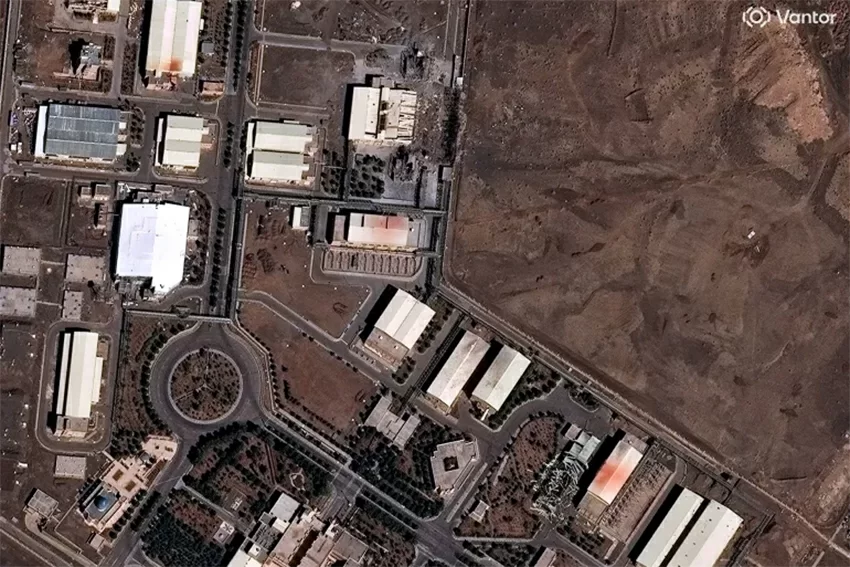
    The Middle East faces unprecedented turmoil as military confrontations between Iran, Israel, and the United States intensify, targeting critical infrastructure and threatening global energy security. Recent developments include a suspected Israeli-American strike on Iran’s Natanz nuclear enrichment facility, though Israel has denied involvement. International Atomic Energy Agency officials have confirmed no radioactive leakage from the site, while Russia condemned the attack as a “blatant violation of international law.

    Simultaneous Israeli airstrikes hit Beirut areas associated with Hezbollah and multiple Iranian cities including Tehran, Karaj, and Isfahan. Iranian media reported three civilian fatalities in a residential building strike in Ramsar, prompting widespread sheltering across Israel in response to air raid alerts.

    Iran retaliated by launching ballistic missiles toward the joint US-UK military base on Diego Garcia Island in the Indian Ocean, approximately 3,800 kilometers away. The missiles missed their target, and the UK Defense Ministry noted the attack occurred before authorization was granted for using British bases for American operations against Iranian targets.

    President Donald Trump signaled a potential reduction in US military engagement, stating via social media that America is “very close to achieving our objectives” and considering scaling back Middle Eastern operations. He urged other nations to assume responsibility for securing the Strait of Hormuz—a critical passage for approximately 20% of global oil and gas exports—emphasizing that the US should not bear this burden alone.

    The conflict has already claimed over 2,000 lives since hostilities began on February 28, with energy infrastructure attacks driving a 50% surge in oil prices and triggering worldwide inflation. European gas prices jumped 35% this week due to damaged facilities, prompting EU calls for reduced consumption and energy demand management.

    Diplomatic channels show slight openings, with Iran indicating willingness to permit Japanese vessels—which handle nearly 90% of Japan’s oil imports—safe passage through the Strait of Hormuz. Meanwhile, Germany and France insist violence must cease before further steps can be taken, even as the US, Japan, Canada, and European allies pledge to secure the vital waterway.

    National positions remain firm: Israel vows to continue targeting Iranian military capabilities, Iran’s leadership emphasizes national unity and resilience, Russia advocates political solutions, and the EU focuses on stabilizing energy markets through coordinated action.

  • Minor Earthquake Recorded North of Antigua

    Minor Earthquake Recorded North of Antigua

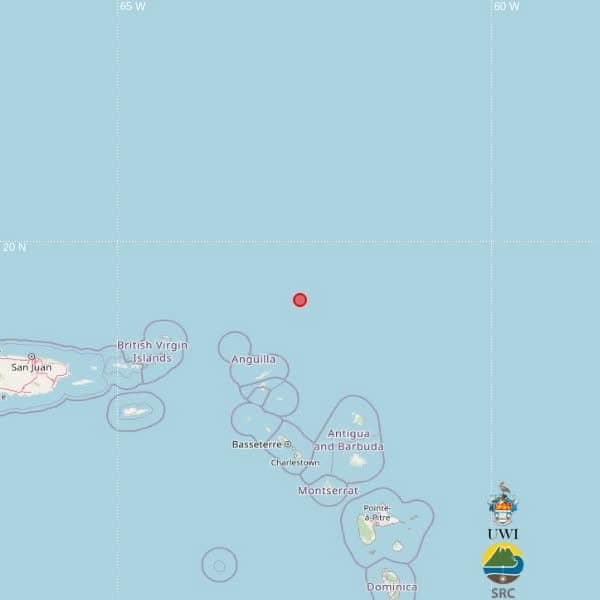
    A minor seismic event measuring 3.8 on the Richter scale was detected north of Antigua and Barbuda late Friday evening, as confirmed by the University of the West Indies Seismic Research Centre. The tremor occurred at 8:50 p.m. local time (00:50 UTC) on March 20th, with its epicenter positioned approximately 247 kilometers north-northwest of St. John’s, Antigua.

    According to preliminary data, the earthquake originated at a depth of 10 kilometers beneath the Earth’s surface, with coordinates placing it at latitude 19.22 north and longitude 62.56 west. The seismic activity was also recorded 214 kilometers north of Basseterre, St. Kitts and Nevis, and 272 kilometers north of Brades, Montserrat.

    Notably, the tremor appears to have gone unfelt across the region, with no immediate reports of ground shaking or structural damage. The Seismic Research Centre emphasized that their initial calculations were generated through automated computer algorithms, with the precise location subject to potential revision upon further scientific analysis. The event serves as a routine geological occurrence in the seismically active Caribbean region.