作者: admin

  • Kunsteducatie krijgt impuls in Brokopondo met project Beeldkracht

    Kunsteducatie krijgt impuls in Brokopondo met project Beeldkracht

    In a vibrant celebration of cultural heritage, the Beeldkracht arts education initiative has brought renewed focus to the significance of artistic development within Suriname’s Brokopondo district. Spearheaded by the Nola Brokopondo Foundation, the project resumed activities Monday at the Nucleus Center of the Ministry of Education, Science and Culture, receiving enthusiastic endorsement from the Directorate of Culture.

    The program attracted hundreds of students and teachers from vocational schools across the district, who arrived by bus to engage with visual arts and photography. Participants admired the intricate woodcarvings of visual artist David Linga while photographer Roy Tjin demonstrated techniques for capturing artwork effectively using basic mobile phone cameras.

    The opening ceremony featured students from Frans Pryor School in Tapoeripa, who welcomed cultural representatives with a traditional Saramaccan song followed by a musical tribute to the Surinamese flag. The performance highlighted the symbolic meaning of the flag’s colors and star as emblems of national identity.

    Samuel Wens, chairman of the Nola Brokopondo Foundation, honored the legacy of Dutch artist Nola Hatterman, who played a pivotal role in developing Suriname’s art education system from 1954 until her final years in Brokopondo. Hatterman taught drawing to local children and organized exhibitions from her Mamamdamweg studio. The Beeldkracht project forms part of Suriname’s 50th independence anniversary commemorations and advances plans to restore Hatterman’s former residence as a district arts center.

    Clifton Braam, deputy director of the Directorate of Culture, praised the initiative while acknowledging the challenges facing arts education in schools. He emphasized that creativity remains understimulated despite art’s essential role in youth development, celebrating both the restoration plans and the students’ flag song as exemplary methods for instilling national values.

    Workshops commencing Tuesday featured Linga’s mahogany sculptures displayed throughout the center’s park, with the artist explaining their symbolism connected to Suriname’s history of slavery and freedom struggles. Tjin provided practical photography guidance focusing on lighting, composition, and background techniques.

    Students responded with visible emotion to the artworks, with 16-year-old Kimora Liberetto noting that arts education diminishes after secondary school’s second year, making the project particularly meaningful. The sculptures evoked recognition of animals, birds, and elements from the students’ local environment.

    The program continues through the week with workshops on woodworking, cedar craftsmanship, and art conservation in tropical climates. Over five hundred secondary students will participate in exhibitions and workshops, supported by funding from the Johan Ferrier Fonds.
  • Antigua and Barbuda, Dominica respond as partial US travel restrictions set to take effect in the new year

    Antigua and Barbuda, Dominica respond as partial US travel restrictions set to take effect in the new year

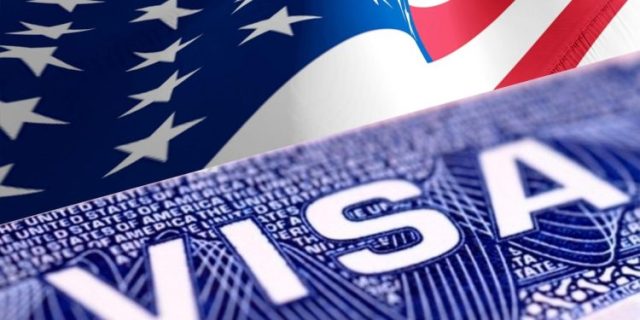
    The United States has announced significant visa restrictions targeting multiple nations, including Caribbean counterparts Antigua and Barbuda and Dominica, citing national security concerns related to their Citizenship by Investment (CBI) programs. The policy shift, declared by the White House on December 16, 2025, will take effect January 1, 2026.

    This development represents an expansion of existing travel limitations, now encompassing twenty additional countries across Africa and the Caribbean. The restrictions specifically apply to B1/B2 business/tourist visas, F and M student visas, and J exchange visitor visas for applicants from these nations.

    According to the presidential proclamation, the measures aim to address perceived vulnerabilities in immigration vetting processes. The administration identified several systemic issues including inadequate document verification, unreliable criminal records, and insufficient birth registration systems in affected jurisdictions. Particular concern was directed toward CBI programs that allegedly enable identity concealment and bypass standard vetting protocols through non-residency requirements.

    Caribbean leaders have responded with both surprise and consternation. Antiguan Prime Minister Gaston Browne expressed ‘deep disappointment,’ asserting that recent legislative reforms have already implemented a mandatory 30-day physical residency requirement for citizenship applicants—directly contradicting the US administration’s stated concerns.

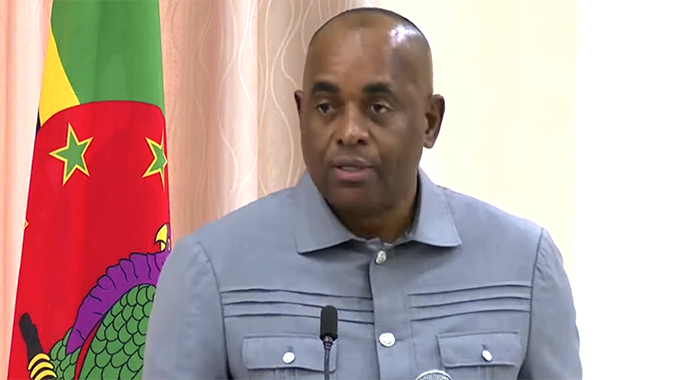
    Similarly, Dominican Prime Minister Roosevelt Skerrit highlighted his nation’s comprehensive CBI reforms enacted in October 2025, which established enhanced due diligence procedures, stricter financial transparency mandates, and an independent regulatory authority. Both governments have initiated diplomatic channels, dispatching envoys to Washington for urgent consultations regarding the implementation scope of these restrictions.

    The policy announcement has generated uncertainty among current visa holders and applicants from affected nations, with specific implications for educational exchanges, business travel, and diplomatic relations between the US and Eastern Caribbean states.

  • Parlementaire commissie wil OM spreken over initiatiefwet inrichting rechterlijke macht

    Parlementaire commissie wil OM spreken over initiatiefwet inrichting rechterlijke macht

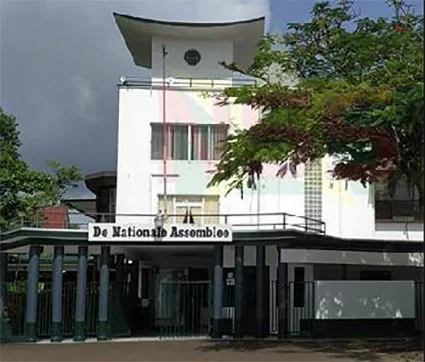
    Suriname’s National Assembly has taken significant steps toward judicial reform with the establishment of a special parliamentary committee mandated to engage with the Public Prosecutor’s Office regarding proposed legislation on the structure of the judiciary. The committee, appointed during Monday’s administrative session, aims to initiate dialogue with judicial authorities as early as this week.

    Rabin Parmessar, leader of the National Democratic Party faction and appointed committee chair, currently oversees four distinct legislative proposals concerning judicial organization. Parmessar clarified that the decision to consult the Public Prosecutor’s Office stems from constitutional necessities rather than responding to Prosecutor General Garcia Paragsingh’s expressed concerns about the proposed laws. “This initiative reflects our shared commitment to properly establishing the judicial branch as a fundamental pillar of our separation of powers,” Parmessar stated.

    Both Parmessar and fellow NDP legislator Ebu Jones emphasized that parliamentary members maintain constitutional authority to propose legislation, noting that the Prosecutor General’s public criticism through media channels occurred prematurely and without proper procedural context. Jones highlighted the established parliamentary process for legislative proposals, which involves formal submission, committee appointment during administrative sessions, and consultation with relevant stakeholders before public deliberation.

    The current situation presents a unique circumstance where four separate committees—all chaired by Parmessar—will examine constitutional amendments and judicial restructuring proposals before they became public knowledge, somewhat accelerating the typical legislative timeline.

    In parallel developments, the National Assembly established additional committees for other legislative matters, including a committee for the Sustainable Nature Management initiative led by NDP parliamentarian Rossellie Cotino. The government has identified this legislation as crucial for policy implementation, particularly following Suriname’s recent securing of $20 million in commitments from Nordic countries and international environmental institutions during the latest UN assembly. These funds remain contingent upon strengthening the legal framework for environmental conservation.

    Notably, the proposed ban on online gambling has not yet received committee assignment as it was absent from the current session’s agenda. Jones has received assurances that this proposal will be prioritized during the next parliamentary administrative meeting.

  • STATEMENT: Ministry of Foreign Affairs on US visa sanctions

    STATEMENT: Ministry of Foreign Affairs on US visa sanctions

    The Commonwealth of Dominica has formally responded to the United States government’s recent imposition of partial travel restrictions targeting Dominican nationals. The White House disclosed this diplomatic decision on December 16, 2025, with implementation scheduled for January 1, 2026.

    In an official statement, Dominican authorities acknowledged potential concerns arising from this development while emphasizing their serious and urgent approach to the matter. The government has initiated high-level communications with the United States Embassy based in Bridgetown, Barbados, seeking comprehensive clarification regarding multiple aspects of the new measures.

    Diplomatic engagements focus on three primary objectives: determining the precise scope of restrictions, understanding the foundational rationale behind the implementation, and identifying specific consequences for Dominican travelers, international students, family members, and legitimate visa holders. The government has committed to protecting citizen interests through continued collaboration with American officials to resolve identified challenges.

    Transparency remains a priority throughout these diplomatic exchanges, with authorities pledging to provide accurate information to the public as developments occur. The government has promised subsequent updates once additional details are formally confirmed through diplomatic channels.

  • Dominica seeking ‘clarification’ on US travel restriction

    Dominica seeking ‘clarification’ on US travel restriction

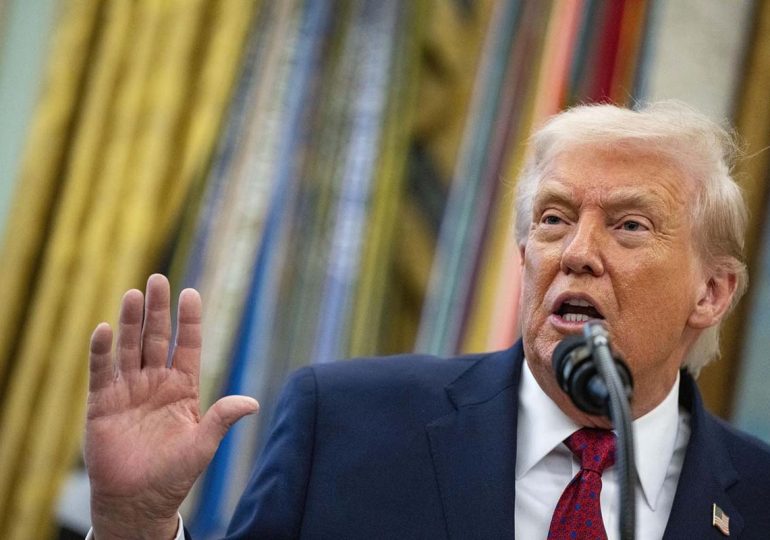
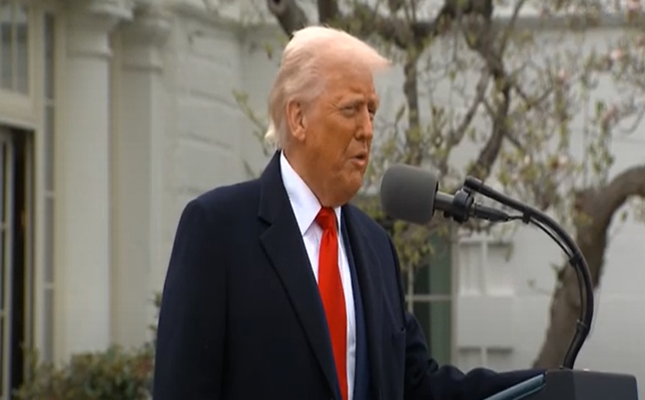
    ROSEAU, Dominica – The Dominican government has initiated urgent diplomatic communications with United States authorities following President Donald Trump’s executive order imposing partial travel restrictions on its nationals. The December 16, 2025 proclamation, which becomes effective January 1, 2026, also targets citizens of Antigua and Barbuda and Haiti.

    In an official statement released Tuesday night, Dominica’s Ministry of Foreign Affairs, International Business, Trade and Energy acknowledged the White House announcement while emphasizing its commitment to addressing concerns among Dominican citizens. The Roosevelt Skerrit administration has engaged US Embassy officials in Bridgetown, Barbados to obtain detailed clarification regarding the scope, rationale, and specific implications for Dominican travelers, students, and visa holders.

    President Trump’s executive order reinstates immigration policies from his first administration, citing national security concerns. The proclamation specifically identifies Citizenship-by-Investment (CBI) programs—which Dominica and Antigua and Barbuda operate—as creating vetting vulnerabilities. These programs grant citizenship to foreign investors without residency requirements, which US authorities claim enables individuals to conceal identities and evade travel restrictions.

    The Trump administration asserts that the measures are necessary to protect national security against potential terrorists, public safety threats, and those who might exploit immigration laws for malevolent purposes. The order suspends entry for immigrants and non-immigrants on B-1, B-2, B-1/B-2, F, M, and J visas from the affected Caribbean nations.

    Dominican officials have pledged continued cooperation with US authorities to address identified issues while protecting the interests of Dominican citizens. The government has committed to providing regular public updates as additional information becomes available.

  • Trump orders total blockade of sanctioned oil tankers linked to Venezuela

    Trump orders total blockade of sanctioned oil tankers linked to Venezuela

    In a dramatic intensification of pressure on Caracas, former U.S. President Donald Trump has declared a comprehensive naval blockade prohibiting all sanctioned oil tankers from entering or departing Venezuelan waters. This decisive action represents the most aggressive measure to date in Washington’s campaign against the administration of Venezuelan President Nicolás Maduro.

    Through an official communication on Truth Social, Trump asserted that substantial U.S. military assets have encircled Venezuela within Caribbean territories. He leveled serious accusations against the Maduro government, claiming it utilizes national petroleum resources to bankroll narco-terrorism operations, human trafficking networks, kidnapping schemes, and various illicit enterprises. The former president framed this maritime blockade as essential to halt prohibited crude exports and recover assets allegedly expropriated from United States interests.

    This blockade significantly expands ongoing U.S. naval operations in international Caribbean waters, previously justified as counter-narcotics initiatives targeting regional drug trafficking organizations. Although White House officials haven’t quantified the expected impact on tanker movements, energy analysts anticipate substantial disruptions to Venezuelan petroleum exports with potential ramifications for global oil markets.

    The escalation follows intensified activities by U.S. Southern Command, which has interdicted over thirty vessels since August accused of narcotics transportation and sanctions evasion. Most notably, American forces recently captured the sanctioned Skipper tanker—a vessel long associated with Venezuela’s so-called “shadow fleet”—while it transported crude near Venezuela’s coastline. The apprehended ship was escorted to a U.S. port where legal proceedings to confiscate its cargo are underway.

  • Cooperation : Haiti and Mexico celebrate 195 years of diplomatic relations

    Cooperation : Haiti and Mexico celebrate 195 years of diplomatic relations

    PORT-AU-PRINCE, Haiti – In a significant demonstration of international camaraderie, Haiti and Mexico commemorated 195 years of uninterrupted diplomatic relations during an official ceremony held December 16, 2025, at the Montana Hotel in Port-au-Prince.

    The event, characterized by both solemn reflection and warm conviviality, assembled high-ranking officials from both nations. Prime Minister Alix Didier Fils-Aimé led the Haitian delegation alongside Presidential Transition Advisor Leslie Voltaire and Foreign Affairs Minister Jean-Victor Harvel Jean-Baptiste. The Mexican contingent was headed by Ambassador José de Jesús Cisneros Chávez, with Haitian Ambassador to Mexico Hubert Labbé also in attendance alongside numerous diplomatic corps representatives.

    The ceremony featured the inauguration of a historical exhibition showcasing archival photographs and documents chronicling nearly two centuries of bilateral cooperation. Prime Minister Fils-Aimé personally participated in the ribbon-cutting ceremony that unveiled this visual narrative of international friendship.

    During the proceedings, Haitian officials reaffirmed their government’s unwavering commitment to strengthening bilateral ties with Mexico across multiple strategic sectors. The partnership prioritizes collaborative initiatives in healthcare, education, national defense, security enhancement, and agricultural development – all oriented toward sustainable development and mutual prosperity.

    Presidential Advisor Voltaire delivered an address highlighting the exemplary nature of Haitian-Mexican relations, noting their foundation in shared historical struggles for freedom and independence. He referenced Haiti’s early support for Latin American independence movements as one of history’s first instances of South-South cooperation.

    Voltaire further emphasized Mexico’s substantial contributions to Haitian development through educational scholarship programs, cultural exchanges, and technical cooperation projects. He characterized Mexico as an indispensable strategic partner in Haiti’s ongoing reconstruction and sustainable development efforts, underscoring the relationship’s evolution from historical solidarity to contemporary partnership.

  • PM Drew tables EC$1 billion budget addressing government priorities for 2026

    PM Drew tables EC$1 billion budget addressing government priorities for 2026

    In a comprehensive parliamentary address spanning nearly five hours on December 16, 2025, Prime Minister Dr. Terrance Drew presented a transformative EC$1.07 billion national budget for the 2026 fiscal year. The financial blueprint outlines a strategic shift away from dependency on the Citizenship by Investment Programme while addressing critical national priorities including healthcare enhancement, economic expansion, crime reduction, infrastructure modernization, and cost-of-living mitigation measures.

    The budget framework establishes a three-year fiscal strategy emphasizing strengthened public financial management, increased governmental transparency, and improved service delivery mechanisms. Dr. Drew highlighted the necessity of this approach given current economic challenges, particularly declining CBI revenues that have traditionally served as the Federation’s primary economic pillar.

    Financial projections indicate total revenue and grants for 2026 are estimated at $894.8 million, with recurrent revenue expected to reach $855.7 million. The government anticipates recurrent expenditure of $879.8 million for 2026, alongside capital expenditure and net lending projected at $167.2 million. Medium-term forecasts suggest revenue growth to $899.1 million with average annual expenditure of $892.4 million for 2027-2028.

    The budget addresses the 2025 fiscal deficit, where government expenditure reached $1.04 billion (35.6% of GDP) against revenues of $732.7 million. Public debt is projected to rise to $1.7 billion by year-end 2025, underscoring the need for fiscal reforms.

    Notably, the Prime Minister announced that public servants will receive traditional double salary payments, while government officials and their advisers will be excluded from this benefit. The administration has committed to implementing tax policy reforms designed to create a more equitable and modernized tax system supported by enhanced compliance measures.

  • Economy : Strategic priorities of the Ministry of Commerce and Industry (video)

    Economy : Strategic priorities of the Ministry of Commerce and Industry (video)

    In a significant development for Haiti’s economic landscape, Commerce and Industry Minister James Monazard unveiled an ambitious portfolio of strategic priorities during the 31st edition of Tuesdays of the Nation on December 16, 2025. The presentation, hosted at the Prime Minister’s Office, detailed comprehensive programs, reforms, and structural projects designed to stimulate national economic growth.

    The ministry’s forward-looking agenda includes the implementation of a digital Professional Identity Card (CIP) application platform, representing a significant step toward modernizing Haiti’s professional documentation system. Minister Monazard provided particularly encouraging updates regarding the HOPE/HELP legislation renewal, indicating that the process is nearing completion with only one final procedural step remaining within the U.S. Congressional framework. The unanimous endorsement by a Congressional Commission signals strong bilateral support, with implementation expected imminently barring unexpected complications.

    Entrepreneurship development features prominently in the ministry’s strategy, with both the Youth Entrepreneurship Support Program (PAPEJ) and Women’s Entrepreneurship Support Project (PAEF) demonstrating measurable progress. Financial backing has already been secured for two of the ministry’s fourteen active initiatives during the initial quarter of the 2025-2026 fiscal year. The PAEF initiative has successfully launched its second cohort, while PAPEJ continues to advance according to established benchmarks.

    The Integrated Business Development Program (PIDE) constitutes another cornerstone of the economic strategy, focusing support on local and regional ventures across critical sectors including agro-industry, manufacturing, and biotechnology. Special emphasis is being placed on revitalizing traditional industries such as sewing and shoemaking through targeted strengthening initiatives.

    A distinctive regional development approach is being implemented with particular concentration on the Great North and Great South regions, where the majority of program beneficiaries will be selected. This geographical focus aligns with Minister Monazard’s vision of decentralizing economic activity and promoting balanced regional development throughout Haiti.

  • Punta Cana International Airport set for busiest year ever in 2025

    Punta Cana International Airport set for busiest year ever in 2025

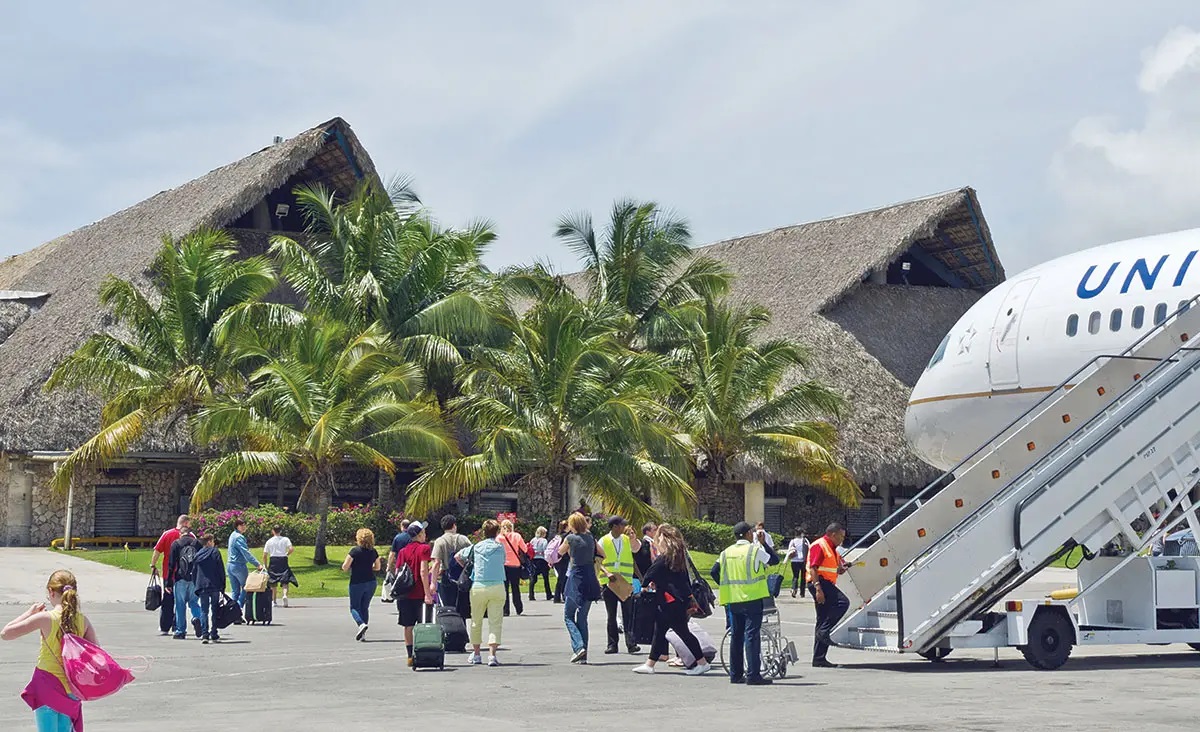
    PUNTA CANA – Aviation authorities at Punta Cana International Airport (PUJ) project that 2025 will become the most active period in the facility’s operational history, with unprecedented levels of passenger movement and flight activities anticipated.

    Giovanni Rainieri, Director of Airside Operations, indicated that December 2025 is expected to be the peak month, concentrating the highest volume of daily passenger and flight operations. Data shared with N Digital reveals that over one million passengers holding confirmed tickets are projected to transit through the terminal by December 31, 2025, cementing PUJ’s status as the Dominican Republic’s primary aviation gateway.

    A new single-day passenger record is forecast for December 29, with approximately 51,000 travelers expected across 155 flights—surpassing the previous milestone of 50,000 passengers. During the week spanning December 24 to December 31, airport officials anticipate processing around 300,000 passengers, including 245,000 international arrivals. Simultaneously, weekly flight operations are predicted to reach an all-time high of 850 inbound and outbound movements, exceeding the prior record of 786.

    Average daily passenger traffic is projected to rise significantly in the latter half of December, exceeding 40,000 travelers per day—a notable increase from the 30,000 daily passengers recorded in the first two weeks of the month. This substantial surge has necessitated expanded staffing and enhanced security protocols.

    To accommodate the increased operational load, multiple national agencies have amplified their presence at the airport. These include the National Drug Control Directorate (DNCD), the General Directorate of Migration, the Specialized Airport and Civil Aviation Security Corps (CESAC), and the Dominican Institute of Civil Aviation (IDAC).