作者: admin

  • Emrick John Claims Barbuda Council Is Victimising Him Over His Support for the ABLP

    Emrick John Claims Barbuda Council Is Victimising Him Over His Support for the ABLP

    Fresh political tensions have erupted on the Caribbean island of Barbuda in the wake of recent national and local elections, after unsubstantiated claims of political retaliation against a public sector employee surfaced on social media. Multiple posts shared across digital platforms have pushed the narrative that the Barbuda Council orchestrated a punitive job transfer against a local worker solely because of her public political support for the opposition Antigua and Barbuda Labour Party (ABLP).

    One of the viral posts openly declared “Victimization done start,” a call to action that encouraged other public workers who faced similar alleged retaliation to share their own transfer notices and hold officials accountable. A second post attached official documentation: a formal transfer letter from the Barbuda Council, dated May 7, 2026, notifying Kerry Warren that she would be reassigned to the position of cleaner at the cafeteria of Sir McChesney George Secondary School, effective just one day after the letter was issued, on May 8. Signed by the Barbuda Council’s Secretary and Chief Executive Officer, the correspondence lays out Warren’s new scheduled work hours and directs her to report to an on-site supervisor at the secondary school. John, an individual sharing the allegations, has publicly linked the reassignment directly to Warren’s open campaigning for the ABLP during the lead-up to the April 30 general election.

    Notably, the social media posts making the claims have not produced any concrete evidence that directly ties Warren’s job change to her political affiliation, linking the decision to partisan retribution. To date, the Barbuda Council, which maintains local governance authority over the island, has not issued any public statement addressing or responding to the allegations made against it. The recent election cycle delivered clear results across both national and local levels: the Barbuda People’s Movement (BPM) retained its long-held political control over the local Barbuda Council, while the ABLP secured a historic fourth consecutive term in national office, winning a landslide 15-2 majority in the country’s legislature.

  • 18 Cruise Passengers Quarantined in U.S. After Hantavirus Outbreak

    18 Cruise Passengers Quarantined in U.S. After Hantavirus Outbreak

    A multi-state public health monitoring and quarantine operation is underway in the United States, after 18 passengers exposed to a hantavirus outbreak linked to an international cruise ship returned to American soil, according to updates from U.S. public health authorities. As of May 11, 2026, these passengers have been placed under targeted medical observation as officials work to stop further spread of the rare but dangerous pathogen and calm public anxiety over broader community transmission.

    Sixteen of the 18 monitored individuals, which includes at least one person who has already tested positive for hantavirus, are being held at the University of Nebraska Medical Center, one of the nation’s leading facilities for treating and isolating emerging infectious diseases. The remaining two passengers have been transferred to Emory University Hospital in Atlanta for more in-depth clinical evaluation and specialized care.

    Health officials confirmed that all 16 patients in Nebraska currently show no signs of hantavirus infection. However, at least one of the two patients receiving care in Atlanta is already exhibiting hallmark symptoms of the virus. Patients range widely in age, from people in their late 20s to those in their early 80s.

    The outbreak is traced back to the expedition cruise vessel MV Hondius, with the first cases emerging shortly after the ship began its voyage in mid-April 2026. To date, three passengers connected to the outbreak have died, and multiple other people who were aboard the vessel have developed confirmed or suspected infections. The World Health Organization has noted that while hantavirus is most commonly transmitted to humans from rodent excrement, the crowded enclosed environment of the cruise ship may have allowed for limited person-to-person spread of the Andes strain of the virus involved in this outbreak.

    U.S. health leaders have moved quickly to address widespread public concern over the outbreak, emphasizing repeatedly that the overall risk of hantavirus transmission to the general American public remains extremely low. Dr. Brian Christine, a senior official with the U.S. Department of Health and Human Services, emphasized the low risk in a public statement, noting that the Andes strain requires extended, close intimate contact with an infected symptomatic person to spread between people. Casual contact in public spaces does not pose a meaningful transmission risk, he explained.

    The U.S. Centers for Disease Control and Prevention confirmed that all U.S.-based passengers who returned home from the MV Hondius are under daily active monitoring by state and local public health departments. Officials have also prepped protocols to immediately isolate any individual who develops hantavirus symptoms while completing their monitoring period at home, to prevent secondary spread.

    Beyond the 18 passengers placed in dedicated medical facilities, an additional nine people across six U.S. states are also undergoing routine monitoring after potential exposure to the virus through their connection to the outbreak, CNN reported. Public health agencies have not released further details about the identities of the exposed individuals to protect patient privacy.

    Hantavirus infections, while rare, can cause severe respiratory and systemic illness with a relatively high mortality rate, which has prompted the proactive, precautionary response from global and U.S. health authorities in this outbreak.

  • Government turns to regional bodies for electoral reform assistance

    Government turns to regional bodies for electoral reform assistance

    As the Caribbean nation of Dominica works to overhaul its national electoral system, slow progress in key phases of the reform initiative has pushed the government to reach out to multiple leading regional and global bodies for specialized technical and expert support.

    In an official statement released by the Office of the Prime Minister of Dominica (OPM), the government has submitted formal requests for guidance to four prominent institutions: the Commonwealth Secretariat, the Organization of American States, the Organisation of Eastern Caribbean States, and the Caribbean Community. The appeal for outside support comes after growing public and administrative concerns over the sluggish pace and suboptimal execution of two core election modernization processes.

    Speaking to journalists during a press briefing on Wednesday, Prime Minister Roosevelt Skerrit outlined the core goals of the ongoing reform project: to modernize Dominica’s entire voting framework by updating voter registration verification protocols and rolling out a unified national voter identification card system. Skerrit emphasized that these changes are crafted to boost the accuracy and reliability of the country’s electoral roll, while adding robust new protections to prevent voter fraud and preserve the integrity of future elections.

    Breaking down the current progress of the voter confirmation process, established under the updated Registration of Electors Act, Skerrit shared official data covering the period from October 15, 2025, through April 30, 2026. Over this six-and-a-half-month window, the Electoral Office received a total of 16,573 voter confirmation applications. More than 79% of these applications – 13,146 in total – were submitted within the first six weeks of the 12-month confirmation period, which runs from October 2025 to October 2026. Despite this early flood of submissions, by the end of April 2026, only 6,592 applications, equal to just 40% of the total received, had been fully processed and approved. That leaves nearly 10,000 applicants (9,981) still waiting for their registration confirmation, Skerrit confirmed.

    Compounding the delay, no voters who have already secured confirmation have received their new national voter ID cards. Skerrit noted that the Electoral Office has announced it will not even begin issuing the new ID cards for another six to eight weeks, pushing the rollout of the core reform component further behind schedule.

    The prime minister explained that the decision to solicit external expertise is not a sign of withdrawal from the reform process, but rather a recognition of the enormous scale and complex technical requirements of updating the electoral system. Building a fully accurate, secure voter register and a dependable national ID infrastructure demands specialized knowledge that the government is eager to source from established international electoral bodies.

    The OPM further clarified the specific areas where the government is requesting assistance. First, external experts are asked to conduct a full, detailed review of the current voter confirmation process and identify bottlenecks slowing application processing. Second, the government is seeking actionable recommendations for the secure operation of the voter ID program, including guidance on integrating the new card system with Dominica’s existing electoral database, and ensuring the cards remain easily accessible to all eligible voters across the country.

    Beyond process and technical fixes, Dominica’s authorities are also looking for guidance aligned with globally recognized electoral standards to improve three key pillars of the reform: overall transparency, public voter participation, and administrative efficiency. The broader support package will also include targeted training for electoral officials working on the ground, and expanded public awareness campaigns designed to build public trust in the new systems and encourage more eligible voters to complete the confirmation process.

    Skerrit closed by reaffirming the government’s full commitment to seeing the reforms through, noting that the administration is ready to coordinate closely with all partnering institutions and provide any resources or access required to facilitate joint assessments and on-the-ground technical missions focused on getting the reform initiative back on track.

  • Smoke postpones Paradise, Brittons Hill clash

    Smoke postpones Paradise, Brittons Hill clash

    Two of the Barbados Football Association (BFA) Premier League’s top title contenders will have to hold their breath a little longer, as their hotly contested title-race showdown was called off mid-game, with a second match also postponed, all due to hazardous thick smoke from a nearby bush fire.

    The disruption hit the BFA Technical Centre playing grounds, where the clash between second-ranked Paradise and third-placed Brittons Hill United was halted at halftime, with the scoreboard still locked at 0-0. Organizers confirmed that this match, paired with the later scheduled fixture between defending champions Weymouth Wales and Kickstart, would be rescheduled at a later date, with no new time confirmed as of yet.

    With just three rounds of regular play left in the season, the results of both postponed matches will have massive ripple effects on the final title standings. Current table-toppers Weymouth Wales hold only a narrow one-point lead over second-place Paradise, while Brittons Hill United sit five points further back in third, meaning every point will be critical as the season reaches its climax.

    While the title contenders’ match was cut short, one full fixture did get completed on matchday, and it delivered all the drama fans could have hoped for: the UWI Blackbirds pulled off a gritty 2-1 comeback win over Bagatelle, courtesy of a stoppage-time match-winner from substitute Xavier Archer.

    UWI Blackbirds drew first blood in the 21st minute, when a left-sided corner from Teon Cadogan sent the penalty area into chaos, and Johan Goddard managed to poke the ball over the goal line to give his side an early lead – a rare advantage for the Blackbirds, who have struggled through a difficult season so far. The lead would not hold long, though; just 10 minutes later, sloppy defending from UWI let Bagatelle’s top scorer Torian Joseph burst through the defensive line, slotting the ball past goalkeeper K’den Hee Chung to level the score.

    The score stayed level through halftime, but the game’s tension ramped up in the 57th minute, when UWI captain Tidre Arthur was shown a red card by referee John Griffith for using an elbow in an aerial challenge with Bagatelle’s Tyrese King, leaving the Blackbirds down to 10 men.

    As the match ticked into stoppage time, a draw looked like the most likely outcome. But that changed when Rojae Collins delivered a pinpoint cross that found an unmarked Xavier Archer, who headed home the winning goal in the 95th minute to secure all three points for UWI. Minutes later, Bagatelle’s Azure Cumberbatch was also sent off after picking up a second yellow card, leaving both sides down to 10 players by the final whistle.

    After the hard-fought victory, Blackbirds player Zion Gollop reflected on his side’s performance, praising the team’s resilience through the match’s toughest moments. “I thought we showed good character to grind out the 2-1 win and we stayed together when the game got quite tough after going down a man in the second half,” Gollop said. “We can take positives from our work rate and resilience and taking the chances when we got them.”

    Looking ahead to the remaining matches of the season, Gollop also noted areas where the side can improve. “Probably the game management, keeping concentration for the full 90 minutes and being a bit cleaner in possession at times, but there’s still room to grow and there is definitely something to build on,” he added.

  • Venezuela will not accept World Court’s ruling that Essequibo belongs to Guyana

    Venezuela will not accept World Court’s ruling that Essequibo belongs to Guyana

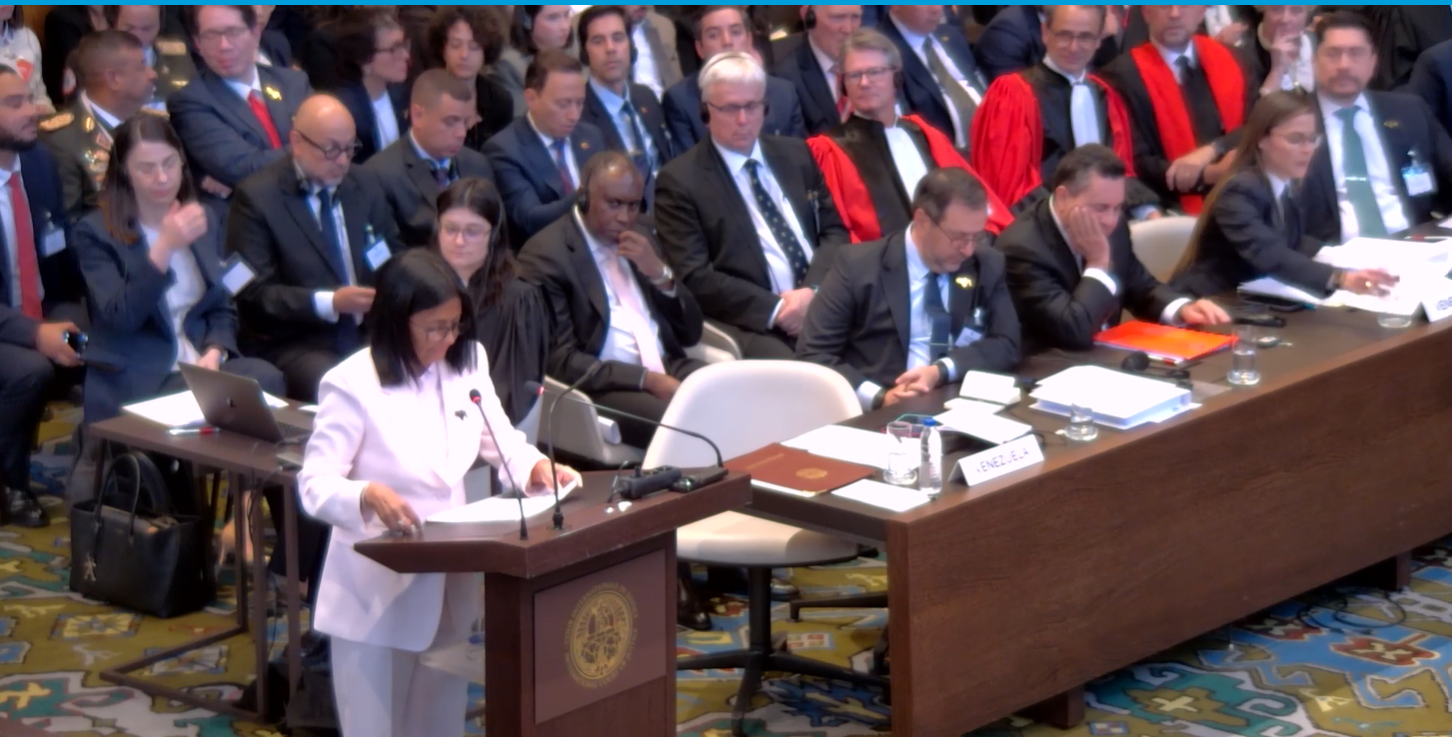
    On Monday, 11 May 2026, Venezuela’s interim President Delcy Rodriguez delivered closing oral arguments before the United Nations’ highest judicial body, the International Court of Justice (ICJ), and issued a clear statement that Caracas will reject any ICJ judgment that upholds the validity of the 1899 Arbitral Tribunal Award, which established the current border between Venezuela and Guyana over the resource-rich Essequibo Region.

    Rodriguez emphasized that Venezuela’s refusal to recognize ICJ jurisdiction over the decades-long territorial dispute extends to all possible outcomes of the current proceedings. “Even if the Court were to declare the 1899 award invalid, Venezuela would be unable to comply with such a ruling, as it would undermine the 1966 Geneva Agreement and core principles of international law,” she stated. “It follows very clearly that there is no legal basis for recognizing any decision resulting from this process, whatever that decision may be.”

    The interim president reaffirmed Venezuela’s long-held position that the 1966 Geneva Agreement, signed by Venezuela, the United Kingdom, and British Guiana ahead of Guyana’s independence, remains the only internationally valid framework for resolving the border dispute. She warned that any ICJ judgment on the controversy will not deliver a mutually acceptable definitive resolution, and will instead deepen divisions between the two South American nations.

    “Any ruling by this court will only push both sides to entrench themselves further in their opposing positions, moving us further away from the practical, mutually satisfactory settlement both parties committed to reaching when we signed the Geneva Agreement in 1966,” Rodriguez explained.

    Instead of ICJ adjudication, Rodriguez proposed an alternative path aligned with the peaceful goals of the 1966 accord: a high-level bilateral negotiation mediated by key regional stakeholders. She argued that this approach would be far more productive and effective than judicial proceedings in reaching a lasting resolution that works for both nations.

    Rodriguez also pushed back against claims that a ruling in Guyana’s favor would resolve the dispute permanently, noting that such an outcome would not end Venezuela’s territorial claims and would only return the conflict to the long-standing impasse the Geneva Agreement was designed to address.

    She further accused Guyana of abandoning the Geneva accord and acting in bad faith starting in 2015, when large oil reserves were discovered offshore of the Essequibo Region. Since that discovery, Rodriguez said, Guyana has deliberately sought to evade its obligations under the 1966 agreement by turning to the ICJ for a binding ruling.

    Outlining Venezuela’s historical claim to the territory, Rodriguez argued that irrefutable evidence confirms Essequibo has been part of Venezuela’s sovereign territory since the formation of the Captaincy General of Venezuela by the Spanish crown in 1777, which included the province of Essequibo as an official administrative unit. This administrative boundary, she said, forms the territorial foundation of the independent Republic of Venezuela declared in 1811, and every Venezuelan constitution since independence has explicitly enshrined Guayana Esequiba as Venezuelan territory. She added that the United Kingdom formally recognized Colombia’s eastern border as reaching Guayana Esequiba in 1825, meaning the UK never held legitimate legal title to the territory — a right that also cannot be claimed by its successor state Guyana today.

    “Beginning in 1840, after discovering immense gold reserves in the territory, the British Crown designed a deliberate strategy to seize and plunder the region, and now Guyana seeks to artificially forge a false legal title to the land through these misleading proceedings,” Rodriguez said.

    The interim president also condemned Guyana’s request that the ICJ order Venezuela to remove all references to Essequibo from national maps, remove it from history education, and eliminate national symbols that reference the territory — measures she described as an attempt to erase Venezuelan claims to the region. “The aim is to erase the memory of a people in order to nullify their future,” she said. “Annihilating history will never, never legitimise dispossession.”

    To counter Guyana’s argument that neither Spain nor Venezuela ever exercised effective control over any part of the Essequibo Region, Rodriguez presented newly submitted Venezuelan maps showing Spanish administrative control extended inland as far as the Pomeroon River within Essequibo.

    Guyana has maintained consistently that the 1899 Arbitral Tribunal, the treaty that established it, and its final boundary award are all fully legal and valid. It also rejects Venezuela’s claims, based on a posthumous memorandum from former arbitrator Mallet Prevost, that the tribunal’s president, Friedrich Martens, engaged in manipulative backroom dealing to sway tribunal members toward a ruling that favored British interests.

    Notably, Rodriguez avoided the harsh anti-American rhetoric that defined the previous administration of former President Nicolas Maduro, who often accused the U.S. government, U.S. Southern Command, and ExxonMobil of colluding with Guyana to seize Venezuelan territory. Following Maduro’s removal from office in a U.S.-backed military operation, bilateral relations between Washington and Caracas have improved significantly under Rodriguez’s interim government: U.S. sanctions on Venezuelan oil exports have been lifted, relevant domestic laws have been amended to align with bilateral cooperation, and major American oil companies have already begun returning to operate in Venezuela.


  • Marcue enters iTunes Top 10 Chart with ‘Just Can’t Let Go’

    Marcue enters iTunes Top 10 Chart with ‘Just Can’t Let Go’

    After a prolonged break from the music industry driven by unforeseen setbacks, rising multifaceted recording artist Marcue is solidifying his presence on both local and global music stages, earning traction that has positioned him as one of the most exciting emerging talents to watch. The entertainer opened up recently about his satisfaction with the trajectory of his career, noting that his discography has grown from relative obscurity to become consistent mainstays on radio programming and official music charts across the world. Marcue’s most recent milestone came when his latest solo single *Just Can’t Let Go* climbed to the 10th spot on the United States’ iTunes Singles Chart, a breakout achievement that has confirmed his belief that he is poised to leave a permanent mark on the global music landscape. “Everything is falling into place exactly how I hoped it would,” Marcue shared in a recent interview. “When I saw my track sitting alongside names like Shaggy, Sean Paul, and the incomparable Bob Marley on the chart, I couldn’t help but feel an incredible sense of pride. I stepped away from the scene for a stretch because of issues I couldn’t have predicted, but ever since I made my comeback, every step has been more amazing than the last. Seeing the music industry embrace my work wholeheartedly is a feeling I can’t really put into words.” The Jamaican-born artist has earned additional visibility from popular Jamaican entertainment platform Onstage TV, which has featured him in two separate recent segments, and his growing social media presence has drawn overwhelmingly positive engagement from fans who are eager to follow his comeback journey. Marcue’s career also includes high-profile collaborative work that was never able to get an official launch during his earlier career: a few years back, he recorded the track *My Favourite Song* with iconic reggae star Buju Banton, and later created a remix of the track that added verses from dancehall legend Vybz Kartel and American rapper-producer Kent Jones. His unplanned break put those projects on hold, but with his return to full-time recording, those tracks are now poised to reach the wider audience they missed out on previously. Most recently, Marcue dropped *Looked Away*, a genre-blending crossover release that has already piqued the interest of music critics and industry analysts, many of whom have highlighted the track as a sign of the artist’s versatile range and broad commercial appeal.

  • Ricketts excited after appointment as Calabar head coach

    Ricketts excited after appointment as Calabar head coach

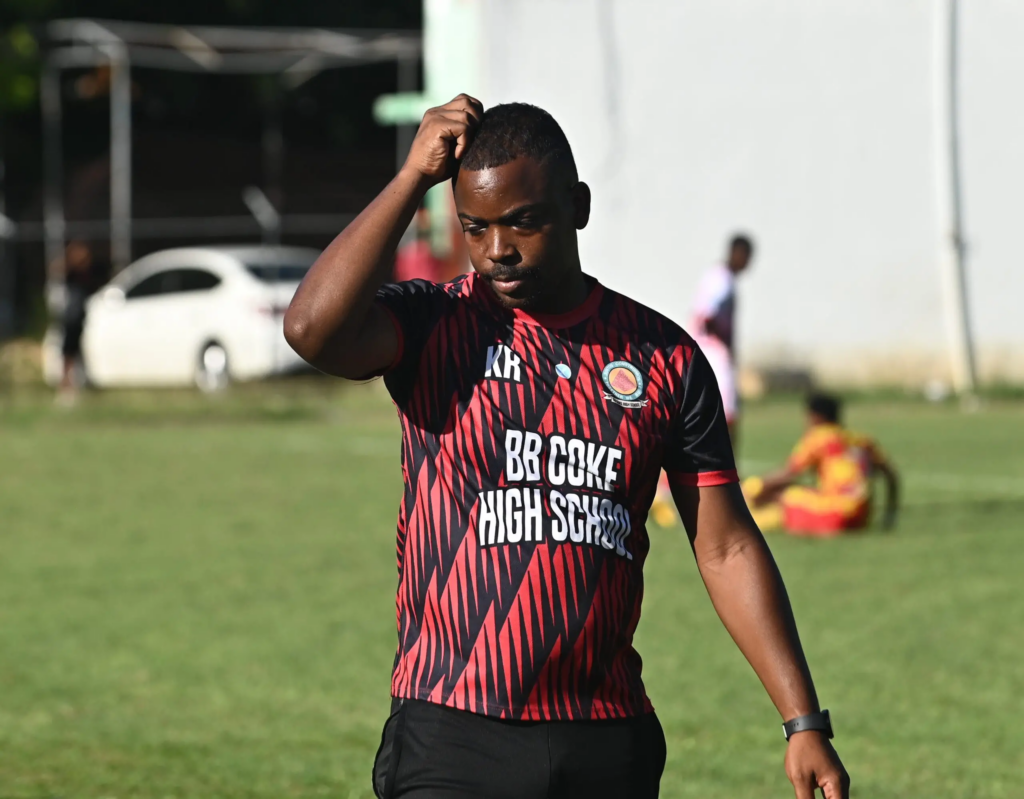
    KINGSTON, Jamaica — A new chapter for Calabar High School’s football program has officially begun, with seasoned Jamaican football coach Kemar Ricketts stepping into the role of technical director, bringing with him a proven track record of building competitive teams from the grassroots up. Fresh off pulling Treasure Beach FC back from the brink of relegation in the Jamaica Premier League, Ricketts says he is deeply honored to join the historic institution, which has produced dozens of elite athletes over its decades of existence.

    In an exclusive interview with Observer Online, Ricketts opened up about his priorities and vision for the program, opening with gratitude for the opportunity. “First, I have to thank God for granting me this incredible chance to join a school with such a rich legacy,” he said. “So many legendary sportspeople and prominent figures have walked these halls, and it truly is a privilege to become part of this community.”

    Ricketts fills the vacancy left by Jermey Miller, who guided Calabar High to the quarter-final stage of both the Manning Cup and Walker Cup for the first time in decades — a milestone that marked the program’s first major breakthrough in top-flight schoolboy football in generations. Calabar High’s trophy cabinet includes just three Manning Cup titles, with their most recent championship win coming back in 2005, a fact that underscores the gap the program has been looking to close in recent years.

    Unlike many new coaches who enter a role making grand promises of immediate silverware, Ricketts is focused on building sustainable, long-term success that will outlast his own tenure. His coaching philosophy has been shaped by 15 years leading BB Coke High’s daCosta Cup program, where he built the team’s entire competitive structure from scratch, an experience that prepared him for the work ahead at Calabar.

    “I’m not here to make empty guarantees about trophies. What I can promise is that I will give this role my absolute best every single day,” Ricketts said. “My core goal is to introduce clear structure, strong organization, and a culture of discipline across the program. We are building a durable program that will thrive for years after I am gone, and that long-term growth matters more to me than any quick, short-term result.”

    Ricketts pointed to his recent work at Treasure Beach FC as proof of his approach: after securing the club’s place in the Jamaica Premier League and keeping them from dropping out of the top division, he calls the result a “monumental achievement” that has prepared him for this new challenge. For Ricketts, taking on the Calabar High role in the storied Manning Cup competition is a dream opportunity he has long awaited.

    “I have admired the Manning Cup for years, for its technical quality and the rich tradition of competitive school football here in the Corporate Area,” he explained. “This is a whole new environment and a new challenge, but I am confident that things will grow better as we settle in and put in the work. The chance to rebuild and strengthen key parts of Calabar’s program is something I am incredibly excited about.”

    Beyond winning matches, Ricketts emphasized that his biggest priority is nurturing the young athletes he will coach, focusing on personal growth as much as on-pitch performance. He wants to help the student-athletes develop a clear sense of purpose, build unshakable self-belief, and learn to see their potential from a new perspective. That growth, he says, should translate to every area of their lives, not just the football pitch.

    “My biggest hope is that when these young men move on from the program, they leave as better people, with the confidence to express themselves both on and off the pitch,” Ricketts added. “That is the legacy I want to build here at Calabar.”

  • Project STAR honours five Salt Spring community champions

    Project STAR honours five Salt Spring community champions

    In St. James, Jamaica, five dedicated local residents of the Salt Spring neighborhood have earned the distinguished title of Community Champions from the social development initiative Project STAR, honored for their years of consistent volunteer leadership and unwavering commitment to lifting their community.

    The formal award ceremony took place during a recent public town hall meeting hosted by Project STAR at the Salt Spring New Testament Church, bringing together community members, local organizers and initiative leaders to celebrate the recipients’ contributions. Per an official statement from Project STAR, the honorees—Travis Cooke, Oraine Lawson, Barbara Beadle, Ann Marie Douglas and Sherri-Kay Morris—were recognized for impactful work spanning across four key areas: youth mentorship, community organizing, public communications and local entrepreneurship.

    Barbara Beadle, a long-serving community volunteer and assistant public relations officer for the Salt Spring Community Development Commission (CDC), was singled out for her steady, unwavering support of Project STAR since the program launched in Salt Spring in early 2024. The initiative noted that Beadle consistently shows up to contribute her time, energy and encouragement to any project or group that needs support, from youth outreach to senior engagement. In her response to the award, Beadle shared that the honor came as a complete surprise, adding that she never pursued recognition for her community work. “I am well elated. I appreciate it. I wasn’t looking for it,” she said. Beadle, who helps facilitate connections between the Project STAR team and residents across all age groups, expressed hope that the program’s positive impact would endure long after its formal period of operation ends, noting that local residents are prepared to carry forward the work the initiative started.

    Ann Marie Douglas, known affectionately by neighbors as “Ms Chin”, was recognized for her relentless grassroots organizing work, where she has encouraged hundreds of local residents to take part in Project STAR programs focused on strengthening family support systems and expanding access to job opportunities. Speaking after receiving her award, Douglas simply shared, “Well, I feel good.”

    Sherri-Kay Morris, chief public relations officer for the Salt Spring CDC, was honored for her work keeping the community well-informed and actively engaged with initiative activities, ensuring open and accessible communication between program organizers and local residents. Morris shared that she felt “elated and excited” to receive the recognition, noting that most ongoing community work rarely receives public acknowledgment. She also praised Project STAR for its community-centered approach, noting that the initiative followed through on all its commitments, and stood out from other programs by centering resident input from the very start, designing tailored programs for children, youth and seniors based on what local people said they needed. “They came in, they promised, they delivered, and they even added topping to the cake,” Morris said.

    Travis Cooke was recognized for his deep commitment to youth development through his work with the Kicking Forward Football Programme, which uses the popular sport as a platform to mentor at-risk young people and guide them toward positive life outcomes. Project STAR highlighted a recent example of Cooke’s dedication: when the community took a youth tournament trip to May Pen, Cooke volunteered his vehicle to transport participants free of charge, even covering all road toll costs out of pocket to uphold the program’s motto: “Everybody Fahwud”, or “Everybody Forward”.

    Oraine Lawson, a key community leader based in Salt Spring’s Melbourne neighborhood, became involved with Project STAR through the initiative’s nano-grants program, which supports local small business owners. After receiving funding to expand his own business, Lawson has dedicated his time to encouraging other local residents, especially emerging entrepreneurs, to take advantage of the resources and opportunities Project STAR offers.

    Saffrey Brown, project director for Project STAR, offered formal praise for all five awardees in her closing remarks. “I commend each of this year’s Community Champion awardees for the consistent service, leadership and care you demonstrate every day. Your example strengthens Salt Spring and inspires others to step forward. Thank you for helping to ensure that everybody fahwud,” Brown said.

  • Audit raises questions about ODPEM’s management of disaster relief

    Audit raises questions about ODPEM’s management of disaster relief

    KINGSTON, Jamaica — Jamaica’s national audit watchdog has raised serious red flags over how the country’s top emergency management agency handles public and donated disaster relief funding, including a major post-hurricane recovery program.

    The Auditor General’s Department (AGD) released a damning audit report Tuesday, which was formally presented to Jamaica’s parliament, calling out widespread systemic failures at the Office of Disaster Preparedness and Emergency Management (ODPEM), the government body tasked with leading national emergency response and recovery operations. The probe centered specifically on ODPEM’s stewardship of resources allocated to the Hurricane Melissa Relief Initiative, alongside broader oversight of the National Disaster Fund and the government’s Restoration of Owner or Occupant Family Shelters (ROOFS) shelter recovery program.

    According to the report, ODPEM has demonstrated significant shortcomings across three core operational areas: financial management, institutional governance, and program accountability. One of the most notable gaps uncovered is the extreme lack of transparency around how Hurricane Melissa relief resources have been deployed. As of the audit cutoff date of February 23, 2026, just 1.8 percent of total cash donations earmarked for relief efforts had been spent — a mere $26.2 million out of the $1.44 billion received.

    Auditors also found insufficient regulatory controls for donations processed through a partnering financial services institution. Key documentation gaps include the absence of a formal written agreement outlining terms for retained funds, and incomplete financial reconciliation records that make it impossible to fully track how all donations have been managed.

    For the ROOFS Program, which relied on emergency procurement rules to speed up delivery of shelter materials, the audit identified multiple critical gaps in operational oversight. ODPEM failed to carry out required due diligence on participating suppliers, did not complete formal verification that ordered materials were delivered, lacked proper supporting documentation for payments, and failed to maintain complete records of project completion. These failures mean regulators have no guarantee that $167.3 million worth of program materials were used fully and for their intended purpose, the report concluded.

    Beyond the specific program findings, the audit also assessed whether ODPEM’s internal control systems are robust enough to prevent, identify, and address fraud, waste, and misuse of public and donated disaster resources. The report confirmed that significant unaddressed gaps also remain in the ongoing oversight of the broader National Disaster Fund, raising questions about the agency’s ability to responsibly manage disaster resources at a systemic level.

  • Regional countries urged to expand the role of nursing to strengthen health systems

    Regional countries urged to expand the role of nursing to strengthen health systems

    On the occasion of International Nurses Day, the Pan American Health Organization (PAHO) issued a clear call this Tuesday from Washington D.C., urging Caribbean nations to implement bold, targeted measures to reinforce and scale up advanced practice nursing across the region. PAHO officials frame this move as a foundational strategy to expand access to critical health services and build more resilient, community-focused health systems that better serve population needs.

    Across the Americas, including the Caribbean, nurses make up the single largest segment of the regional health workforce, totaling nearly 7.4 million practicing professionals. These frontline workers carry core responsibilities across every area of public health: from proactive health promotion and disease prevention to long-term management of chronic conditions, and ongoing support for vulnerable communities. Their work is particularly vital in rural and remote regions, where access to physician care is often extremely limited.

    Dr. Jarbas Barbosa, PAHO’s director, emphasized that advancing the role of advanced practice nursing requires four interconnected actions: integrating these professionals more deeply into primary health care systems, embedding innovative digital tools into nursing practice, expanding nursing education opportunities, and increasing nurse representation in public health policy development. All of these steps, he noted, are critical to boosting the accessibility, quality, and long-term sustainability of health care across the region.

    Advanced practice nurses are defined by PAHO as highly trained specialists with the qualifications to take on expanded, autonomous clinical responsibilities. This includes full scope of work from patient assessment, diagnosis, and treatment to ongoing monitoring of both individual and community health outcomes. Globally, more than 100 countries have already adopted these expanded nursing roles, with the United States and Canada operating long-standing, successful advanced practice nursing models. Several Latin American nations have already begun rolling out updated regulatory frameworks, specialized training programs, and new person-centered care models, but much of the Caribbean still has progress to make.

    Extensive global evidence, PAHO reports, confirms that when advanced practice nurses receive sufficient autonomy and institutional support, they directly improve population access to care, strengthen continuity of treatment for patients with chronic conditions, and boost overall patient satisfaction through a more compassionate, individual-centered approach to care delivery.

    Despite these proven benefits, widespread adoption of advanced practice nursing in the Caribbean still faces notable barriers. Outdated regulatory frameworks that restrict nursing scope of practice, a persistent shortage of specialized advanced nursing training programs, and systemic resistance to shifting traditional models of health care delivery all slow progress toward expansion.

    To address these challenges, PAHO has launched targeted regional support initiatives, working directly with national governments to update health workforce planning, foster collaborative interprofessional health care teams, and develop modern, person-centered regulatory frameworks that accommodate expanded nursing roles.

    In closing, PAHO reaffirmed that expanding advanced practice nursing is not just a measure to improve health system efficiency—it is a strategic, once-in-a-generation opportunity to move the region closer to universal health coverage, while building health systems that are more responsive to the actual evolving health needs of populations across the Americas.