作者: admin

  • Chilean lawmakers slam granting president power to dissolve Congress

    Chilean lawmakers slam granting president power to dissolve Congress

    Chile’s political landscape has been plunged into turmoil following the introduction of controversial legislation that opponents claim threatens the nation’s democratic foundations. The proposed bill, put forward by independent lawmaker Gaspar Rivas—a former member of the conservative People’s Party—would grant the president unprecedented authority to dissolve Parliament under specific circumstances.

    The legislation stipulates that if Parliament either rejects a presidential message or introduces modifications that substantially alter its core intent, the president would obtain the power to dissolve the legislative body. Following such dissolution, the president would be authorized to govern exclusively by decree with the force of law for a period of up to six months, effectively bypassing traditional legislative oversight.

    This proposal has triggered immediate and widespread condemnation across Chile’s political spectrum. Legislator Lorena Fries of the left-leaning Broad Front (Frente Amplio-FA) characterized the initiative as marking ‘the beginning of the erosion of democracy and the Rule of Law,’ warning that it opens ‘a dangerous path’ by undermining essential checks and balances between governmental branches.

    Fries emphasized that the proposal fundamentally disrupts one of the foundational pillars of Chile’s political system—the existence of three independent branches of government with mutual controls. Her concerns were echoed by fellow FA lawmaker Emilia Schneider, who declared the initiative ‘extremely serious’ and cautioned that its approval ‘would imply a great deterioration for democracy’ that Chile neither needs nor deserves.

    The legislation has generated unusual unity in opposition, drawing criticism from political parties representing diverse ideological positions who share concerns about the potential concentration of executive power and the erosion of democratic safeguards.


  • Simons roept op tot vrede en eenheid tijdens Volkskerstzang

    Simons roept op tot vrede en eenheid tijdens Volkskerstzang

    In a stirring address during the National Christmas Carols event at Independence Square, President Jennifer Simons of Suriname delivered a powerful message emphasizing unity, mutual care, and inner peace as essential foundations for the nation’s future. The President articulated that the peace commemorated during Christmas must originate within individuals to genuinely benefit society as a whole.

    President Simons framed Christmas as both a period of reflection and hope, referencing the birth of Jesus Christ as the dawn of light that dispels darkness. She stressed that this inner illumination must first occur within each person before they can effectively address the needs of others and contribute to national development.

    Highlighting interconnectedness as crucial to national progress, Simons urged Surinamese citizens to become guardians of one another and embrace mutual responsibility, particularly during challenging economic and social times. Her central thesis maintained that Suriname can only thrive through collective care and solidarity.

    The President noted encouraging signs of growing social cohesion, pointing to the diverse religious backgrounds represented among attendees at Independence Square. She characterized this interfaith gathering as a promising seed of national unity that requires nurturing and protection.

    Simons extended appreciation to citizens actively maintaining clean environments, businesses supporting school rehabilitation projects, and organizations that voluntarily facilitated the National Christmas Carols event. The celebration featured blessings from spiritual leaders across multiple faith traditions and musical performances accompanied by the police band.

    Concluding her address, the President wished strength and hope to the nation while advocating for daily incremental steps toward a better tomorrow guided by mutual support and solidarity. “The peace that God has promised us must begin within ourselves,” Simons affirmed, encapsulating her vision of personal transformation preceding national advancement.

  • Brooklyn man charged with stealing nearly US$16 Million by pretending to be cryptocurrency exchange rep and scamming users

    Brooklyn man charged with stealing nearly US$16 Million by pretending to be cryptocurrency exchange rep and scamming users

    A 23-year-old Brooklyn resident faces serious criminal charges for allegedly orchestrating an elaborate cryptocurrency phishing operation that defrauded nearly 100 investors of approximately $16 million. Ronald Spektor of Sheepshead Bay was indicted on 31 counts including first-degree grand larceny and money laundering following an extensive investigation by the Brooklyn District Attorney’s Virtual Currency Unit.

    The sophisticated social engineering scheme involved Spektor allegedly contacting Coinbase users while impersonating a company representative, warning them of imminent hacking threats to their digital assets. Victims were persuaded to transfer their cryptocurrency holdings to what they believed were secure wallets, which were actually under the defendant’s control. The operation spanned multiple states, with individual losses ranging from $38,750 to over $1 million.

    Brooklyn District Attorney Eric Gonzalez characterized the operation as “a digital robbery against scores of crypto investors across the country.” He emphasized that the defendant allegedly “tricked many unsuspecting people to transfer their life savings to wallets he controlled, blew their hard-earned money gambling online, and then bragged about his successful thefts.”

    Investigators employed advanced blockchain analysis and digital forensics to trace the stolen assets through multiple cryptocurrency exchanges and mixing services. Evidence indicates substantial portions of the funds were funneled to online gambling platforms and various digital storefronts. During the investigation, authorities seized approximately $105,000 in cash and $400,000 in cryptocurrency, with efforts ongoing to recover additional assets.

    The case revealed Spektor’s alleged use of encrypted messaging platforms including Telegram and Discord, where he operated under the handle “@lolimfeelingevil” and maintained a channel called “Blockchain enemies.” Digital evidence suggests he openly boasted about his criminal activities and recruited accomplices to assist with social engineering operations.

    Coinbase’s Chief Legal Officer Paul Grewal expressed appreciation for the District Attorney’s efforts, noting the company’s collaboration in identifying the perpetrator, providing evidence, and assisting with fund recovery efforts. The case highlights growing concerns about cryptocurrency phishing schemes, which have become increasingly prevalent nationwide.

    Authorities provided guidelines for cryptocurrency users to avoid similar scams: legitimate companies like Coinbase will never initiate contact requesting transfers to “safe wallets,” caller ID and sender names can be spoofed, and users should only contact companies through official support channels. Additionally, investors should be wary of urgency tactics and employ strong authentication measures.

  • Syria denounces Israeli violations before the UN

    Syria denounces Israeli violations before the UN

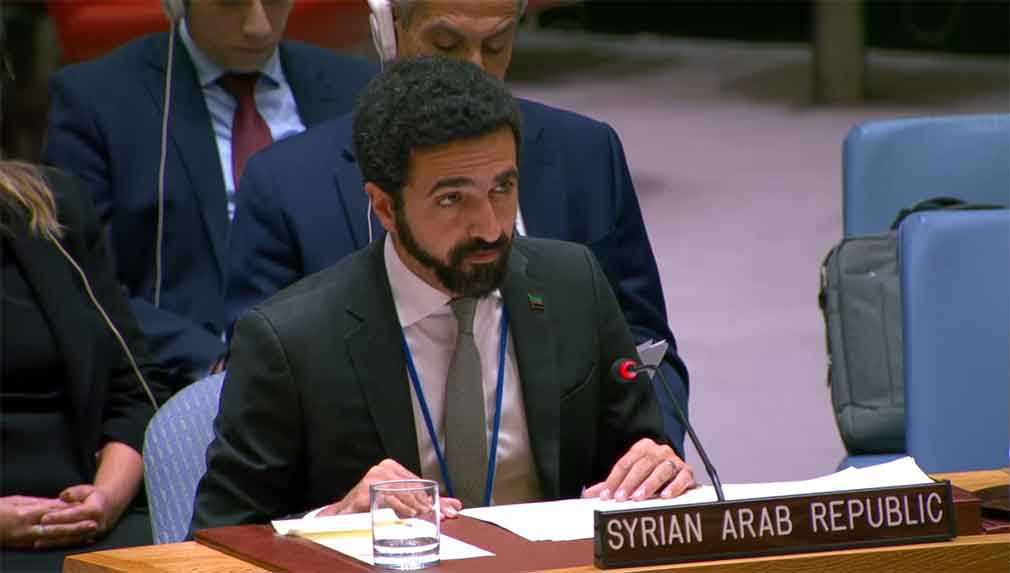
    During a dedicated United Nations Security Council session reviewing the Syria-Lebanon mission report, Syrian representative Alabi delivered a sharp condemnation of Israel’s ongoing military activities. The diplomat asserted that while Damascus consistently adheres to international law and Security Council resolutions, Israel systematically violates these established norms, thereby destabilizing regional peace efforts.

    Alabi highlighted the critical need for Syrian security forces to maintain a presence along the Israeli border to reinforce sovereign control. He pointed to significant improvements in Syria’s domestic security situation, noting that over three million refugees and internally displaced persons have returned to their homes since the fall of the previous government structure in December 2014.

    The historical context of water resource control dates to 1967 when Israel occupied the Golan Heights, a strategically vital plateau containing substantial freshwater reserves in southern Syria. From late 2014 onward, Tel Aviv has substantially escalated military operations within Syrian territory under the declared objective of countering Iranian influence and allied militia presence—a campaign formally initiated in 2018.

    The Syrian delegation’s statement contrasts Israel’s assertive military posture with what it characterizes as Damascus’s compliance with international legal frameworks, creating a diplomatic confrontation at the highest level of global security discourse.

  • Cuban ballet company opens historic season of Don Quixote

    Cuban ballet company opens historic season of Don Quixote

    Havana’s cultural scene is set to dazzle ballet enthusiasts as the prestigious Teatro Nacional de Cuba unveils its spectacular holiday programming in the iconic Avellaneda Hall. From December 19 through January 1, 2026, the institution designated as a Cultural Heritage of the Nation will present an extraordinary series of performances blending artistic excellence with social responsibility.

    The season commences with a humanitarian gesture as proceeds from the December 19-20 performances will be directed toward supporting victims of Hurricane Melissa in eastern Cuba. This philanthropic initiative was confirmed by Viengsay Valdes, General Director of the Ballet Nacional de Cuba (BNC), in statements to Prensa Latina.

    Artistic excellence takes center stage with an impressive roster of talent. The season opens on December 19 featuring acclaimed principal dancers Anette Delgado and Dani Hernández, who will reprise their captivating performances on December 21. Subsequent dates will showcase rising stars and established virtuosos: Laura Kamila and Yankiel Vázquez (December 20 and 29), Nadila Estrada and Alejandro Alderete (December 26), and Gabriela Druyet and Anyelo Montero (December 27 and January 1).

    Notably, several dancers including Kamila, Estrada, and Alderete will make their debut in leading roles from the demanding classic ‘Don Quixote’—a ballet so significant that fragments regularly feature in international competitions worldwide.

    The programming reaches its zenith with two exceptional international collaborations on December 28 and 30. Argentine virtuoso Marianela Núñez, principal dancer with London’s Royal Ballet, will share the stage with Cuban sensation Patricio Reve, currently a guest artist with the British company and principal dancer at Australia’s Queensland Ballet. This cross-continental partnership promises to deliver unforgettable performances that highlight the global reach of Cuban ballet.

  • Here’s Why Horses Remain on Belize City Streets

    Here’s Why Horses Remain on Belize City Streets

    Belize City faces mounting pressure to address the controversial presence of horses within urban areas, with municipal authorities citing significant legal constraints as the primary obstacle to resolution. City Councillor Kaya Cattouse has clarified that the City Council lacks the jurisdictional authority to enforce actions against the keeping and racing of horses within city limits, despite escalating public outrage over recurrent animal welfare violations.

    Councillor Cattouse emphasized that the council is actively engaged with the issue rather than ignoring it. ‘We have been systematically documenting incidents and participating in interagency discussions,’ she stated. ‘Concerns have been formally elevated to national authorities who hold ultimate responsibility for animal welfare protocols, public safety standards, and legislative frameworks.’

    The debate has intensified following the circulation of recent photographs depicting injured and malnourished horses, prompting animal advocacy organizations to renew demands for complete removal of horses from urban environments. Michelle Rudon, a local volunteer, characterized the situation as persistent cruelty and called for immediate governmental intervention to address this deeply entrenched problem.

    According to Cattouse, the complexity extends beyond mere enforcement challenges. She advocates for a comprehensive approach that recognizes the multidimensional nature of the issue—encompassing public safety hazards, community health implications, animal welfare considerations, and aspects of youth development programming. This perspective suggests that only a coordinated national response strategy can effectively address the root causes.

    The Belize Police Department faces operational limitations due to absent legal provisions and inadequate facilities for impoundment. Cattouse highlighted the practical dilemma: ‘Without specific legislation authorizing confiscation, and lacking designated facilities for housing seized animals, law enforcement options remain severely constrained.’

    The councillor confirmed that substantive progress awaits the establishment of appropriate national legislation. ‘Once an adequate legal framework is implemented,’ Cattouse affirmed, ‘municipal authorities stand ready to fulfill their role in the execution phase.’ The matter was initially tabled for formal discussion during a City Council session in May, yet reports of animal mistreatment have continued to emerge in subsequent months.

  • Trinidad PM says Caricom has ‘lost its way’

    Trinidad PM says Caricom has ‘lost its way’

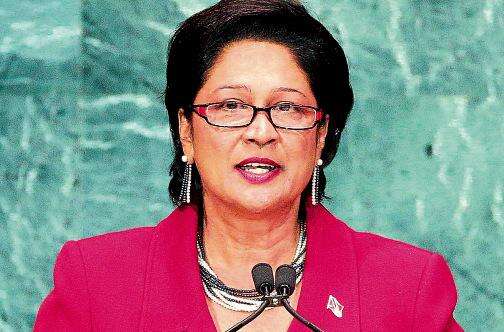
    PORT OF SPAIN, Trinidad – In a striking diplomatic rupture, Trinidad and Tobago’s Prime Minister Kamla Persad-Bissessar has publicly denounced the Caribbean Community (CARICOM) as an unreliable partner, signaling a profound fracture within the regional bloc. The condemnation emerged amidst a contentious dispute regarding U.S. visa restrictions and the organization’s perceived alignment with Venezuela’s government.

    Prime Minister Persad-Bissessar issued a formal statement distancing her nation from CARICOM’s collective position on recent U.S. immigration measures. She asserted that the 15-member integration grouping ‘will not determine the future’ of Trinidad and Tobago, characterizing the organization as having ‘lost its way’ in its foreign policy orientations.

    The diplomatic schism centers on contrasting responses to the United States government’s December 2025 announcement of enhanced entry restrictions for certain foreign nationals. While the CARICOM Bureau – comprising the prime ministers of Jamaica, Barbados, and Grenada – expressed concern about the visa limitations’ potential adverse effects on regional travel and economic stability, Trinidad’s leadership adopted a distinctly different stance.

    Persad-Bissessar emphasized her government’s recognition of Washington’s sovereign right to implement policies advancing its national security interests. ‘Every sovereign state is responsible for its foreign and domestic policy choices and must be prepared to accept the concomitant consequences,’ she stated, framing the U.S. decision as a ‘measured response’ to international circumstances.

    The Trinidadian leader delivered particularly sharp criticism regarding CARICOM’s approach to Venezuela, accusing the organization of ‘lending support to the Maduro narco-government’ while ‘disparaging our greatest ally the United States.’ She referenced the Venezuelan government’s human rights record and its threats against two CARICOM member states as evidence of the regional body’s misguided trajectory.

    Further exposing internal divisions, Antigua and Barbuda Prime Minister Gaston Browne separately criticized CARICOM’s handling of the situation, referencing ‘inertia and insularity’ within the organization. Browne revealed that despite his advice that the visa matter was resolved, CARICOM proceeded with issuing its critical statement, highlighting coordination failures within the bloc.

    Persad-Bissessar concluded with a stark warning about CARICOM’s institutional viability, citing ‘widening fissures’ beneath ‘the thin mask of unity’ that threaten to cause its ‘implosion.’ She identified poor management, factional divisions, and inappropriate meddling in member states’ domestic politics as existential challenges requiring transparent acknowledgment and reform.

  • STETHS outlast Glenmuir on penalties to win daCosta Cup

    STETHS outlast Glenmuir on penalties to win daCosta Cup

    In a breathtaking conclusion to the ISSA daCosta Cup final, St Elizabeth Technical High School (STETHS) emerged victorious against Glenmuir High in an intense penalty shootout that extended to sudden death at the National Stadium on Saturday. The championship match culminated in an 8-7 penalty decision following a grueling 90-minute stalemate that remained scoreless despite extraordinary efforts from both sides.

    The contest intensified dramatically in the 55th minute when STETHS faced a critical disadvantage after player Jade Lynch received a red card, forcing the team to complete the match with only ten players. Despite this significant setback, STETHS demonstrated remarkable resilience and tactical discipline, effectively neutralizing Glenmuir’s offensive strategies throughout the remainder of regulation time.

    The penalty shootout unfolded as a dramatic narrative of its own, with both teams initially deadlocked at four successful conversions apiece after the standard five attempts. The tension escalated as each squad missed their seventh penalty attempt, extending the contest into sudden death rounds. The decisive moment arrived when STETHS goalkeeper Steadmon, who had previously converted his own penalty shot, made his second critical save of the shootout by stopping Glenmuir’s ninth attempt, securing the championship for his team.

    This victory marks STETHS’ sixth daCosta Cup title overall and their first championship claim since 2015, ending an eight-year drought for the institution. The outcome simultaneously denied Glenmuir High their potential fourth hold on the trophy and represented their second finals defeat within a three-year period, adding another chapter to the competitive rivalry between these football programs.

  • 2026 West Indies T20 Breakout League put on pause

    2026 West Indies T20 Breakout League put on pause

    In a significant scheduling shift, Cricket West Indies (CWI) has announced the postponement of the 2026 edition of the West Indies T20 Breakout League, despite previous commitments from Trinidad and Tobago Cricket Board (TTCB) president Azim Bassarath that the tournament would proceed in January-February at the Brian Lara Cricket Academy in Tarouba.

    The decision follows a comprehensive collaborative review between CWI and the Caribbean Premier League (CPL), which determined the originally planned window would conflict with an exceptionally congested international and domestic cricket schedule. The upcoming calendar features two major global events: the ICC Men’s Under-19 World Cup (January 15-February 6) immediately followed by the ICC Men’s T20 World Cup (February 7-March 8).

    CWI CEO Chris Dehring emphasized that while the developmental league remains integral to long-term planning, the pause allows for strategic reassessment during a fiscally constrained period. ‘With our under-19 and senior men’s teams focused on upcoming World Cups, this is an especially demanding period for our players,’ Dehring stated. He confirmed both organizations agree the tournament requires adequate space to achieve its developmental objectives and fan engagement goals.

    The inaugural Breakout League, held April 25-May 10 this year, proved successful with Trinidad and Tobago Legions claiming victory over Leeward Islands Thunder by 17 runs in the final. The tournament served as a crucial platform for emerging talent, with several participants already advancing to international representation.

    Dehring indicated the hiatus would enable authorities to evaluate the league’s structural framework and positioning within the World Cup cycle to optimize developmental outcomes. He highlighted the need for enhanced scouting mechanisms and improved data collection to strengthen alignment between the Breakout League and high-performance systems.

    CPL CEO Pete Russell reinforced his organization’s continued support for the league’s mission, stating the postponement period would allow for refinement of format, timing, and supporting structures to ensure the tournament fulfills its intended role within Caribbean cricket’s development ecosystem.

  • Paralympic Committee president Sudhir Ramessar dies

    Paralympic Committee president Sudhir Ramessar dies

    The Trinidad and Tobago sporting community is in mourning following the passing of Sudhir Ramessar, the long-serving president of the TT Paralympic Committee (TTPC), who died on December 19. Ramessar’s death has prompted an outpouring of tributes from national sporting organizations celebrating his transformative impact on para-sports advocacy.

    Beyond his presidential role with TTPC, Ramessar served as director of the Consortium of Disability Organizations, demonstrating an unwavering commitment to improving conditions for differently-abled individuals both in athletic competition and daily life. His advocacy work created substantial opportunities for para-athletes through persistent lobbying efforts and strategic development initiatives.

    The Trinidad Olympic Committee (TTOC) formally acknowledged Ramessar’s contributions via social media, stating: “We honor his unwavering dedication, leadership and lifelong service to para-sport and athlete advocacy in Trinidad and Tobago. His contribution to sport, inclusion and the Paralympic movement has left an indelible mark that will continue to inspire generations.”

    The Trinidad Rifle Association commemorated Ramessar as “a visionary leader, tireless advocate, and true champion for persons with disabilities in sport” in their Facebook tribute. They emphasized how his leadership “profoundly transformed the sporting landscape, creating opportunities, dignity and hope for countless athletes.”

    Ramessar is remembered not merely as a sports administrator but as a genuine humanitarian whose integrity, passion for service, and commitment to inclusion reshaped Trinidad and Tobago’s approach to Paralympic sports. The national sporting fraternity recognizes his legacy as one that will continue to influence future generations of athletes and advocates alike.