作者: admin

  • Alpart reopening push

    Alpart reopening push

    After years of stalled plans to restart operations at Jamaica’s shuttered Alpart bauxite plant, the country’s Minister of Agriculture, Fisheries and Mining Floyd Green is set to travel to China for high-stakes talks with the facility’s owner, state-owned Jiuquan Iron and Steel Company (JISCO), in a renewed push to bring the idle plant back online this year.

    The Alpart plant in St Elizabeth has remained non-operational since 2019, when JISCO announced its closure to accommodate a large-scale modernization initiative. Back in 2025, Green shared public optimism that a phased restart of the facility was on the near horizon, leaving local stakeholders and industry observers waiting for tangible progress. Now, 12 months after that initial reopening projection, no firm timeline has been locked in, prompting the Jamaican government to ramp up pressure for action.

    Speaking at a post-sectoral debate briefing in Kingston on Thursday, Green made clear the Jamaican government’s non-negotiable stance: the Alpart reopening process must get underway in 2026. “This plant sits on some of the largest untapped bauxite reserves in the region, and the economic vitality of not just St Elizabeth, but the entire Jamaican economy is tied to the revival of our bauxite and alumina mining sector,” Green emphasized.

    Green outlined that JISCO had previously committed to three key pre-restart milestones: a full asset verification audit, renewed exploration activities across its mining concessions, and the launch of mandatory land reclamation work on already mined areas. To date, the company has fulfilled all three preconditions, but has yet to move forward with the long-promised phased reopening.

    The company attributed the repeated delay to unforeseen weather-related disruptions during a December 2025 meeting with Green. The most recent setback came from Hurricane Melissa, which made landfall in Jamaica in late October 2025, causing substantial damage to the Port Kaiser infrastructure that the Alpart plant relies on for shipments. This damage came on the heels of Hurricane Beryl, which hit the island in July 2024, creating two consecutive major weather events that upended JISCO’s original cost and timeline projections. Green added that as a Chinese state-owned enterprise, JISCO operates with a centralized decision-making structure where all major strategic choices are made by leadership based in China, rather than the local on-ground team, creating additional layers of bureaucratic delay.

    Back in March 2026, Green told Parliament’s Standing Finance Committee that JISCO would need to draft an entirely new development plan for the Alpart reopening, accounting for revised repair costs for Port Kaiser and new infrastructure investments to build climate resilience against future extreme weather events. On Thursday, he stressed that the window for further delays has closed, and the government is fully committed to securing a restart in 2026.

    Against a backdrop of rising global aluminium prices and growing global demand for critical industrial minerals, Green said the upcoming trip to China will focus on securing a definitive timeline from JISCO’s top leadership. “We are going directly to the owners to get a clear answer on when we can expect operations to resume. Depending on the outcome of these discussions, the Jamaican government will be prepared to make whatever decisions are necessary to move this project forward,” Green said.

    The minister’s delegation will not limit their discussions to the Alpart plant during the trip. They are also scheduled to hold talks with other Chinese business stakeholders with operations in Jamaica, including leadership at the Pan-Caribbean Sugar Company, as well as senior Chinese agricultural officials, with the goal of deepening bilateral cooperation across the agricultural sector.

    The confirmation of the China trip came during a post-sectoral presentation press briefing at the Office of the Prime Minister in St Andrew on Thursday.

  • Big push to clear waste backlog in Westmoreland

    Big push to clear waste backlog in Westmoreland

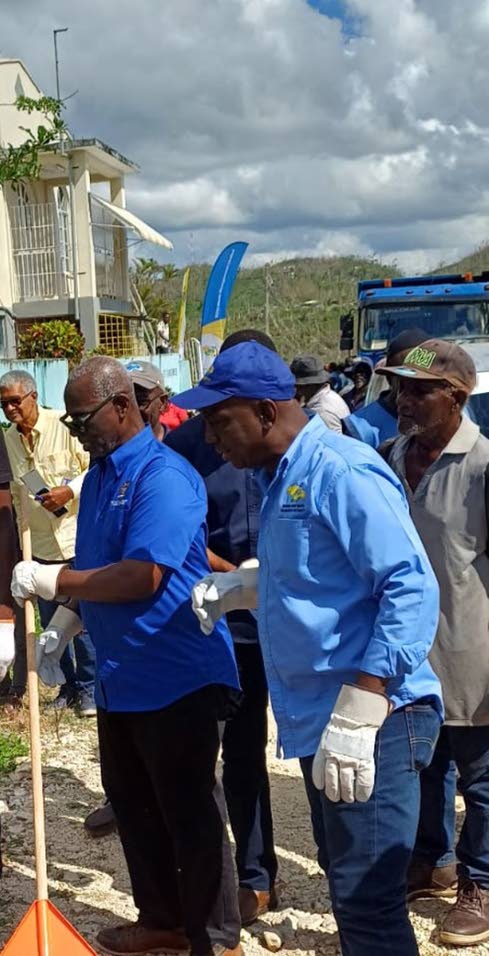
    Residents of Jamaica’s Westmoreland parish, who have endured growing mountains of uncollected garbage for months, are finally seeing light at the end of the tunnel, as regional waste management officials have redirected emergency resources from neighboring St James to clear the crippling collection backlog.

    Leona Bennett, senior public cleansing inspector for Western Parks and Markets (WPM) Waste Management Limited — the regional subsidiary of Jamaica’s National Solid Waste Management Authority (NSWMA) — outlined the emergency intervention during the monthly general meeting of the Westmoreland Municipal Corporation this week. Four additional waste collection trucks have been deployed to the parish to tackle accumulated waste, with the fleet set to remain on site until the entire backlog is eliminated, she confirmed.

    “The trucks from St James began arriving last week, and they have continued working through this week, with crews on site as recently as yesterday and Friday. Regional operations manager Dramaine Jones has guaranteed that the vehicles will stay with us through next week, until every last trace of the backlog is cleared,” Bennett told assembled council members.

    The temporary reassignment of vehicles is just one pillar of a broader, multi-pronged strategy to reverse Westmoreland’s waste crisis. To accelerate collection efforts, WPM has also extended operating hours by ramping up night shift services, with collection trucks now servicing main roads and residential communities after standard business hours.

    “Local residents can confirm for themselves that our trucks have been active in their neighborhoods overnight. We are pulling out all the stops to erase this backlog as quickly as we possibly can,” Bennett said.

    Alongside emergency collection measures, the agency is running ongoing bulky waste removal campaigns and community public education programs designed to curb persistent illegal dumping, one of the root causes of the parish’s waste management struggles. Bennett emphasized that long-term cleanliness depends on active participation from local residents, urging the public to take greater responsibility for waste disposal.

    “We are asking everyone to take pride in our parish and properly contain all waste. If you are transporting waste, please dispose of it at designated communal bins instead of leaving it in unauthorized areas,” she said.

    Bennett acknowledged that illegal dumping remains a persistent blight on Westmoreland’s communities, noting that the problem adds unnecessary strain to already stretched resources. “It slows our progress clearing the backlog when we constantly find new piles of illegally dumped waste on main roads and public spaces, left by people from across the parish,” she explained.

    In a long-awaited update on a critical permanent infrastructure project, Bennett also confirmed that the long-delayed Westmoreland waste transfer station has finally entered the construction preparation phase. First announced back in 2014, the project has faced years of unanticipated delays that pushed its original 2024 operational target back, but site work is now officially underway. The project site has been fully cleared, and crews are currently laying base material for the facility’s foundation.

    “Once the foundation work is complete, construction of the facility’s core infrastructure will proceed without further delays, and we will provide regular updates to the municipal corporation on progress,” Bennett said.

    Local councillors welcomed the news of the transfer station’s progress, highlighting the transformative impact the facility will have on the parish’s long-term waste management capacity. Ian Myles, Jamaica Labour Party councillor for the Little London Division, called the start of construction a major milestone for Westmoreland.

    “We all understand how vital this facility is for our parish, so to hear that construction is finally underway is incredibly exciting. Located just five minutes from Georges Plain, the transfer station will streamline waste hauling from central, eastern and western Westmoreland before waste is sent on to Montego Bay, and it will give us far more capacity to keep the entire parish clean,” Myles said.

  • Pay the principal

    Pay the principal

    Two months have passed since Jamaica’s Supreme Court issued a landmark ruling ordering the reinstatement of Dr. Marjorie Fullerton as principal of Merl Grove High School, alongside full payment of all outstanding wages and benefits accrued since her unlawful termination. But as of this week, the veteran educator has yet to receive a single cent of the compensation she is legally owed, prompting urgent concern from Jamaica’s largest education sector union.

    Speaking with the Jamaica Observer on Thursday, Jamaica Teachers’ Association (JTA) Assistant Secretary General Doran Dixon voiced deep frustration over the ongoing delay, noting the court’s ruling leaves no room for noncompliance. “The lower court’s original decision to uphold her removal was quashed entirely, so she is legally entitled to every dollar of salary and benefits owed to her over the period she was unjustly out of office,” Dixon explained.

    Dixon emphasized that there is no legitimate legal ground for withholding payment, as Fullerton complied fully with every step of the judicial process throughout her years-long dispute. “She respected the court, she followed all procedures, and now that the court has ruled in her favor, the Ministry of Education and relevant stakeholders have a binding obligation to respect that ruling and act on it promptly,” he added. “Dr. Fullerton, her legal team, and the JTA all share this deep concern over the unnecessary hold-up.”

    As of press time, multiple requests for comment from Education Minister Senator Dr. Dana Morris Dixon and ministry permanent secretary Kasan Troupe have gone unanswered.

    According to Dixon, while the Merl Grove High school board has stated it intends to appeal the Supreme Court’s ruling, no formal stay of execution — which would pause enforcement of the judgment pending appeal — has been granted by the court. What is more, the board filed its notice of appeal past the legal deadline, forcing it to seek special court permission to even move forward with the appeal process. “Under Jamaican court procedure, an appeal filed even one minute past the deadline is still considered late,” Dixon noted. “While the board has applied for an extension to proceed, the court has not yet issued a stay on the original ruling, which remains fully in effect.”

    Fullerton’s dispute with the school dates back to 2021, when she was first suspended from her post at Merl Grove, a prominent all-girls institution owned by the Associated Gospel Assemblies Church. In 2022, the school’s personnel committee held a disciplinary hearing into allegations against her, concluded the claims were proven, and the school board moved to remove her from the principal position permanently.

    That decision was upheld by both the Ministry of Education and the church, before being fully overturned in the Supreme Court’s March 6, 2026 ruling, which ordered Fullerton’s immediate reinstatement and back payment.

    Dixon stressed that the ministry’s obligation to comply is even more pressing given Fullerton’s personal circumstances throughout the legal battle: the principal has been undergoing treatment for cancer during her years out of office. The ruling entitles her to close to four years of unpaid salary and benefits, a sum that is critical for her ongoing care and financial stability, Dixon said.

    He also issued a clear warning that if the Ministry of Education and school officials continue to ignore the court’s order, Fullerton’s legal team will move forward with contempt of court proceedings against the responsible parties. “Because no stay of execution has been granted, the original judgment remains fully enforceable. Stakeholders that refuse to comply are in open violation of the court’s order, and we have every right to initiate contempt proceedings to enforce the ruling,” Dixon confirmed.

  • Breach!

    Breach!

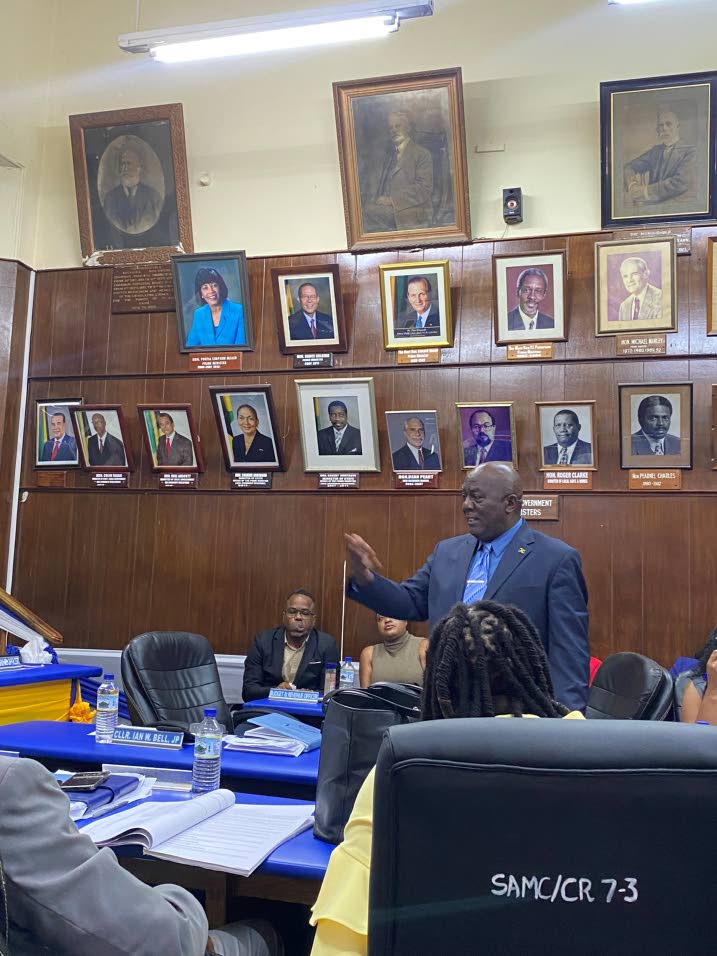
    In Ocho Rios, St Ann, Jamaica, local municipal authorities are moving forward with punitive measures against developers who have defied an official stop work order to complete an unapproved commercial building along Moneague’s main thoroughfare. The St Ann Municipal Corporation confirmed this week that the project has proceeded without any submitted building plans or mandatory safety inspections, putting the structure in direct violation of the island’s national Building Act. CEO Jennifer Brown-Cunningham outlined the corporation’s next steps during the body’s regular monthly meeting Thursday, noting that legal action will be filed in court as soon as the municipal superintendent wraps up additional on-site investigations. “A number of developers ignore our stop orders and continue building illegally, but this case will not be swept under the rug,” Brown-Cunningham said. “It is now our responsibility to bring this matter before the court and enforce our local building regulations.” Located near the Four Roads intersection on Moneague’s main road, the completed structure is laid out for commercial use, with local leaders estimating its base footprint measures at least 5,000 square feet, indicating it is intended to operate as a supermarket or commercial plaza. Multiple sitting councillors have raised urgent public safety and infrastructure concerns about the unregulated project. Moneague Division Councillor Lloyd Garrick, of the People’s National Party, pointed out that the construction has fully blocked the public sidewalk, eliminating safe passage for pedestrians, while construction debris has been dumped illegally into a nearby public drain. He also noted that the roadside building provides no dedicated customer parking, creating additional traffic hazards for the busy main road. Echoing growing frustration across the municipal body, Mayor of St Ann’s Bay Michael Belnavis emphasized that the corporation bears a legal and ethical obligation to protect public safety, and willful disregard for official regulatory directives will not be tolerated. “We cannot allow unapproved commercial buildings to operate in this parish when we cannot guarantee the safety of the people who will enter them,” Belnavis said. “If we do not enforce building codes, especially when it comes to structural resilience for natural disasters like earthquakes, it is only a matter of time before a tragedy occurs where people are trapped or killed.” The mayor confirmed that the most extreme outcome under consideration is full demolition of the unauthorized structure, and urged all future developers to follow the proper approval process to avoid similar consequences. Beecher Town Division Councillor Ian Bell, also of the PNP, called the unpermitted construction a deliberate insult to the municipal corporation’s regulatory authority. He noted that the full plaza was built in plain sight along the heavily travelled main road, not in a remote, unmonitored area, adding that he first raised concerns about the project a month prior after receiving multiple complaints from local residents. Bell also told attendees he received a threatening call urging him to drop his scrutiny of the project, a demand he rejected. “I will only back off if I can confirm this building was constructed to code,” Bell said. “Right now, it is fully complete and preparing to open without a single approval from this body, which is an unacceptable failure of regulation that cannot stand.”

  • $10,000 bribe costs motorist $75,000

    $10,000 bribe costs motorist $75,000

    In Montego Bay, St James, a local motorist’s misguided attempt to bribe a police officer to avoid traffic penalties has resulted in a far heftier financial penalty than he ever expected. 56-year-old Eric Buchanan faced sentencing last Wednesday before Judge Natiesha-Fairclough Hylton at the St James Parish Court, where he was ordered to pay a combined $75,000 in fines across four separate offenses, after his $10,000 bribe offer backfired spectacularly.

    Details of the incident, which have now been laid out in open court, show that uniformed police officers on routine mobile patrol first spotted Buchanan violating road rules by ignoring a posted one-way traffic sign. Pulling the driver over, officers requested his standard operating documentation: a valid driver’s license, proof of insurance coverage, and a current vehicle fitness certificate. Upon inspection, officers quickly confirmed that Buchanan lacked two required documents: a valid insurance certificate and an up-to-date fitness certificate for his vehicle.

    After being instructed to gather and submit all required paperwork, Buchanan eventually handed a folder of documents to the attending officer. The officer immediately noticed two $5,000 banknotes folded inside the cover of the insurance documents, court records confirm. Prosecutors allege that Buchanan explicitly encouraged the officer to accept the cash, saying in local patois: “Officer, yuh done see wha a gwaan? Tek this and gwaan officer, yuh done see wha a gwaan” — a clear request for the officer to look past his violations in exchange for the hidden $10,000 bribe.

    Buchanan was taken into custody on bribery charges immediately after the attempted payoff. During his court appearance, the motorist pushed back against the bribery allegation, claiming the entire situation was a misunderstanding. He argued that the hidden cash was not a bribe, but a “gesture” to reward the officer for what he claimed was assistance helping him exit a nearby car park. He added that heavy rain had created confusion around the traffic stop, but his explanation was inconsistent and difficult for the court to corroborate.

    Judge Fairclough-Hylton rejected Buchanan’s version of events entirely, and handed down stacked penalties to send a clear message about corruption attempts targeting law enforcement. For the bribery charge alone, Buchanan was ordered to pay a $30,000 fine or serve 30 days in prison in default of payment. Additional penalties were imposed for his other traffic violations: $20,000 fine (or 10 days’ jail) for driving without valid insurance, $17,000 fine (or 10 days) for operating an unfit vehicle, and $8,000 fine (or 10 days) for disobeying the one-way traffic sign — bringing the total mandatory fine to $75,000, seven and a half times the value of the original bribe Buchanan tried to offer.

  • Ontslag voltallige CBvS-Raad: regering tart grenzen van de Bankwet

    Ontslag voltallige CBvS-Raad: regering tart grenzen van de Bankwet

    A sudden decision by the government of Suriname to replace the entire Supervisory Board (Raad van Commissarissen, RvC) of the Central Bank of Suriname has reignited a fundamental national debate over the rule of law in the country’s public administration. What is framed as a routine leadership transition, upon closer inspection, raises serious concerns about compliance with the 2022 Central Bank Act, the independence of regulatory institutions, and the government’s adherence to formal legal procedures.

    According to the government’s order, which retroactively took effect on April 10, 2026, the entire sitting RvC has been replaced by a newly appointed body. What makes this move unusual is not only its abrupt nature, but more critically, the complete lack of a publicly disclosed justification for forcing the sitting board members out of office mid-term. This already puts the government on legally shaky ground.

    The 2022 Central Bank Act leaves little room for ambiguous interpretation when it comes to the appointment and dismissal of RvC members. Article 5 explicitly states that board members are appointed for five-year terms, eligible for re-appointment only once. The replaced board only took office in 2024, meaning all members were still well within their legally mandated terms. This fact alone makes an early collective dismissal a highly questionable action under existing law.

    Even more problematic is the government’s failure to comply with the clear requirements laid out in Article 6 of the act. That statute explicitly defines the only circumstances under which an individual RvC member can be suspended or removed from office: solely when the member no longer meets the legal qualification requirements for the role, or has committed serious misconduct in the performance of their duties. Furthermore, the law requires that any removal decision must be made based on a nomination from a majority of the remaining RvC members and the Central Bank’s executive board.

    This is where the government’s action runs into an unavoidable legal contradiction. How can the entire board be collectively removed based on a nomination from “the remaining members” when those remaining members do not exist prior to the dismissal? Legally, this immediately raises the core question of whether Article 6 even allows for the entire board to be removed in one sweeping political move. It appears that legislators deliberately designed a framework that only allowed for addressing individual misconduct, rather than enabling full-scale political purges of the entire oversight body.

    On top of these contradictions, the law explicitly requires that any suspension or removal decision must include a detailed public justification, and that the affected members must be given an opportunity to be heard before the decision is finalized. To date, the Surinamese government has not publicly released any evidence of misconduct, integrity violations, or policy failures by the former board. There is also no public confirmation that the required hearing and response process was ever followed. The government’s official order only includes a generic formality thanking the dismissed members for their service.

    This level of opacity is unacceptable for a democratic constitutional state. In a democracy, the public is entitled to expect that any major administrative intervention by the government is not only legally justified, but also publicly accounted for. This standard is especially critical when it comes to an institution like the central bank, whose independence and stability are foundational to domestic and international financial confidence in Suriname.

    The controversy also takes on a sour political dimension due to one notable exception to the mass dismissal: Robbie Poetisi, one of the original sitting board members, was immediately re-appointed to the new RvC. This inconsistency raises an obvious, pressing question: if the entire board was truly dysfunctional and required full replacement, why was one member immediately retained? And if that member was not dysfunctional, what legal justification exists for removing all the other members?

    These kinds of inconsistencies reinforce the growing public perception that the government’s decision is driven by political interests rather than institutional necessity. That perception is deeply dangerous. Central banks rely not only on formal legal authority to function, but also on public and market trust – trust from citizens, private investors, international financial institutions, and global markets. When the impression takes hold that regulatory oversight bodies can be replaced arbitrarily to suit political interests, it directly erodes the credibility of Suriname’s entire institutional framework.

    Suriname still bears the lasting scars of previous crises related to monetary policy, currency management, and financial regulation. It was precisely in response to those crises that the 2022 Central Bank Act was strengthened: its core purpose was to limit political interference and strengthen transparent governance of the central bank. If the executive branch now chooses to interpret the law selectively or creatively to suit its own goals, the entire national regulatory reform agenda risks losing all credibility.

    For this reason, it is in the government’s own interest to provide full public transparency around this decision. What specific legal basis supports the mass dismissal of the entire board? Were the procedural requirements laid out in Article 6 actually followed? Were the affected board members given the legally required opportunity to be heard? What concrete facts justify ending their mandates early? Without clear answers to these questions, the public will continue to believe that the law is not treated as a binding framework for governance, but rather as a tool that can be bent to suit political opportunism.

    Ultimately, the core of this controversy extends far beyond the individual identities of the dismissed board members. It centers on a fundamental question: do legal safeguards in Suriname actually carry meaning when they limit the power of the executive branch? A constitutional state is not tested when the law aligns with political interests; it is tested when legal procedures create constraints or inconvenience for the current holders of power.

    Many observers are also asking why several former high-ranking officials, including an ex-central bank governor and two former ministers, have agreed to join the new board. After all, the same law that protects RvC members also shields the central bank governor from arbitrary political removal. This has led to widespread speculation that this mass dismissal could be a test case for removing the sitting central bank governor in the near future.

    If the government is able to replace the entire oversight board of the central bank without transparent justification or demonstrable respect for legal procedure, then Suriname’s society has every right to ask what institutional protections against arbitrary political power still remain in place. The debate over this single decision has become a defining test for the future of the rule of law in the country.

  • Project 500 officially announces the sale of homes in First Phase of Dunfermline Housing Development

    Project 500 officially announces the sale of homes in First Phase of Dunfermline Housing Development

    Grenada has reached a landmark step in its mission to expand access to affordable, climate-resilient housing for local families, as Project 500 has officially opened sales for the first tranche of homes at its flagship Dunfermline development. This pilot initiative, which aims to redefine accessible homeownership for middle-income and first-time buyers, is now entering a critical assessment period that will shape the future of affordable housing policy across the island nation.

    Randall Dolland, the sponsor of Project 500, framed the launch of home sales as one of the most pivotal milestones of the entire pilot program. With sales now open, the initiative can begin collecting real-world data on market demand and accessibility for buyers who meet the program’s eligibility requirements. “We are proud to officially announce the sale of homes within the first phase of the Project 500 Housing Programme in Dunfermline,” Dolland said in a statement. “This phase allows us to evaluate the viability of these homes for hardworking Grenadian families who have increasingly found themselves priced out of the traditional housing market, but still deserve the opportunity to own a modern, desirable, climate-smart home within a properly planned community.”

    Prospective buyers are invited to review the program’s eligibility requirements and submit their applications through a dedicated online portal. Once an application is received, the Housing Authority of Grenada (HAG) will guide candidates through all subsequent steps, including assembling the required documentation to secure mortgage financing through their chosen financial institution.

    Project 500 officials confirmed that eligibility rules were carefully crafted to ensure homes reach the initiative’s core target groups: first-time property buyers and middle-income Grenadian families working toward a realistic path to homeownership. To qualify, applicants must meet all of the following criteria: hold Grenadian citizenship and be current residents of the country, be at least 18 years of age, have a total gross monthly household income that does not exceed 7,500 Eastern Caribbean dollars, can prove a stable and verifiable source of income, do not currently own or co-own any residential property anywhere in the world, and agree to occupy the home as their primary and permanent residence. Additional requirements mandate that married applicants submit joint applications, and successful buyers must remain the sole approved deed holders for the property for the duration of the program.

    Under the pilot phase allocation framework, half of all available first-phase homes are reserved for families that currently live in St Andrew parish. The remaining units are split evenly between public sector employees and private sector workers, expanding access across different professional groups.

    Every home in the development was designed with long-term sustainability and climate resilience at its core. Built to withstand changing climate conditions, the properties include a suite of climate-smart features: upgraded insulation to reduce temperature control costs, low-flow plumbing fixtures to cut water usage, and on-site solar energy systems that lower monthly utility expenses while shrinking the development’s carbon footprint. Beyond individual home features, the entire neighborhood was master-planned to deliver safe, high-quality living spaces for residents. Each lot measures a minimum of 4,700 square feet, and the development includes newly constructed roads, sidewalks, modern drainage infrastructure, full public utility connections, dedicated public green spaces, and at least two off-street parking spots per home.

    Dolland emphasized that the initiative extends far beyond simply constructing new residential units. “Our intention was not simply to place a roof over someone’s head,” he added. “Our goal was to create homes and communities that families can truly be proud of, places of comfort, dignity, security and opportunity. Places where children can grow, families can thrive, and generational wealth can become attainable for many Grenadians who once believed home-ownership was beyond their reach.”

    Looking ahead, Project 500 leadership confirmed that data and insights collected during this first pilot phase will guide all future expansion of the program. As the initiative scales, officials aim to deliver more affordable, climate-resilient, and sustainable housing solutions to eligible families across all of Grenada.

    This article was published by NOW Grenada, which notes that it is not responsible for the opinions and statements shared by contributing parties, and provides a channel for users to report any content that violates platform policies.

  • Sagicor expands island-wide tree planting initiative to mark 185th anniversary

    Sagicor expands island-wide tree planting initiative to mark 185th anniversary

    To celebrate its 185 years of operation, Barbados-based financial group Sagicor has launched a large-scale national environmental initiative centered on planting 185 evergreen trees across every one of the island nation’s 11 parishes. The campaign represents the centerpiece of the company’s broader legacy program, which is targeted at developing greener residential communities, boosting the country’s climate change resilience, and leaving a positive, long-lasting environmental footprint across Barbados.

    The initiative kicked off in February with a ceremonial planting event led by Sagicor Financial Company Ltd President and Chief Executive Officer Andre Mousseau at the organization’s Wildey headquarters. The ceremony served as a symbolic launch for the company-wide effort, which will see trees planted at multiple Sagicor operational sites and highlights the firm’s ongoing investments in Barbados’ national growth.

    Over the next several months, coordinated planting activities will be carried out at schools and prominent public locations across the island, with participation from Sagicor executive teams, local students, and teaching staff. Senior company leaders will take on the role of parish ambassadors, working directly with school communities and empowering young people to act as long-term stewards for the trees planted in their local regions.

    A concentrated cluster of new trees will be planted in Bridgetown, the island’s capital and a designated United Nations Educational, Scientific and Cultural Organization (UNESCO) World Heritage Site. This targeted planting will honor Sagicor’s deep historical connections to the capital, while also helping to create cooler, more leafy urban public spaces for residents and visitors.

    The evergreen species selected for the project are engineered to deliver sustained environmental benefits for decades, including natural shade, urban temperature reduction, and support for greater local biodiversity. Each parish will also install sustainably produced markers to commemorate the initiative, standing as permanent reminders of the campaign as Sagicor continues to grow into the future.

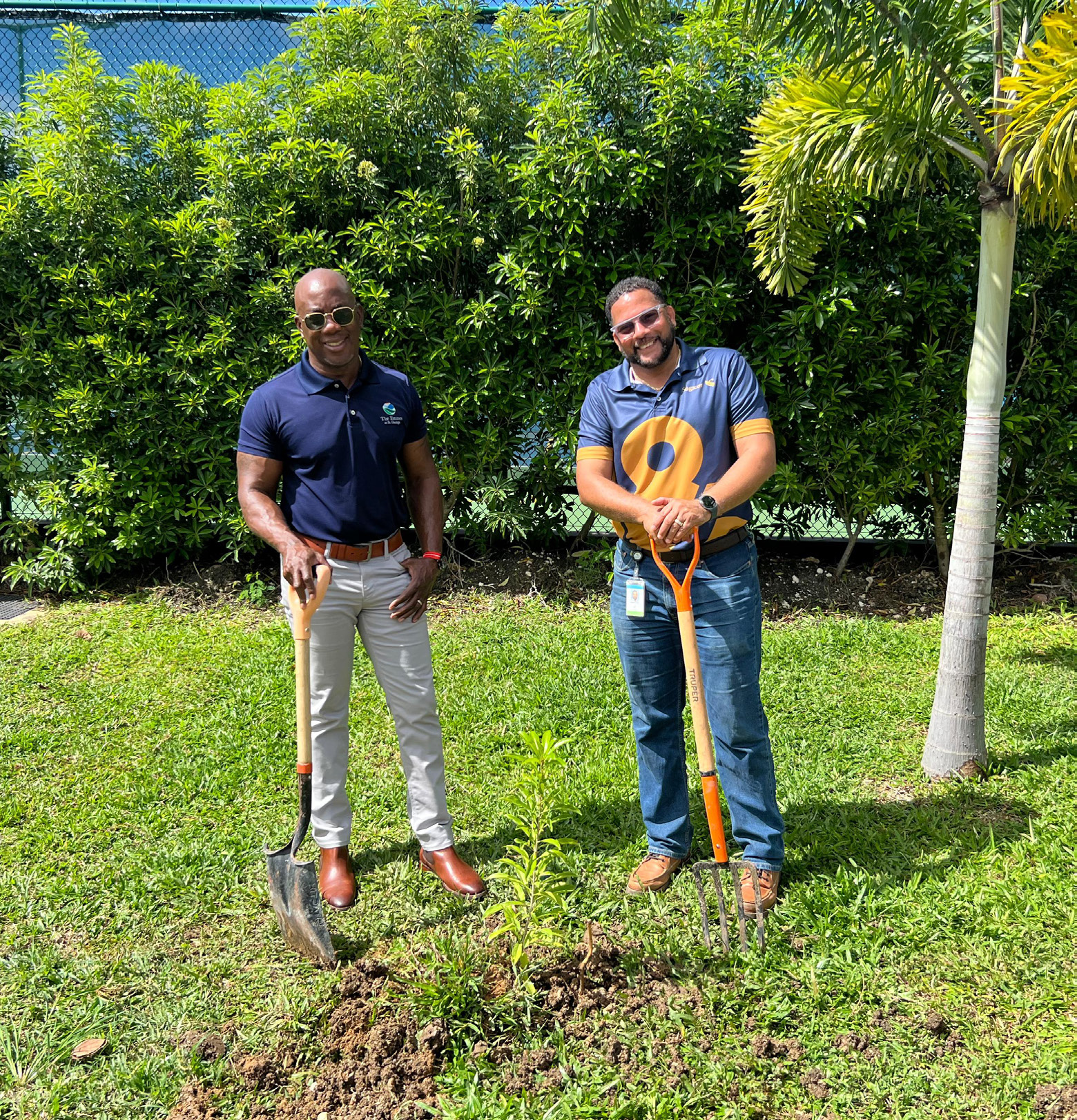
    The most recent round of planting was held to coincide with Arbor Day at The Estates at St George, where five new trees were added to the development. Ezra Prescod, Sagicor’s Vice President of Project Development, explained that the tree-planting drive aligns with the company’s long-standing commitments to community development and sustainable practice.

    Prescod noted, “The Estates at St George grew directly out of Sagicor’s mission to lead the way in impactful community development. It was conceptualized by Sagicor team members to be an environmentally friendly, wellness-centered community that supports healthy living for residents of all ages. As we mark 185 years of Sagicor, planting trees here perfectly embodies the permanent legacy the company has built for local communities, and there is no more fitting location for this work.”

    The anniversary campaign reinforces Sagicor’s broader institutional commitments to environmental stewardship, collaborative community engagement, and laying the groundwork for a more sustainable future for coming generations of Barbadians.

  • Gregor Nassief named president-elect of Caribbean Hotel Assocaition

    Gregor Nassief named president-elect of Caribbean Hotel Assocaition

    In a historic decision for Caribbean regional tourism leadership, the Caribbean Hotel and Tourism Association (CHTA) has named Gregor Nassief, a veteran hospitality executive from Dominica, as its incoming president. The unanimous approval of Nassief’s nomination came during the organization’s May 12 Board of Directors meeting held in Antigua and Barbuda, held just ahead of the 44th annual Caribbean Travel Marketplace. Nominated by a broad coalition of CHTA member destinations across the region, Nassief ran unopposed for the role, cementing broad industry confidence in his leadership.

  • Non-nationals on cocaine charges to sentenced for immigration offences

    Non-nationals on cocaine charges to sentenced for immigration offences

    Two foreign men, Frank Garcia from Venezuela and Alister Haynes from Grenada, are on track to receive court sentencing on June 11 after pleading guilty to violations of St. Vincent and the Grenadines (SVG) immigration rules. The pair remain in remand as they fight separate, more severe charges related to the possession of hundreds of kilograms of cocaine for trafficking.