作者: admin

  • Why inflation is falling but Jamaicans still feel squeezed?

    Why inflation is falling but Jamaicans still feel squeezed?

    Jamaica’s national inflation rate recorded another downward shift in April, with official data pointing to sharp drops in electricity costs as the primary driver. The Statistical Institute of Jamaica (Statin) announced that the country’s Consumer Price Index (CPI) fell by 0.3% for the month, a move that looks encouraging on paper but has failed to translate into tangible relief for the majority of Jamaican households.

    The reality on the ground tells a more complicated story: grocery costs remain elevated, petrol prices have climbed once again, rent stays at historically high levels, school fees are increasing, and dining out has grown more expensive. After years of consecutive price hikes triggered by the COVID-19 pandemic, global supply chain disruptions, and repeated hurricane damage to local infrastructure and agriculture, most families are still adjusting to a permanently higher cost of living that shows little sign of reversing.

    This gap between falling official inflation figures and widespread persistent financial pressure has emerged as one of the most widely misunderstood features of Jamaica’s current economy. The confusion stems from a common misinterpretation: lower inflation does not mean prices are decreasing across the board. Instead, it simply means that prices are rising at a slower pace than they were previously. In April’s case, the overall decline was only made possible by a single large category — electricity — dropping enough to cancel out price increases across every other major sector.

    Statin’s breakdown confirms this disparity: food prices rose by 0.6% in April, led by a dramatic 6.2% jump in the cost of fruits and nuts including ripe bananas, oranges, and watermelon. Higher petrol prices also pushed up overall transport costs for consumers and businesses alike. That means while the headline inflation number moved downward, most of the goods and services Jamaicans purchase on a regular basis continued to get more expensive.

    This mismatch explains why so many households still feel financially squeezed even though headline inflation now sits squarely within the Bank of Jamaica (BOJ)’s official target range, a development policymakers frame as a sign of economic stability.

    Clearing Up the Inflation Misconception

    A core source of public confusion is the frequent mixing up of inflation and general price levels. Inflation does not measure how cheap or expensive goods are — it measures the rate at which prices are changing over time. For example, if inflation falls from 8% to 4%, prices are still going up; they are just increasing at half the speed they were previously.

    After several years of sustained high inflation across the global economy, most prices remain far higher than they were in the pre-pandemic period. A family that once spent JMD 15,000 a week on groceries may now pay JMD 23,000 or more for the same basket of goods. Even if inflation slows sharply, prices almost never drop back to their previous levels, leaving families permanently adjusting to higher costs. This is the key reason official inflation statistics and everyday lived experience so often feel out of alignment: official numbers may show stabilizing price growth, but consumers are still dealing with long-term financial fatigue from cumulative increases.

    Electricity Carries the Weight of April’s Decline

    April’s drop in inflation was driven almost entirely by a single factor: falling electricity costs. Statin reports that the “Housing, Water, Electricity, Gas and Other Fuels” category fell by 4.3% in April, after electricity costs themselves dropped by 12.5%. This shift is economically significant, because electricity touches nearly every part of the national economy. Lower electricity costs can reduce pressure on businesses, transport operators, manufacturers, distribution networks, and household budgets all at the same time.

    Over the past year, Jamaica’s inflation trends have increasingly been shaped by movements in global energy prices, paired with weather-related disruptions to local food production. When global oil prices ease and fuel-related utility charges fall, inflation tends to soften quickly. Food prices, by contrast, follow a much more volatile pattern.

    Agricultural prices remain extremely vulnerable to droughts, hurricanes, supply chain breakdowns, and seasonal shortages, and this volatility consistently shows up in monthly inflation data. Over the 12 months leading up to April, prices for fruits and nuts jumped 26.3%, while fish and seafood costs rose 11.4%, both adding steady upward pressure to household grocery budgets. This explains why consumers feel the impact of inflation most acutely at supermarkets and local markets, even when the overall headline inflation rate is moderating.

    What This Means for the Bank of Jamaica’s Policy

    The Bank of Jamaica does not aim to drive prices down across the entire economy — its core mandate is to prevent inflation from becoming unstable and eroding purchasing power too quickly. Sustained high inflation creates widespread economic uncertainty: businesses struggle to set accurate prices for goods and services, borrowing becomes riskier for all parties, savings lose value more quickly, consumers delay major discretionary purchases, and long-term investment decisions become far harder to make.

    To avoid these outcomes, the BOJ targets an inflation range of 4% to 6%. April’s 4.3% year-over-year inflation rate falls comfortably within that target, a reading that is widely expected to reinforce the central bank’s plan to keep interest rates relatively stable when the Monetary Policy Committee meets later this month.

    Stable interest rates have direct benefits for consumers: higher rates push up the cost of mortgages, car loans, credit cards, and business borrowing, so holding rates steady eliminates the risk of even higher debt repayments for households and enterprises. But stable, moderate inflation does not immediately solve widespread affordability problems — it primarily prevents economic conditions from worsening more quickly than they otherwise would.

    The Long-Term Structural Shift in Living Costs

    What Jamaica appears to be entering right now is not a return to the era of cheap living many consumers remember, but rather a period of slower, more stable price growth after years of rapid increases. These are two very different outcomes.

    For decades before the pandemic, the global economy saw unusually low inflation, and consumers grew accustomed to gradual, barely noticeable price increases. The post-pandemic world upended that reality entirely. Global shipping disruptions, geopolitical conflicts, climate-related extreme weather, widespread labor shortages, and energy market volatility pushed costs higher across dozens of sectors at the same time.

    Many economists now believe the global economy is entering a structurally more inflationary era than the period that existed before 2020. If that prediction holds, consumers will need to adjust their expectations of what counts as a “normal” price level. This does not mean inflation will spin out of control, but it does mean households will likely continue facing elevated costs even when headline inflation appears statistically stable.

    Broader Social and Political Implications

    Inflation is never just an economic metric — it is a major driver of public mood and political sentiment. When workers find their salaries do not stretch far enough to cover basic needs, public frustration grows regardless of what official statistics report. This dynamic has left governments around the world struggling politically even as inflation rates have moderated from their post-pandemic peaks.

    Consumers experience prices through deeply personal, repeated encounters: the weekly grocery checkout total, the daily taxi fare, the monthly electricity bill, school lunch costs, and the quarterly rent payment. Food inflation in particular hits harder psychologically, because consumers encounter price increases at the grocery store every week, making the pressure impossible to ignore.

    In Jamaica’s context, this pressure is especially acute because wages in most sectors have not kept pace with cumulative price increases over the past five years. Even with inflation slowing, many households are still working to recover financial ground after years of eroding purchasing power.

    The real question facing Jamaican policymakers and households right now is not whether inflation is falling. Instead, the more critical question is whether incomes will rise fast enough to rebuild consumers’ purchasing power after several years of economic hardship. For most families, the only economic statistic that matters ultimately comes down to one simple, practical question: when will it be affordable to live comfortably again?


  • Man who shot at cop fails in bid to overturn conviction

    Man who shot at cop fails in bid to overturn conviction

    Nearly a decade after a Jamaican man opened fire on a police officer conducting a stakeout in Kingston’s Manning’s Hill neighborhood, the Court of Appeal has finalized his sentence, upholding his conviction on weapons and assault charges while trimming two months off his 20-year prison term to account for pre-sentencing custody time.

    The defendant, Rohan Dixon, a St. Catherine resident, was first found guilty in the 2015 incident in 2021 by the Gun Court’s High Court division. For the charge of illegal firearm possession, he received a 15-year prison term, and an additional 20-year sentence for shooting with intent to harm. The court ruled the sentences would run concurrently, meaning Dixon would serve the full 20-year term. Dissatisfied with the ruling, Dixon launched an appeal challenging both his conviction and the original sentencing.

    Dixon’s legal team argued the original trial had critical flaws. They claimed there was no physical evidence to prove a firearm was even present at the scene—neither the weapon itself nor spent bullet casings were ever recovered—and no accurate description of the weapon was provided by witnesses. The defense further pushed the claim that prosecution evidence could not support the conviction, as there was no definitive proof Dixon was the person who fired at the officer.

    The prosecution’s account of the 2015 incident lays out the context for the case. In July 2015, a team of plainclothes police officers executing an operation targeted a specific residential property in Manning’s Hill. When officers arrived, they found the home empty but discovered clear signs that occupants had fled in a urgent hurry. The team set up a hidden surveillance perimeter around the property to wait for the occupants’ return.

    One lead detective, who was a sergeant at the time of the operation, testified that while he was positioned at the rear of the home watching a downhill slope through a window, he spotted two armed men moving up the hill toward the back of the property. The officer moved to hide behind a wall on the home’s left side, where he saw one man approaching his position with a gun pointed directly toward him. When the man got within range, the officer shouted his police identification and ordered the man to stop. The detective confirmed the suspect fired at him, but the shot missed. The officer returned fire, and the suspect fled the yard into nearby dense brush. A subsequent search of the brush turned up multiple blood trails, indicating the suspect had been hit in the exchange.

    A month after the shooting, acting on a tip, a detective corporal apprehended Dixon at a home in Gregory Park, St. Catherine. The officer, who had prior knowledge of Dixon, noticed Dixon had a fresh gunshot wound to his ankle. When cautioned, Dixon initially claimed he had been shot while trespassing on a squatted site near Mexico. Later, while detained at the Portmore lock-up, Dixon allegedly admitted to the corporal he had been at the Manning’s Hill scene, telling the officer he had followed another person uptown when police arrived, shots broke out, and he was shot in the foot. During another police interview, Dixon gave a contradictory statement, saying he had never carried a gun, had just run from the house when shots started, and was shot by police.

    At his original trial, Dixon swore under oath he had no involvement in the shooting at the officer. He admitted he could not even confirm where he was on the day of the incident, and denied ever telling police he had been present at the scene. During the appeal process, the prosecution successfully petitioned to reopen its case to present new rebuttal evidence refuting Dixon’s claim that he was not at the crime scene.

    After reviewing all arguments from both sides and issuing its ruling this month, the Appeal Court confirmed the original convictions were legally sound. Justices on the appeal panel wrote that a thorough review of the case found the lead detective had provided sufficient, detailed description of the firearm used in the attack. The court further noted that the detective’s testimony, which was accepted by the original trial judge, led to one unavoidable conclusion: that Dixon fired at the detective with the clear intent to cause severe bodily harm.

    The court highlighted significant aggravating factors that justified the lengthy sentence, including the original trial judge’s note that Dixon’s social enquiry report painted a picture of a man widely feared in his local community. Justices also pointed out that Dixon had two prior convictions for illegal firearm and ammunition possession, both of which were committed after he was charged for the 2015 shooting. He had just finished serving those prior sentences when he was sentenced for the 2015 crimes, further weighing against a more lenient sentence.

    A key argument from the defense was that the six-year delay between Dixon’s arrest and his trial violated his constitutional right to a timely, fair trial, and the trial judge had failed to account for this delay in sentencing. The Appeal Court ruled that Dixon could not prove his defense had suffered any prejudice from the overall delay, which was split between prosecution/administrative delays (accounting for 60% of the total wait) and defense-caused delays (the remaining 40%). The court found the three years and four months of delay attributable to the state was not excessive, given the well-documented operational constraints of Jamaica’s justice system, and did not violate Dixon’s constitutional rights.

    While the court upheld the convictions, it did find the original trial judge had made a procedural error in carrying out the sentencing. After conducting a full resentencing review, the only adjustment the court made was a two-month reduction to account for pre-sentence custody Dixon served after completing his prior, unrelated sentences. The court rejected the defense’s request for a broader sentence reduction tied to the delay, finding no constitutional violation had occurred that would warrant such a cut.

    After apologizing to both legal teams for the delay in issuing the appeal judgement, the court dismissed Dixon’s challenge to his illegal firearm possession conviction and 15-year sentence, affirming that penalty in full. The court allowed the appeal of the 20-year shooting with intent sentence, setting aside the original term and substituting it with a 19-year and 10-month term. As with the original ruling, the two sentences will run concurrently, backdated to the original April 15, 2021 sentencing date.

  • ‘I thought I was going to die’

    ‘I thought I was going to die’

    Two months after a fatal school violence incident shocked Jamaica, a second brutal attack at another campus in the same parish has reignited urgent conversations about the country’s growing bullying crisis and failures in school safety. On March 4, 2026, 16-year-old Ocho Rios High School student Devonie Shearer was killed when a 17-year-old classmate allegedly struck him in the head with a metal chair. On May 4, that same act of violence nearly played out again: an 11-year-old sixth-grade student at St John’s Preparatory School, located in St Ann parish, was surrounded and beaten by five of his schoolmates, one of whom lifted a chair to strike him. The child, still haunted by news of Shearer’s killing, left the attack convinced he would suffer the same deadly fate.

    The attack unfolded while teachers were distracted assisting graduating students with graduation photographs. School accounts frame the incident as a casual “play fight” that spiraled out of control after a verbal altercation. But the victim and his mother, who have chosen to remain anonymous to protect the child’s privacy, describe it as a coordinated, life-threatening assault. According to the 11-year-old’s account, the confrontation began when a classmate targeted him with unprovoked harassment. After repeated pleas for the harassment to stop were ignored, the aggressor began shoving him around the campus. The victim pushed back in self-defense, which prompted four other students to join the attack. Fleeing for his safety, the child ran into an empty classroom, but his attackers followed, throwing objects at him as the violence escalated.

    In the chilling moments that followed, one of the attackers picked up a metal chair and prepared to swing it at the victim’s head – the same weapon that killed Shearer just two months prior. “I thought I was going to die,” the 11-year-old told Jamaica Observer in an interview. Exhausted and shaken from the sustained attack, he was unable to locate a teacher to report the violence immediately, and returned home injured and terrified. The attack was recorded on a student’s phone and circulated to a campus WhatsApp group, leaving the child subjected to further humiliation. “I had a sharp pain in my chest and my legs, and when I was going home, my legs were trembling. I just wanted to get home and lie down, and pray that the pain would go away,” he recalled. The child added that he was especially distressed by the attackers’ insults targeting his mother, and now refuses to return to campus, saying: “When I come back, I don’t know if the chair is going to hit me this time.”

    Compounding the family’s anger, school administrators only learned of the attack after the victim contacted his mother directly, who then alerted the school. The child’s mother, who was in the middle of sitting final exams to qualify as an attorney, told reporters she first found out about the assault when her son called her via video call after school, showing her the large bump on his head from the attack. “I have since withdrawn my son from the school, and I am considering legal action,” she said. “It is outrageous that I had to hear about this from my child, not from the school administration. This is not an isolated incident – my son has been targeted in at least four separate bullying incidents at this school, and nothing was ever done to stop it.”

    St John’s Preparatory Principal Bertram Watson confirmed that the school launched an internal investigation immediately after being notified by the mother. The students accused of involvement were removed from campus and asked to stay home while the school board reviews the incident and determines further disciplinary action. The parents of the aggressors have already offered to cover the victim’s medical costs and issued a formal apology. Watson pushed back on claims that the school has a persistent bullying problem, noting “There has never been any gang-related violence or organized group fighting of this nature at our school. One of the boys involved had a previous conflict with the victim in grade five, but that incident was resolved through meetings with parents. To call this an ongoing issue is inaccurate.” The principal added that the school maintains a strict zero-tolerance policy for bullying, pointing to regular anti-bullying campaigns, distributed educational flyers via parent WhatsApp groups, webinars organized in partnership with the Ministry of Education, and regular class and school-wide devotional discussions on the harms of bullying.

    While the mother acknowledges the school has taken steps to address the incident following her complaint, she remains resolute in demanding accountability. Multiple parents of the involved students have reached out to her to apologize and urge her not to pursue formal action, but she says she cannot let the incident be swept under the rug. “I am not doing this to be vindictive. I appreciate everything the school has done for my son over the years,” she explained. “But children need to learn that there are real consequences for violent actions. If I stay silent now, my son will grow up knowing five boys attacked him and I did nothing. That is something I cannot allow.” The mother, who has been deeply affected by seeing her son’s trauma – he has become withdrawn and unusually quiet since the attack – shared that she feels every bit of his pain: “There were nights I laid in bed and felt every blow my child took to his head. It is an agony no parent should have to go through.” She is calling on parents across Jamaica to address aggressive behavior in children early, before it escalates into irreversible violence.

    The incident comes as Jamaica observes Child Month 2026 under the official theme “Prioritise Our Children’s Mental Health: Strong Minds, Safer Future.” The 11-year-old victim himself has joined the call for reform, noting that bullying causes irreversible damage to young people’s mental wellbeing. “Bullying affects your mental health and makes you unstable. Sometimes when bullying gets too bad, it can lead to children taking their own life – or the bully ending it for them,” he said. He is calling for closer adult supervision on school campuses to prevent future attacks, stressing that “It is important to keep children safe, because if you don’t keep children safe, they lose their lives.”

    Jamaica is a signatory to the United Nations Convention on the Rights of the Child, which Article 19 guarantees all children the right to be protected from all forms of violence, including bullying, physical harm, and emotional abuse. Bullying violates fundamental child rights to education, health, and human dignity, requiring signatory nations to implement robust legislative and social measures to prevent attacks, support victims, and maintain safe, inclusive learning environments. But official data obtained by the Sunday Observer reveals that reports of bullying across Jamaica have risen steadily for four consecutive years, with the trend accelerating into 2026.

    Between January 1 and March 26 of 2026 alone, 49 bullying incidents were reported to the National Children’s Registry, a division of Jamaica’s Child Protection and Family Services Agency. January led with 22 reported cases, followed by 11 in February and 16 in March. Looking back over the previous four years, the trend is clear: 130 bullying incidents were reported in 2022, climbing to 140 in 2023, 151 in 2024, and 167 in 2025. Between January 2022 and January 2023, 55 critical incident reports related to school violence were submitted to the Ministry of Education and Youth – 15 at the primary school level and 35 at the secondary level. Data from the 2023 Jamaica Violence Against Children and Youth Survey further reveals that among school-attending youth aged 13 to 24, one in four females and one in three males report knowing of active gang presence on their school campuses.

  • Marcia griffiths, third world put on a show!

    Marcia griffiths, third world put on a show!

    Kingston’s AC Hotel Kingston ballroom transformed into a celebration of motherhood and iconic Jamaican music this past Sunday, as the ‘To Mom With Love’ tribute event rolled out the red carpet for mothers across the region. Curated as a two-part Mother’s Day concert series, the event delivered an unforgettable evening of reggae and soul, headlined by legendary performers Third World and Marcia Griffiths, whose dynamic sets had the packed venue singing and dancing from start to finish.

    While the afternoon opening show failed to draw the crowd organizers had projected, the evening performance turned out to be a sold-out success. The stacked lineup featured rising and established acts including Robert Minott, Nestor, Glenn Jones, Kumar Bent (who shared the stage with Third World), and The Super Band under the direction of Grub Cooper, each bringing their own unique energy to the tribute.

    Marcia Griffiths, the undisputed queen of reggae, delivered a career-spanning set that left the audience cheering. Over 45 minutes, she ran through her decades of chart-topping hits, from early fan favorites like *Feel Like Jumping* to timeless originals including *Dreamland*, *I Shall Sing*, *Fire Burning*, and *Land of Love*. She also paid homage to other iconic artists with soulful covers of Cilla Black’s *Conversation*, Dionne Warwick’s *Don’t Make Me Over*, and Nina Simone’s *Young, Gifted And Black* — the 1970 classic she first recorded alongside Bob Andy. The performance built to a rousing climax with her signature hit *Electric Boogie*, which had the whole venue on their feet; multiple audience members were even invited on stage to join the iconic dance alongside Griffiths. At the conclusion of her set, event organizers presented Griffiths with a special lifetime achievement award, honoring her extraordinary 60-plus-year career that began in the early 1960s.

    Following a solid, crowd-pleasing set from R&B singer Glenn Jones, who performed his best-known tracks including *We’ve Only Just Begun* and *Show Me*, reggae pioneers Third World took the stage to close out the night. Their hour-long set drew from the band’s extensive catalog of classic hits, including *Now That We Found Love*, *Reggae Ambassador*, *Sense of Purpose*, and *96 Degrees in The Shade*. For the track *Always Around*, lead singer AJ Brown welcomed his wife Tamara on stage for a heartfelt duet, before wowing the crowd with a solo rendition of the Andrea Bocelli and Sarah Brightman opera standard *Time to Say Goodbye*. His powerful, soaring vocals earned a spontaneous standing ovation from the audience, and smoothly transitioned into the final numbers: *Try Jah Love* and a cover of Jimmy Cliff’s *We All Are One*, wrapping up a warm, joyful celebration of mothers and Jamaican music.

  • From banking to homeschooling six children

    From banking to homeschooling six children

    Fourteen years ago, Trudy Lee Panton and her husband Shane Panton made a life-altering choice that would redefine their family’s future and eventually open doors of support for hundreds of other Jamaican families. What started as a personal solution to their eldest daughter’s dissatisfaction with traditional schooling has grown into a formal, community-focused homeschooling service that is reshaping how Jamaican parents approach child-centred learning.

    Trudy Lee, a former banking sector professional, never planned to become a full-time homeschool advocate. Initially, she enrolled her oldest daughter in a standard infant school, confident that the traditional education system would meet her family’s needs. But long working hours kept her separated from her children, a trade-off she quickly decided she could not accept. She resigned from her position to spend more time with her daughter, and that closer involvement revealed a deeper problem: the young girl was deeply unhappy in the rigid classroom environment.

    “Before starting school, she was always moving with me and her younger sister, exploring the world through trips to the beach and spontaneous outings, used to that freedom of movement and curiosity,” Trudy Lee told local outlet Jamaica Observer. “She felt constrained, stuck in a desk for hours every day. I gave her a full year to adjust, but she never adapted. She had no issues socializing with peers—she just craved a more explorative learning space, and the traditional classroom felt too limiting. That’s when we made the final call to switch to full-time homeschooling.”

    The decision came with significant anxiety. Coming from a family of people who cherished their traditional school experiences, Trudy Lee worried she was depriving her children of key social and educational moments. Still, she moved forward, and when she reached out to Jamaica’s Ministry of Education to formalize her homeschool registration, she discovered a hidden community: the Jamaica Association of Homeschoolers. This network transformed her journey, connecting her with other parents navigating the same challenges and drawing her into advocacy work. By 2020, Trudy Lee was serving as the association’s secretary, while her husband Shane held the role of president. In 2025, the pair launched their own venture, Jamaica Life Learners Limited, to fill unmet needs in the local homeschool community.

    Today, the Panton family is eight strong, with six children, all homeschooled under their model. What started as casual lessons in the family living room has evolved into a dedicated learning space, rooted in Jamaica’s national curriculum but supplemented with resources from regional and international homeschool organizations to deliver a holistic education. The children complete internationally recognized assessments including City and Guilds and General Certificate of Education (GCE) to formalize their learning outcomes, but the core of the Panton method remains its child-led philosophy.

    That philosophy grew from the Pantons’ own negative experiences in traditional schooling. Both recalled feeling forced to move on from topics they did not understand, pushed along by the system’s rigid ‘one-size-fits-all’ pacing that left struggling students behind. For their own children, they wanted an environment that prioritizes curiosity, questioning, and open debate, putting the learner in control of their own journey.

    “We believe children should be empowered to manage their own education,” Trudy Lee explained to the Sunday Observer. “Every child learns differently, so we give them the tools and resources to progress at their own pace. We don’t act as instructors standing at the front of the room—we’re facilitators, here to encourage them to seek out knowledge and explore on their own terms.”

    This approach goes far beyond textbook learning. When children show interest in a specific career field, the Pantons leverage their community network to arrange hands-on, real-world experiences. If a child is curious about medicine, for example, the family arranges visits to local medical facilities to let them see the field firsthand. They bring in specialist tutors for advanced subjects and recreational pursuits, and often move classes outside to parks or beaches to make learning dynamic and connected to the natural world.

    Beyond flexible pacing and explorative learning, Trudy Lee highlights another key benefit of homeschooling for her family: it has allowed her to shield her children from the pervasive culture of violence and aggression that plagues many Jamaican schools. “School is meant to be a child’s temporary home, and being in an environment so full of aggression is not something I wanted for my kids,” she said. “I can already see the difference: they have a more hopeful outlook on the world, they’re excited to meet new people and try new things, and that comes from not being exposed to that constant stress. Even if a child isn’t directly involved as a victim or aggressor, just witnessing violence among peers shapes their worldview and personality in negative ways, and I’m glad my children don’t have to carry that.”

    Fourteen years in, Trudy Lee says she has no regrets about the choice she and her husband made. Today, through Jamaica Life Learners Limited, they pay that support forward, offering consultation services, supplemental learning programs in literacy, numeracy, sports, and creative arts, and networking opportunities for other homeschooling families across Jamaica. For any parent considering homeschooling who feels nervous about taking the first step, she has a simple message: you don’t have to do it alone.

    “If you’re unhappy with the school environment your child is in, if you wish you had more time to build a closer relationship with your kids, homeschooling is an option worth exploring,” she said. “The hardest part is figuring out where to start, but there’s a whole community here ready to support you. If you’re thinking about it, why not take the leap?”

  • UWI Toronto Benefit 2026 AWARDEES

    UWI Toronto Benefit 2026 AWARDEES

    Even as late spring still held its chill over Toronto on Saturday, April 25, the grand ballroom of the city’s Ritz Carlton buzzed with warm Caribbean energy. Over 300 sharply dressed guests filled the space for the 17th iteration of the University of the West Indies (UWI) Toronto Benefit Awards 2026, where flowing Appleton rum and a spirit of collective giving set the tone for a night of purpose-driven celebration.

    For long-time attendees of the annual gala, the event’s popularity is no surprise: organizers report that tickets sell out within weeks of the event date being announced, often before the full list of award recipients is even released. This rapid sell-out is more than a marker of the gala committee’s effective planning—it is a clear reflection of the deep commitment held by the Canadian Caribbean diaspora to the principle of noblesse oblige, or the responsibility of privilege to lift up communities.

    Now in its 17th year, the UWI Toronto Benefit Awards was created to do two core things: raise critical funds to need-based scholarships for Caribbean students pursuing higher education, and honor individuals and organizations that have made extraordinary contributions to Caribbean communities and beyond. For 2026, organizers added an extra layer of impact: a portion of all proceeds would be directed to support Caribbean students whose education and lives were disrupted by Hurricane Melissa.

    Gathering under this year’s theme, “Unlocking Brilliance,” the event brought together a cross-section of prominent stakeholders, from Fortune 500 corporate leaders to long-time philanthropists and grassroots community champions, all united by a shared goal of expanding educational access and economic opportunity across the Caribbean region.

    The night’s fundraising momentum was dramatically amplified by one personal story that resonated deeply with attendees. Thrion Mitchell, a current UWI student who himself holds a scholarship from the Benefit Awards program, took the stage to share his emotional journey of overcoming severe economic and personal hardship to pursue his academic goals. His compelling recounting of how the scholarship changed the trajectory of his life underscored the tangible impact of every dollar donated, driving a surge in giving that pushed the night’s total far beyond initial fundraising targets.

    “This was an extraordinary demonstration of generosity and collective commitment,” said Dr Donette Chin-Loy Chang, patron of the UWI Toronto Benefit Awards, in closing remarks. “These funds will directly support students in achieving their academic goals, particularly those whose education has been disrupted by Hurricane Melissa.”

    Alongside the fundraising, the evening’s core tradition is honoring changemakers across sectors with prestigious awards. One of the most anticipated honors of the night was the Global Humanitarian Award, which went to Dr Siyabulela Mandela, great-grandson of anti-apartheid icon Nelson Mandela. Dr Mandela was recognized for his decades of global leadership in youth empowerment, social justice advocacy, and equitable community development.

    The 2026 Luminary Award was presented to Tonya Williams, OC, an award-winning performer best known for her decades-long role on *The Young & The Restless*, as well as a respected producer and equity advocate. Williams was honored for her groundbreaking contributions to film and television, and her ongoing work pushing for greater diversity and inclusion across the global screen industries.

    Multiple Vice Chancellor’s Awards were granted this year, with one going to Marci Ien, a former Canadian cabinet minister and award-winning broadcast journalist, and another to Donald McLeod, justice of the Ontario Court of Appeal. Photographs from the night captured the joyful, proud moments as McLeod celebrated with his family and was congratulated by Canadian Olympian Donovan Bailey, while Ien shared the stage with her two children.

    Two Chancellor’s Awards were also granted to leading organizations advancing equity and opportunity. The first went to the Lifelong Leadership Institute, with institute chair Trevor Massey accepting the honor from Pro-Vice Chancellor Clive Landis, principal of UWI’s St Augustine Campus. The second Chancellor’s Award went to the Black Opportunity Fund, received by CEO Craig Wellington and board chair and founder Ray Williams from Pro-Vice Chancellor Justin Robinson, principal of UWI’s Five Island Campus. All official photography for the 2026 gala was captured by photographer Garfield Robinson.

  • Salt+Sand freshens up Negril’s 7-mile beach

    Salt+Sand freshens up Negril’s 7-mile beach

    Nestled along Jamaica’s world-famous Negril Seven-Mile Beach, a piece of local vacation history is undergoing a dramatic rebirth as a new boutique beachfront development that balances modern luxury with authentic Jamaican culture. Spearheaded by Canadian investment and redevelopment collective Salt+Sand, the Salt+Sand Deh Yah project will convert the long-vacant former resort site into 22 high-end condo-hotels, with construction on track to wrap by the end of 2025.

    The prime beachfront parcel carries decades of legacy as a go-to spot for low-stress Jamaican getaways. First developed as the three-star Sea Splash Resort, it gained widespread acclaim for its on-site eatery Norma’s, which drew visitors from across the island with its signature local cuisine. After original owner Patrick Lawe sold the property, it reopened as the VickiTini Beach Resort, which operated until permanently closing its doors in July 2025. For the Salt+Sand leadership team—led by 28-year-old Canadian real estate investor Sutton McKay, alongside co-founders Lena Langille and Negril-based veteran realtor Maura Watson—the vacant property represented far more than a typical real estate acquisition.

    The team had been in negotiations with the property’s sellers since 2024, and when the site became available full-time, they jumped at the chance to revitalize the space without erasing its unique cultural identity. “We’ve been in talks with the sellers since 2024. When the property sat vacant, we saw a huge opportunity — not just to purchase a beachfront asset, but to bring it back to life and optimise it to its full potential. We didn’t want to erase the soul of the property; we wanted to modernise it while still staying true to the authentic Jamaican energy and culture that makes Negril so special,” McKay told Jamaica Observer’s Real Estate on the Rock.

    Watson, who has built an extensive portfolio of Negril-based properties and calls the town home, explained the meaning behind the project’s distinctive name, which reflects the team’s commitment to embracing local culture. “Jamaica is more than a place — it’s a feeling. The people, the food, the music, the laid-back lifestyle, and the culture are what made all of us fall in love with Negril in the first place. That’s why we named the property Salt+Sand Deh Yah,” she said. “‘Deh Yah’ in Jamaican Patois means ‘I’m here’ and, for us, it represents being present, slowing down, and truly experiencing the vibe and culture of Negril. Our goal is for every investor and future guest to feel the same connection to Jamaica and Negril that we do: peace, love, and reggae music.”

    Langille, who brings extensive Canadian real estate experience from Nova Scotia to the project, oversees branding, marketing, design, and redevelopment strategy for the team. She noted that early buyer interest has already exceeded expectations, with roughly half of all units sold within the first two weeks of listing earlier this year. Units officially went on the market between late January and early February 2025, priced from $249,000 to $550,000 USD. The strong early sales, Langille added, reflect growing global investor confidence in Jamaica’s booming tourism economy. “As a team, we saw a tremendous amount of opportunity in Jamaica. We genuinely love real estate, design, hospitality, and working with investors who also see long-term opportunity and potential. We’ve also been incredibly impressed with the strength of Jamaica’s tourism economy and the level of interest from foreign investors — selling approximately 50 per cent of the project within the first two weeks alone,” she said. Beyond the current development, Langille confirmed that Salt+Sand is positioned as a growing hospitality and investment brand, with additional Jamaican projects already in early exploration.

    Unlike the site’s previous iteration as a traditional full-service resort, Salt+Sand Deh Yah will operate under a flexible condo-hotel model that benefits private unit owners. When owners are not using their personal beachfront retreat, they can generate rental income by making the space available to short-term guests. Local luxury hospitality firm South Coast Villas will handle all property management, short-term rental operations, and concierge services for owners who choose this option. The original 20 units from the former VickiTini resort will be expanded by two additional condos to reach the final count of 22, with three unit tiers available: 240-square-foot standard units, 450-square-foot deluxe units that include private balcony space, and 700-square-foot loft suites.

    The $18.1 million USD total redevelopment investment is split between equity and financing, with a phased renovation plan designed to deliver a strong long-term foundation for the property. The first round of upgrades focuses entirely on critical infrastructure and operational improvements, including brand-new plumbing lines, full solar panel installation, a modern backup generator system, and a sub-metered RUBS utility allocation system that fairly splits utility costs between owners based on unit size and occupancy. The second major construction phase is scheduled to kick off in mid-June 2025, and will focus on cosmetic and guest-focused lifestyle upgrades. This phase includes exterior repainting and refinishing, new perimeter fencing, updated tile work, pool refurbishment, new furnishings across all units, a full upgrade of the property’s bar and restaurant spaces, and the addition of a new wellness and fitness area. The team will also rebuild the original lobby, gift shop and excursion area—originally converted to storage under previous ownership—upgrade landscaping and common areas, and reconfigure underused space to accommodate the two additional condo units.

    To avoid common construction delays that often plague coastal developments, the team has implemented multiple contingency plans. All core materials are sourced locally to eliminate shipping hold-ups, and key materials have already been ordered ahead of the mid-June construction start. A pre-vetted local contractor will lead on-site construction management, with pre-approved backup contractors and subcontractors on call if needed. After months of pre-planning, the team will also use dedicated project tracking software to stay on schedule and on budget.

    Addressing common buyer concerns about regional infrastructure challenges, including periodic water shortages and power outages that impact many growing Jamaican tourism destinations, the Salt+Sand team has proactively upgraded on-site systems to boost self-sufficiency. Large backup water tanks are already in place to guarantee continuous water access, the new backup generator will ensure reliable power, and the expanded solar installation will allow the property to operate independently when regional utility service is interrupted.

    The project’s pre-existing strata zoning—granted in the 1990s—has been a major draw for international buyers, as it streamlines the legal ownership process and adds a layer of transparency that is rare for beachfront properties in the region. With extremely limited availability of titled beachfront condos on Seven-Mile Beach, remaining unsold units are expected to see a 15-20% price increase following the completion of renovations at the end of the year. Beyond the valuable zoning and prime location, buyers have also responded strongly to the project’s core mission: honoring Negril’s iconic laid-back, authentic vibe while adding modern upgrades that make relaxation easier than ever. For the Salt+Sand team, the development is perfectly positioned to grow alongside Negril’s rapid tourism evolution, delivering strong long-term returns for investors while giving guests and owners the iconic Jamaican beach experience they seek.

  • ‘CRICKETS!’

    ‘CRICKETS!’

    At a regular monthly gathering of the St Thomas Municipal Corporation held Thursday, a heated discussion has erupted over the steady decline of community cricket in the parish, with local elected representative Hubert Williams calling out systemic neglect that he says is abandoning an entire generation of young athletic talent.

    Williams, the councillor for the White Horses division and a long-time backer of local cricket, argues that the sport has been left to stagnate with no clear direction or intentional investment, operating on what he describes as “autopilot” with no long-term strategy to sustain or grow grassroots participation.

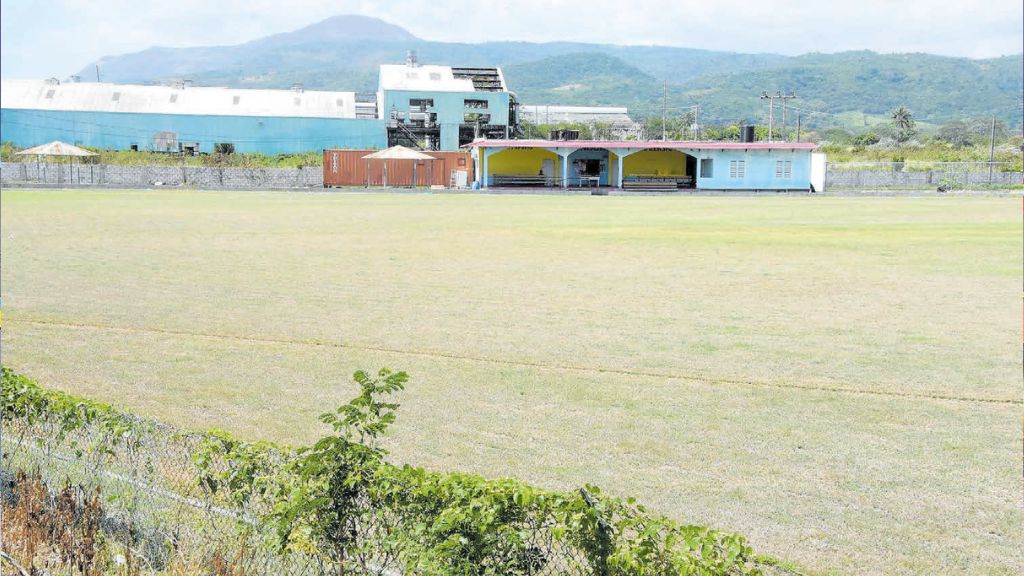
    The core of the crisis, Williams stressed, lies in the catastrophic decay of the parish’s cricket playing infrastructure. He told attendees that St Thomas currently lacks a single regulation-quality cricket pitch capable of hosting competitive matches, brushing off suggestions of existing usable grounds. The last high-quality facility, the Good Year Cricket Oval, has been completely destroyed, while other popular spots like Springfield are co-opted by football teams that leave the surfaces unfit for cricket play.

    The debate was triggered when Social Development Commission (SDC) parish field supervisor Darlene McCalla outlined the administrative and financial barriers that have forced the cancellation of the body’s annual parish cricket competition for 2024. McCalla explained that the SDC was recently restructured and no longer falls under the government’s sports ministry, eliminating direct public funding for its community sports programs. Today, all organized competitions rely entirely on private corporate sponsorship to operate.

    For years, leading Jamaican distiller J Wray and Nephew was the primary backer of the SDC’s cricket program, but new participation policies that require a minimum number of school-aged players to be involved led the company to withdraw its support entirely. While last year’s competition received partial backing from Lasco Finance, HEART/NSTA Trust and one additional corporate partner, McCalla said no sponsors have stepped forward this year. Sponsors have been reluctant to commit funding after widespread infrastructure damage across the parish from Hurricane Melissa, leaving the program with no budget to operate in 2024.

    Williams pushed back sharply on the narrative that Hurricane Melissa’s damage is a valid excuse for the collapse of organized cricket, noting that other core public services and activities – including regional CXC secondary school examinations – have continued uninterrupted this year despite the storm’s impact. He argued that the parish is creating a damaging double standard, prioritizing academic development for young people while sidelining talented young athletes who could build successful careers in cricket.

    “We’re really killing the future of maybe a future millionaire here,” Williams warned, adding that the neglect of grassroots cricket puts long-term prospects for talented young players at serious risk. “Melissa happened last year. All of us as politicians and as civil servants are still getting paid this year even though Melissa happened, so we cannot continue blaming Melissa. We know she’s a bad girl but we left her a long time ago; we have to move on.”

    Any meaningful revival of the sport, Williams said, must start with investment in at least one high-quality, dedicated playing pitch. No sustainable development program can succeed without basic infrastructure that allows young players to train and compete in proper conditions, he noted. He also called on the SDC to take a leadership role in coordinating the revival effort, noting that the agency has overseen parish cricket competitions for the past five years.

    If the SDC no longer has the capacity to lead the development of the sport, Williams added, local authorities need to open a formal discussion to clarify which government agency will take responsibility going forward. He rejected the status quo that leaves the sport with no oversight or structured development.

    McCalla later clarified that organized cricket has not disappeared entirely from the parish, noting that the independent St Thomas Cricket Association continues to host small-scale matches separate from SDC programming. But Williams stood by his criticism, emphasizing that the fundamental problem is a lack of sustained institutional leadership and coordinated development strategy for the sport across the parish.

    “It can’t be a thing where we just leave it on autopilot like that,” he said.

  • Treasure this

    Treasure this

    For years, travelers have associated the name Treasure Beach with a quiet, scenic collection of fishing villages along Jamaica’s untouched southern coast. But that is no longer the only spot holding that iconic moniker, as a new luxury resort destination by the same name has officially debuted in the Turks and Caicos Islands, becoming the latest standout addition to the Beaches Turks and Caicos resort portfolio. Nestled on a stunning stretch of coastline that locals have cherished for decades under the Treasure Beach name, the new resort village caters explicitly to the fast-growing trend of multigenerational family travel, offering guests high-end oceanfront accommodations complete with private pools, private rooftop viewing decks, and sprawling family-friendly suites designed to accommodate large groups.

    The official launch celebration kicked off last Thursday with a Regatta Golden Hour welcome event, a nod to longstanding maritime traditions shared by the Turks and Caicos Islands and neighboring The Bahamas. More than 500 invited guests gathered for the weekend festivities, including top travel advisors, local and regional government leaders, tourism authority officials, A-list celebrities, and early vacation guests eager to preview the new property. Deryk Meany, general manager of both Treasure Beach Village and Beaches Turks and Caicos, delivered an energetic opening address to welcome attendees to the one-of-a-kind new destination.

    The weekend of celebration reached its climax on Saturday night with a high-energy Treasure Beach Village Bash, which featured Jamaica’s Prime Minister Dr. Andrew Holness as a special guest of honor. Adam Stewart, Executive Chairman of Sandals Resorts International, which owns the Beaches brand, hosted the official opening ceremony marking the completion of the $50-million development. The property first welcomed guests during a soft opening phase back in March 2024, and its official launch now signals the start of a major new growth push for the brand’s Beaches 2.0 initiative.

    Under Beaches 2.0, Sandals Resorts International plans to invest an estimated $1-billion to expand the Beaches footprint across the Caribbean, with new planned destinations in Exuma, The Bahamas, as well as additional sites in Jamaica, Barbados, and St. Vincent and the Grenadines. The launch of Treasure Beach Village marks the first major milestone in this ambitious regional expansion strategy, which aims to meet rising demand for luxury family-friendly vacation experiences across the Caribbean’s most coveted coastal locations. Industry insiders note that the new development and broader expansion plan signal the brand’s confidence in a continuing post-pandemic boom in Caribbean travel, particularly among multi-generational groups seeking custom, spacious accommodations.

  • Residents Across Antigua and Barbuda Describe Panic After 6.5 Magnitude Earthquake

    Residents Across Antigua and Barbuda Describe Panic After 6.5 Magnitude Earthquake

    On a Saturday morning, a 6.5-magnitude earthquake rattled waters northeast of the twin-island nation of Antigua and Barbuda, leaving residents across both islands reeling from a jolt of fear, momentary confusion, and eventual relief when no severe harm was reported. The Seismic Research Centre (SRC) based at the University of the West Indies documented the event, noting the tremor struck at 10:50 a.m. local time at a depth of 31 kilometers beneath the ocean surface.

    Preliminary positioning data places the earthquake’s epicenter at 17.39 degrees north latitude and 61.18 degrees west longitude, roughly 80 kilometers from St. John’s, the capital of Antigua. The epicenter is also approximately 132 kilometers from Brades, the administrative center of Montserrat, and 132 kilometers north-northeast of Guadeloupe’s largest city, Pointe-à-Pitre. The SRC emphasized that this initial location was calculated automatically by machine algorithms, and will remain provisional until expert analysts complete a full manual review of the collected seismic data.

    In the hours immediately after the quake, there were no confirmed reports of human casualties or widespread structural damage, even as residents across dozens of communities reported feeling strong, sustained shaking across the islands. A resident living on Old Parham Road reported that household and store items tumbled from shelves during the shaking, with other communities including Yorks, Powells, Liberta, and New Winthorpes also recording intense tremors that were impossible to miss.

    Social media posts from local residents captured a range of experiences. One user described the quake as “super strong,” while another characterized it as “very big and heavy and long.” Many locals said they experienced moments of disorientation when the shaking first started; one woman, who was showering when the quake hit, shared online that she initially assumed her husband was playing a practical joke to startle her.

    Other accounts detailed scattered scenes of panic in public spaces. One commenter reported that customers and staff rushed out of a hardware store on Old Parham Road as the shaking grew more intense, with many fearing the building could sustain structural damage. In the immediate aftermath of the tremor, questions about road conditions and neighborhood safety spread rapidly across local social media platforms, as residents sought updates to confirm loved ones were unharmed and infrastructure remained intact. For many, the lack of major harm prompted relief: one resident wrote online “Thank God for your grace and mercy towards us.”

    The eastern Caribbean is no stranger to seismic activity. The entire region sits along the complex boundary between the Caribbean tectonic plate and the North American tectonic plate, creating constant geological stress that regularly produces tremors felt across multiple island nations in the area.