作者: admin

  • Courtesy classes for Westmoreland cops

    Courtesy classes for Westmoreland cops

    SAVANNA-LA-MAR, Westmoreland — After a wave of public complaints over unprofessional conduct and biased treatment by local law enforcement, the Jamaica Constabulary Force (JCF) Westmoreland Police Division has announced a multi-pronged strategy to repair community trust, combining mandatory professionalism training, expanded outreach events, and public accountability commitments.

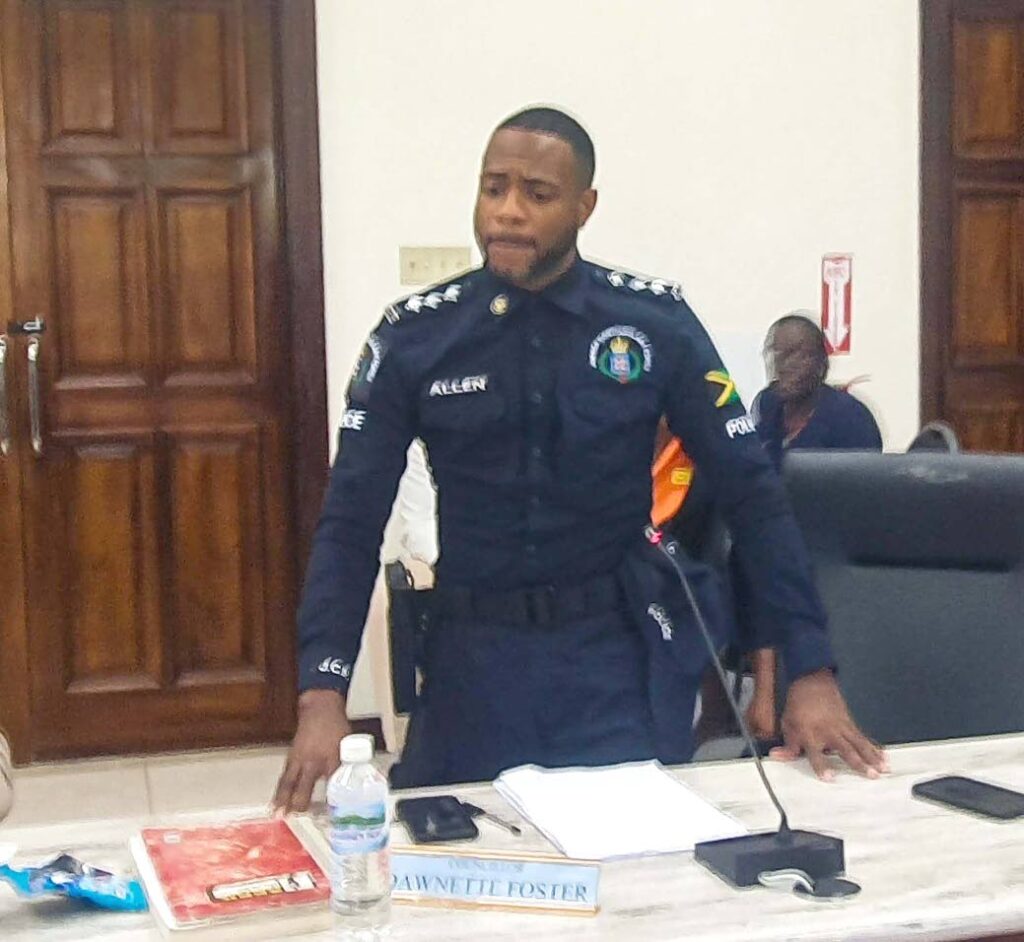
    Deputy Superintendent Jordaine Allen, the division’s operations officer, outlined the new initiatives during a monthly general meeting of the Westmoreland Municipal Corporation last Thursday. Starting Monday, May 18, 2026, all officers across the division will participate in ongoing interactive training sessions, with professional conduct and appropriate public engagement prioritized as the first core module, per Allen’s direct instruction.

    The training rollout comes in direct response to growing criticism from local elected officials over gaps in existing interpersonal skills training for junior officers, and widespread allegations of inconsistent treatment of motorists based on vehicle type and perceived social status. Councillor Ian Myles, representing the Little London Division for the Jamaica Labour Party, highlighted the disparities many residents face: if an officer stops a driver operating a vehicle commonly associated with marginalized groups, the interaction is often far more aggressive and disrespectful than it would be for a driver in a different vehicle, falling far short of the professional standards expected of law enforcement.

    Myles also shared a recent high-profile incident to illustrate the scope of the problem: a uniformed JCF officer parked in a paid public parking bay on municipal corporation property, located directly across from the Westmoreland Police Divisional Headquarters, and launched into a verbal tirade of abuse against a senior female municipal department head who confronted him about the violation. Myles described the officer’s language as completely unjustified and deeply distasteful, underscoring the urgent need for cultural change within the local force.

    In his response to the corporation’s concerns, Allen affirmed that the JCF remains committed to its core motto of professional service, and pledged that all officers will be retrained on the national Police Public Interaction Policy, which mandates that all members of the public be treated with the utmost respect regardless of background or circumstance.

    Beyond formal training, the division is launching a new phase of its community engagement program Beat the Streets, scheduled to kick off simultaneously with the training on the morning of May 18 at the Cook Street Multipurpose Court in Savanna-la-Mar. Unlike traditional top-down policing outreach, Beat the Streets brings together senior command staff, local station commanders, traffic officers, and operations teams to meet directly with community stakeholders in informal settings. The initiative is designed to open two-way dialogue: law enforcement shares their public safety vision for the area, while community members can voice unaddressed concerns and collaborate with officers to develop solutions that meet local needs.

    Allen also used the meeting to share positive progress on the division’s core crime reduction mandate, noting a substantial drop in homicides so far this year. Compared to the same period in 2025, the Westmoreland Division has recorded six fewer murders, representing a 38% overall reduction in fatal violent crime, a gain the command team credits to consistent proactive patrols and community collaboration.

    Looking ahead, the division will host a public awards ceremony on June 30 at Savanna-la-Mar’s Sean Lavery Hall to recognize outstanding service by officers across the parish, celebrating work that has advanced both crime reduction and positive community engagement.
  • Move beyond the pews

    Move beyond the pews

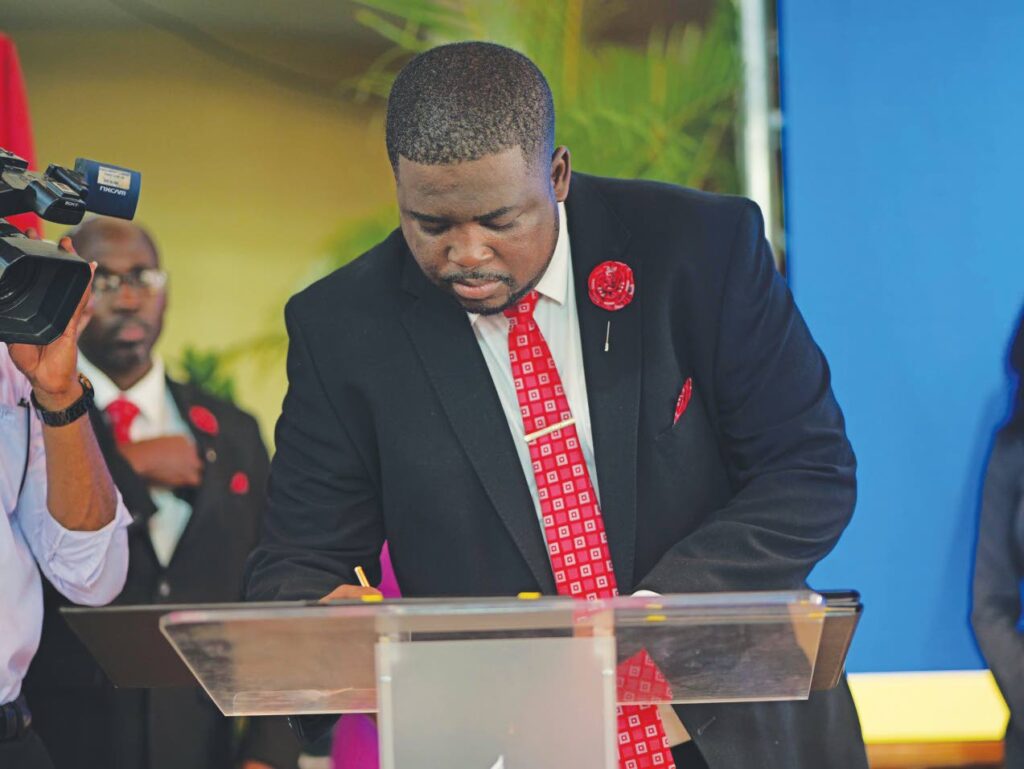
    On May 16, 2026, at the Seventh-day Adventist Church in Falmouth, Trelawny, a new chapter began for the North Jamaica Conference of Seventh-day Adventists (NJC). During the inauguration ceremony for the organization’s newly elected officers, directors, and executive committee members, newly sworn-in president Pastor Jermaine Johnson delivered a bold, mission-driven address challenging the conference’s congregations to step beyond traditional religious boundaries and pursue widespread transformational change across Jamaican society.

    Known affectionately to his peers and followers as Pastor JJ, Johnson brings a wealth of cross-sector leadership and public service experience to his new role. A native of Port Antonio, Johnson is an established motivational speaker, personal and professional development strategist, and justice of the peace for St Ann parish. He built his early foundation as a student at Titchfield High School, before going on to earn his degree from Northern Caribbean University. His long record of public engagement includes leading the National Youth Council of Jamaica, serving as an ambassador for the National Youth Service, and representing Jamaica at the Commonwealth Youth Parliament in Australia. A nationally celebrated communicator, Johnson is an award-winning toastmaster, recognized across the Caribbean for his dynamic oratory and leadership. He also composed the theme song for the Governor General’s I Believe initiative, and in 2023, he received the prestigious Governor General’s Gold Medal of Honour for his decades of work advancing social progress across the country. Johnson has also shared his leadership and faith frameworks through two published works: *The Seven Ps to Effective Church* and *Don’t Chicken Out*.

    In his inauguration address, Johnson emphasized that the event marked more than just a change in organizational leadership: it was a collective recommitment to the conference’s core mission. “If we are to achieve maximum impact for the Kingdom of God we must become intentional about engaging people everywhere they are — not for prestige, not for political advantage, but for transformational influence,” Johnson told attendees.

    He pushed back against the idea that the church’s role is only to maintain long-held traditions, arguing instead that the NJC has a duty to shape broader community life. “The NJC has not been called merely to preserve tradition, we have been called to transform communities, disciple nations, uplift families, engage institutions, and proclaim the everlasting gospel with urgency, fervency, and emergency,” Johnson said.

    Johnson outlined a radical expansion of what counts as the church’s mission field, rejecting the idea that faith work is confined to church buildings. “The time has come for us to think bigger, pray deeper, work smarter, and move boldly. The mission field before us is no longer confined to the four walls of the church. Our mission field is Parliament, the hospital, boardrooms, police stations, universities, the media landscape, the digital space, and every sphere where people seek hope, integrity, purpose, and truth,” he explained.

    Drawing inspiration from a quote by Seventh-day Adventist World Church President Pastor Erton Kohler, which states “A hopeless world is in desperate need of a hopeful church,” Johnson rooted his call for engagement in the example of Jesus Christ. “The church must not isolate itself from society while expecting to influence society, for we cannot impact that with which we are out of touch,” Johnson said. “Jesus did not merely preach in synagogues; He walked among the people; He entered cities; He engaged leaders; He transformed culture through compassion, truth, and service. We must let the world know that except God is placed in His rightful place, which is first place, things will always be displaced in this place.”

    Johnson was first elected to the NJC presidency during the conference’s Fourth Quadrennial Session, held April 20–21, 2026. He will lead the 85-congregation conference alongside Executive Secretary Pastor Carlington Hylton and Treasurer Pastor Onyeka Nevins. Covering the parishes of St Ann and Trelawny, the NJC currently counts more than 22,936 registered members across its faith communities.

  • Plane crash survivor is alleged cocaine kingpin

    Plane crash survivor is alleged cocaine kingpin

    What began as a routine ocean rescue off Florida’s coast in May 2026 unfolded into a dramatic twist that has sent shockwaves through Caribbean law enforcement and political circles: the capture of one of the world’s most-wanted alleged cocaine kingpins, thanks entirely to an unforeseen accident. Jonathan Eric Gardiner, a 50-something Bahamian man with a prior drug trafficking conviction in the U.S., was one of 11 passengers forced to ditch their Election Day flight from Abaco to Grand Bahama after both engines failed mid-flight during a storm. For five hours, the survivors drifted in life rafts 80 miles off Florida’s coast – in U.S. airspace – until the U.S. Coast Guard winched them to safety. When agents checked Gardiner’s identity, they discovered he had been a top target of a three-year undercover DEA investigation into a massive international drug trafficking network, and he was immediately taken into U.S. custody.

    The full, extraordinary details of the case are laid out in a newly unsealed deposition from DEA Special Agent Michael Coleman, a veteran of the agency’s Bilateral Special Operations Division. Coleman’s filing reads like a modern thriller, complete with paid confidential informants, wiretapped communications, coded text messages, a dead drug-smuggling pilot, a crashed plane on Rum Cay, and an allegation of a secret meeting with an unnamed high-ranking Bahamian politician inside the Bahamian Parliament Building in October 2024. That meeting, allegedly held to coordinate an upcoming 1,000-kilogram cocaine shipment valued at roughly $30 million, has left unanswered questions about potential high-level corruption that echo the dark drug-smuggling era of the 1980s, when Colombian cartels turned Bahamian islands into smuggling fortresses.

    The DEA’s investigation traces back to 2023, when agents launched a probe into multiple drug trafficking organizations (DTOs) moving multi-ton cocaine shipments from South American producer nations including Colombia and Venezuela through the Bahamas, then on to consumer markets in the United States by air and sea. One of the primary groups under surveillance was a network based in Georgia, and investigators quickly identified Gardiner – who uses the street nickname “Player” – as the network’s primary South American cocaine supplier. Gardiner had previously served 18 years in a U.S. federal prison for drug trafficking and money laundering, before being deported back to the Bahamas 12 years before the 2023 investigation began. The DEA also confirmed he first connected with key Georgia DTO member “Shorty” while both served time in the same U.S. prison.

    To build their case, DEA agents recruited two confidential informants to infiltrate the network. The first, a repeat offender with prior convictions for narcotics, robbery, fraud, firearms and immigration offenses, agreed to cooperate in exchange for having pending narcotics charges – which included 84 kilograms of seized cocaine and $84,000 in cash – dropped entirely. The second informant had no criminal record and agreed to work exclusively for financial compensation. Over the course of 18 months, agents intercepted hundreds of wiretapped calls and text messages between network members, gained access to Gardiner’s Apple iCloud account via a seized device belonging to a DTO distributor, and tracked cross-border travel between Georgia, Florida, Nassau and other Bahamian hubs.

    Coded communications intercepted by agents reveal a steady stream of large-scale drug transactions. In one early 2023 shipment, agents intercepted messages referencing “sorter machines” – a coded term investigators confirm refers to money counting machines common in drug trafficking operations – and “dinner plates”, which translate to kilograms of cocaine. In June 2023, the Georgia DTO leader told a co-conspirator during a monitored call that his Bahamian supplier – who was barred from entering the U.S., had four private planes, an estimated $30 million net worth, and maintained a hangar full of cocaine – had shown him 1,500 kilograms of the drug via FaceTime. While the indictment does not explicitly confirm that this description refers to Gardiner, it matches details of his background as a deported convicted trafficker. The leader also explained that the operation relied on corrupt Bahamian government officials to bypass air traffic control and coast guard inspections.

    By June 2024, the DEA had gathered enough evidence to secure a grand jury indictment charging 14 members of the network with federal narcotics trafficking and conspiracy charges. The arrest of Gardiner, however, would not come for another year, until the unexpected plane crash placed him directly in U.S. law enforcement’s hands. When agents searched Gardiner after his rescue, they found he was carrying three cell phones, a small amount of cash, and an envelope holding $30,000 handwritten with the name of a prominent Bahamian politician. That name has been redacted in public court filings, leading to widespread speculation about the identity of the mystery “Politician-1” first referenced in the October 2024 Parliament Building meeting allegation.

    This case is not an isolated incident, Coleman’s deposition emphasizes. In November 2024, U.S. authorities unsealed a separate 13-defendant indictment charging a different Bahamian-based drug trafficking network with smuggling cocaine into the U.S. with the protection of corrupt politicians, senior Royal Bahamas Police Force (RBPF) officers, and high-ranking Royal Bahamas Defence Force (RBDF) personnel. That scheme, which ran from 2021 to 2024, saw former RBDF chief petty officer Darrin Alexander Roker plead guilty in October 2026 to conspiracy to import cocaine, after admitting he shared law enforcement vessel location data with traffickers. Roker, who is terminally ill with aggressive prostate cancer, was sentenced to 48 months in federal prison. RBPF sergeant Prince Albert Symonette and former RBPF chief superintendent Elvis Nathaniel Curtis – who previously oversaw security at Lynden Pindling International Airport – are also among those charged in that case, with allegations that Curtis arranged for a $2 million payout to a high-ranking Bahamian politician in exchange for clearing large drug shipments.

    Coleman notes that the current affidavit submitted to the court is only intended to establish probable cause for Gardiner’s detention, and does not include all evidence gathered during the three-year investigation. When Gardiner was arrested after the crash, he was already facing indictment for his role as the foreign supplier for the Georgia network, and additional charges are expected as the investigation unfolds. For Bahamian authorities and the public, however, the biggest remaining question is one that has not been answered: who is Politician-1, and will the full details of alleged political complicity in modern Caribbean drug trafficking finally be made public?

  • FNM: Bastian and Miller-Brice posts may be tested in court

    FNM: Bastian and Miller-Brice posts may be tested in court

    A brewing political controversy has emerged in the Bahamas after the recent swearing-in of two new Cabinet ministers, with the main opposition Free National Movement (FNM) demanding full transparency and threatening to bring the issue before the courts for judicial review over alleged compliance gaps with the country’s Gaming Act.

    The controversy centers on Sebas Bastian, the newly appointed Minister of Innovation and National Development and MP-elect for Fort Charlotte, and Leslia Miller-Brice, incoming Minister of Culture, Arts and Heritage and MP-elect for Seabreeze. Both appointees have well-documented connections to the Bahamian gaming sector: Bastian previously served as chief executive of major gaming operator Island Luck, while Miller-Brice’s husband Leander Brice recently stepped down as head of GLK Limited, which trades as A Sure Win Gaming House Operator, ahead of his wife’s appointment.

    Under Sections 25 and 26 of the Bahamas’ Gaming Act, sitting Cabinet ministers, members of the national Gaming Board, and their immediate family members are prohibited from holding gaming employment licences, and are barred from holding a 5% or greater financial stake in any licensed gaming operator. While the law does not implement an outright ban on all individuals with past industry ties serving in Cabinet, it raises critical questions about whether current regulatory restrictions have been fully satisfied for the two new appointees.

    In an official statement released this week, the FNM argued that the governing Progressive Liberal Party (PLP) has failed to provide the Bahamian public with clear explanations for how the pair were cleared for Cabinet service. The opposition said Bahamians deserve full disclosure of whether either minister or their families retain any gaming-related financial interests, and if such interests were divested, full details of when and how that process was completed. If full disclosure does not resolve outstanding questions, the FNM says the matter should be tested in court to cement a clear judicial interpretation of the law that upholds the national interest.

    FNM Chairman Dr. Duane Sands emphasized that the dispute is not a minor technical debate, but a core issue of transparency, governmental accountability, and public trust in the rule of law. “The public deserves an explanation from the Progressive Liberal Party,” Sands said, noting that a number of critical questions remain unanswered: Have the ministers fully given up any ongoing income from gaming sector businesses? Do any hidden holdings still exceed the 5% ownership cap? He also pointed to a striking inconsistency: Prime Minister Philip “Brave” Davis previously ruled Miller-Brice out as a suitable candidate for Cabinet in his last administration, and the public is owed an explanation for why that assessment has changed. Sands added that while the FNM has not formally committed to legal action, all possible pathways remain on the table, and the government must prove it has followed both the letter and the spirit of existing law.

    Both appointees have pushed back against criticism, asserting that they completed all required regulatory steps to meet compliance standards ahead of their swearing-in. Bastian stepped down as Island Luck CEO earlier this year after being ratified as a PLP candidate. Speaking on the sidelines of the official swearing-in ceremony at Government House Saturday, he said his team had worked closely with gaming regulators to confirm all conditions for appointment were satisfied, and directed further questions to the Bahamas Gaming Board. “The gaming laws are in place, and we would’ve done work with the regulator to ensure that we were compliant and meet all of the regulatory conditions, which were a prerequisite obviously to these appointments, and I am confident that they have been satisfied,” he said.

    Miller-Brice echoed that defense, noting that she and Bastian had proactively engaged with the Gaming Board to adhere to all existing rules and guidelines ahead of taking up their new posts. “We have taken the proactive steps necessary, we have engaged with the Gaming Board, and so we’ve done all that we can to follow the rules and the guidelines that the gaming board has put in place,” she said. “Now this gives me and Mr. Bastian an opportunity to take on the role of serving in the capacity as cabinet ministers.”

    Latrae Rahming, communications director for the Office of the Prime Minister, has directed all inquiries about the compliance process to the Gaming Board, noting that a formal public statement addressing the matter will be released in the near future. However, many observers and critics say that referring the issue to the Gaming Board is unlikely to resolve concerns, as the Act grants the sitting minister responsible for gaming the authority to appoint all board members, designate the board chair, and terminate board appointments at will, raising questions about the board’s independent oversight capacity.

    Questions about Miller-Brice’s gaming ties and Cabinet eligibility have circulated for months. She served in the previous Davis administration as Bahamas’ Ambassador to CARICOM and chair of the National Independence Secretariat, but was not selected for a Cabinet post at that time. In July 2025, she publicly called for a review and amendment of the Gaming Act’s restrictions on Cabinet members and their families holding gaming licences, though she declined to confirm whether she was directly affected by the existing rules. Prime Minister Davis responded at the time by stating that there were no plans to amend the law, and existing eligibility rules governing gaming interests would remain in force for all Cabinet appointees.

  • Prime Minister names Jerome Fitzgerald to Cabinet post

    Prime Minister names Jerome Fitzgerald to Cabinet post

    Nearly a decade after a high-profile corruption scandal helped sink the Progressive Liberal Party (PLP) in a landslide 2017 electoral defeat, Jerome Fitzgerald — the Bahamian politician whose career has long been tied to that controversy — has been tapped to return to the national Cabinet, where he will oversee the country’s economic affairs.

    Fitzgerald, a former member of parliament for the Marathon constituency and ex-education minister who is set to be appointed a senator, was officially sworn into office on Saturday as Prime Minister Philip “Brave” Davis launched his second term in office. His comeback to top-level government is not a sudden surprise, however: over the PLP’s previous term, Fitzgerald served as a senior advisor in the Prime Minister’s Office, where insiders say he wielded outsized behind-the-scenes influence, and he also managed the PLP’s successful 2024 re-election campaign.

    Fitzgerald’s most damaging political controversy emerged on the eve of the 2017 general election, when leaked internal emails revealed he had lobbied heavily for multi-million-dollar brokerage, trucking, and limousine contracts tied to the massive Baha Mar resort development for a company founded by his father. The scandal became a central talking point for the opposition Free National Movement (FNM), which campaigned heavily on allegations of widespread PLP corruption. The FNM went on to win that election in a historic landslide, and Fitzgerald lost his Marathon parliamentary seat.

    The leaked correspondence showed Fitzgerald requested a $20,000 monthly stipend from original Baha Mar developer Sarkis Izmirlian, claiming the funds would cover medical expenses for his ailing father. In a 2014 email, he pressed Baha Mar executives to direct brokerage and shipping business to Bahamas Cargo and Logistics, his father’s firm, after earlier overtures had only resulted in a one-time contract for 40 containers.

    “Unfortunately despite all efforts by you and promises to me by Daniel Liu (CCA’s vice president) that we would receive the brokerage and trucking work, we have not apart from a one time deal to move 40 containers. I do not know why, I am disappointed, but I have accepted it and moved on,” Fitzgerald wrote in the message. “I know that the interior Furniture and Fittings should begin arriving shortly, and I would really wish to now establish a relationship between Baha Mar and Bahamas Cargo and Logistics Limited (“BCL”) where all ports of entry can be advised that BCL is to collect the paperwork and clear shipments for Baha Mar. It is my hope that the relationship will continue when the hotel opens and we will again be the broker and trucker for this property as we were for so many years.”

    Izmirlian ultimately forwarded the email to his senior leadership team, noting that all contracts should be awarded based on competitive cost and demonstrated capability, not political pressure. At the height of the scandal, Fitzgerald denied abusing his office to steer contracts to himself or his family. He clarified at the time that he held no ownership stake in BCL and never personally held a contract with Baha Mar or its affiliates, arguing he only followed up on his father’s pre-existing business discussions after his father fell ill. He maintained that no contract ever materialized from his outreach.

    The Baha Mar controversy is not the only scandal that marked Fitzgerald’s past tenure in government. In 2012, an underground fuel leak at a Rubis service station in his Marathon constituency released approximately 12,000 gallons of unleaded gasoline. The leak was detected in late December 2012, and a subsequent investigation by global environmental consulting firm Black & Veatch found local residents had been exposed to potentially dangerous toxins, including benzene, a confirmed human carcinogen. Though the firm’s final report was completed in February 2014, it was not released to the public until April 2015, after months of sustained public pressure and a heated town hall meeting with angry stakeholders. Marathon residents and local business owners expressed outrage over the delay, with critics accusing the PLP government of suppressing the report and failing to warn affected communities about the public health risks in a timely manner. Multiple local families ultimately filed legal action against Rubis Bahamas and the service station’s former operator.

    Fitzgerald’s return to senior public office first stirred controversy back in 2021, when the Prime Minister’s Delivery Unit announced on social media that he would serve as the unit’s senior policy advisor and head. The announcement was quickly deleted, and while initial OPM sources claimed the appointment had not been finalized, the office later confirmed Fitzgerald had joined the team without offering details on his specific role. Prime Minister Davis has long defended Fitzgerald, dismissing the Baha Mar controversy as “no harm” and “no foul” in 2021 comments to reporters, saying he has full confidence in Fitzgerald’s ability to help guide the country. Davis argued he was seeking out the most capable Bahamians to advance his policy agenda, and that Fitzgerald was one of the people he trusted to deliver results. When pressed specifically on the 2017 Baha Mar scandal, Davis questioned the premise of the question, repeating that there was no wrongdoing tied to Fitzgerald’s actions.

    Following Saturday’s swearing-in ceremony, Fitzgerald said he had worked closely with Davis and the full Cabinet over the past five years, praising Davis as a leader with a “heart of gold” and noting the pair had secured significant progress during the last term, even as much work remains to address national challenges. Over the past three months, Fitzgerald said he had traveled extensively across the Bahamas, speaking directly with thousands of citizens to better understand their challenges, aspirations, and desire for a government that creates pathways for all Bahamians to learn, earn, and build personal wealth. That commitment, he said, will be at the center of his work leading the country’s economic portfolio. He also noted he is optimistic about the Bahamas’ future, pointing to high youth turnout and engagement in the recent election as a promising sign, and emphasized that young people should remain actively involved in government planning and decision-making moving forward.

  • New Attorney general Munroe dismisses conflict concerns

    New Attorney general Munroe dismisses conflict concerns

    Following the Progressive Liberal Party’s landslide victory in last week’s Bahamian general election, where the party secured 32 of the 41 available parliamentary seats, a new cabinet has taken shape, bringing with it questions around potential ethical conflicts for one top appointee.

    Wayne Munroe, the newly sworn-in Attorney General and Minister of Legal Affairs, is pushing back against growing public concerns that his decades-long legal career — marked by multiple high-profile lawsuits against the Bahamian government and extensive representation of defendants charged by state agencies — will create unacceptable conflicts of interest in his new role leading the country’s legal framework.

    Munroe is no stranger to top government office: he previously served as Minister of National Security under the Progressive Liberal Party, and held the Freetown parliamentary constituency seat for years. In a notable twist from the election results, he became the only nominated cabinet member to fail to retain his seat in last week’s vote. Despite the election outcome for his constituency, the party tapped him for the critical attorney general role, and he was officially sworn in during a formal ceremony at Government House this past Friday.

    In a press briefing immediately after the ceremony, Munroe leaned into his extensive legal background as a strength for the role, rather than a liability. Over his decades in private practice, Munroe built his reputation handling complex civil and constitutional litigation, including multiple cases brought against the government. Beyond private practice, he has also previously served as a sitting Supreme Court judge and led the Bahamas Bar Association as its president, giving him deep cross-sector experience across the country’s legal ecosystem.

    Addressing the conflict of interest claims directly, Munroe shared a lighthearted observation from peers to frame the conversation. “Someone made a joke and said, if I have to be in court, they prefer for me to be representing the government than suing the government,” he told reporters. “If I’m not in government, I’m going to go back to the business that I do, which is civil and constitutional litigation.”

    When pressed on whether any of his past lawsuits against the government remain active, Munroe clarified that he had stepped away from active private practice four and a half years ago, leaving no ongoing personal litigation against the state. For any potential future matters that involve legal work from his former law firm, he committed to following standard ethical protocols: “You recuse yourself,” he said, confirming he would step aside from any matters where a conflict could arise.

    Munroe’s appointment fills the role left vacant by former Attorney General Ryan Pinder, who signaled his departure from the post back in January. At the time, Pinder told reporters that while he had not formally stepped down earlier, his tenure had come to a formal end, and he had no plans to remain in frontline Bahamian politics, quipping, “Don’t hold your breath” for a return to elected office.

    The appointment comes as the new Progressive Liberal Party government settles into its mandate, with the leadership banking on Munroe’s decades of cross-cutting legal experience to guide the country’s legislative and regulatory agenda over the coming term.

  • Parents, drug pushers blamed for student violence

    Parents, drug pushers blamed for student violence

    At a public education forum focused on curbing rising violence in Jamaican schools, a prominent St Andrew high school principal has sounded the alarm over the role of unaccountable adults – from careless parents to illicit street vendors – in fueling substance abuse among students and the aggressive behavior that follows.

    Reverend Claude Ellis, head of Pembroke Hall High School in the Corporate Area, laid out his case during last Thursday’s Kiwanis Club of North St Andrew meeting, themed ‘Safer Schools Now: Strategies to Combat Violence in Schools’. He argued that systemic change to protect students cannot stop at holding minors responsible for bad choices; adults who enable harmful behavior must face consequences too.

    Ellis pointed first to shifting parental responsibilities that leave digital devices to raise children from a young age. ‘We need to get back to holding parents accountable,’ he said. ‘Many of us hand toddlers a phone or tablet to keep them quiet early on, and we fail to anticipate how this lack of guided upbringing plays out in adolescence.’ Beyond lax parenting, he called out unregulated vendors who operate near school campuses, peddling alcohol, vapes, cigarettes and other controlled substances to underage students with little to no repercussions.

    To illustrate the urgency of the crisis, Ellis shared a first-hand incident from his own school campus just days before the meeting. While walking toward the main gate, he spotted a cold beer bottle near a student seating area. Assuming it had been left by an adult football team that practiced on the campus the night before, he bent to pick it up – only for a 12-year-old seventh-grade girl sitting nearby to admit the bottle was hers. She told Ellis that drinking before school was a regular habit, and she had brought the beer from her own home, with an adult’s knowledge. ‘When an adult gives a child alcohol at 8 o’clock in the morning, that child grows up thinking this behavior is acceptable,’ Ellis explained. ‘We can’t keep placing all the blame on children while ignoring the adults who normalize harm, all while claiming to uphold children’s rights.’

    Ellis also pushed back against the narrative that widespread school indiscipline is simply a product of better media coverage today. While acknowledging that schools have always dealt with low-level misbehavior, he argued that a gradual abandonment of basic moral standards and expectations of good conduct has created a pathway to more severe violence. He criticized the popular viewpoint that personal expression around appearance and behavior has no impact on learning, saying this hands-off approach has backfired spectacularly. ‘There is a clear link between small deportment violations and more serious violent and maladaptive behavior down the line,’ he noted. ‘When we let every student set their own unregulated rules, those competing individual interests end up clashing in harmful ways.’ The principal also added that many incidents of violence and substance abuse go unreported, masking the true scale of the problem across Jamaican schools.

    Ellis’ call to action aligns with longstanding concerns from law enforcement and public health officials across the country. Back in 2022, the St Catherine South Police division launched a sustained crackdown on drug and contraband trafficking in local schools, but officers reported facing a persistent ‘cat and mouse’ game with vendors, many of whom are parents themselves. These vendors sell drug-infused treats to students, justifying their actions by claiming they rely on the income for survival. Sergeant Princess Bayliss Ranger of the St Catherine South Community Safety and Security Branch told reporters at the time that even after multiple arrests, vendors almost always return to selling ganja-infused cookies and alcohol-soaked gummies to minors shortly after being released. A 2022 rapid assessment by Jamaica’s National Council on Drug Abuse, which surveyed 160 students and 20 guidance counsellors across 13 parishes, confirmed that the most common substances accessed by students today are Molly, vaping products, and cannabis-infused edibles.

    With clusters of school violence rising across the island, Ellis is urging policymakers and community leaders to prioritize sweeping accountability measures to put a ‘dent’ in the growing crisis, starting with holding the adults who enable student substance abuse legally and socially responsible.

  • He’ll kill again

    He’ll kill again

    PORT MARIA, ST MARY — It was a moment of raw, unfiltered grief for Phillipa Walker last Friday, as the man who murdered her three-year-old son and left her and multiple others injured in a brutal May 2024 attack was sentenced to 15 years behind bars. Even as the court handed down the punishment, the heartbroken mother could not find closure – telling reporters the sentence was far too lenient to protect the public.

    Walker told the Jamaica Observer she fears that when the 33-year-old attacker, Devon Williams, is released, his age and strength will leave him capable of killing again. “When he is out — you see how big and strong he is? — I can feel it when he gets out, he is going to come back and kill again,” she lamented through tears.

    Williams, who had recently relocated to Jamaica from the United States where he resided with his mother, was originally handed a 20-year prison term by the St Ann Circuit Court. The sentence was reduced by five years to account for his guilty plea and a psychiatric evaluation that confirmed he suffers from severe mental instability.

    The attack unfolded on the afternoon of May 29, 2024, as Walker walked home from school with her three children – three-year-old Asher Campbell, 9-year-old sister, and an older sibling – in the Pagee community of Port Maria, St Mary. Armed with an iron pipe and a knife, Williams launched an unprovoked assault on the group that left toddler Asher dead. Walker, her 9-year-old daughter, and five other bystanders were also wounded in the attack.

    Court documents reveal that Williams’ mental health struggles date back to 2016, when he first began requiring psychiatric medication. In statements given to the St Mary Parish Court, Williams’ father told authorities that after his son returned to Jamaica, he left his prescription medication behind in the U.S. While Williams’ mother shipped the medication to Jamaica, it never arrived before the deadly attack took place.

    Initially, Williams told the court he intended to represent himself during trial proceedings. However, presiding judge Nicole Kellier ordered that a court-appointed attorney be assigned to him due to his documented mental health condition, and he was represented throughout the trial by defense attorney Dane Marsh.

    In her post-sentencing interview, Walker said the tragedy could have been entirely avoided if the community had been notified of Williams’ unmanaged mental illness before the attack. “Had the community been warned about Williams’ ill health people would have been wary of him. Maybe my baby would be alive,” she said, her anger and grief plain on her face.

    Asher was Walker’s youngest child, the last of her six children, and the pain of his loss remains raw six months after his death. She recalled that Asher dreamed of becoming a soldier, and would have dressed up for his school’s recent Career Day in a military outfit – a future that will now never come to pass. “When I see the other babies going to school, especially on Career Day, in their cute outfits, my Asher would have dressed up as a soldier, as that was what he wanted,” she repeated through sobs.

    The murder has destroyed the entire family, Walker explained. Asher’s father has been so consumed by grief that he has refused to cut his hair since the attack – a small, telling sign of his pain. “When Asher was around and his father wanted a trim, no matter how I told him, [he would ignore me]. It would be the baby that would say, ‘Daddy, come let’s go to the barber.’ He’s hurting badly,” Walker said.

    Walker, who still bears the physical scar from the attack on her own body, says her mental and emotional health has been shattered. She has developed severe sleep disturbances and relies on medication to cope, but says the drugs do nothing to ease her constant pain. “My nerves are shattered. I have to tell myself I get old before I become young,” she shared. “My baby was innocent, he deserved to grow up.”

    Walker recalled that Williams showed no emotion during the attack, and argued that he should have received a life sentence long enough that he would be old and too weak to harm anyone if he is ever released. “He should have gotten a time [in prison] when him ready to come out he is old and feeble and he can’t hurt anyone else,” she said.

  • Firefighters host charity car wash for community safety

    Firefighters host charity car wash for community safety

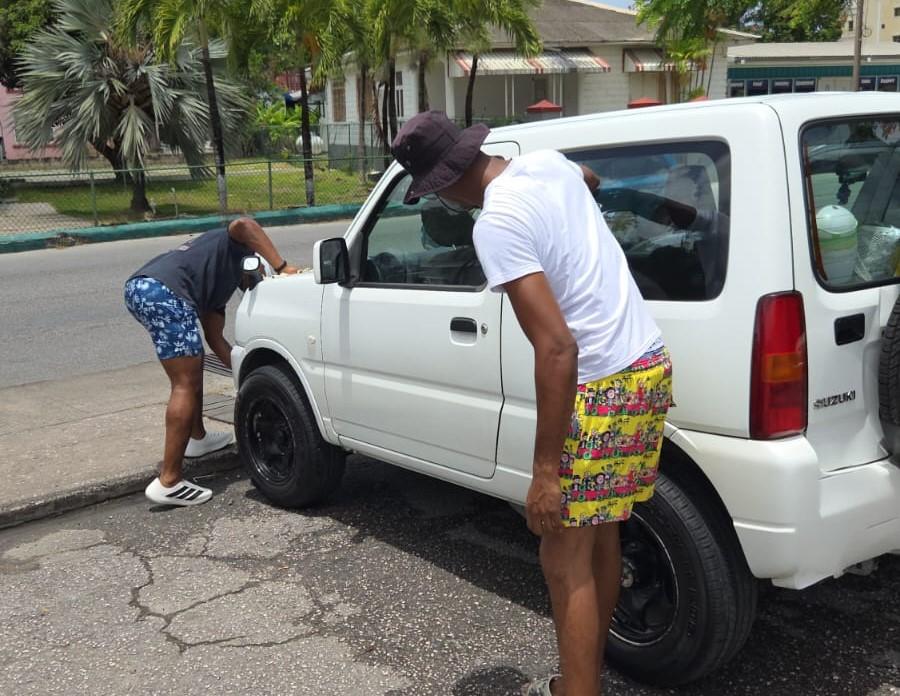
    On a lively Saturday in the coastal community of Worthing, Barbados, the Bajan Firefighters Network rolled out a creative new charity fundraiser that blended fun, practical service, and public good: a ‘sexy car wash’ designed to refill the organization’s coffers for its ongoing community-focused safety initiatives.

    Local firefighters and volunteer supporters set up their operation steps from the area’s post office, greeting motorists looking for a car deep clean while raising the critical donations the grassroots non-profit depends on to keep its programs running. Beyond washing vehicles, the event also doubled as a recruitment drive for the Barbados Builder Identifier, a new digital tool developed by the network to help first responders quickly and accurately locate homes calling for emergency assistance, cutting down response times in life-threatening situations.

    Krystal Penny Bowen, the network’s public relations officer and a long-time volunteer, explained that the lighthearted, accessible event grew out of a goal to rebuild in-person connections with local residents after the organization paused in-person fundraising events for a period. “Our charity has been serving Barbadian communities for several years, but we hadn’t hosted an in-person fundraising gathering in quite some time,” Bowen shared in an interview at the event. “We wanted something straightforward and useful that the public would actually engage with. People always need their cars washed, so it made perfect sense to bring together firefighters and volunteers to pull this off.”

    While the playful theme created a high-energy, upbeat atmosphere that drew crowds of locals to the site, the work behind the fundraiser is rooted in serious, life-saving public safety work. The Bajan Firefighters Network is entirely dependent on public donations to support its free community outreach programs, the most prominent of which is a free smoke alarm installation service for vulnerable residents. The group prioritizes installing and maintaining life-saving smoke alarms for low-income, elderly, and disabled Barbadians who often cannot afford the equipment or do not have anyone to help them install it properly. In addition to this core program, the network regularly delivers free fire safety educational workshops to schools, neighborhood groups, and community centers across the island, helping reduce the risk of preventable fire-related injuries and deaths.

    Bowen emphasized that all funds raised from the car wash event will go directly to program costs: the money will be used to purchase new smoke alarms for upcoming installation drives, fund future community outreach and education activities, and recognize the hard work of the organization’s volunteer members who give their time to keep communities safe.

  • President announces new REOs

    President announces new REOs

    On May 17, 2026, the Office of the President of Guyana confirmed that President Irfaan Ali has formally given approval for the national government’s slate of regional executive officer (REO) appointments across the country’s administrative regions. This personnel adjustment forms a core part of the government’s broader push to strengthen grassroots governance across Guyana, with the newly installed and retained leaders tasked with forging close collaborative ties with regional governing bodies, locally elected democratic institutions, and grassroots community groups. Their core mandates will be threefold: to sharpen the efficiency of regional governance frameworks, speed up the rollout of priority development programs, and raise the quality of public services accessible to ordinary Guyanese citizens across all areas of the country. Among the appointments confirmed, Karl Singh will retain his position as REO for Guyana’s Region Nine, bringing institutional continuity to the region’s ongoing development work. In an official statement accompanying the announcement, the Guyanese government reaffirmed its long-term commitment to building state institutions that meet three key benchmarks: professionalized operational standards, responsiveness to community needs, and a core focus on centering public well-being in all governance work. These institutional improvements are designed to lay the groundwork for inclusive, equitable development that reaches every corner of Guyana, leaving no region or community behind in the country’s broader economic and social progress. The appointment process underscores the administration’s priority of aligning regional leadership with its national development agenda, ensuring that local governance outcomes directly reflect the needs and priorities of Guyana’s population.