作者: admin

  • Suicide among adolescents and young adults on the rise in the Americas—PAHO

    Suicide among adolescents and young adults on the rise in the Americas—PAHO

    A groundbreaking new study published in *The Lancet Regional Health – Americas* has uncovered a troubling upward trend in suicide rates among adolescents and young adults across the Americas, sounding a major alarm for public health systems across the region. The research, a collaborative effort between the Pan American Health Organization (PAHO) and specialists from Stony Brook University’s Renaissance School of Medicine in New York, analyzed 21 years of global health data from the World Health Organization (WHO) collected across 35 countries between 2000 and 2021.

    Over the study period, researchers documented a 38% jump in the suicide mortality rate for people aged 10 to 24, a surge far outpacing the 17% increase recorded for the general population across the region. The mortality rate for this age group climbed from 5.7 deaths per 100,000 people in 2000 to 7.84 per 100,000 in 2021, marking an average annual increase of 1.48%. Today, suicide remains the third leading cause of death for young people across this age bracket in the Americas.

    In 2021 alone, the region recorded 18,156 suicide deaths among adolescents and young adults. While three-quarters of all youth suicide deaths occur among young men, data shows the rate of increase has been far steeper among females. The most dramatic rise has been observed in the youngest demographic group: children aged 10 to 14, a shift that has intensified urgent public health concerns across the region. Though suicide rate increases varied across individual countries and subregions, the upward trend is widespread, with particularly severe impacts recorded in North America and several Southern Cone nations. Notably, the Americas is the only region globally that continues to see rising overall suicide rates, with a 17% increase across the full population since 2000.

    PAHO experts have identified a range of interconnected contributing factors behind this surge. These include the earlier onset of common mental health conditions such as depression and anxiety, rising rates of substance use among young people, overexposure to unregulated digital spaces and growing prevalence of cyberbullying, mounting social and academic pressures, and unregulated access to lethal means of self-harm. Crucially, researchers emphasize that nearly all of these risk factors are preventable or manageable when detected early.

    PAHO Director Dr. Jarbas Barbosa described the findings as a critical wake-up call for regional governments and health systems. “The fact that the suicide rate among young people has risen 38 per cent in just over two decades — compared to a 17 per cent increase in the general population — is a wake-up call,” he stated. “We must strengthen prevention efforts, especially for children, adolescents, and young adults, and ensure they receive timely support.”

    Renato Oliveira e Souza, chief of PAHO’s Mental Health and Substance Use Unit, stressed that expanded early intervention infrastructure is essential to reversing the trend. “The increase in suicide mortality among younger populations calls for stronger early detection and interventions in schools and communities,” he said. “It is essential to continue expanding access to mental health services and strengthening measures aimed at restricting access to lethal means.”

    The study also outlines key evidence-based interventions that have proven effective in reducing youth suicide rates. These include expanding school-based mental health promotion and socio-emotional learning programs, improving routine early identification and long-term follow-up for at-risk young people, and guiding media outlets to adopt responsible, stigma-reducing reporting standards for suicide-related coverage.

    To coordinate a regional response to this growing public health crisis, PAHO has launched its new Regional Suicide Prevention Initiative in 2025. The initiative is designed to support national governments in rolling out evidence-based prevention programs, strengthen national suicide prevention strategic plans, expand affordable, accessible mental health services for young people, and reduce widespread social stigma surrounding mental health treatment and suicide discussion. Closing his remarks, Dr. Barbosa emphasized that collective action can reverse the deadly trend. “Suicide affects families, communities, and entire societies, and is preventable,” he added. “With political commitment, investment, and collaboration across sectors, we can save lives.”


  • Police seek driver in fatal hit-and-run crash in St Mary

    Police seek driver in fatal hit-and-run crash in St Mary

    Authorities in St Mary, Jamaica have launched a manhunt for a vehicle driver responsible for a fatal pedestrian collision that left an unidentified man dead on a major local roadway earlier this week. The tragic incident unfolded just after 9:00 pm on Tuesday along the Heywood Hall main road, close to the Hampstead entrance in the parish, according to official police accounts.

    Preliminary reports from law enforcement confirm the victim, described by officials as a man believed to be experiencing mental distress, was struck by the moving vehicle while walking along the public roadway. In what has become the core focus of the ongoing investigation, the driver of the vehicle that hit the man immediately fled the accident site rather than stopping to render aid or report the crash, as required by Jamaican law.

    Following the collision, members of the local community discovered the seriously injured victim along the roadside. Acting quickly to save his life, residents transported the injured man to the Port Maria hospital, where attending medical staff pronounced him dead shortly after arrival.

    The St Mary Police Division is now leading a full criminal investigation into the fatal hit-and-run, working to identify both the victim and the at-large driver. Law enforcement officials are urging members of the public who may have witnessed the crash, have information about the vehicle involved, or hold any other details that could advance the investigation to contact the St Mary police immediately. All submissions of information can be kept confidential to protect witnesses, authorities added.

  • Stylish Aston Villa win Europa League to end 30-year trophy drought

    Stylish Aston Villa win Europa League to end 30-year trophy drought

    On a storied night under the lights of Istanbul’s Besiktas Stadium, English side Aston Villa etched a new chapter into their 152-year history, ending a 30-year wait for major silverware with a ruthless 3-0 demolition of Germany’s Freiburg in the 2024 UEFA Europa League final.

    The match, which felt like a coronation from the opening whistle, saw two moments of individual brilliance from Youri Tielemans and Emiliano Buendia put the outcome out of reach before halftime, before a second-half strike from Morgan Rogers put the final seal on a historic triumph. This win marks Aston Villa’s first major trophy since the 1996 League Cup, and their first major European title since their legendary 1982 European Cup victory over Bayern Munich.

    In a twist that echoed the club’s most iconic triumph, Emery’s side wore the same white kit they donned for that 1982 upset in Rotterdam, fittingly taking the pitch as 1982 heroes Peter Withe and Dennis Mortimer watched from the stands. In the 41st minute, Tielemans broke the deadlock with a thunderous volley: Rogers played a clever short corner, floating a pinpoint cross into the path of the Belgian, who timed his run to perfection and hammered a strike past Freiburg goalkeeper Noah Atubolu from just inside the 18-yard box. It was only Tielemans’ second goal of the entire season, and arguably his most important.

    Before the halftime whistle could blow, Buendia doubled Villa’s lead with an even more sublime finish. Left unmarked on the edge of the area, the Argentine picked out the far top corner with a curling shot that left Atubolu with no chance, putting the German side – appearing in their first ever major European final – on the back foot for good. Rogers put the result beyond doubt in the 58th minute, sliding to convert Buendia’s cross and cap off a flawless team performance.

    For manager Unai Emery, this victory adds another legendary entry to his already unparalleled Europa League resume. The Spanish tactician has now lifted the trophy five times, having previously won three consecutive titles with Sevilla between 2014 and 2016, and another with Villarreal in 2021. Despite Emery dismissing the label of “Europa League King” in pre-match comments, his tactical mastery once again proved unbeatable on the continental stage.

    The historic win was celebrated by two of Aston Villa’s most famous supporters: Prince William, a lifelong Villa fan, was in attendance to join roughly 20,000 travelling ecstatic fans in the stands, while Hollywood A-lister Tom Hanks sent a pre-match good luck message to the squad ahead of kickoff.

    This triumph caps a remarkable turnaround for a club that looked to be going nowhere just 18 months ago. When Emery took charge in October 2022, Villa sat just three points above the Premier League relegation zone, having endured decades of disappointment since the 1982 European Cup win, including two relegations to England’s second tier and four defeats in domestic cup finals. Even this season started in rocky fashion, with Villa opening the campaign with six winless matches, scoring just two goals in that dismal opening run.

    But a first win of the season against Bologna in the Europa League sparked an incredible run: Villa notched 13 wins from 15 matches in the competition, culminating in Wednesday’s final victory, and last week secured qualification for next season’s UEFA Champions League with a crucial win over Liverpool. The 1982 golden generation of Withe, Tony Morley, Mortimer and Nigel Spink stood alone in Villa’s history for more than four decades, but now the current crop of Tielemans, Buendia, John McGinn and Rogers have joined that elite group, banishing decades of painful memories on the banks of the Bosphorus.

  • Dominican Olympic Committee receives final RD$150 million for Santo Domingo 2026 preparation

    Dominican Olympic Committee receives final RD$150 million for Santo Domingo 2026 preparation

    In a key step ahead of the upcoming 2026 Central American and Caribbean Games, Dominican Republic’s Sports Minister Kelvin Cruz has officially handed over the final $150 million Dominican peso installment to the Dominican Olympic Committee (COD), wrapping up total government funding for the nation’s athlete preparation and delegation organization.

    This closing disbursement brings the total public-sector support for the event to RD$893 million, a comprehensive package that covers every critical element of readying the Dominican delegation, from pre-competition training to on-the-ground organizational logistics. During a formal ceremony marking the transfer, COD President Garibaldy Bautista extended his gratitude to the Dominican government for releasing the allocated funds on schedule. He highlighted that the committee would prioritize full transparency and efficiency in resource allocation, ensuring every Dominican athlete gains access to high-quality training facilities, professional coaching staff, and all the supporting resources required to perform at their best.

    Minister Cruz confirmed that the final installment has already been fully processed and deposited into the COD’s dedicated bank account, removing any financial barriers that could distract athletes from their preparation work. The XXV Central American and Caribbean Games are scheduled to run from July 24 to August 8, 2026, in the nation’s capital of Santo Domingo, with roughly 850 domestic athletes expected to compete across multiple disciplines. Beyond the one-time event funding, the Ministry of Sports has implemented additional supporting measures for national competitors: since January 2025, the ministry has doubled monthly stipends for all national team members, a move designed to reduce financial stress and help athletes focus exclusively on refining their skills ahead of the regional games.

  • Foreign Minister Roberto Álvarez reaffirms support for Bolivia’s democratic institutions

    Foreign Minister Roberto Álvarez reaffirms support for Bolivia’s democratic institutions

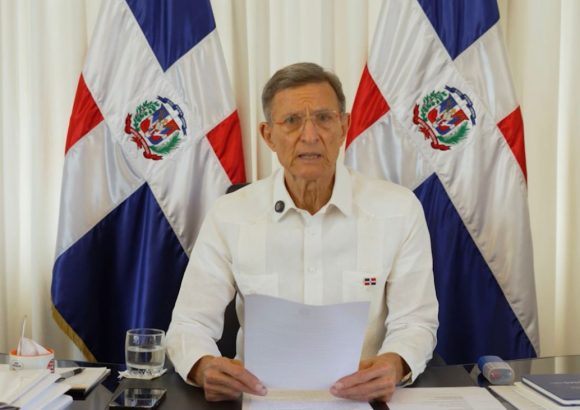
    During a recent virtual meeting of the Organization of American States (OAS) Permanent Council, the Dominican Republic made a clear, firm stand on the unfolding political crisis in Bolivia, officially rejecting all efforts to destabilize the country’s constitutional order and reaffirming its unwavering support for the democratic mandate established by Bolivian voters in the 2025 general election.

    Speaking on behalf of the Dominican government at the regional body’s session, Foreign Minister Roberto Álvarez opened his remarks by voicing profound alarm over the intersecting political, social and humanitarian crises currently roiling Bolivia. He pointed specifically to ongoing disruptive actions including widespread road blockades, widespread interruptions to critical public services, and frequent violent clashes between rival groups, emphasizing that these destabilizing acts place the heaviest burden on Bolivia’s most marginalized and vulnerable communities, who lack the resources to cushion themselves against the chaos.

    Álvarez went on to underscore the full democratic legitimacy of current Bolivian President Rodrigo Paz and his administration, noting that the government took power through a transparent, widely recognized electoral process. He stressed that no matter how deep political and social divides may run in the country, all disagreements must be channeled through established democratic institutions, rather than through force, intimidation, or overt attempts to overthrow the constitutional order.

    The Dominican foreign minister also extended tangible solidarity to Bolivian households that have been pushed into hardship by widespread shortages of essential goods, including food, fuel, and life-saving medication, all of which have been exacerbated by the ongoing unrest. He commended the current Bolivian government for its active efforts to open inclusive dialogue with diverse social and economic sectors across the country, framing these outreach efforts as clear proof that negotiated, mutually acceptable solutions are within reach when all parties are committed to prioritizing national stability over partisan gain.

    Additionally, Álvarez recognized the critical humanitarian support provided by Argentina and other partner nations that have worked to speed the delivery of emergency aid supplies to vulnerable populations in Bolivia. He characterized this cross-border assistance as a powerful model of constructive hemispheric cooperation that serves the shared interest of protecting civilian well-being across the region.

    In closing, the Dominican Republic reiterated its core position that open dialogue, respect for democratic institutions, and collective regional solidarity are three irreplaceable pillars for restoring calm to Bolivia and safeguarding both the fundamental rights and long-term well-being of the Bolivian people.

  • Malfunctioning mic at Gordon House forces temporary suspension of sitting

    Malfunctioning mic at Gordon House forces temporary suspension of sitting

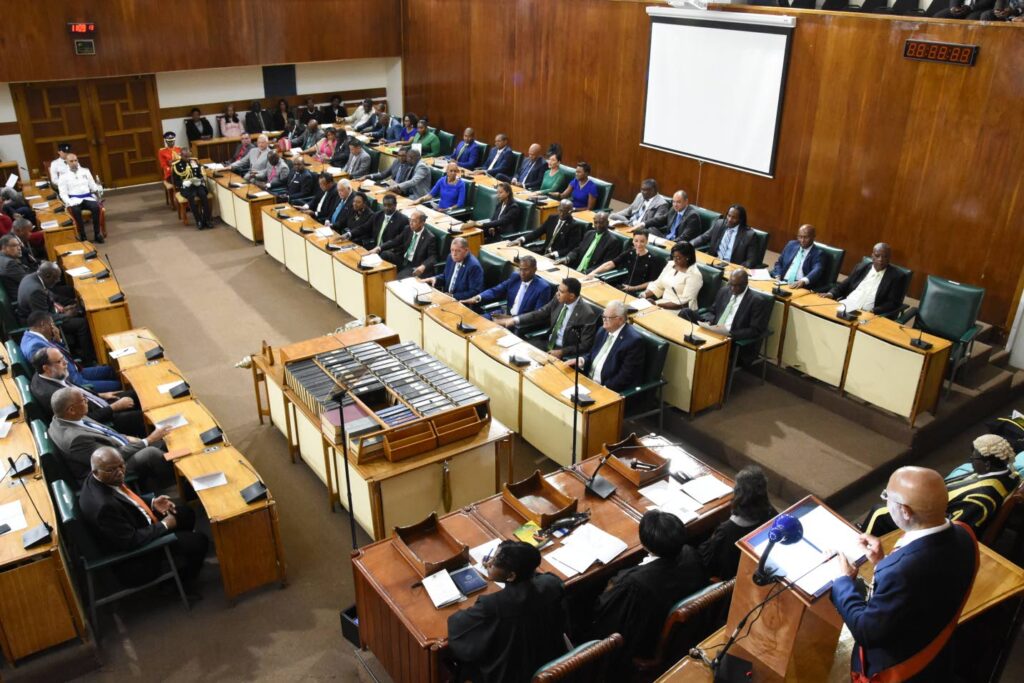
    KINGSTON, Jamaica — What was scheduled to be a routine Wednesday sitting of Jamaica’s House of Representatives got off to a chaotic, delay-plagued start after an unexpected technical failure knocked out the building’s core microphone infrastructure inside Gordon House, the official seat of Jamaica’s parliamentary lower house.

    The issue emerged within minutes of proceedings getting underway, when Deputy Speaker Heroy Clarke stepped up to open the session and attempted to activate his wired desk microphone. Instead of capturing his voice, the faulty device emitted a deafening burst of high-pitched audio feedback that completely drowned out Clarke’s remarks, leaving attendees and observers unable to hear a single word.

    Parliamentary staff quickly intervened, passing Clarke a portable wireless microphone to allow him to continue his opening address while a team of on-site audio technicians raced to identify the root of the problem and conduct emergency repairs on the chamber’s integrated sound system.

    Unfortunately, the backup wireless mic also suffered a failure just minutes into use, leaving parliamentary leaders with no option but to call a temporary suspension of the entire sitting while technical crews worked relentlessly to fully restore full audio functionality to the chamber.

    Despite the extended early disruption to the day’s agenda, parliamentary authorities confirmed that the technical issue was eventually fully resolved, allowing the sitting to resume and proceed with its scheduled business as planned. As of Wednesday’s adjournment, official authorities had not yet released any immediate details on what caused the original audio system malfunction.

    Reporting by Jerome Williams

  • St James Municipal Corporation donates $20m to Montego Bay Sports Complex

    St James Municipal Corporation donates $20m to Montego Bay Sports Complex

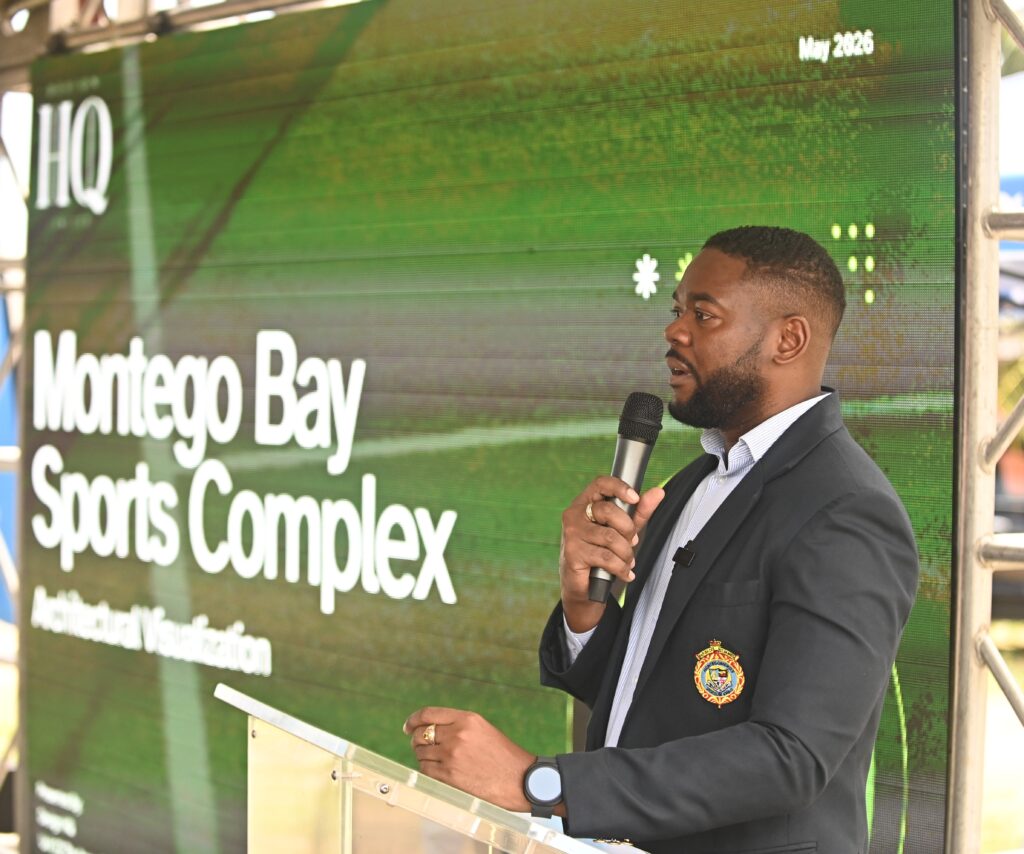
    ST JAMES, Jamaica — In a pivotal step toward reviving a key regional recreational hub, the St James Municipal Corporation has committed JA$20 million in funding to Montego Bay Multi Sports Development Limited, marking the official launch of the cleanup phase for the long-awaited Montego Bay Sports Complex rehabilitation project. The funding announcement was made Wednesday during a public ceremony hosted at the complex itself, where organizers also unveiled full master plans for the site’s extensive refurbishment and expansion. The venue suffered extensive structural and terrain damage last October when Hurricane Melissa swept across Jamaica, leaving critical facilities, including the main football pitch, submerged and ruined by floodwaters.

    Montego Bay Mayor and Councillor Richard Vernon shared details of the municipal contribution during the ceremony, emphasizing the local government’s commitment to revitalizing public sports infrastructure for the St James community. Johann ‘Yoni’ Epstein, who leads both Montego Bay Multi Sports Development Limited and top-tier local football club Montego Bay United, confirmed that the flood-ravaged main football field is on track to be fully restored and ready to host matches in time for the 2026-27 national football season.

    Beyond repairing existing damage, the project’s long-term vision transforms the underutilized site into a multi-purpose regional sports destination. The master plan includes adding multiple new full-size football pitches, a regulation Olympic-sized swimming pool, dedicated futsal courts, facilities for racquet sports such as tennis and squash, on-site athlete dormitories, and a fully equipped public gym. The redevelopment project has been years in the making: Montego Bay Multi Sports Development first submitted a 25-year lease bid for the complex valued at roughly JA$700 million in November 2024, and the partnership between the private development group and municipal government was formalized with a signed Memorandum of Understanding this past February. The new 25-year lease agreement paves the way for phased construction and upgrades to be rolled out over the coming years.

  • ‘You do not have my permission to take a picture of me!’

    ‘You do not have my permission to take a picture of me!’

    Surveillance cameras positioned across residential neighborhoods, commercial properties, traffic infrastructure, and other public spaces document the daily movements of millions of people globally. Beyond formal security recording, ordinary people often end up as unintended background subjects in personal photos or selfies. In other scenarios, individuals may intentionally capture images of strangers—for casual entertainment, or in more harmful cases, to record awkward or compromising moments that are later spread across social media. This widespread reality leads to a critical, often misunderstood legal question: does entering a public space automatically mean an individual surrenders their right to control their own image? The answer, under Jamaican law, is firmly no.

    Jamaica’s judicial system has a long-standing precedent for protecting individuals against unauthorised use of their personal image. Two landmark Supreme Court cases laid early groundwork for these protections: the 1994 dispute between the Robert Marley Foundation and Dino Michelle Limited, centered on the unapproved use of Bob Marley’s likeness on mass-produced apparel, and the 2004 case Georgia Messam v Morris and Williams, which addressed the unauthorised inclusion of Messam’s image in a commercially distributed publication. In both rulings, the court formally recognised the tort of misappropriation of personality, a legal claim that applies when a person’s image or identity is exploited for commercial gain without their explicit permission, alongside the related tort of passing off. Importantly, Jamaican law also recognises that privacy violations related to unapproved image use can occur even when no commercial motive is involved.

    These protections are rooted in Jamaica’s foundational law: the Charter of Fundamental Rights and Freedoms, enshrined in the national constitution, explicitly guarantees every person the right to respect and protection of their private and family life. The 2019 case Julian Robinson v The Attorney General of Jamaica [2019] JMFC Full 04 reinforced this right, citing reasoning from a prominent Indian privacy ruling that established every individual holds the right to control how their own image and personal identity are presented to the world, including how those elements are used for commercial purposes. Control over the distribution and publication of one’s own image is a core component of the broader right to privacy, and this right is enforceable not only against the state but also between private citizens. Even with this clear foundation, conflicts between competing rights do arise: every person holds both a right to privacy and a right to freedom of expression. When one individual’s exercise of free expression violates another person’s privacy, Jamaican legal framework requires courts to assess whether the violation is clearly justifiable in a free and democratic society, with particular weight given to the principle of proportionality.

    To further clarify the application of privacy rights in image use, courts often reference persuasive precedent from other common law jurisdictions, particularly the United Kingdom. A defining UK ruling, Campbell v MGN [2004] UKHL 22, established a foundational objective test for determining if a reasonable expectation of privacy exists: the standard asks whether a reasonable person in the same circumstances, facing the same level of public exposure, would expect their image and activity to remain private. The ruling clarified that all people, whether public figures or ordinary private citizens, must accept that they may be observed and photographed without consent when they are out in public, just as they accept being seen by other members of the public. Disliking an unapproved photograph taken in a public space does not automatically require the photographer to delete the image under law. Even so, the ruling warned that anyone capturing images of others must exercise caution—especially when the image captures a humiliating moment, when the subject explicitly withholds consent, or when the subject requests the image be deleted.

    In the Campbell case itself, the majority of the Law Lords ruled in favor of the claimant, a prominent international fashion model who had been photographed on a public street leaving a Narcotics Anonymous meeting. The publication of the photograph contradicted the model’s previous public statements that she did not use drugs, outing her private struggle with addiction. The court found that she did hold a reasonable expectation of privacy in this scenario, and that this privacy right outweighed the publisher’s claim to freedom of expression. The ruling also drew a critical, often overlooked distinction between simply taking a photograph or video recording, and publishing that material to a wider audience. For example, when a CCTV camera captured a man in an embarrassing moment and that footage was repeatedly broadcast on television, UK courts ruled that the level of exposure far exceeded anything the man could reasonably have anticipated when he was in public. A CCTV camera that incidentally captures passersby for security purposes may be entirely acceptable, but that does not grant the camera owner the right to publish any and all recordings it captures.

    When assessing whether an individual has a reasonable expectation of privacy, courts consider all relevant circumstances of a given case, including eight core factors: the personal characteristics of the claimant bringing the case; the nature of the activity the claimant was engaged in when the image was captured; the location where the recording or photography took place, including whether the location is a private space open to the public with its own photography rules; the nature and purpose of the intrusion into the individual’s privacy; whether consent was not given, and whether the person capturing the image knew consent was withheld or could have reasonably inferred it; the specific harm or impact the image use caused the claimant; whether the image relates to a matter of legitimate public interest; and the circumstances and purpose that led the publisher to obtain the image.

    In the digital age, capturing and sharing images and videos has never been easier, but this accessibility comes with legal responsibility. To avoid potential legal liability for privacy violations, anyone capturing or sharing images of other people without their explicit consent must exercise careful judgment. Acting in good faith and with basic respect for others’ rights is the most reliable step to avoid violating privacy laws.

    This analysis is written by Kimberley Brown, an associate in the commercial department at the law firm Myers, Fletcher and Gordon. The article is intended for general educational purposes only and does not constitute formal legal advice.

  • GraceKennedy Foundation’s 36th annual lecture to highlight progress in restoring Kingston Harbour

    GraceKennedy Foundation’s 36th annual lecture to highlight progress in restoring Kingston Harbour

    KINGSTON, Jamaica — Ahead of World Environment Day 2026, the GraceKennedy Foundation has unveiled plans for its 36th Annual Public Lecture, an event centered on celebrating and unpacking the landmark progress of the Kingston Harbour Cleanup Project (KHCP), Jamaica’s pioneering large-scale effort to reverse solid waste pollution in one of the Caribbean’s most ecologically and economically vital coastal ecosystems.

    Scheduled for Friday, June 5, 2026, the lecture — branded *Kingston Harbour Cleanup Project: From Vision to Reality* — will dive into how cross-sector strategic alliances, cutting-edge waste interception technology, and evidence-based scientific guidance have turned a long-held conservation ambition into tangible, impactful action. Kingston Harbour stands as a foundational natural and economic asset for the entire Caribbean region, supporting commercial shipping, local fishing livelihoods, and marine biodiversity that sustains coastal communities across the island.

    The KHCP is led by the GraceKennedy Foundation in partnership with local environmental group Clean Harbours Jamaica, with core funding provided by The Ocean Cleanup, the globally recognized non-profit specializing in large-scale interception of plastic waste in rivers and oceans. In its first five years of operation, the initiative has already delivered extraordinary results, blocking almost 13 million pounds of plastic and other solid waste from entering the harbour’s waters.

    Caroline Mahfood, CEO of the GraceKennedy Foundation, emphasized that the project offers a replicable blueprint for global conservation action. “This initiative proves what is possible when science, private sector leadership, and local community commitment align behind a shared environmental goal,” Mahfood explained. “Our collaboration with The Ocean Cleanup and Clean Harbours Jamaica has demonstrated that measurable, meaningful progress to reverse environmental damage is well within reach. Through this annual lecture, we aim to share not just what the project has delivered for Kingston Harbour, but also a broader, hopeful message: restoring degraded natural resources is absolutely achievable through sustained collaboration and intentional long-term commitment.”

    The GraceKennedy Foundation’s annual public lecture series, launched in 1989, has grown into one of the Caribbean’s most respected public platforms for examining pressing regional challenges, from climate change to environmental degradation. The 2026 event marks a full-circle moment for the foundation’s work on Kingston Harbour: it revisits a conversation first opened by the organization’s 2019 lecture, *Clean Kingston Harbour: Pipe Dream or Pot of Gold?*, which was instrumental in raising national awareness of the harbour’s unfolding pollution crisis and building public support for large-scale cleanup action.

    The 2026 lecture will be presented by a trio of key stakeholders: GraceKennedy Foundation CEO Caroline Mahfood; Michael McCarthy, Managing Director of Clean Harbours Jamaica Limited; and Professor Mona Webber, holder of the GKF James S. Moss-Solomon Senior Chair in Environment at The University of the West Indies, Mona. A special pre-recorded video message will also be shared by Boyan Slat, founder and CEO of The Ocean Cleanup, offering a global perspective on the project’s significance for international ocean conservation efforts.

    Leading the discussion as moderator will be Professor Michael Taylor, noted climate scientist and Dean of the Faculty of Science and Technology at The University of the West Indies, Mona. In a push to make the event accessible to audiences across Jamaica and around the world, the foundation is opening free virtual attendance via livestream on GraceKennedy’s official YouTube channel. Interested participants can register for access to the livestream at gkflecture2026.eventbrite.com, and additional information about the ongoing work of the Kingston Harbour Cleanup Project is available at www.cleankingstonharbour.org.

  • Arribazon turns pain into purpose with I’ll Rise Up

    Arribazon turns pain into purpose with I’ll Rise Up

    KINGSTON, Jamaica — For fast-rising Jamaican entertainer Arribazon, who has built a massive global fanbase through his viral “Musical A.I” persona on TikTok, creativity has long been intertwined with life experience. Now, he is turning one of the darkest chapters of his personal journey into a force for collective encouragement with his deeply moving new inspirational single, *I’ll Rise Up*.