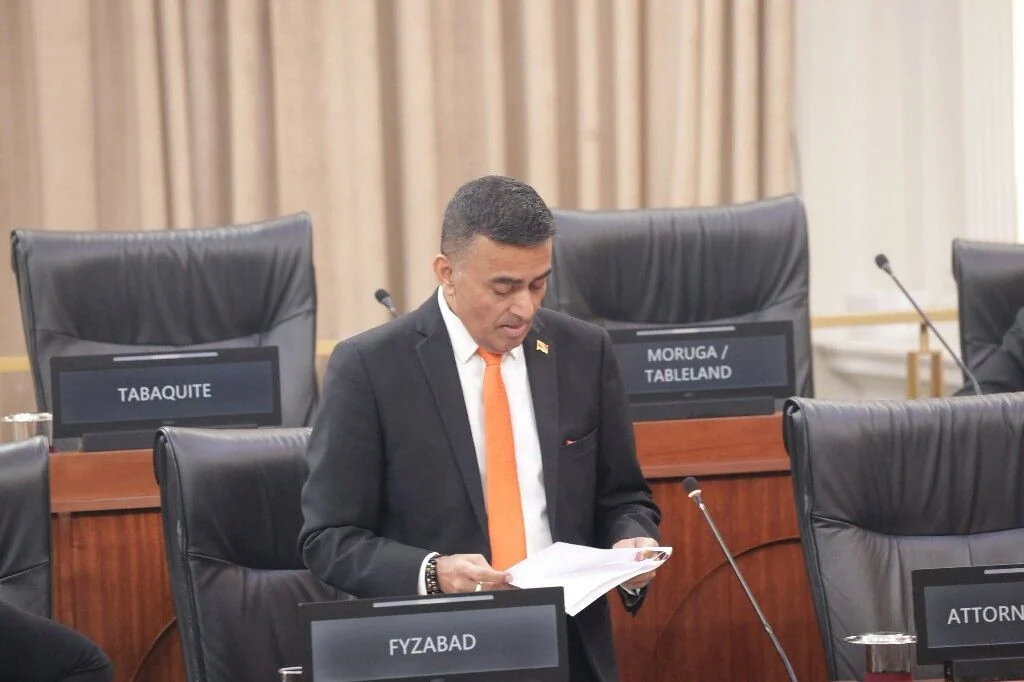
A high-value public sector contractual agreement between Trinidad and Tobago’s state-run National Payment and Innovation Company (NPICTT) and fintech provider WiPay is poised for formal referral to national law enforcement after a damning independent legal review uncovered systemic, non-compliant gaps in the procurement process that render the entire deal legally void. Finance Minister Davendranath Tancoo disclosed the pending referral during a parliamentary session in the House of Representatives, responding to formal queries raised by Arouca/Lopinot Member of Parliament Marvin Gonzales. The probe was triggered after NPICTT’s sitting board of directors launched a full audit of inherited pre-existing contractual arrangements, including the WiPay partnership, to verify adherence to national public procurement rules, confirm the legal authority under which the agreement was signed, and map the full scope of financial and operational obligations the state entity had assumed. The independent legal assessment, finalized on June 29, 2026, found no verifiable documentary proof that WiPay was selected through a formal, competitive public procurement process: no records of formal requests for proposals, quotation calls, public tender notices, or official bid invitations could be validated against available filings. As a result, the review confirmed the engagement of WiPay failed to meet all requirements outlined in the Public Procurement and Disposal of Public Property Act. Beyond fundamental statutory compliance failures, the legal assessment flagged severe risks embedded in the agreement’s commercial terms: the original contract was structured to run for 10 years, paired with overly restrictive termination clauses that would have exposed NPICTT to massive unplanned financial liabilities if the state sought to exit the partnership early. Additional red flags included lack of proof that a pre-signing independent legal review was ever completed, unresolved ambiguity around the contract’s total duration and automatic extension clauses, and questions over whether the NPICTT’s former chief executive officer held valid statutory authority to sign the agreement on the state entity’s behalf. The independent review formally concluded that the widespread procurement irregularities rendered the entire agreement “null and void and illegal” under Section 6 of the Public Procurement and Disposal of Public Property Act, though Tancoo noted this legal finding remains subject to potential future rulings from the country’s judiciary. Further scrutiny of the partnership uncovered a sprawling web of related side arrangements that raised additional governance concerns, including external consultants taking on core executive operational duties normally reserved for NPICTT’s in-house leadership, unvetted spending on television advertising campaigns, sponsorship of the state firm’s WeDay corporate event, a third-party workforce management contract with TT Supply Chain, and a proposed large-scale purchase of point-of-sale terminals. Auditors flagged heightened risks around adherence to procurement protocols, proper sign-off authority for spending, public value for taxpayer funds, and the erosion of NPICTT’s operational independence, with evidence suggesting external commercial entities may have gained improper influence over core state company decision-making. When pressed by MP Gonzales on the employment status of the former CEO who oversaw the signing of the WiPay deal, Tancoo confirmed the executive is no longer on NPICTT’s payroll. Addressing widespread public rumors of a $4.4 billion legal claim filed by WiPay against NPICTT over the terminated contract, Tancoo clarified that no active legal action for that sum has been formally served on the state entity, and no corresponding clause outlining such a massive penalty exists in the original signed agreement.