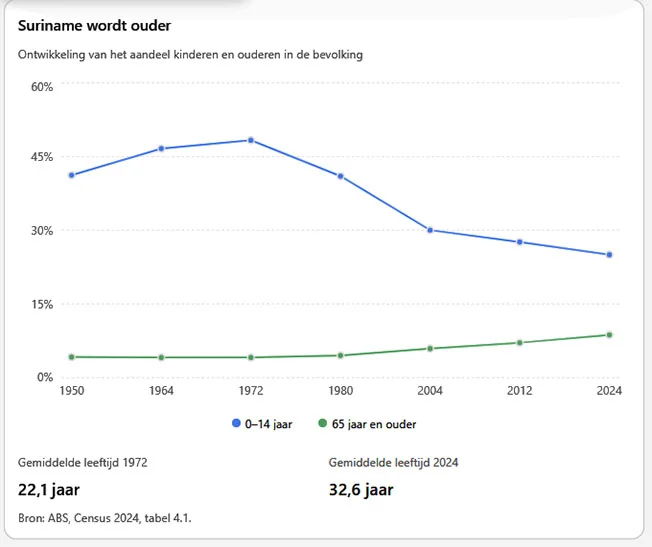
Recent 2024 national census data released by Suriname’s General Bureau of Statistics (ABS) paints a striking portrait of the South American nation’s dramatic demographic transformation over the past 52 years, with far-reaching implications for public service planning across the country. Official figures show that the share of Suriname’s population aged 65 and older has more than doubled from just 4.1% in 1972 to 8.7% in the latest 2024 count, while the proportion of children under 15 has plummeted by nearly half over the same half-century period. The youth demographic dropped from 48.3% of the total population in 1972 to 30% by the 2004 census, and now stands at just 25% in 2024, driving a sharp rise in the national median age: the average age of Suriname’s residents has climbed 10.5 years from 22.1 in 1972 to 32.6 this year. The pace of population aging varies significantly across Suriname’s administrative districts. The highest concentration of senior citizens is recorded in Coronie, where 11.7% of residents are 65 or older, followed by the capital city Paramaribo at 10.6% and Nickerie at 10.5%, while Wanica reports a far lower 7% share of elderly residents. Notably, the working-age population aged 15 to 64 has expanded to make up roughly two-thirds of the total national population, creating a concurrent window of demographic opportunity alongside the rising aging trend. Demographers and policymakers note that this shifting population structure will impose substantial new pressures on long-term planning for healthcare systems, specialized elderly care services, pension schemes, and the country’s flagship General Old Age Provision (AOV) social safety net. Analysts point out that Suriname’s emerging oil and gas sector, which is projected to generate sustained new state revenue streams in coming years, provides a unique opportunity to build robust, structural social infrastructure to address the needs of its fast-growing elderly population, and emphasize that long-term national financial planning over the next decades must explicitly prioritize provisions for this expanding senior demographic group.