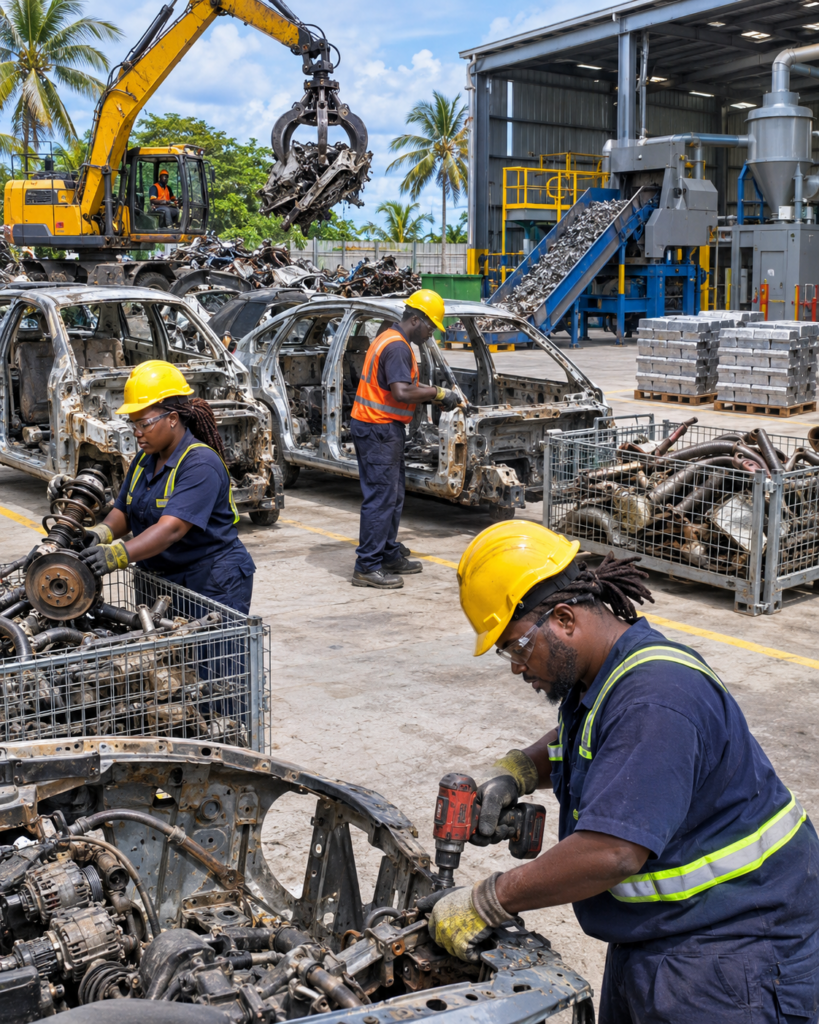
During a recent appearance on Pointe FM’s popular *Taking Stock* radio programme, Antigua and Barbuda’s Information Technology Minister Melford Nicholas laid out a forward-looking industrial vision that would transform the country’s current scrap vehicle management system, shifting away from the longstanding practice of compressing end-of-life automobiles into dense cubes for unprocessed export to overseas markets.
Under the proposed framework, local operators would smelt the ferrous and non-ferrous metals recovered from decommissioned vehicles on domestic soil, adding significant tangible value to the raw scrap material before it is sent to international buyers. Nicholas emphasized that this value-added processing model would not only generate new, sustainable local employment opportunities but also capture a far larger share of the global scrap metal revenue stream that the nation currently forgoes by exporting unprocessed material.
A core prerequisite for the viability of this new light manufacturing sector, the minister explained, is access to low-cost, consistent energy supply — a gap the government is actively addressing through a multi-phase national renewable energy rollout. The administration has already initiated drafting detailed project blueprints for a utility-scale solar farm, whose first operational phase is projected to cut the country’s total fossil fuel consumption by up to 25%. Wind energy infrastructure is slated to be integrated as a key component of the project’s second development stage.
Looking further ahead, Nicholas projected that renewable energy sources could account for more than 80% of Antigua and Barbuda’s total national electricity demand within a 10 to 15 year timeline. To incentivize private sector participation in the new circular economy industries, the government is exploring preferential, competitively priced energy tariffs specifically tailored for recycling and light manufacturing ventures.
The minister noted that the local processing ecosystem could later be expanded beyond scrap metal to include domestic treatment of post-consumer plastic and paper waste, with downstream production capabilities including custom packaging cartons for the country’s domestic egg producers and agricultural export sector. Nicholas clarified that no formal, binding scrap vehicle processing project has been officially approved to date, and no details regarding proposed facility locations, total capital costs, potential private investors or targeted implementation timelines have been finalized for public disclosure.