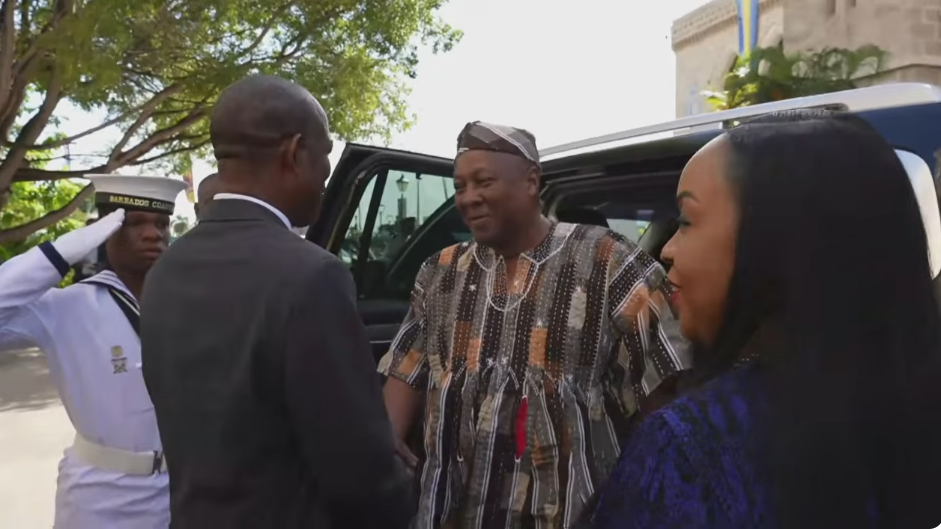
During a landmark joint sitting of Ghana’s Parliament on Friday, President John Dramani Mahama laid out a sweeping, multi-pronged strategy to formalize longstanding kinship and practical cooperation with Barbados, timed to coincide with the island nation’s dual 2025 milestones: 60 years of independence and five years as a sovereign republic. The centerpiece of the new collaboration is the finalization of a bilateral air services agreement, paired with concurrent efforts to revive Ghana’s national airline and establish dedicated port-to-port shipping corridors across the Atlantic Ocean. This move builds on recent successful charter flights that slashed travel time between Accra and Bridgetown from a grueling 23 hours to just seven hours, a tangible preview of the transformative impact of permanent direct connectivity for cross-border trade, tourism, and grassroots people-to-people exchanges. President Mahama emphasized that 21st century economic and social progress cannot rely on outdated, fragmented transit links, noting that both governments are prioritizing integrated air and maritime infrastructure to unlock shared growth. The cooperation framework extends far beyond transit links, building on existing successful partnerships that have placed 380 Ghanaian health professionals in service at Bridgetown’s Queen Elizabeth Hospital and local community clinics since 2022. Ghana’s administration is drafting streamlined legislative reforms and expanded visa waiver policies that will remove bureaucratic barriers for Barbadian and broader Caribbean citizens seeking to travel, invest, settle, or access accelerated ancestral citizenship pathways, anchored in the upcoming Homeland Return Bill that goes far beyond existing right-of-abode provisions to create clear, formal citizenship routes for all people of African descent across the diaspora. This policy push is rooted in deep shared historical heritage: millions of Barbadians trace their ancestral roots to enslaved West Africans forcibly displaced from the territory once known as the Gold Coast, present-day Ghana, during the transatlantic slave trade. To strengthen institutional and financial collaboration, Mahama highlighted ongoing expansion of the African Export-Import Bank’s operations in Bridgetown, as well as upcoming CARICOM-Africa Summit mechanisms designed to create tailored cross-continental financial instruments for African and Caribbean markets. Looking ahead to Ghana’s assumption of the African Union chairmanship in 2027, Mahama pledged to formalize the African diaspora as the AU’s official sixth region, and work alongside Barbadian Prime Minister Mia Mottley and other regional leaders to integrate the African Continental Free Trade Area with CARICOM’s single market to unlock cross-regional commercial opportunities. The Ghanaian president also drew direct parallels between Barbados’s successful economic transformation from a monocrop sugar-dependent economy to a diversified, service-focused nation with robust international reserves and steadily declining public debt, and his administration’s new four-year “New Economy” strategic program. Set to launch next year, the $10 billion domestic investment plan spans eight targeted strategic pillars focused on local value addition for natural resources, large-scale job creation, and long-term economic structural resilience, with Mahama noting that Ghana intends to draw heavily on Barbados’s proven model of sound fiscal governance to turn macroeconomic stability into widespread, inclusive prosperity. The two nations will also align their advocacy for global systemic reform, with Ghana formally endorsing the Barbados-led Bridgetown Initiative for equitable global financial restructuring, paired with the Accra Research Initiative launched in September 2025 that demands fairer climate finance frameworks and global governance structures that center the lived realities of Global South nations. Additional planned cooperation spans renewable energy deployment, sustainable fisheries management and ocean conservation, shared intellectual property protection frameworks, joint funding pools for creative and digital innovators, and a structured student exchange program that facilitates semester-long placements across four leading institutions: The University of the West Indies Cave Hill campus, the University of Ghana, Kwame Nkrumah University of Science and Technology, and the University of Cape Coast. Throughout his address, Mahama invoked the Akan philosophical concept of Sankofa – the practice of drawing wisdom from the past to build a prosperous future – to frame the partnership, pointing to numerous shared cultural threads including overlapping culinary traditions such as kenkey, conkie, banku and cou-cou, roasted plantain and yam dishes, communal rotating savings systems known locally as sou-sou, and shared historical tributes to anti-colonial resistance leader King Cuffie and the sacred Newton Burial Grounds for enslaved Africans. Ghana also highlighted its leadership of the successful United Nations resolution that formally classified the transatlantic slave trade as the gravest crime against humanity, a measure that also integrates CARICOM’s 10-point reparatory justice framework for harms from slavery, colonialism, and indigenous genocide. Mahama clarified that the collective push for reparatory action is not rooted in retribution or lingering resentment, but in upholding human dignity, affirming unvarnished historical truth, ensuring formal accountability, advancing cross-continental reconciliation and healing, and securing the long-overdue rightful global standing of people of African descent. He closed his address by referencing recent acts of anti-Black violence, including the fatal shooting of 10-year-old Ghanaian schoolboy Javit Frimpong in New York, as a urgent reminder that collective solidarity across the global African family is critical to countering systemic intolerance, before closing with lines from Ghana’s national anthem and a tribute to the enduring brotherhood and sisterhood binding Accra and Bridgetown as they advance shared prosperity together.