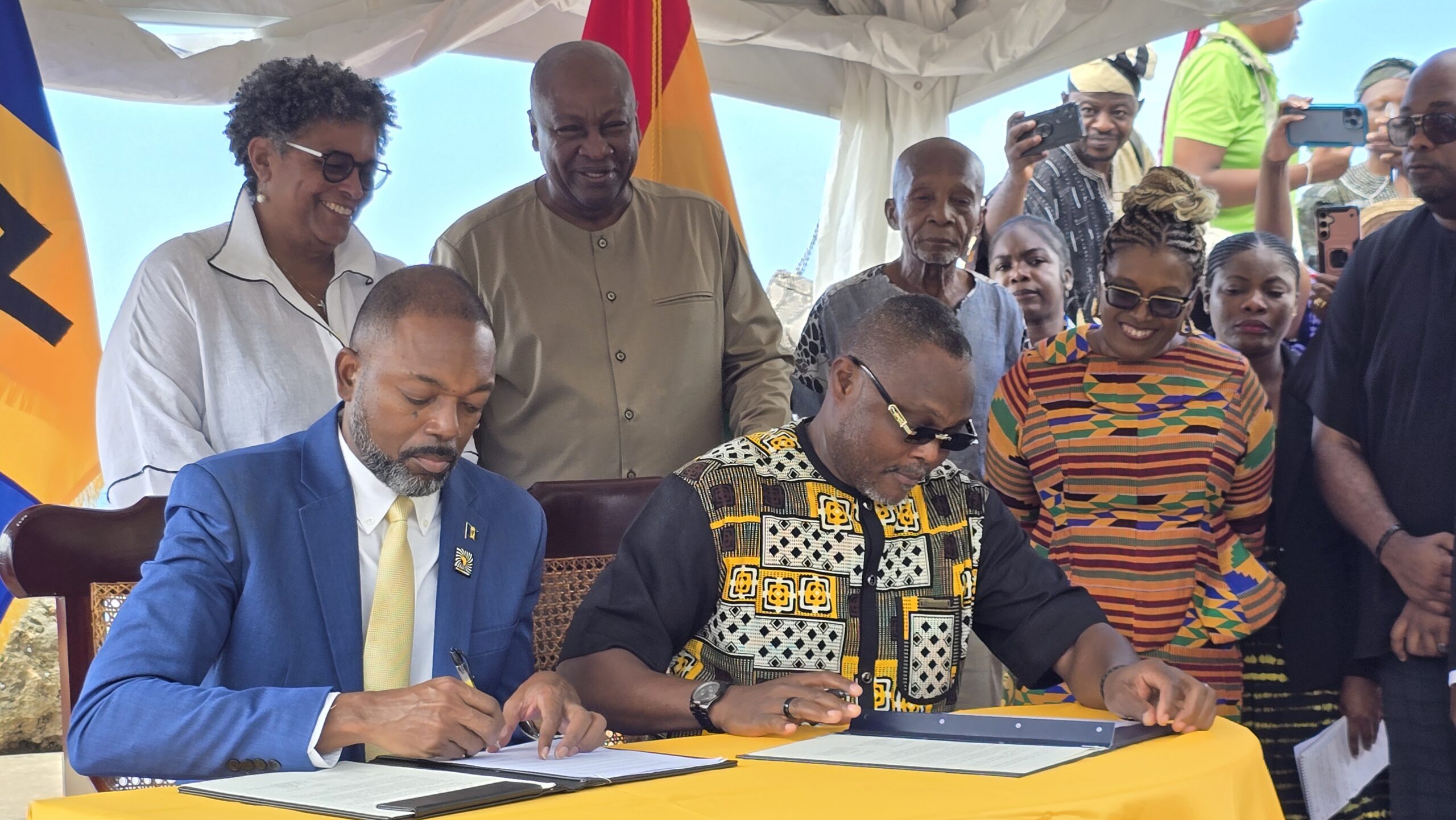
A landmark diplomatic and cultural milestone unfolded last Friday as the Barbadian coastal town of Speightstown and Ghana’s historic Cape Coast formally signed a twinning agreement, cementing a cross-Atlantic bond forged by shared ancestral histories tied to the transatlantic slave trade. The high-profile official ceremony, held at Speightstown Esplanade, drew senior government leaders from both nations, cultural performers, local students, and community representatives to mark the occasion, which also featured the public unveiling of a bronze bust honoring King Cuffee, the enslaved African rebel widely believed to have originated from what is now Ghana. Historical records confirm King Cuffee led the earliest documented organized rebellion of enslaved people in Barbados in 1675, a long-overlooked act of resistance that the new memorial now elevates to public recognition. Ghanaian President John Dramani Mahama, who traveled to Barbados for the signing, laid out a sweeping vision for the partnership that extends far beyond symbolic commemoration. His flagship proposal called for structured, reciprocal K-12 student exchange programs between the two communities, allowing young learners from Cape Coast to attend classes alongside their peers in Speightstown, and vice versa, to nurture intergenerational solidarity rooted in shared heritage. “Let this twinning become a living partnership that benefits not only institutions involved but also our ordinary citizens, our young people, our women, and future generations in both communities,” Mahama told assembled attendees, urging local leaders on both sides of the Atlantic to back the agreement with sustained engagement, tangible programming, and regular cross-community visits rather than letting it remain a ceremonial gesture. The formal twinning pact is structured to foster long-term collaboration across six priority domains: education, cultural exchange, sports development, sustainable tourism, grassroots community projects, and shared heritage preservation. In his keynote address, Mahama framed the partnership as a corrective to a brutal shared past: Cape Coast was one of the most prominent departure points for enslaved Africans trafficked across the Atlantic during the height of the transatlantic slave trade, while Speightstown — historically known to British colonial traders as “Little Bristol” — was one of the first major ports of entry for enslaved people arriving on Barbadian soil. “We do more than just commemorate a historical figure or establish a partnership,” Mahama emphasized. “We reconnect communities whose histories are linked by the experiences, sacrifice, and the resilience of our ancestors. We also honour the courage of those before us and reaffirm our responsibility to preserve their legacy for future generations.” He concluded by noting the agreement would “transform a geography once defined by separation into a lasting bridge of solidarity and partnership.” Barbadian Prime Minister Mia Mottley formally endorsed President Mahama’s student exchange proposal, framing youth engagement as the core of the partnership’s long-term impact. “In these children from both countries, if we can imbue in them that sense of commitment and that sense of common purpose and history, then they too can recognise that as they seek to walk the world, as they seek to build the new world in which they live, they do so in solidarity with others, not believing that their journey is singular,” Mottley stated. She also used the ceremony to correct longstanding colonial narratives about the 1675 rebellion led by King Cuffee, noting that the enslaved men who organized the uprising were not seditious conspirators, but unrecognized patriots who “stood up for this country before the country was ready for them.” The official twinning documents were formally signed by St Peter Member of Parliament Colin Jordan, representing Speightstown, and Dr Kwamena Minta Nyarku, MP for Cape Coast North and the Cape Coast City Assembly’s parliamentary representative, alongside the unveiling of a dedicated commemorative plaque marking the new partnership. The ceremony featured vibrant cultural performances from Barbados’ Pinelands Creative Workshop troupe, and drew local student groups including attendees from The Alexandra School in Speightstown, who posed for photos alongside President Mahama and Prime Minister Mottley. Community leader Dannyele Teneel Leslie, a Speightstown native set to represent Barbados as Miss Afrikana International 2027 in Ghana, also addressed the gathering, noting the agreement infuses the two communities’ long-shared history with tangible contemporary purpose. Her community initiative, the Transatlantic Bridge project, is designed to encourage Barbadian residents to deepen their connections to their African ancestral heritage, aligning directly with the twinning pact’s core goals. Notably, the twinning with Cape Coast comes just days after Speightstown formalized a separate sister-city agreement with Bristol, the British port that was one of the world’s largest financiers of transatlantic slaving voyages during the 17th and 18th centuries, creating a three-way cross-Atlantic network focused on confronting historical harms and building equitable collaborative futures.