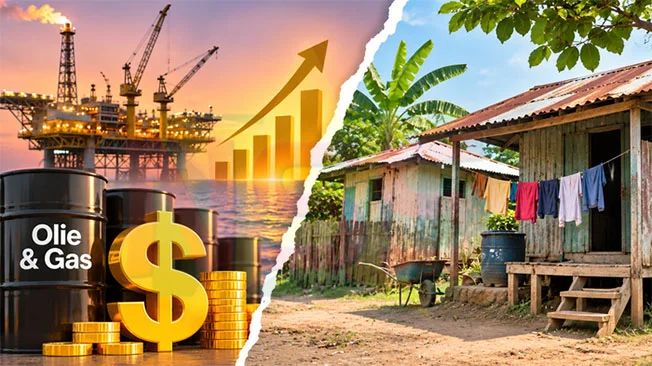
On November 27, energy sector analyst Wilfred Leeuwin published a critical assessment of Suriname’s latest major energy milestone: the final investment decision for the $1.6 billion KrakaWi gas project, a joint development between Malaysia’s PETRONAS and state-owned national oil company Staatsolie to bring the Sloanea gas field in offshore Block 52 into full production. The project marks Suriname’s second large-scale offshore energy development following the GranMorgu project in Block 58, cementing the country’s rising status as a regional hydrocarbon producer. Leeuwin notes that private and industry stakeholders have demonstrated rigorous, long-term planning to de-risk the project: PETRONAS, which first entered Suriname in 2013, spent 13 years on exploratory drilling, technical research, regulatory negotiation and phased investment to reach the final investment stage, while local firms including the Kuldipsingh Group invested nearly a decade ago in purpose-built port infrastructure that now serves as a critical logistics hub for offshore operations. Staatsolie, meanwhile, has built a robust operational framework to represent Suriname’s national interests in the global energy value chain, earning widespread recognition for its professional industry stewardship. Despite these strong private and sector-level preparations, Leeuwin raises urgent concerns about gaps in national political and policy readiness to convert incoming hydrocarbon revenues into broad, long-term shared prosperity. He points to Suriname’s historical pattern of failing to leverage past bauxite, gold and oil windfalls to develop foundational sectors including agriculture, manufacturing, education and core infrastructure, leaving the economy persistently vulnerable to global commodity price shocks. Echoing a recent public warning from United Nations Resident Coordinator Joanna Kazana, Leeuwin stresses that natural resource wealth does not distribute itself automatically: without deliberate, enforceable policy guardrails, Suriname risks falling victim to the well-documented “resource curse” that has left large swathes of the population in nearby fast-growing oil exporter Guyana in poverty, even as national GDP surges from energy exports. Leeuwin lays out a clear actionable roadmap for Suriname’s policymakers to avoid this outcome: first, fully operationalize the existing legal framework for the country’s Savings and Stabilization Fund, with binding rules governing revenue allocation, mandatory savings for future generations, strict public debt limits, independent oversight and full public transparency to prevent billions in windfall funds from being diverted to vanity political projects or unproductive short-term consumption. Second, move beyond draft local content legislation to implement enforceable rules that give domestic Surinamese businesses fair access to energy sector contracts, paired with targeted funding, skills training and certification support for small and medium-sized enterprises to help them build capacity, acquire new technology and compete in regional and global markets. Third, prioritize tangible economic diversification investments, including modern irrigation systems, agricultural mechanization, food processing facilities and export infrastructure to turn the agricultural sector into a resilient, high-value economic pillar, rather than leaving smallholder farmers without basic support even as billions in energy revenue is projected to enter national coffers. Fourth, overhaul national education and vocational training curricula in close partnership with the energy and agriculture sectors, to train not just petroleum engineers but a full pipeline of skilled technicians, ICT specialists, agricultural scientists and local entrepreneurs that can sustain a diversified, functional economy long after the country’s oil and gas reserves are depleted. Leeuwin warns that successive Surinamese governments have repeatedly failed to maintain long-term continuity in national development plans, resetting priorities and dissolving existing programs every time a new administration takes power. He emphasizes that the 13 years of patient, disciplined planning that PETRONAS and local stakeholders invested to deliver the KrakaWi project must be matched by equal foresight and consistent governance from the country’s political class. The ultimate failure for Suriname, he argues, would be to earn billions in new oil and gas revenue over the coming decades, only to find the country still trapped in the same cycles of underdevelopment, economic vulnerability and widespread poverty 20 years from now — a outcome that would represent a complete dereliction of political leaders’ historic responsibility to the Surinamese public.
Column: Gas- en oliebedrijven zijn voorbereid; is de Surinaamse politiek dat ook?