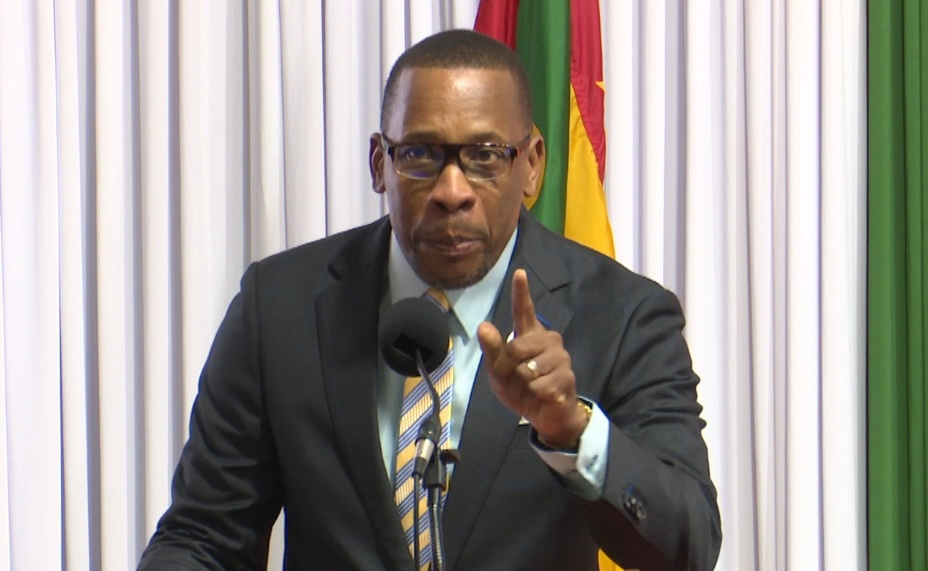
Delivering a keynote address at the 2026 National Insurance Scheme (NIS) Grenada Stakeholder Consultation themed “Securing Tomorrow Together: Strategy, Innovation and Resilience for Generations” on Wednesday, Eastern Caribbean Central Bank (ECCB) Governor Timothy Antoine laid out an urgent, comprehensive roadmap to rescue Grenada’s 43-year-old social security system from looming demographic, financial, and technological risks, calling for a cross-sector National Insurance Compact to lock in long-term sustainability for generations to come.
Headquartered in St. Kitts and serving all Organisation of Eastern Caribbean States (OECS) member nations including Grenada, the ECCB has pledged full institutional backing for the proposed compact, which Antoine framed as a binding multi-stakeholder agreement between the Grenadian government, private employers, and working citizens to be finalized within 12 months. The proposal comes after decades of piecemeal adjustments to the NIS, which Antoine argued have created a cycle of repeated last-minute demands for higher contributions and later retirement ages rather than permanent structural stability.
Antoine laid out stark demographic data to underscore the urgency: in 2016, 5.8 NIS contributors supported every single pensioner in Grenada, a ratio that had plummeted to 3.9 by 2024. Projections show that by the late 2040s, 20% of the island’s population will be aged 65 or older, as shrinking family sizes and aging populations become a universal regional economic and demographic trend. The system has not issued a general pension increase since 2006, leaving retirees with a 28% drop in purchasing power after 38% cumulative inflation over the 18-year period, while incremental 2024 parametric reforms that adjusted retirement ages, contribution rates, and minimum pension levels only offered temporary relief rather than long-term fixes.
To break this cycle, Antoine held up Sweden’s 1990s pension overhaul as a global model: when Swedish political parties set aside partisan divides to build an automatic, thermostat-style adjustment mechanism that adapts to rising life expectancies and fiscal pressures without waiting for a crisis, they created a system that remains stable regardless of which administration holds power. Aligning with recommendations from the NIS’s 14th Actuarial Review, the proposed Grenadian compact would embed three core pillars: first, a transparent, pre-defined rule for periodic pension increases (tied to cost of living adjustments and the fund’s fiscal capacity, for example with reviews every five years) to eliminate the current ad-hoc approval process; second, a binding long-term financial plan that sets clear contribution ceilings for workers, pre-announces gradual future adjustments, and establishes explicit reserve targets; and third, a fairness mandate that centers low-income earners in every policy design, ensuring the future NIS is solvent, trusted, fair, adequate, and modern for young people like “Ezra”, a hypothetical current child set to reach retirement age in 2071.
Antoine emphasized that no pension reform can succeed without parallel broad-based economic growth, pointing to the ECCB’s regional “Big Push” initiative that targets doubling the size of OECS national economies – for Grenada, that means growing from roughly EC$4 billion to EC$8 billion in total output. A larger economy would generate more formal and informal jobs, expand the NIS contribution base, and reduce the strain on the pension system, he explained. He highlighted Grenada’s 2025 milestone as the first Eastern Caribbean Currency Union nation to launch a retail bond with a minimum EC$500 investment threshold (far lower than the standard EC$5,000) that drew 350 participants and raised EC$4.3 million, a model now being replicated across the region. The NIS, which holds Grenada’s largest pool of domestic savings, can unlock new value by expanding local investment opportunities including more public listings on the regional stock exchange, dedicated bonds for housing and climate resilience projects, and carefully vetted cross-border Caribbean and global investment vehicles.
The ECCB governor also outlined the dual risks and opportunities of the rapidly evolving artificial intelligence landscape for social security administration. Properly deployed, AI tools can deliver 24/7 citizen support, cut claim processing times from weeks to days, and identify unreported employer contribution arrears before they accumulate to unsustainable levels, while AI-powered fraud detection systems can counteract bad actors’ own malicious use of AI to target pension funds. But Antoine stressed a non-negotiable guardrail: all final decisions on claims and benefits must remain in human hands, and the next NIS actuarial review must specifically examine how to adapt social security financing rules for an AI era that risks displacing formal wage jobs, expanding gig work, and decoupling economic growth from wage growth. He also called for digital transformation of NIS services to prioritize accessibility for elderly pensioners, ensuring no vulnerable groups are left behind amid tech upgrades.
Closing with a rallying call that cited a proverb about farmers who never harvest if they wait for perfect weather, Antoine rejected calls to delay reform to wait for a crisis-free “perfect time”, noting that global economic and climate shocks are a constant reality for small island nations. “The right time is now,” he told assembled stakeholders, urging all Grenadians to verify their NIS contribution records, make proactive retirement plans, submit payments on time, and stay engaged with the reform process to honor the 43-year-old promise of social security that has supported citizens through hurricanes and pandemics for generations.