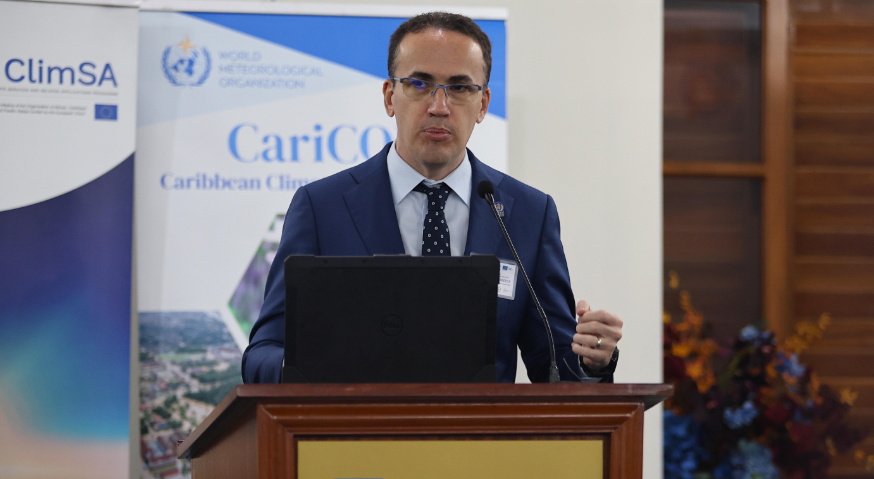
Delivered at the 2026/2027 Dry Season Caribbean Climate Outlook Forum Stakeholder Forum hosted in St Vincent and the Grenadines on Wednesday, a urgent public advisory from a leading regional climate expert has laid out a cascade of interconnected climate hazards set to impact large swathes of the Caribbean in the coming 18 months. Dr Cédric J Van Meerbeeck, senior lecturer in Climate Science at the University of the West Indies and climatologist at the Barbados-based Caribbean Institute for Meteorology and Hydrology (CIMH), outlined that a developing strong El Niño event — defined by anomalously elevated sea surface temperatures across the equatorial Pacific — will drive far-reaching disruptions to the region’s typical weather patterns from the summer of El Niño’s onset through to the end of the Northern Hemisphere winter in February 2027. The eastern and southern Caribbean face the sharpest exposure to below-average precipitation, with projected rainfall shortfalls set to trigger significant water scarcity risks across populated and agricultural zones. Contrary to common assumptions that a dry seasonal outlook means a total absence of rain, Van Meerbeeck emphasized that precipitation will arrive in far less frequent but far more intense bursts, carrying tangible risks of flash flooding, landslides and community displacement — a particularly acute threat for the region’s volcanic island nations where steep, geologically unstable terrain amplifies the hazard of sudden downpours. Compounding the drought risk, the climatologist noted that the 12 months following El Niño’s onset typically bring record or near-record high air temperatures, creating public health risks for vulnerable groups including the elderly, low-income households and outdoor workers. Warming Caribbean coastal and offshore ocean waters tied to the climate pattern also raise dual environmental hazards: widespread mass coral bleaching that threatens the region’s vital marine ecosystems and fisheries, and an elevated likelihood of above-average activity in the upcoming hurricane season. The accompanying CIMH agricultural drought projection map, which forecasts alert levels as of the end of December 2026, segments territories across four tiers ranging from no concern up to drought emergency, highlighting uneven but widespread risks to crop yields, smallholder farmer livelihoods and long-term food security. Van Meerbeeck pushed back against any public complacency that may arise from the dominant dry outlook, urging both national governments and local residents to prioritize cross-sector, sustainable water allocation planning to avoid crippling shortages for domestic use, agriculture and industry. He also stressed the critical need for continuous, real-time engagement with official updates from national meteorological services, rather than relying solely on long-term seasonal outlooks, to stay prepared for sudden extreme rainfall events and shifting heat conditions. The annual stakeholder forum, which brings together climate scientists, meteorologists, local media and public sector representatives from across the Caribbean, is explicitly designed to strengthen coordinated climate risk communication and help territories build targeted, proactive adaptation plans to mitigate avoidable harm from the projected hazards.
Caribbean countries put on alert for intense drought, extreme heat and warmer seas