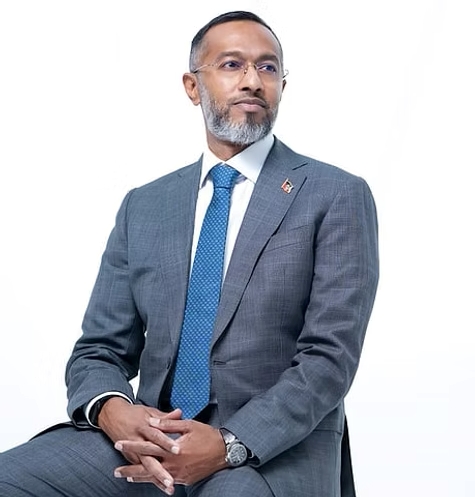
Authored by H.E. Theon Ali, Antigua and Barbuda’s Ambassador to the State of Qatar and the Syrian Arab Republic, as well as Deputy Head of Mission at the nation’s UAE Embassy, this commentary outlines the core priorities driving the country’s diplomatic delegation to the 18th MEDays Forum in Tangier, Morocco. For small island nations like Antigua and Barbuda, global geopolitical and economic shifts are far from abstract theoretical events: their tangible impacts are felt directly by every citizen at petrol stations, local food markets, and even when turning on household kitchen taps. Accompanying Honourable E.P. Chet Greene, Antigua and Barbuda’s Minister of Foreign Affairs, Trade and Immigration, Ambassador Ali carries one central, people-focused question to the Tangier gathering: will the agreements forged at this forum translate to a lower, more affordable cost of living for families back home?
The cumulative financial burden on ordinary households, referred to as the collective “kitchen table bill”, is driven by three interconnected, crisis-prone sectors. First, energy: nearly all of Antigua and Barbuda’s electricity is generated from imported fossil fuels, meaning fluctuations in global commodity markets ripple immediately to end users. This year alone, residential electricity tariffs have surged 44.3%, placing unprecedented strain on private households, hospitality venues, medical facilities, and small businesses alike. Second, food security: as a small island state, the vast majority of consumed food is imported, leaving local communities with no buffer against geopolitical disruptions that inflate shipping and fuel costs, pushing up prices for basic staples like bread. Third, water access: the desalination infrastructure that supplies most of the nation’s drinking water runs on the same expensive, imported fossil fuels, tying water costs directly to volatile global energy markets. Ambassador Ali emphasizes that these three sectors are not isolated challenges: they combine into a single, cumulative household expense, and any new international partnership must be evaluated first on its ability to reduce that total bill, or at minimum, make associated costs far more predictable for ordinary families.
The ambassador notes that recent UN climate talks held in Antalya concluded without a binding global consensus, pointing out that working-class households cannot afford to delay relief while nearly 200 nations negotiate slow, large-scale multilateral agreements. The 2024 MEDays Forum’s official theme, “Fragmented World: Time for Choices”, perfectly encapsulates this urgent reality for small island developing states. For these vulnerable nations, the choice is no longer whether to pursue new international partnerships, but rather what tangible outcomes those partnerships must deliver: they must be practical, rooted in shared values and aligned priorities, and focused on executing targeted, concrete projects one sector at a time.
Many of the most aligned potential partners are already gathering in Tangier. Qatar, a longstanding Gulf ally that has consistently centered developing world priorities in its national strategy, has spent the past decade building robust domestic food production systems, strategic staple food reserves, and large-scale water storage infrastructure despite its own challenging natural context of minimal arable land and scarce freshwater. This accumulated expertise in food and water security directly maps to the pressures facing Antigua and Barbuda, while Qatar’s deep energy sector knowledge can support the island’s transition away from costly fossil fuel dependence. Across Africa, Morocco has emerged as a global benchmark for utility-scale solar power deployment and innovative desalination technology, while nations across the African continent are pairing ambitious agricultural development initiatives with new cross-border trade corridors and climate-smart farming frameworks. These proven solutions hold direct potential to drive down household power and food costs for Caribbean communities. Ambassador Ali stresses that for Antigua and Barbuda, African nations are far more than formal diplomatic partners: they are connected by shared historical ties and a mutual, vested stake in building a more equitable global future.
These targeted, practical partnerships could take a range of actionable forms: joint solar generation and battery storage projects to fully decarbonize the national power grid, next-generation desalination cooperation that cuts energy consumption per litre of produced freshwater, and collective bulk purchasing or regional food storage agreements to stabilize volatile staple food prices. While each individual project may appear modest in scale, their combined impact will substantially reduce the cumulative household costs that land on every family’s kitchen table. This work aligns directly with the longstanding vision of Antigua and Barbuda’s Prime Minister, the Right Honourable Gaston Browne: to position small developing states as active shapers of the global governance agenda, rather than passive recipients of externally set policies. Prime Minister Browne first advocated for this framework at the 2022 MEDays Forum in Tangier, calling for deeper South-South cooperation to advance global justice and equity, and in last year’s forum session, he urged that nations that bear the brunt of geopolitical conflict, systemic inequality, and climate damage must lead the reform of the global systems that define their collective future. For Prime Minister Browne, every global governance reform is ultimately measured by its direct, tangible impact on the daily lives of ordinary citizens.
In Tangier, Ambassador Ali will collaborate closely with Minister Greene and the full Antiguan and Barbudan delegation to turn high-level diplomatic dialogues into formal, actionable partnerships with allies across the Gulf, the African continent, and the broader Global South. Guided by Prime Minister Browne’s leadership and people-centered vision, the delegation will prioritize partnerships that strengthen national climate and economic resilience while delivering immediate, measurable benefits for local communities. In an increasingly fragmented global landscape, small vulnerable states cannot afford to wait for inclusion in slow, traditional multilateral processes: they must proactively build the targeted, practical partnerships they need to support their populations. The success of all these new agreements will be measured by the same simple, universal standard that local citizens use every day: the price at the petrol pump, the cost of goods at the local market stall, and the reliability and affordability of water flowing from the kitchen tap.