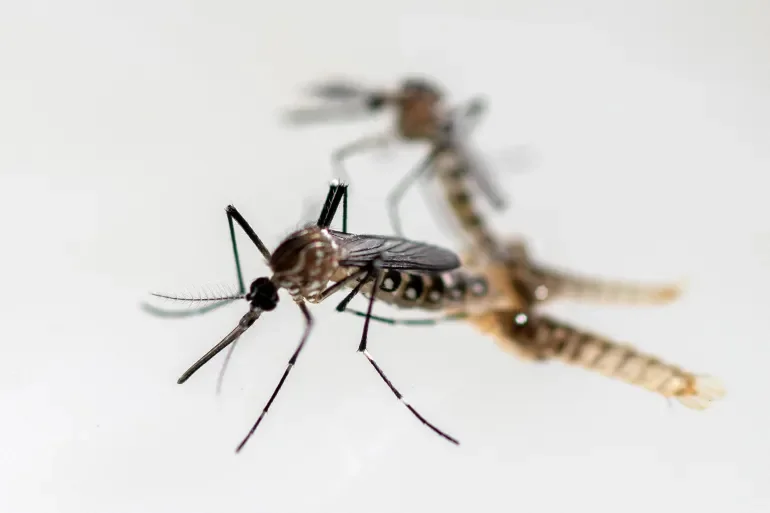
A groundbreaking four-year field trial conducted in Brazil’s densely populated southeastern city of Belo Horizonte between 2020 and 2024 has yielded landmark results in the global fight against mosquito-borne viral illnesses, researchers announced on November 21 during the annual conference of the American Society of Tropical Medicine and Hygiene in Maryland, U.S.
The trial centered on deploying Aedes aegypti mosquitoes — the primary vector for dengue, chikungunya, Zika and yellow fever — that have been colonized with Wolbachia, a naturally occurring, harmless bacterium present in roughly half of all wild insect species but absent from native Aedes aegypti populations. Unlike conventional mosquito control strategies that rely on insecticide application and breeding site removal to reduce overall mosquito numbers, the Wolbachia method does not aim to eradicate local mosquito populations entirely. Instead, the bacterium inhibits the replication of pathogenic viruses inside the mosquito’s body, drastically reducing the likelihood that a biting insect will transmit disease-causing pathogens to humans. Critically, Wolbachia poses no health risk to people or other mammals.
The Belo Horizonte study tracked 5,757 child participants across paired residential zones: in intervention areas, modified Wolbachia-carrying mosquitoes were released to integrate into local wild populations, while control zones maintained standard existing mosquito abatement protocols. Post-trial blood testing revealed only 4% of child participants in Wolbachia release areas tested positive for dengue, compared to 14% of peers in control zones, translating to a 68.5% reduction in dengue transmission. Chikungunya case rates saw an even steeper 73.3% drop across intervention zones.
Notably, the trial unfolded during one of Brazil’s most severe national dengue epidemics on record, a context that researchers say makes the dramatic reduction in infections even more statistically and practically significant, as transmission pressure across the entire region was exceptionally high during the study period.
This validated approach is not a newly invented technology: the global World Mosquito Program has been rolling out Wolbachia-modified mosquito interventions across multiple countries for years, with prior positive outcomes documented in Colombian urban zones and the Brazilian city of Niterói. A 2025 peer-reviewed analysis of the Niterói program found that full establishment of Wolbachia in the local mosquito population drove an 89% drop in recorded dengue cases compared to the 10-year baseline before the intervention, even during the massive 2024 national dengue surge that affected the rest of Rio de Janeiro state and broader Brazil. As of July 2026, 16 Brazilian cities run active Wolbachia mosquito programs, covering a combined population of roughly 5 million residents.
Health authorities and tropical disease researchers emphasize that the Wolbachia method functions as a complementary tool rather than a full replacement for established public health measures, which remain critical to long-term mosquito control: eliminating standing water breeding sites, targeted insecticide use and public personal protection campaigns still play essential roles in reducing vector contact. Because female Wolbachia-carrying mosquitoes pass the bacterium directly to their offspring across generations, the intervention becomes self-sustaining once the microbe is fully embedded in the local wild mosquito population, creating a low-cost, durable long-term defense against dengue and other mosquito-borne illnesses for tropical and subtropical communities that face recurring, endemic outbreaks.
Brazilië: Nieuwe muggenaanpak vermindert dengue met 68,5 procent