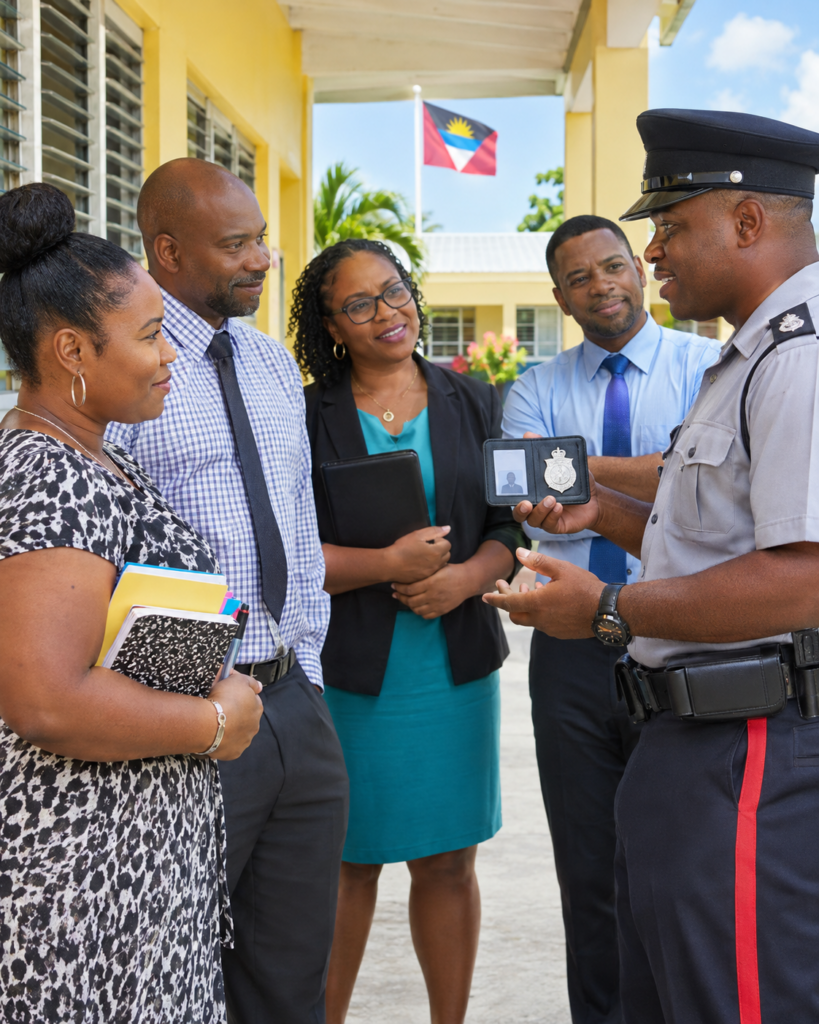
During a live appearance on Observer Radio’s popular *Voice of the People* program this Monday, Royal Police Force of Antigua and Barbuda Commissioner Everton Jeffers unveiled a new, flexible pathway for interested school teachers to register as special constables, as local authorities roll out multi-pronged measures to address a growing wave of youth altercations that has sparked widespread public concern.
Jeffers clarified that no formal, dedicated recruitment drive for teacher-special constables has been launched to date, nor have official details been released outlining standardized application workflows, mandatory training curricula, or the exact legal authority that participating educators would hold once formally sworn in. Any interested teaching staff may submit an application directly to the national police force, which will then route submissions to the appropriate governing oversight body to process official swearing-in procedures in a timely manner, he confirmed.
The announcement emerged during a broader public discussion centered on recent high-profile incidents of student violence, including a widely reported altercation that left two teenage schoolgirls injured after they fell from the structure of an unfinished public parking lot. The special constable framework is positioned as one supplementary layer of intervention to strengthen coordinated responses to pre-planned and in-progress student fights, rather than a standalone policy solution.
Commissioner Jeffers emphasized that a particularly troubling trend driving rising youth harm is the widespread culture of silence among student populations: in the vast majority of planned post-school altercations, dozens of classmates are aware of the impending violence hours or even days in advance, but choose not to alert school administrators, teachers, or law enforcement before injuries occur. He issued a direct public appeal to all students who receive advance warning of planned fights to immediately report the details to their school principal or trusted staff member, so that police can intervene proactively before any conflict escalates.
Jeffers went on to voice sharp criticism of the pervasive new social norm where bystander students prioritize recording violent altercations on their mobile devices, cheering on the fighting parties rather than stepping in to de-escalate the situation or summon adult help. He contrasted this behavior with the cultural expectations of his own school decades earlier, where peers would immediately move to separate fighting students and urge them to calm down, rather than derive entertainment from their harm. “You can hear the unmistakeable excitement in the background of these shared videos, as young onlookers film instead of stepping in to prevent injury,” he noted.
Alongside the special constable pathway for educators, the Royal Police Force has outlined additional targeted intervention measures to curb youth violence: the force will soon redeploy uniformed officers to local public bus stations, and will roll out targeted, regular foot patrols in the immediate vicinity of high-priority schools where student altercations have been most heavily concentrated in recent months. Commissioner Jeffers also issued a formal reminder to all teaching staff to maintain heightened vigilance for reports of planned fights, and to initiate direct contact with local police units as soon as credible information about impending violence comes to light. He declined to share official data on the number of teachers already serving as special constables across the country, and did not confirm if any educators have already submitted applications under the newly announced pathway.
Teachers can apply to become special constables, police chief says