As the 2026 holiday retail cycle swings into full gear, with Black Friday launching the peak consumer spending window and Christmas less than a month away, small import-reliant businesses across Belize are navigating unprecedented logistical hurdles that threaten to cut into their seasonal profit margins and disrupt customer order fulfillment. For these small-scale operators, moving inventory from overseas suppliers to local shoppers has long involved layered shipping charges, complex customs clearance protocols, and unpredictable lead times, but the strains have grown far more acute as demand spikes in the final quarter of the year.
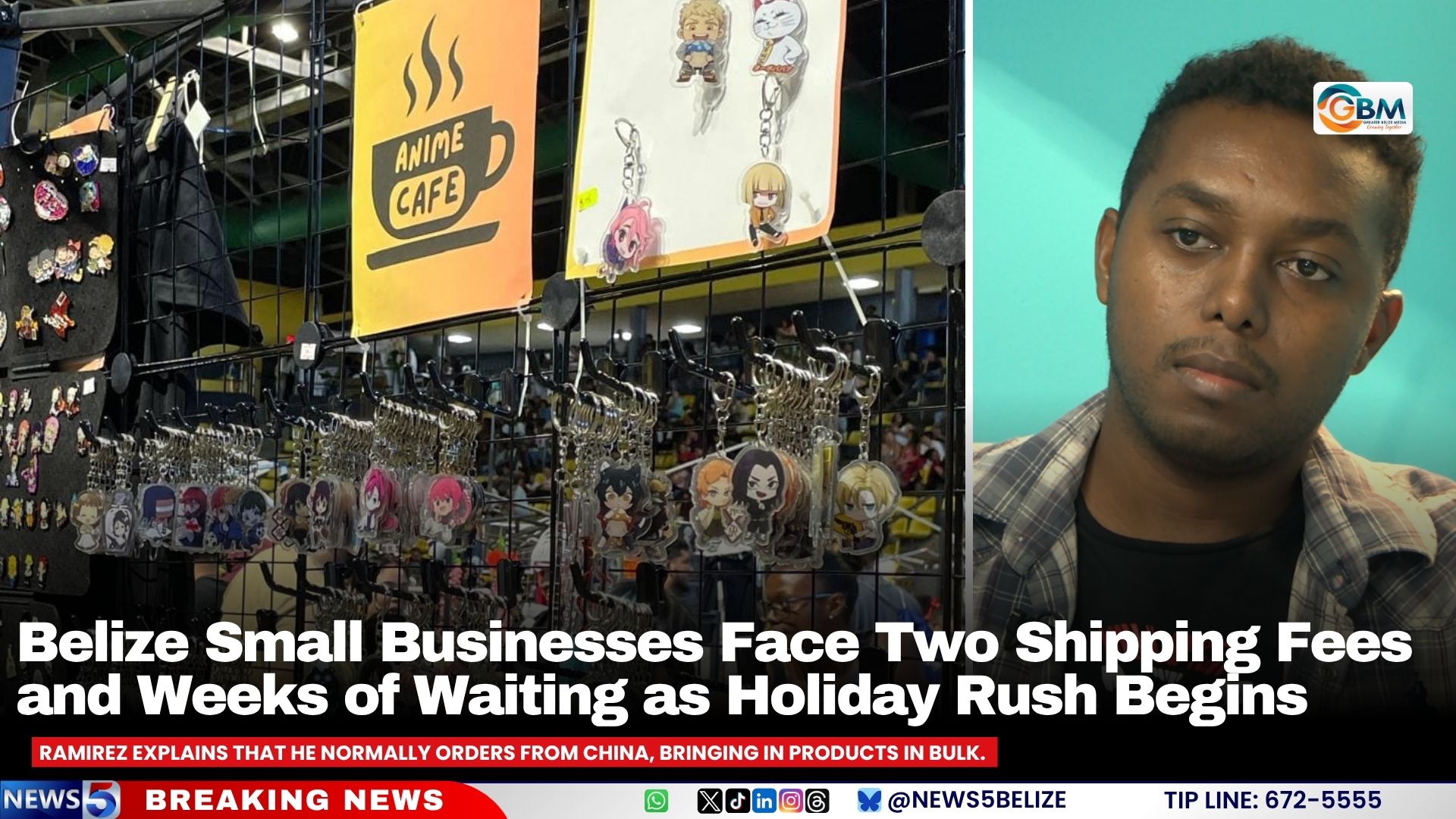
Tyler Ramirez, founder and sole primary operator of Anime Café, a Belize City-based specialty retail spot focused on Japanese animation merchandise, notes that the holiday stretch is consistently one of the most high-volume, high-stress periods for his independent venture. “Orders are coming in nonstop, one right after another,” Ramirez explained in a recent interview. Even when he brings on temporary part-time staff to handle the surge, he says the workload remains overwhelming, and he is currently evaluating sustainable expansion pathways that will not stretch his tight operating budget past its breaking point.
Ramirez sources the vast majority of his inventory directly from Chinese manufacturers via bulk wholesale orders, a supply chain setup that carries inherent, unforeseen costs. Standard delivery timelines for these bulk shipments range from 30 to 60 days, depending on the production and dispatch speed of his overseas suppliers. The goods are first shipped from China to a consolidation hub in the United States, then forwarded onward to Belize, a routing structure that forces Ramirez to cover two separate international shipping fees for a single batch of merchandise. He now partners with a U.S.-based freight forwarding firm that handles all packaging, documentation, and last-mile shipping coordination to Belize, eliminating the need for him to manage cross-border logistics directly.
This streamlined arrangement is a far cry from the process Ramirez navigated when he first launched Anime Café. In his business’s early days, he handled every step of the import process personally: making in-person trips to Belize’s primary seaport, arranging for mandatory customs inspections of his inventory, and manually processing all duty and tax payments. Ramirez described that early end-to-end workflow as excessively time-consuming, bureaucratic, and draining on his limited resources, prompting him to shift to the third-party freight model he uses today to reduce administrative burden even as he absorbs the extra associated shipping costs.