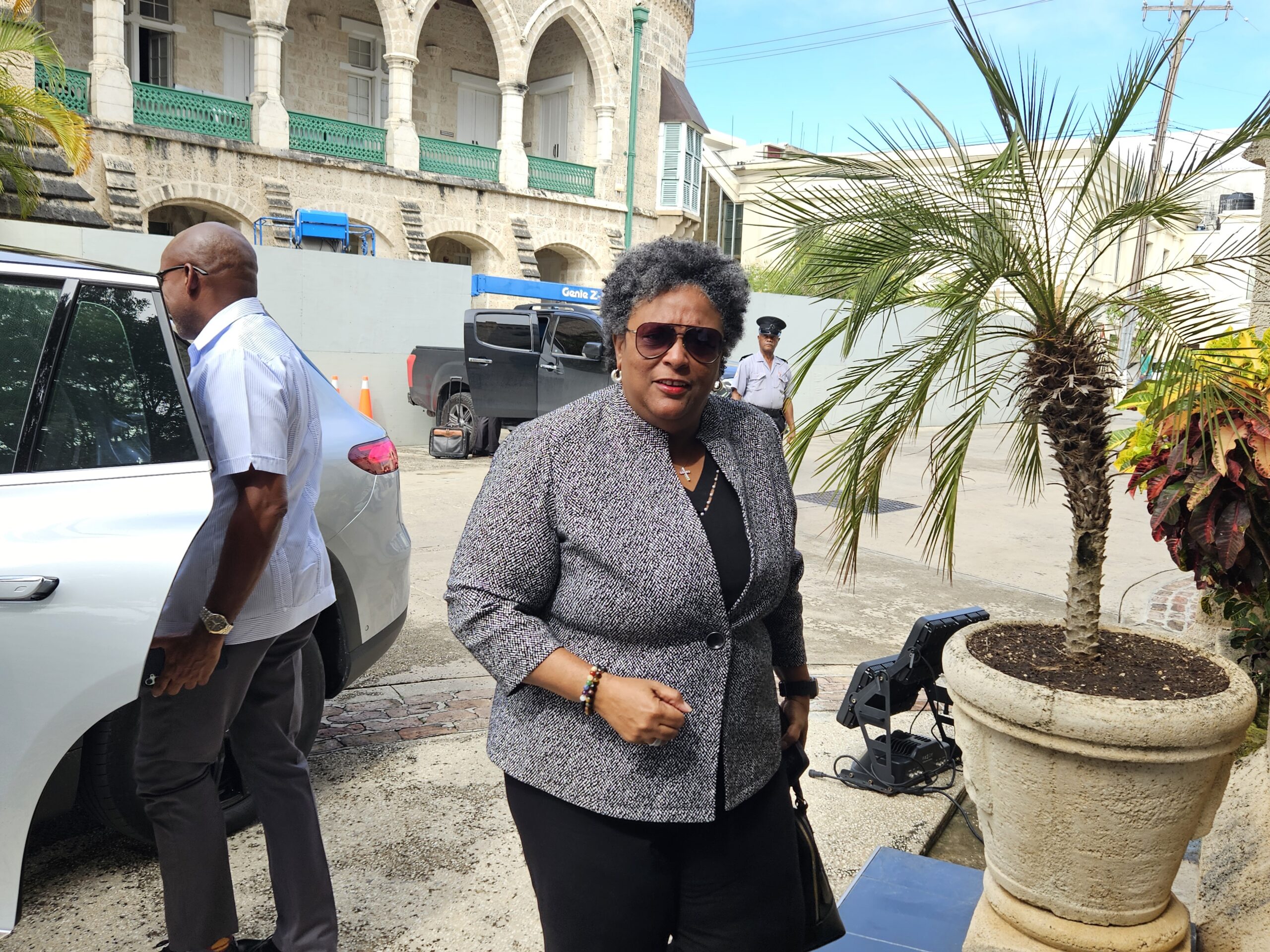
During a parliamentary address on Tuesday, Barbadian Prime Minister Mia Mottley laid out landmark draft legislation that marks a paradigm shift for the island nation’s approach to crisis preparedness, moving away from decades of reactive post-disaster recovery to proactive, pre-emptive resilience building. The Resilience and Regeneration Fund Bill, formally tabled in the House of Assembly by Finance Minister Ryan Straughn, was framed by Mottley as one of the most consequential policy packages presented to the chamber in Barbados’ entire post-independence history.
Mottley anchored the proposed legislation in three overlapping existential threats facing all small island developing states: the erosion of national sovereignty amid a rapidly rearranging global geopolitical order, the need to balance artificial intelligence’s transformative economic opportunities with its unforeseen systemic risks, and the cascading crises of climate change and accelerating biodiversity loss. “Expending resources to prevent or minimize damage before a disaster strikes delivers exponentially better outcomes than scrambling to rebuild after devastation unfolds,” Mottley told assembled lawmakers. “That is the core purpose of building national resilience: equipping every citizen to fortify their home, their livelihood, and their daily lives to withstand any unforeseen shock.”
The new fund represents a dramatic overhaul of the 2006 Catastrophe Fund, which was structured to distribute only modest payouts after destruction had already occurred. Unlike its predecessor, the Resilience and Regeneration Fund extends its coverage far beyond traditional weather hazards including hurricanes and floods to encompass a far broader spectrum of modern risks: public health pandemics, malicious cyberattacks, and sudden destabilizing economic shocks.
Mottley emphasized that the legislation was crafted in direct response to a rapidly worsening global insurance landscape, where skyrocketing regional premiums and shrinking reinsurance access — even in major markets such as Florida and California — have rendered overreliance on traditional post-event insurance payouts a dangerously unsustainable strategy for both households and the national government.
Under the bill’s household support framework, all families earning an annual income of $75,000 or less will qualify for pre-disaster grants to reinforce structurally vulnerable residential properties, alongside low-interest loans of up to $25,000 at a 1% annual rate to fund resilience upgrades ranging from rainwater harvesting tanks and rooftop renewable energy systems to backup generators. Homeowners whose properties are valued at $200,000 or less will also be eligible for post-catastrophe reconstruction grants of up to $200,000, with clear eligibility guardrails and deductions applied for any existing insurance payouts to eliminate the risk of duplicate compensation.
Eligibility is also extended to small businesses and self-employed workers with annual turnover not exceeding $500,000 who maintain compliant tax standing with the Barbados Revenue Authority, providing targeted support to cover severe cash flow disruptions triggered by a major catastrophic event. Mottley clarified that tax compliance does not require immediate full repayment of all outstanding balances, noting that businesses that adhere to pre-negotiated, scheduled payment plans will retain their eligible status.
To finance the expansive program, the bill proposes a shared 0.25% contribution rate for all employees and self-employed workers, matched equally by their employers, with no upper income cap on contributions. Mottley framed the model as a collective solidarity levy: “Every dollar earned contributes to this shared safety net, so those who have greater means contribute more to ensure the most vulnerable among us are protected when disaster hits.” The national government will also backstop the fund with an annual allocation equivalent to 0.35% of the previous year’s gross domestic product, paired with natural disaster clauses embedded in national debt instruments that will unlock immediate liquidity for two years in the event of a large-scale national shock.
Robust governance safeguards have been built into the fund’s structure, modeled after the longstanding National Insurance Scheme, including independent assessment committees to review all physical damage and economic disruption claims, a 40% maximum cap on fund investments held outside the CARICOM Single Market and Economy, and mandatory annual full audits that will be tabled for public review before Parliament.
Mottley tied the legislation directly to immediate practical household preparedness ahead of the upcoming hurricane season, warning Barbadians not to grow complacent following a relatively calm recent storm cycle. She referenced the widespread adoption of flat roofs and wide overhangs in the aftermath of Hurricane Janet, makeshift post-storm repairs that later proved highly vulnerable to destructive uplift winds during subsequent hurricanes, and called for the rollout of public education preparedness checklists, wide distribution of the Ministry of Housing’s official resilient home design blueprints, and targeted community outreach to enforce updated residential building codes. “This is the moment for every Barbadian to inspect their roof, assess if they need to trim overhangs, install hurricane straps, or make other critical reinforcements before a storm arrives and it is too late,” she urged.
Beyond domestic policy, Mottley positioned Barbados’ new resilience framework as a model for global climate action, referencing recent international climate talks in Antalya, Turkey, and the upcoming global summit in Addis Ababa. She emphasized the urgent need for coordinated global action to curb highly potent short-lived methane emissions and keep global warming within the critical 1.5°C threshold, and called on all citizens and parliamentarians to lend their support to the international “1.5 Voices for 1.5” advocacy campaign. “Anyone who believes they are completely insulated from the impacts of the climate crisis is living in a fool’s paradise,” Mottley warned. “Every single one of us has a part to play.”
PM defends 0.25% disaster resilience levy