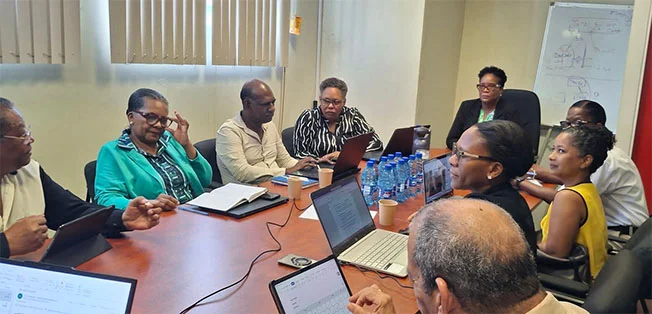
On November 20, a formal kickoff gathering brought together senior leadership from the Suriname Tax Service (Belastingdienst) and representatives of specialized advisory firm HUMUS Consultancy to mark the official launch of a sweeping, multi-phase human resources management transformation program, as documented in official event photography distributed by the Communications Department of Suriname’s public sector bodies. Unveiled as a core pillar of the tax authority’s broader organizational modernization agenda, this initiative moves far beyond superficial upgrades to digital tools and administrative workflows to target foundational shifts in workplace culture, leadership accountability, and employee development frameworks that have remained largely stagnant under decades of traditional personnel governance. Tasked with end-to-end guidance for the full HRM overhaul, HUMUS Consultancy’s assigned team – including on-site representatives Reana Burke and Sharon Ubbergen, alongside remote participants Alex Boyd and Demis Johnn joining via secure video link – will work in close partnership with the Tax Service’s internal project leadership to embed sustainable, people-first reforms across every layer of the agency. Leading the public sector side of the transformation is appointed project lead Humphrey Bendt, who emphasized during the opening session that technical system updates alone cannot deliver the level of operational agility the modern tax authority requires to meet evolving public and regulatory demands. “This reform does not start with updating software or rewriting procedure manuals,” Bendt stated during his opening address. “It starts with reshaping how every member of our team thinks, acts, and collaborates. For this transformation to stick long-term, we need widespread collective awareness of the benefits of change, a proactive, solution-focused attitude across all ranks, and leaders who step up to model the new standards we want to embed for the entire organization.” The program’s most complex and high-stakes priority, Bendt outlined, is dismantling long-ingrained cultural norms that have created siloed workflows, limited upward mobility for frontline staff, and blurred lines of accountability for departmental performance. Rather than rolling out top-down mandates that staff are expected to comply with passively, the reform framework will intentionally include rank-and-file tax employees in co-designing and rolling out new operational practices, ensuring on-the-ground feedback shapes adjustments that fit real daily work realities. For mid-level and senior managers, the new model introduces explicit, measurable accountability for supporting their teams through the transition: leaders will be tasked with providing targeted one-on-one guidance, recognizing staff contributions during the shift, and removing unnecessary bottlenecks that hinder teams from adopting more efficient work methods. Tax Service Director Marita Lautan-Wijnerman, who attended the launch alongside her full executive management team, noted that the dual focus on process optimization and employee investment is designed to unlock underutilized talent across the agency, create clear pathways for professional growth for every staff member, and position the public tax authority as a more competitive, desirable employer across Suriname’s public sector landscape. When fully implemented, the transformation is projected to deliver a far more responsive, operationally robust tax agency that can adapt nimbly to future regulatory, digital, and societal shifts, while delivering more consistent, accessible service to taxpayers across the country. The launch event on November 20 also included a detailed joint presentation by Bendt and fellow project lead Theo Linscheer, laying out the core guiding principles, long-term ambitions, and anticipated operational hurdles that the cross-sector project team will address over the multi-year implementation timeline.