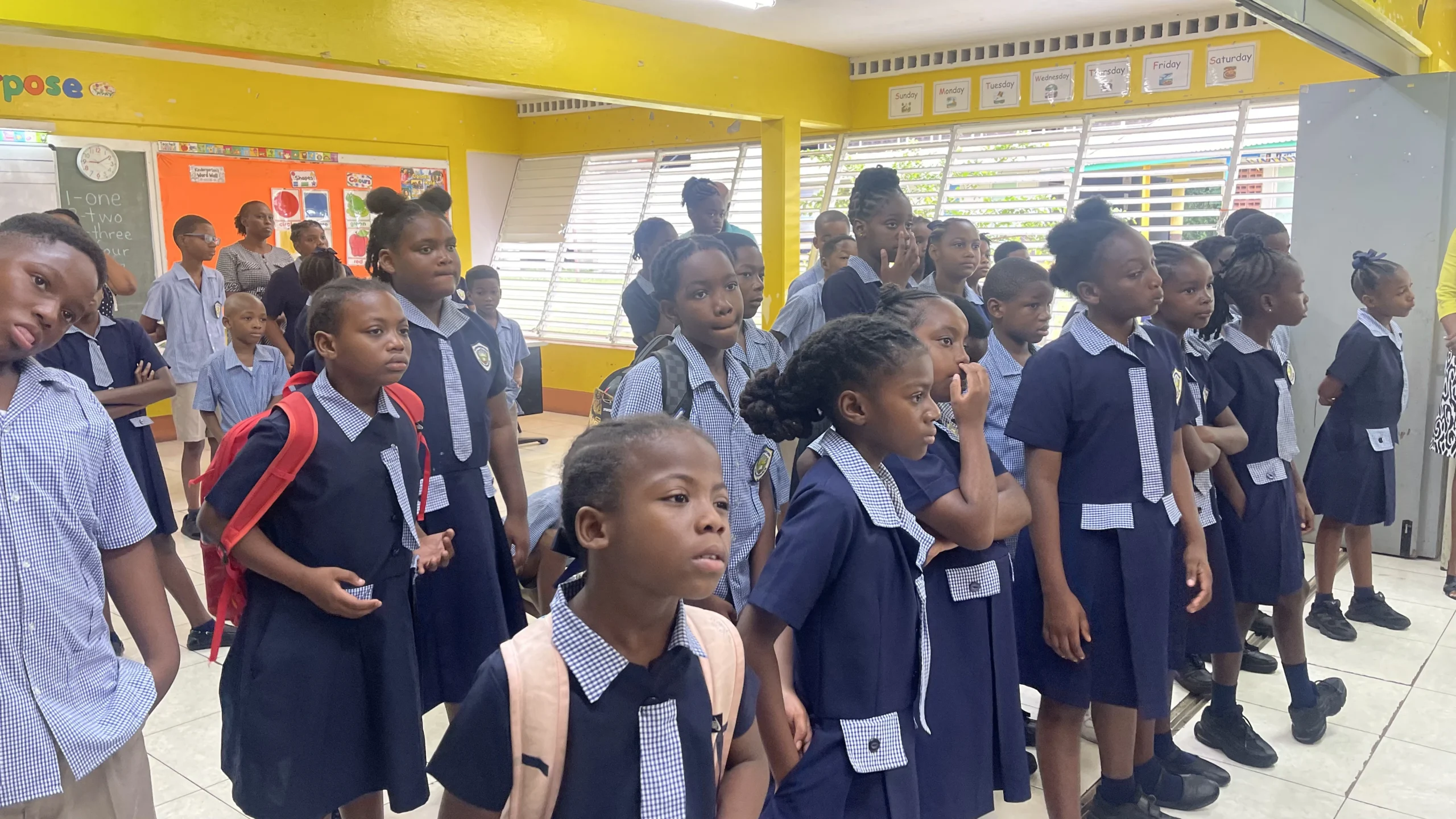
At the official Monday opening of Ellerton Primary School’s highly anticipated annual Literacy Week, Janelle Little, Transformation Education Officer and national Literacy Lead from the Ministry of Education, led a dynamic, interactive session urging all young learners at the institution to cultivate a deep, sustained passion for reading from their earliest academic years. Framed under the vibrant, cross-curricular theme “Planting Words, Growing Numbers, Nurturing Values!”, Little anchored her entire presentation around a vivid horticultural metaphor that resonated with students, comparing every child to a tiny, potential-rich seed that requires targeted, consistent care both at home and in the classroom to bloom into a confident, capable reader.
Little broke down the often-overlooked foundational timeline of literacy development, emphasizing that formal classroom reading instruction is far from the starting point: long before a child ever picks up a school textbook, caregivers play an irreplaceable role in building early language exposure, from reading aloud bedtime stories to discussing illustrations and holding casual, curiosity-driven daily conversations that expand a young child’s vocabulary and contextual understanding of words. She walked the young audience through the sequential, step-by-step journey of literacy skill building, noting that while letter recognition is a critical early milestone, true reading fluency depends on mastering phonetic sounds, blending those sounds to form coherent words, and eventually progressing to independent reading that unlocks entirely new worlds of information, lived experiences, and previously unknown vocabulary.
Crucially, Little pushed back against the common misconception that literacy skills only matter for language arts classes, pointing out that strong reading comprehension is a foundational requirement for success across every core subject, including mathematics, science, and social studies, as students must be able to interpret written instructions and problem prompts to complete their work accurately. She also framed digital tools as a valuable supplementary resource, encouraging learners to explore educational reading games and e-books on personal devices while maintaining a healthy, balanced approach to screen time that does not replace hands-on engagement with physical books and in-person discussion.
In an inclusive, heartfelt segment of her address, Little highlighted that no child should be excluded from the joy and opportunity of literacy, even those living with disabilities such as visual or hearing impairments, noting that adaptive, tailored learning approaches can help every learner master reading at their own pace, no matter the extra time or specialized support required. She further reminded students that literacy is a lifelong practice, not a one-time skill to be mastered and abandoned, noting that even fully developed “mature reader trees” must continue to nurture their skills by engaging with new texts throughout their lives. She closed her remarks with a direct call to Ellerton Primary’s teaching staff, urging them to weave regular storytelling sessions, structured phonics instruction, vocabulary building exercises, and comprehension practice into daily lesson plans to provide all the nurturing “nutrients” their student “seeds” need to thrive.
Captured by photographer Lauryn Escamilla, accompanying visuals from the opening ceremony show teacher Shontelle Walcott-Tull and student Kayden Howard performing a live skit that brought Little’s seed-to-reader-tree metaphor to life for the assembled audience. The school has planned a full, packed week of cross-curricular activities to mark Literacy Week, kicking off Tuesday with hybrid physical education and literacy challenges, hosting a campus-wide literary scavenger hunt on Wednesday, running themed spelling bees, math-literacy quizzes, and a public speaking contest on Thursday, and wrapping up the week on Friday with a beloved Bajan Character Day costume event and student talent showcase.
Students encouraged to develop reading habits for everyday learning