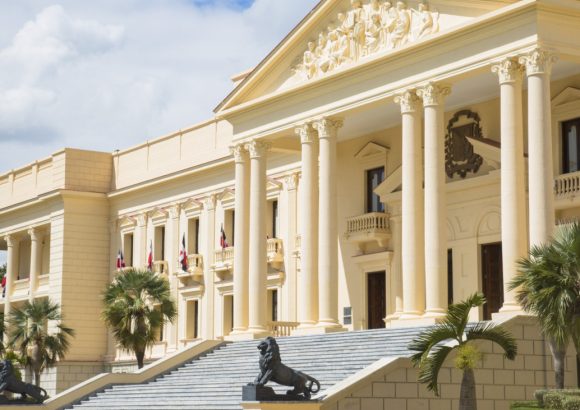
Santo Domingo, Dominican Republic – President Luis Abinader has formally signed into law landmark legislation, Law No. 97-26, that imposes a full ban on any goods entering the Dominican national territory that are partially or wholly produced, manufactured, extracted, or processed via forced labor. Spanning 26 comprehensive articles, the new legal statute lays out a structured national regulatory system designed to detect, block, and eliminate forced labor-tainted products from global supply chains flowing into the country, while upholding core human rights standards, leveling the playing field for ethical domestic and international businesses, and preserving the transparency and integrity of the Dominican consumer market. Two key government agencies have been assigned distinct, complementary roles to implement the new rules: the General Directorate of Customs (DGA) will act as the primary enforcement body for all import restriction measures, while the Ministry of Labor will serve as the specialized technical authority tasked with issuing formal, evidence-backed rulings on whether forced labor practices are present in any given supply chain. Customs officials are authorized to open formal investigations in response to submitted complaints, public alerts, verified third-party reports, or any other credible intelligence sourced from fellow government departments, global intergovernmental bodies, labor unions, civil society advocacy groups, and other relevant stakeholders. Standard administrative review proceedings under the law will be capped at 90 business days, with a single permissible extension that can extend the timeline to a maximum of 115 business days. If preliminary inquiries yield reasonable, substantiated indicators that a shipment is tied to forced labor, customs authorities are empowered to temporarily halt cargo clearance, detain the relevant goods, or impose a provisional import ban for an initial period of up to 45 business days, which may be extended for an additional 30 business days as needed to complete full verification. All importers operating in the Dominican Republic will be required to submit official declarations confirming whether they possess knowledge, or reasonable grounds to suspect, that their incoming goods were produced using forced labor. Any importer found to have submitted false or misleading declarations will face administrative penalties under the existing customs regulatory framework set out in Law No. 168-21, and may additionally face formal criminal prosecution in cases where violations meet relevant legal thresholds. To ensure full transparency, the new law mandates the creation of a publicly accessible digital registry that logs all final, non-appealable import prohibition rulings, with publicly available details including the description of restricted goods, their corresponding tariff classifications, the identities of implicated producers and suppliers, and the specific country or region of origin linked to the tainted products. Businesses operating in sectors identified as high-risk for forced labor exposure will be legally required to roll out formal supply chain due diligence systems to systematically identify, preempt, and mitigate forced labor risks across their entire operational networks. Firms that have previously been subject to forced labor-related investigations or import bans will be subject to heightened traceability mandates, which may include mandatory full supplier disclosure, regular third-party risk assessments, independent social compliance audits, anonymous worker grievance reporting channels, and formal corrective action remediation plans for any identified violations. Producers, suppliers, and other affected third parties will have the right to petition for a formal review of a forced labor designation if they can provide verifiable proof that all past violations have been fully rectified, including the complete elimination of forced labor practices, full financial compensation for affected workers, full payment of all outstanding unpaid wages, and the return of all confiscated worker identity documents that had been withheld by employers. The legislation also establishes formal cross-agency coordination protocols between customs, the Ministry of Labor, and other relevant Dominican government bodies, alongside structured information sharing partnerships with the International Labour Organization and equivalent regulatory authorities in other nations to support cross-border enforcement efforts. Critically, the law enshrines full due process protections for all affected importers and relevant parties, including the right to access all relevant administrative case records, submit supporting evidence during proceedings, and file formal appeals against unfavorable regulatory decisions. For the latest breaking news and updates on Dominican policy developments, readers can access full coverage via DominicanScope.