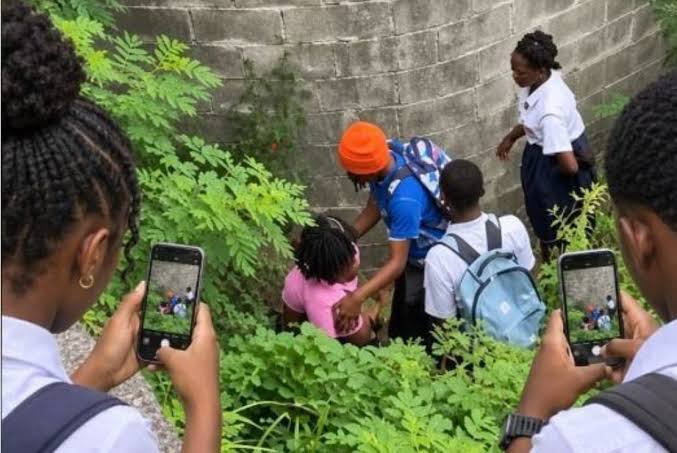
Antigua and Barbuda’s top law enforcement official announced a series of proactive public safety measures on Monday, aimed at stemming a rising tide of after-school altercations among secondary school students that has already resulted in serious harm to young people. Speaking during a live appearance on Observer Radio’s popular *Voice of the People* program, Police Commissioner Everton Jeffers confirmed the Royal Antigua and Barbuda Police Force will revive its long-dormant practice of posting uniformed officers at major public bus terminals, high-traffic locations where large groups of students congregate immediately after classes dismiss each weekday. The policy shift comes in direct response to a recent violent altercation between two female students that escalated dramatically, resulting in both teens falling from the upper levels of a still-uncompleted multi-story car park. While Commissioner Jeffers declined to share a concrete launch date for the bus station deployments or publicly name the specific school campuses earmarked for expanded external foot patrols, he emphasized the intervention strategy targets a small cluster of institutions where pre-planned student fights have become a recurring issue. The core goal of the new deployment model, he explained, is to intercede before tensions boil over into physical violence, rather than only responding after injuries have already occurred. “Our highest priority is ensuring no more of our young residents suffer preventable harm, either as victims of aggression or as people who make a split-second choice to hurt their peers and face lifelong legal consequences,” Jeffers stated during the broadcast. He noted that in many cases, students are aware of prearranged fights hours before classes end for the day, and issued a public appeal for any student with advance knowledge of planned altercations to immediately report the information to a trusted teacher or school principal, rather than remaining silent. Jeffers also called on school administrative staff to maintain heightened situational awareness during after-school dismissal windows, so they can coordinate with law enforcement quickly to de-escalate tensions before conflicts erupt. A particularly troubling trend the commissioner highlighted during his remarks was the growing number of bystander students who pull out smartphones to film ongoing fights, often reacting with visible excitement rather than stepping in to defuse the situation. He contrasted that cultural shift with his own school-era experience, where peer bystanders would almost always intervene to physically separate fighting classmates before anyone sustained serious injury. Jeffers added that he had observed an identical pattern of bystander inaction and fight recording during a similar student violence incident in Barbados the week prior, framing it as a regional youth safety concern rather than a localized issue unique to Antigua and Barbuda. As an additional long-term safety measure, the police commissioner also extended an open invitation to full-time teachers across the country who are interested in serving as volunteer special constables to submit formal applications, noting the law enforcement agency will process all eligible submissions and forward them to the relevant national oversight authority for final approval.
Police to return to bus stations to curb student fights in Antigua and Barbuda