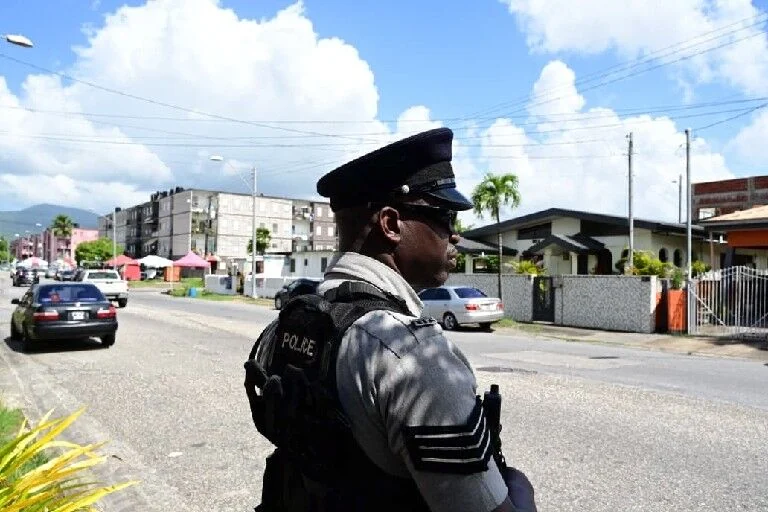
A cohort of five taxi, maxi-taxi and private vehicle-for-hire operators in Trinidad and Tobago has issued a formal pre-action legal ultimatum to the national government, demanding a full response by 4 p.m. this Thursday or face a class-action representative lawsuit over sweeping lockdown measures imposed on the Maloney residential community. The legal challenge, filed on behalf of drivers Winston Junior Joseph, Errol Mahase, Javon Cain, Roland Mitchell and Kenny Dubarry by law firm Hove & Associates under lead attorney Farai Hove-Masaisai, was delivered Saturday evening to Attorney General John Jeremie SC, the full Cabinet, and Police Commissioner Allister Guevarro. This latest legal push follows two prior pre-action letters: one submitted Friday representing Maloney residents and local small business operators, and a second filed November 17 on behalf of Opposition Leader Pennelope Beckles, with the drivers’ legal team noting their clients share many of the same core grievances raised in those earlier filings. The group is seeking High Court approval to act as representative claimants for all transport operators impacted by the Maloney restrictions, which were implemented November 10 under the 2026 Special Operations Act via the Special Operations (Closed Area) Order and Special Operations (Curfew) Order. Drivers allege that joint police and Defence Force personnel manning Maloney checkpoints are arbitrarily blocking access to licensed for-hire vehicles, granting or denying entry solely based on whether a driver’s permit lists a Maloney residential address, rather than applying consistent, publicly shared rules. Operators add that maxi-taxi services have been completely barred from picking up passengers inside the zone, including commuters heading to work and minor schoolchildren, forcing Maloney residents to walk long distances to the Churchill-Roosevelt Highway to find available transport. The legal challenge also targets an unwritten, unpublicized 7 p.m. operational ban for transport operators that was announced verbally by District 2 Special Operations Head Snr Supt Avalon Frank during a November 19 stakeholder meeting, who told drivers the rule was “five to seven or nothing.” Operators point out the official public curfew for the Maloney area does not begin until 9 p.m., and no formal written legal justification, appeals process, or exemption pathway for the 7 p.m. restriction was ever provided to workers. Additional grievances target the official permit and curfew-pass application system, which requires in-person submissions, mandates many applicants to provide proof of employment via an employer letter, and stipulates that any vehicle used for authorized movement must be registered directly in the permit applicant’s name — a requirement that excludes the vast majority of for-hire drivers, who often operate vehicles owned by third-party fleet companies. The legal team argues these overlapping restrictions violate the drivers’ constitutionally enshrined rights to free movement and equal treatment under the law, and are seeking both compensatory and vindicatory damages for the severe financial harm operators have already sustained. 10-year Maloney route veteran Winston Junior Joseph, who previously worked seven days a week to support his family, explained the restrictions have gutted his earning potential and forced him to take on extra, unplanned operating costs to make up for lost fares. 41-year industry veteran Errol Mahase noted his popular evening commuter routes have been abruptly cut off at 7 p.m. with no advance warning. Fellow driver Javon Cain shared a harrowing personal account where he was barred from entering the restricted zone to pick up his 18-year-old shift-working daughter, who held a valid curfew pass, forcing her to walk several miles alone from her Red Hill workplace back to Maloney late at night. The drivers’ legal team is also demanding full disclosure of all internal government documents used to justify the original Maloney lockdown orders, including the Trinidad and Tobago Police Service Special Branch’s formal threat assessment report, the full Cabinet Note authorizing the measures, and all supporting evidence that informed the policy decisions. The letter gives authorities a separate deadline of 4 p.m. the day before the full Thursday deadline to address urgent interim concerns, and warns that if no satisfactory resolution is reached, the group will immediately file the full lawsuit alongside an application for urgent conservatory orders to suspend the contested restrictions pending a full High Court ruling.