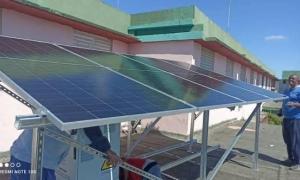
Pinar del Río, Cuba – November 23, 2026: A new community-focused renewable energy initiative spearheaded by the Andalusia-Cuba Association has officially kicked off in Cuba’s western Pinar del Río province, deploying custom-sized photovoltaic power systems to 13 critical public institutions spanning the healthcare and education sectors. Funded by the Provincial Council of Seville in Spain, the project marks a new milestone in decades of sustained solidarity cooperation between Andalusian civil society and Cuban local public services.
The 13 beneficiary sites include multiple local polyclinics, early childhood day care centers, the Tania La Guerrillera Pedagogical School, and the Pinar del Río Provincial Center for Medical Genetics. Each solar array is engineered to match the unique operational demands of its host facility, with output capacities ranging from 3 kilowatts for smaller sites up to 12 kilowatts for high-demand medical and educational hubs.
For the local education sector, which serves more than 1,200 enrolled students and young children across the beneficiary sites, the new solar installations will resolve longstanding gaps in reliable power access that have been exacerbated by decades of U.S. government-imposed energy restrictions. As Evelio Herrera Padrón, the sector lead for Vueltabajo and holder of a doctorate in science, explained, four local daycare centers that have been forced to rely on firewood and charcoal to prepare children’s meals due to inconsistent grid power will now run their food preparation operations entirely on solar electricity. The Tania La Guerrillera Pedagogical School will also receive dedicated solar support for its campus kitchen and student dormitory facilities, which house hundreds of provincial scholarship students from across Pinar del Río’s 11 municipalities.
In the public health domain, the upgrades will deliver tangible improvements to patient care across the province. Dr. Sandra Ramírez Guzmán, Pinar del Río’s provincial health director, noted that remote rural medical offices will gain stable off-grid solar power, while three existing polyclinics that previously operated on underpowered legacy systems will see their generation capacity expanded to 12 kilowatts. This new capacity will allow these facilities to run diagnostic laboratories, power ultrasound machines, and operate other critical medical equipment that could not be reliably used during past grid outages. The 12-kilowatt solar array installed at the Provincial Center for Medical Genetics, which manages care for all high-risk pregnancies across the province, will directly strengthen the national Maternal and Child Health program by eliminating power disruptions during sensitive prenatal care and testing procedures.
This new project builds on existing provincial progress to diversify Cuba’s national energy matrix: prior to this launch, local authorities had already deployed photovoltaic systems to 19 educational sites (prioritizing special needs schools and residential student centers), every polyclinic in the province, and all local maternal and nursing care homes. Antonio Zurita Contreras, president of the Andalusia-Cuba Association, emphasized that the initiative embodies the long-running spirit of cross-border solidarity that Andalusian institutions and ordinary citizens have extended to the Cuban people for more than 30 years, focusing on practical, community-led solutions to address everyday public service gaps.
International solidarity supports the installation of photovoltaic systems in Health and Education centers in Pinar del Río