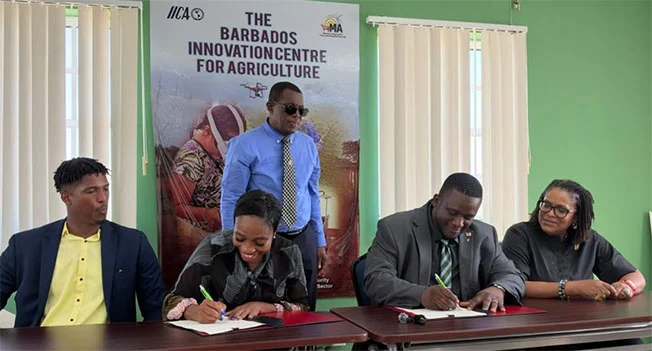
On November 22, 2024, during the official inauguration of Barbados’ state-of-the-art Plant Tissue Culture Laboratory, Suriname-based InVitroplants Grassalco (IVP) — a fully owned subsidiary of leading local agricultural enterprise N.V. Grassalco — formalized a memorandum of understanding (MoU) with Barbados’ Ministry of Agriculture to advance plant propagation technology and strengthen the island nation’s agricultural sector. The landmark partnership centers on tissue culture, a precision agricultural technique that enables controlled, large-scale propagation of disease-free, high-yield plant stock, a process that IVP has refined at its established Surinamese facility for years. The scope of the collaborative agreement covers structured knowledge transfer, targeted technical training for Barbadian agricultural staff, cross-border personnel exchange programs, shared access to high-quality plant germplasm, and joint technical troubleshooting to expand the operational capacity of Barbados’ new lab. Representing Grassalco at the signing ceremony were chief executive Johan Seymor, IVP laboratory supervisor Shanel Sewotaroeno, and international business development consultant Dawn Simpson. Seymor emphasized that the partnership is designed to foster a long-term, mutually beneficial alliance rather than a one-off service arrangement, noting that Grassalco will deliver hands-on training, supply certified high-performance plant materials, and share decades of accumulated tissue culture expertise to directly support smallholder farmers across Barbados. Paul Lucas, Head of Agriculture at Barbados’ Ministry of Agriculture, confirmed that scaling up domestic production of quality planting material and maximizing the utility of the new lab’s specialized equipment are core national agricultural priorities, and that the technical backing from Suriname’s seasoned industry players will accelerate progress toward those targets. The initiative aligns directly with Barbados’ national strategic agenda to reduce heavy reliance on costly food imports and ramp up domestic food self-sufficiency, a priority amplified by Prime Minister Mia Mottley during her keynote address at the lab’s opening. Mottley highlighted that the Caribbean region’s extreme vulnerability to climate-related disruptions, global supply chain shocks, and volatile international food prices makes investment in agricultural innovation and cross-regional collaboration non-negotiable. She urged Caribbean nations to move beyond outdated traditional farming practices to adopt tech-driven solutions that build collective food security and climate resilience across the archipelago. Barbados’ Minister of Agriculture Shantal Munro-Knight also endorsed the MoU, noting that the signed statement of intent lays a formal, structured foundation for follow-up detailed negotiations to roll out joint implementation activities in the coming months.