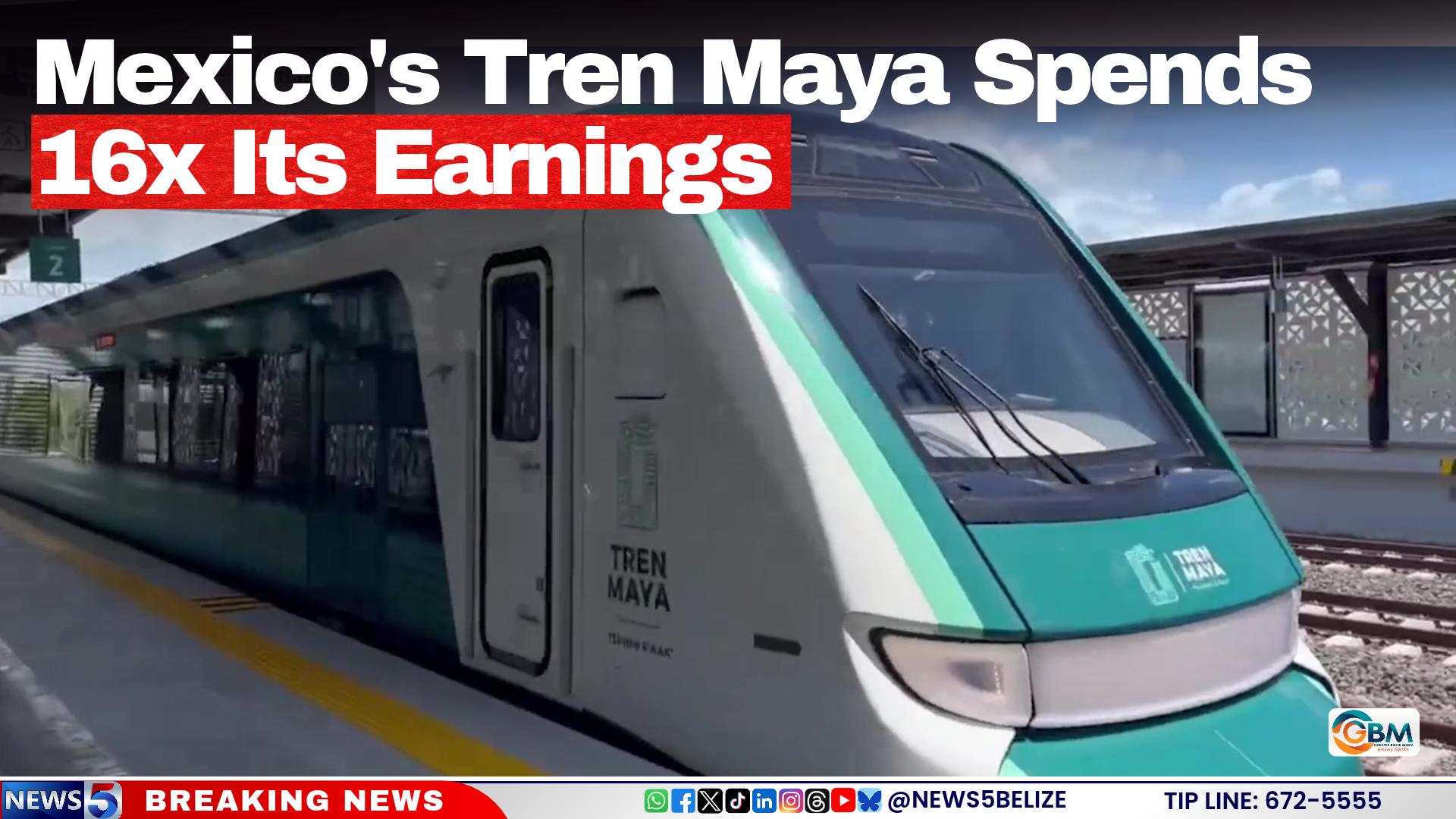
Mexico’s high-profile Tren Maya, the military-operated intercity passenger railway launched in late 2023 under former President Andrés Manuel López Obrador, is facing rapidly deteriorating financial performance, latest public disclosures confirm. Official financial statements from the railway operator, released via regional outlet Riviera Maya News & Events, reveal that between July and September 2026, the service generated just 119.3 million pesos in total revenue from ticket sales and on-board commercial services, while its total operating expenditures surged to 1.893 billion pesos. This stark imbalance translates to the operator spending nearly 16 pesos for every single peso of revenue it generated in the three-month period, marking a sharp year-on-year decline in fiscal health. Compared to the same quarter in 2025, top-line revenue dropped 17.6% from 144.7 million pesos, while operating costs ballooned 43.5% from the prior year’s 1.32 billion peso expense total. The negative trend extends across the first nine months of 2026, with cumulative commercial revenue hitting only 356.7 million pesos against total operating costs of 4.647 billion pesos, creating a massive structural gap that the operator has been unable to close through organic earnings. To keep the 1,500+ kilometer regional railway operational, the service remains almost entirely dependent on public financial support: between January and September 2026, it received 2.764 billion pesos in direct government transfers, subsidies and public grants, plus an additional 1.879 billion pesos drawn from a dedicated trust fund financed by Mexico’s non-resident visitor entry fees. Combined, these public funding streams totalled more than 4.64 billion pesos – over 13 times the total revenue the railway generated on its own in the nine-month window. Even as it grapples with these mounting financial pressures, the Tren Maya operator has rolled out peak-season fare hikes for the final quarter of 2026, as it races to hit its annual target of 3 million total passengers. Parallel to the domestic financial challenges, regional expansion talks are underway: in an October 2026 public statement, Belize Prime Minister John Briceño confirmed that the Inter-American Development Bank (IDB) has launched a formal feasibility study to assess the viability of extending the Tren Maya route southward across the Mexico-Belize border, connecting to Belize City and eventually linking onward to Guatemala’s national rail network. Briceño noted that a successful cross-border extension would unlock transformative new opportunities for regional tourism, as well as create more efficient freight and passenger connections to leverage underutilized port infrastructure across the three Central American nations.