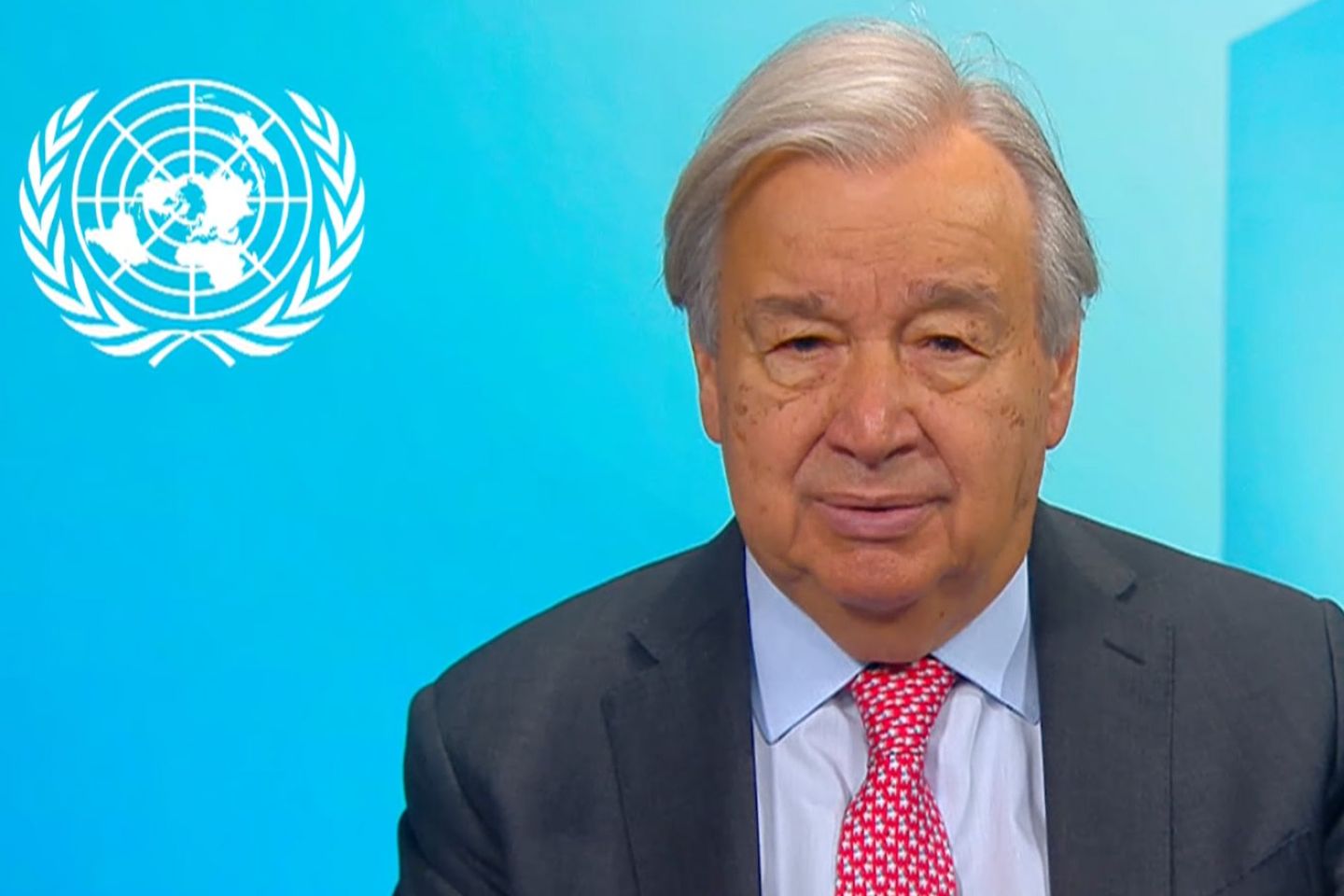
United Nations Secretary-General António Guterres delivered a stark, critical assessment of the recently concluded COP31 climate summit in Antalya, Türkiye, during a joint press briefing with Barbadian Prime Minister Mia Mottley on Sunday, voicing profound disappointment that negotiators failed to deliver a comprehensive, binding overarching agreement to tackle the accelerating climate emergency. Guterres emphasized that the lack of collective ambition at the global talks was a catastrophic missed opportunity at a time when scientific data confirms global temperature records are being shattered annually, and the world is steadily on track to blow past the critical 1.5°C warming threshold that scientists warn will trigger irreversible, cascading climate disasters. The UN chief singled out Small Island Developing States (SIDS) – including the entire Caribbean region – as the most unjustly harmed by this systemic failure, noting these nations have contributed a negligible fraction of historical greenhouse gas emissions yet bear the brunt of intensifying Category 5 hurricanes, chronic sea level rise, crippling economic losses, and exponentially rising public safety infrastructure costs to protect their populations. Guterres laid the bulk of the blame for stalled climate progress on the global economy’s continued “addiction” to coal, oil and natural gas, warning that ongoing fossil fuel expansion is pouring fuel on an already raging climate fire, triggering volatile energy price shocks that devastate small vulnerable economies and erode global energy security. He called on top global greenhouse gas emitters to immediately ramp up deep emission cuts, including targeted reductions of short-lived super-pollutant methane, and for wealthy developed nations to finally honour long-overdue climate finance pledges, particularly funding for adaptation measures and loss and damage support for frontline vulnerable nations. Beyond climate action, Guterres outlined the cascading, overlapping crises battering the Caribbean region right now: spillover impacts of Middle East geopolitical instability that disrupts global trade routes and drives up energy and food costs, spiraling sovereign debt burdens, sky-high interest rates, a persistent cost-of-living crunch, and rising transnational threats including weapons trafficking, drug smuggling and gang-related violent crime. He went on to condemn the persistent, colonial-era exclusion of developing nations from meaningful decision-making seats in major global governance institutions, praising Prime Minister Mottley’s landmark Bridgetown Initiative as a transformative, equity-focused reform blueprint designed to restructure the unfair global financial system to deliver affordable development financing, debt relief, and fairer representation for Global South nations. Guterres also used the joint media appearance to renew an urgent global call to action on the spiralling crisis in Haiti, demanding the full, rapid deployment of the UN-backed Gang Suppression Force alongside sustained capacity-building support for Haitian domestic security institutions, with all operations strictly aligned to international human rights and humanitarian law. He stressed that security interventions alone cannot resolve Haiti’s multi-layered collapse, and that a fully Haitian-led, inclusive political process is required to restore democratic governance, hold free fair elections, rebuild state institutional authority, and create tangible livelihood opportunities for young people trapped outside the control of armed gangs. The two leaders also previewed the upcoming co-hosted Bridgetown Special Summit on AI Safety, scheduled for 23 November, which will bring together heads of state, leading AI technology executives, independent global AI safety experts, members of the UN’s Independent International Scientific Panel on AI, and civil society stakeholders to address rising global anxieties about unregulated, increasingly powerful autonomous AI systems and their associated cross-border risks. Guterres lauded Barbados as a disproportionately influential champion of multilateralism that consistently “punches above its weight” on global policy, noting that the island nation’s 60 years of UN membership has delivered outsized progressive advocacy for global equity. He also announced the signing of a new five-year UN Sustainable Development Cooperation Framework for the Caribbean, alongside a renewed 25-year lease for the regional UN House headquarters, as formal commitments that the United Nations will maintain a permanent, long-term operational presence to support inclusive, resilient, sustainable development across the region. Guterres concluded by noting that Barbados’ global leadership, and the moral clarity of SIDS advocacy, serves as a critical reminder that a nation’s geographic size and population bear no relation to its ability to shape fair, equitable global governance outcomes.