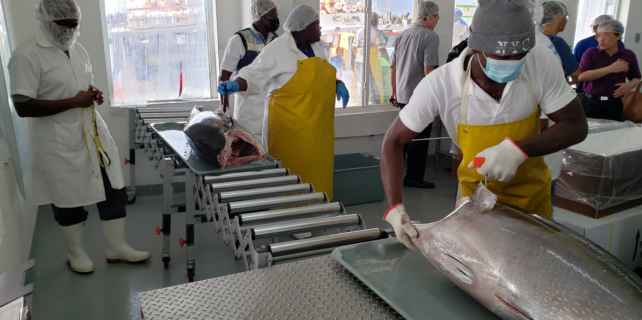
Dominica is set to join a cohort of Caribbean nations gaining access to newly finalized regional model legal frameworks that are poised to elevate aquatic animal health protections and aquatic food safety standards across the region, delivering enhanced consumer safeguards while fortifying the long-term resilience of local fisheries and aquaculture industries. The two landmark instruments — the Model Aquatic Animal Health Bill and accompanying Model Aquatic Food Safety Regulations — were formally greenlit by the Caribbean Community (CARICOM) Legal Affairs Committee (LAC) during its 43rd convening on August 28, 2026, before being publicly released by the CARICOM Secretariat. Designed as a flexible, standardized foundational framework, the documents are tailored to support member states including Dominica to update and align their domestic regulatory systems governing aquatic animal welfare, and the safety of fish and all other seafood products circulating in local, regional, and global markets. When transposed into national law, the frameworks are projected to drive tangible improvements in aquatic disease prevention and outbreak control, raise industry-wide food safety operational standards, and build robust auditing and verification systems to ensure all aquatic goods meet rigorous national, regional, and international compliance benchmarks. For Dominica, where coastal fisheries form a cornerstone of community livelihoods, national food security, and local economic activity, updating this regulatory landscape is a critical step toward cultivating a fisheries sector that is safer, more ecologically sustainable, and more competitive in cross-border trade. The model legislation also creates a structured pathway to foster greater cross-agency collaboration between government departments, industry operators, and community stakeholders to proactively mitigate shared risks to aquatic animal health, seafood quality, and public safety. The finalized texts have already been distributed to relevant officials across all member jurisdictions of the Caribbean Regional Fisheries Mechanism (CRFM), including Dominica, as well as additional Caribbean territories covered by the regional initiative. The entire drafting and approval process was made possible through funding from the 10th European Development Fund (EDF) Sanitary and Phytosanitary (SPS) Measures Project, which was executed by the Inter-American Institute for Cooperation on Agriculture (IICA) in close partnership with the CRFM. The CARICOM Secretariat’s Office of the General Counsel provided specialized, end-to-end legal expertise to refine the draft documents ahead of their formal review and sign-off by the LAC. CRFM Executive Director Dr. Marc Williams emphasized that the model legislation is purpose-built to translate long-standing collective regional commitments to food security into tangible, on-the-ground public protections at the national level. “Caribbean households deserve full confidence that the fish and aquatic products they purchase and serve to their families are safe. These model instruments give every government a unified, tested foundation to turn that public expectation into enforceable, context-appropriate protections that work for their unique national contexts. As member states map out their implementation roadmaps, it is critical that they center the voices of the fishers, aquaculture farmers, market vendors, and seafood processors who will apply these rules in their daily operations. The CRFM stands ready to provide full technical support to national authorities as they adapt these frameworks, and to facilitate peer learning across countries as implementation moves forward. The true measure of our success will be safer food for all our communities, and clear, practical regulatory guidelines that support the livelihoods of everyone who works to bring aquatic products to market,” Dr. Williams stated. In a public statement released earlier this week, IICA characterized the unanimous approval of the two model legal instruments as a transformative milestone for the entire Caribbean region, noting that the frameworks will substantially strengthen CARICOM member states’ capacity to meet stringent international seafood trade requirements and modernize the governance of aquatic animal health and food safety systems. Dr. Jose Urdaz, Head of IICA’s Agricultural Health, Biosecurity, and Food Safety and Quality (AHFS) Program, explained that the approval marks a pivotal step forward in the region’s ability to meet global sanitary and phytosanitary standards, removing long-standing barriers to safe, unimpeded cross-border trade in aquatic animals and seafood products. Dr. Urdaz also extended formal recognition to the CRFM team for their relentless dedication throughout the multi-year development process, while acknowledging the CARICOM Secretariat for its consistent strategic guidance and rigorous legal oversight at every stage of the initiative. Alongside the two core regulatory instruments, the CARICOM Secretariat has also published a dedicated Explanatory Note for the Model Aquatic Animal Health Bill to provide additional, detailed guidance for policymakers and industry stakeholders as they review and adapt the text for local use. The next key phase of the initiative for Dominica and all other CRFM member states will involve targeted consultations to determine how the model provisions can be adjusted to fit distinct national contexts, before being formally integrated into binding domestic legislation. This national adaptation process will intentionally invite input from fisheries management authorities, public health agencies, veterinary services, fishers, aquaculture operators, market vendors, seafood processors, and every other stakeholder across the full aquatic food value chain. For Dominica in particular, this regional initiative offers a rare, structured opportunity to lay stronger, more resilient foundations for its fisheries and aquaculture sector — one that prioritizes public health protection, sustains community livelihoods, boosts domestic consumer confidence, and equips the industry to proactively address emerging aquatic animal health risks and evolving global food safety challenges in the years ahead.
Dominica to benefit from new CARICOM model legislation to strengthen aquatic animal health and food safety