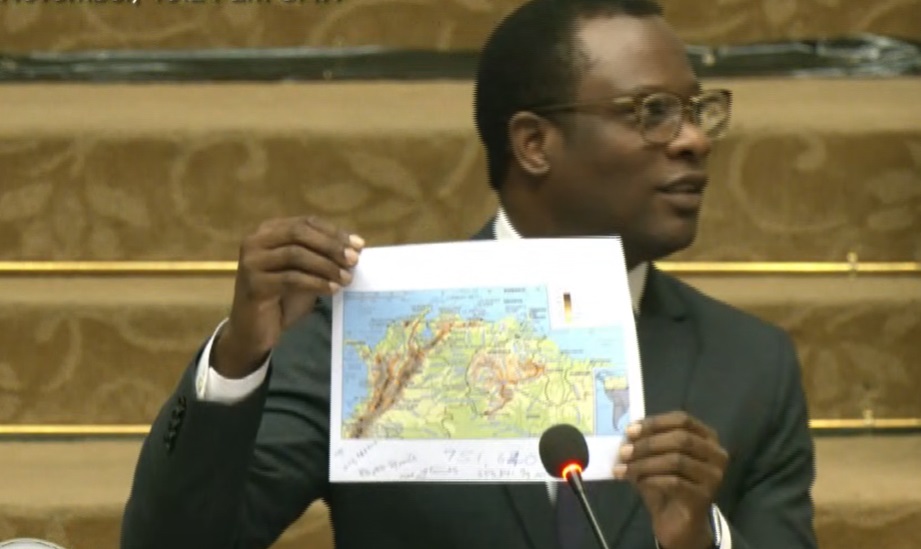
Georgetown, Guyana – November 21, 2026: Guyana’s Minister of Foreign Affairs Hugh Todd has formally and unequivocally ruled out all bilateral negotiations with Venezuela to redraw the two nations’ long-disputed territorial boundary, doubling down on the South American country’s commitment to the ongoing International Court of Justice (ICJ) proceedings over the decades-old Essequibo region claim. In an official public statement, Todd emphasized that Guyana has maintained an unwavering, consistent stance rejecting any bilateral discussions related to Venezuela’s challenge of the 1899 Arbitral Award, the longstanding legal framework that demarcated the two countries’ shared border. He also urged Guyanese citizens to remain patient and focused on safeguarding their nation’s sovereign, independent future amid rising regional tensions. Todd’s remarks came in direct response to two distinct elements of the United States’ public position on the long-running border dispute. While acknowledging that the U.S. currently recognizes the 1899 Arbitral Tribunal Award as a full, valid legal document, he pushed back firmly against Washington’s proposed secondary pathway that would allow for a revised land boundary agreed to by both Guyana and Venezuela. The foreign minister confirmed that Guyana formally communicated its rejection of this bilateral negotiation track during recent high-level talks between then U.S. State Department policy chief Jeremy Lewin and Guyana’s Foreign Secretary Robert Persaud, where Lewin had offered to mediate discussions between Guyanese officials and acting Venezuelan President Delcy Rodriguez. Todd noted that this explicit rejection of non-judicial settlement is fully documented in official meeting minutes held by Guyana’s foreign ministry. Todd clarified that the only legally valid boundary ruling Guyana will accept is the forthcoming ICJ decision, scheduled to be delivered in the first quarter of 2027. His statement was issued just hours after Venezuela’s interim President Delcy Rodriguez Gomez reaffirmed Caracas’ position that the entire controversy must be resolved through bilateral negotiations, in line with Venezuela’s interpretation of the 1966 Geneva Agreement that set initial terms for addressing the border disagreement. Todd pushed back against this demand, stating that Guyana will not waver from its commitment to international legal process, and called on Venezuela to respect and abide by the ICJ’s final ruling once it is released. Adding context to the evolving geopolitical dynamics, prominent international relations scholar Professor Mark Kirton warned that phrasing in recent U.S. statements referencing a future boundary “set by a competent legal body” or established “with the consent of both parties” creates room for Washington to pressure Guyana into bilateral negotiations over the 160,000-square-kilometre Essequibo Region, a resource-rich area abundant in mineral reserves and old-growth forest that Venezuela has laid claim to for decades. Separately, Amanza Walton, leader of the civil society group Forward Guyana Movement, issued a public call late Friday for the Guyanese government to demand full clarity from U.S. officials regarding recent comments made by U.S. Defence Secretary Peter Hegseth referencing Venezuelan territory, which were delivered shortly after Washington signed a new military cooperation agreement with Caracas.