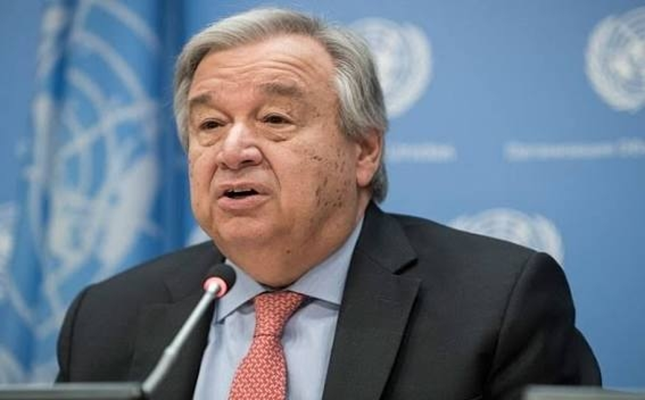
Delivering a press briefing ahead of his scheduled attendance at the upcoming ASEAN summit, United Nations Secretary-General António Guterres laid out a stark, urgent roadmap for global climate action from his base in Washington D.C. on Tuesday, November 17, 2026, calling for an immediate, steep acceleration of the global phase-out of fossil fuels in favor of widespread renewable energy adoption, while sounding the alarm that low- and middle-income nations will face cascading, catastrophic climate harm without drastically scaled-up international financial and technical support. Guterres framed the current global energy landscape, compounded by simmering geopolitical frictions and volatile, soaring fossil fuel prices, as a full exposure of the systemic, dangerous vulnerabilities built into the world’s decades-long dependence on polluting, finite fossil fuel supplies. He highlighted ongoing disruptions to critical global maritime energy shipping chokepoints, including the Strait of Hormuz and Bab el-Mandeb strait, as tangible proof that regional geopolitical instability can send ripple effects across every national energy market, driving up household costs for working people everywhere. The UN chief emphasized two non-negotiable, interconnected priorities for global leaders: first, rapidly scaling the rollout of affordable, accessible renewable energy infrastructure across all regions, and second, tripling existing international climate adaptation funding flows to developing nations to help them build robust resilience to worsening extreme weather. “The era of unchallenged fossil fuel dominance is drawing to a close,” Guterres stated plainly. “Today, renewable energy sources are not only far cheaper than fossil fuels for new capacity builds, they are far more geographically secure and less vulnerable to the geopolitical shocks that have roiled global energy markets for generations.” He called out the stark inequity at the heart of the current energy system, noting that the world’s nine largest fossil fuel corporations raked in a combined $95 billion in net profits in the first quarter of 2026 alone, even as average households across every continent face steeply rising fuel and utility bills that push millions more into energy poverty. Guterres labeled this dynamic fundamentally unjust, arguing that ordinary citizens are forced to bear the brunt of market volatility while powerful fossil fuel shareholders reap record windfall gains. The UN chief went on to warn that if global average temperatures rise more than 1.5 degrees Celsius above pre-industrial levels, the frequency and intensity of destructive storms, typhoons, prolonged droughts and catastrophic flooding will surge, placing unbearable strain on vulnerable coastal and inland communities as well as critical public infrastructure in low-income nations. He noted that the looming possibility of a severe El Niño event in the coming year will amplify these existing climate pressures, putting millions more people at risk of displacement, food insecurity and water scarcity. While Guterres has long advocated for developed nations to triple their existing climate adaptation funding commitments to the Global South, he acknowledged that even that tripled sum would only cover roughly 30% of the total estimated funding required for vulnerable developing nations, including ASEAN member states, to build the resilience they need to survive accelerating climate impacts. Beyond funding shortfalls, Guterres identified the outsized political influence of the fossil fuel industry as one of the single largest barriers to meaningful, timely climate progress. He noted that many elected political leaders are fully aware of the existential severity of the climate crisis, but have failed to take decisive regulatory action to rein in fossil fuel interests, due to sustained, well-funded industry lobbying, inadequate taxation of windfall corporate profits, and coordinated campaigns to spread public disinformation contradicting established climate science. To counter these barriers, Guterres renewed his call for all national governments to implement targeted taxes on the excessive windfall profits of fossil fuel corporations, directing those revenue streams directly to climate adaptation and renewable energy transition support for vulnerable communities. He stressed that national governments must reclaim regulatory leadership over decarbonization efforts, rather than allowing industry lobbying to delay urgent climate action for short-term private gain. Guterres added that grassroots public opinion and civil society movements remain the most powerful, untapped force pushing global leaders to adopt bolder climate policies, pointing to widespread public demands for decisive action that dominated discussions at the most recent UN COP climate negotiations. His remarks arrive at a moment of mounting global anxiety over the capacity of small, climate-vulnerable developing nations to secure the financing, technology and technical support they need to upgrade infrastructure, protect public health and safeguard their economies from the accelerating impacts of planetary warming, rather than only focusing on cutting greenhouse gas emissions.
Guterres urges faster shift to renewable energy, warns of worsening climate impacts