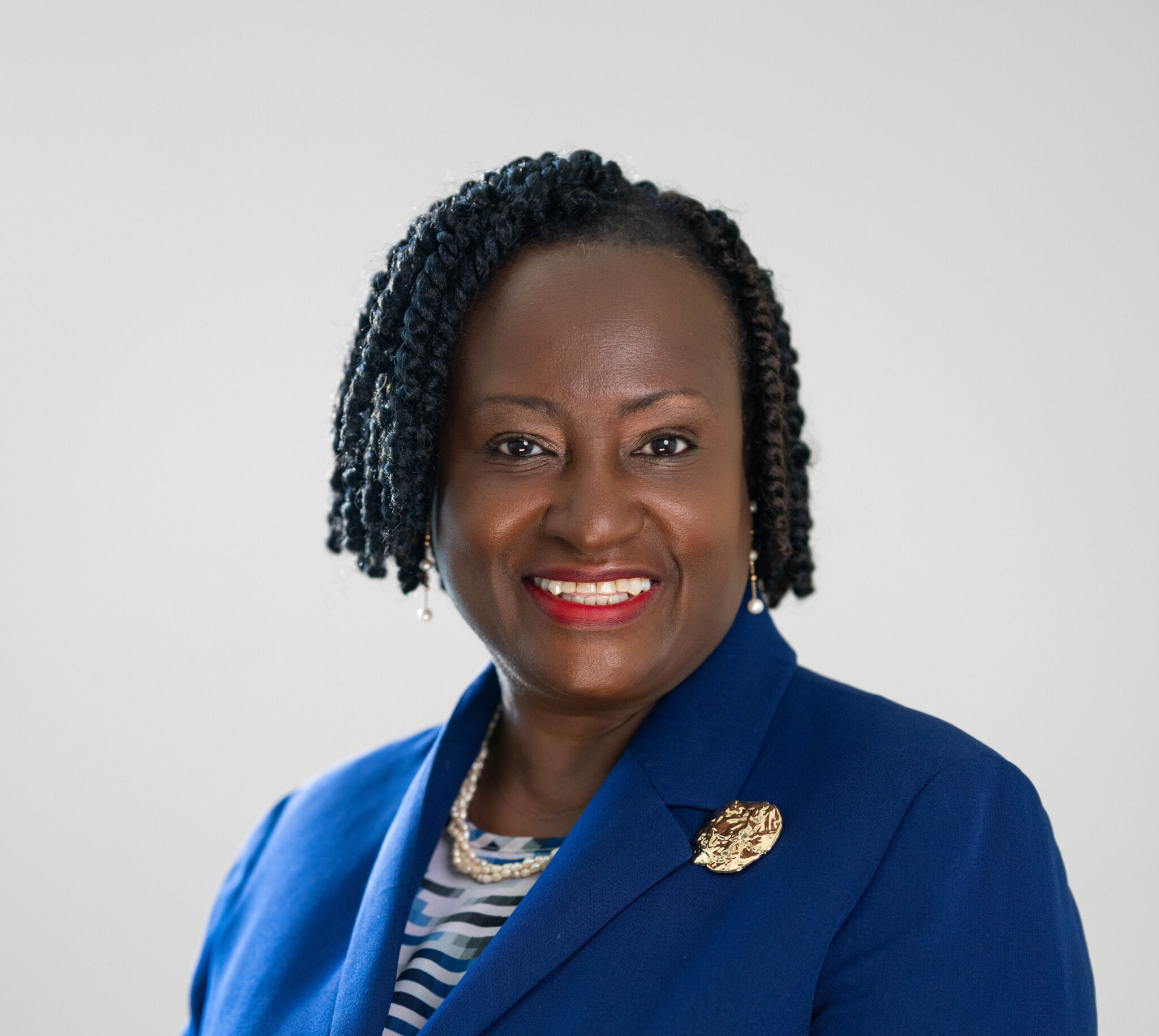
On November 19, 2026, at The UWI Global Campus’ Marryshow House in Grenada, Dr. Wendy C. Grenade delivered a keynote address for the official launch of *Entangled Past: Apology and Reparations for Slavery in Grenada*, a co-authored work by Grenadian historian Dr. Nicole Phillip, a descendant of enslaved Africans, and British-American journalist Laura Trevelyan, whose ancestors were prominent absentee enslavers in Grenada.
Grenade opened her remarks by commending the two authors for producing a landmark volume that injects new, human-centered perspective into global conversations around historical accountability, transatlantic slavery’s enduring legacies, and reparatory justice. Her address mapped the book’s far-reaching global significance, broke down its core narrative frameworks, outlined its defining strengths, acknowledged its unaddressed critical gaps, and closed with a rousing call to collective action to advance the unfinished work of repair in Grenada and across the Caribbean.
Against a shifting global landscape where reparatory justice has moved from the fringes of political debate to mainstream public discourse, the book arrives at a pivotal historical moment. Recent high-profile developments include King Charles III’s 2023 Commonwealth Heads of Government Meeting remarks in Antigua and Barbuda, where he labeled the transatlantic slave trade a “shameful chapter of history” and expressed deep sorrow for its ongoing harms, while stopping short of a formal apology or endorsement of state-level reparations. Parallel shifts in British political circles have seen growing openness to dialogue about the nation’s colonial and slaving past, even as formal calls for financial redress continue to face institutional resistance. These developments build on the 2001 Durban Declaration, which formally classified slavery and the transatlantic slave trade as crimes against humanity, as well as CARICOM’s Ten-Point Reparations Plan that expands the definition of repair far beyond monetary compensation to include public health investment, cultural restoration, educational reform, technology transfer, and sustainable community development. Ghana’s regional leadership in centering Pan-African historical remembrance and reparatory advocacy has also helped normalize previously silenced conversations about historical accountability.
*Entangled Past* centers the unprecedented 2023 public apology from the Trevelyan family for their ancestors’ role in enslaving hundreds of people in Grenada, told through alternating dual narratives from Phillip and Trevelyan that unfold across six interconnected chapters. Blending archival research, personal reflection, family testimonies, historical photographs, and political analysis, the volume avoids framing the apology as a neat, celebratory moment of closure, instead laying bare the tensions, disagreements, and ongoing discomfort that marked every step of the pair’s collaborative journey. Rejecting the trope of reconciliation as a one-off event, the book frames repair as a messy, iterative, long-term process, culminating in the establishment of the Trevelyan Grenada Reparations Fund to deliver tangible, community-led redress. As Sir Hilary Beckles notes in the volume’s foreword, the paired narratives of the two authors, once separated by vastly different inherited relationships to the history of slavery, merge to form a powerful counter-narrative that contributes to a new, more honest global reckoning with colonial harm he calls “the coming enlightenment.”
Grenade outlined the book’s four core strengths, framed as the “Four Ps”: People, Provocation, Partnership, and Progress. First, it rejects abstract, statistic-heavy accounts of slavery to center the lived humanity of both enslaved people and the generations that carry the lingering harms of their exploitation, breaking down long-standing silences around unrecorded personal histories. Second, it introduces the original concept of “ghostlining” – the widespread social practice of intentionally erasing historical injustice from collective memory and dismissing calls for repair – as a framework to challenge persistent societal amnesia around colonial harms, offering actionable insights for grassroots advocacy, public policy design, and future academic research. Third, it offers a tangible, real-world model of reparations in action, moving beyond abstract theoretical debate to demonstrate how cross-community dialogue and shared accountability can translate into concrete, collaborative action, as highlighted by The Guardian’s Natricia Duncan, who hailed the volume as a landmark example of reparations moving beyond rhetoric. Fourth, it frames progress as achievable even without universal consensus, rooted in the simple courage to engage difficult, uncomfortable conversations across lines of historical difference. The book’s final chapter, titled *Sankofa* – named for the Akan concept of reclaiming ancestral historical wisdom to build a more just future – underscores that honest engagement with the past, rather than erasure, is the foundation for collective forward movement.
Grenade also acknowledged the volume’s deliberate, unaddressed gaps: it does not explore how small-scale, individual family acts of apology and repair can be scaled up to confront deep, structural national and global legacies of slavery and colonialism, nor does it unpack the limits of grassroots reconciliation in the absence of formal state and institutional accountability. These omissions, she emphasized, are not failures, but intentional choices that allow the book to prioritize modeling practical, accessible repair rather than attempting to resolve every outstanding debate in the reparatory justice movement.
Closing her address, Grenade issued a collective call to action, noting that the Trevelyan family’s example poses a direct, unignorable question to the British government: if a single family can acknowledge its slaving past and deliver ongoing reparations, what excuse do state institutions that benefited exponentially more from colonial exploitation have to avoid doing the same? She paid tribute to the unwavering work of the CARICOM Reparations Commission and the Grenada National Reparations Committee, and proposed a bold “Great Grenadian Reset” 52 years after the nation’s independence, rooted in historical repair, equitable national development, and collective commitment to fulfilling the unmet promise of political sovereignty by building a society where all citizens can thrive. Reparatory justice and national renewal, she argued, are not competing priorities, but inseparable parts of a shared struggle to build a more united, equitable, and self-determined Grenada. She closed by urging all attendees to embrace the book’s core lesson: while the past cannot be rewritten, collective action rooted in honesty and humility can transform acknowledgement of historical harm into tangible, lasting change for future generations.
Review – Entangled Past: Apology and Reparations for Slavery in Grenada