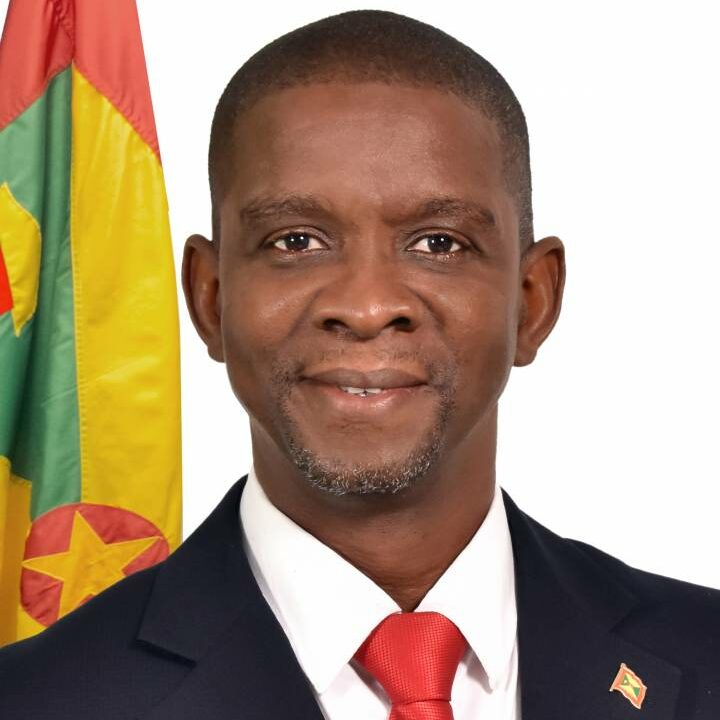
St. George’s, Grenada – The Caribbean island nation of Grenada has formally outlined plans to reinstate the binding fiscal rules enshrined in its 2023 Fiscal Resilience Act starting January 1, 2027, following a temporary suspension implemented to unlock urgent funding for post-Hurricane Beryl reconstruction efforts. Prime Minister Dickon Mitchell, speaking at a recent public briefing on the country’s medium-term fiscal outlook, emphasized that the phased wind-down of exceptional hurricane recovery spending will free up critical fiscal headroom for longstanding national priorities, including expanded investment in domestic agriculture, upgraded public healthcare infrastructure, and targeted community development projects, while also allowing the government to replenish depleted financial reserves.
Mitchell clarified that the temporary pause on the fiscal framework was a targeted, emergency measure enacted immediately after Hurricane Beryl swept across the island, and that a return to enforced fiscal discipline is non-negotiable to avoid the risks of persistent overspending that could undermine decades of economic progress. A core requirement of the 2023 Fiscal Resilience Act mandates that the government maintain a debt-reducing primary balance of no less than 1.5% of nominal annual Gross Domestic Product – a metric that calculates government revenue and incoming grants against total expenditure, excluding public debt interest payments – until the country hits its statutory public debt ceiling of 60% of GDP, a target scheduled to be met by 2035.
The International Monetary Fund’s 2025 Article IV consultation assessment of Grenada’s economy endorsed the government’s timeline for resuming the fiscal rules, noting that the temporary suspension had successfully enabled the government to roll out post-disaster reconstruction projects without sidelining other critical public investments. The IMF analysis further projects that the 1.5% primary balance requirement will be easily achievable in 2027, driven primarily by the sharp drop-off in one-off hurricane reconstruction capital expenditure.
Even as it recommits to strict fiscal guardrails, the Grenadian government has confirmed it will push forward with its flagship EC$1,000 Child Investment Bond program, also set to launch on January 1, 2027, a targeted social investment initiative designed to expand long-term human capital development for the nation’s youth. The return to the formal fiscal framework will also trigger a full, systematic review of all existing government subsidies, most notably long-running support schemes for fuel and electricity, to evaluate their real-world impact on household cost of living and overall public value. Prime Minister Mitchell noted that the review will build on previous adjustments to the national petrol tax, which was temporarily cut from EC$5.50 to zero before being reset to a permanent EC$3.50 rate, paired with an EC$17 price cap on retail fuel.
Newly appointed Minister for Finance and Economic Planning David Andrew will lead the development of the 2027 national budget that will operationalize the return to the fiscal rules, the child investment bond rollout, and the subsidy review process. Mitchell stressed that no immediate cuts to household support measures are on the table, but the full audit of existing subsidies will ensure public funds are directed to the most vulnerable populations while keeping the country on a stable, sustainable fiscal path. The 2027 transition marks a key milestone in Grenada’s post-hurricane recovery, positioning the nation to build robust financial buffers that can absorb future economic shocks and extreme weather events, which are growing increasingly frequent due to regional climate risks.
Grenada to reinstate fiscal rules in 2027