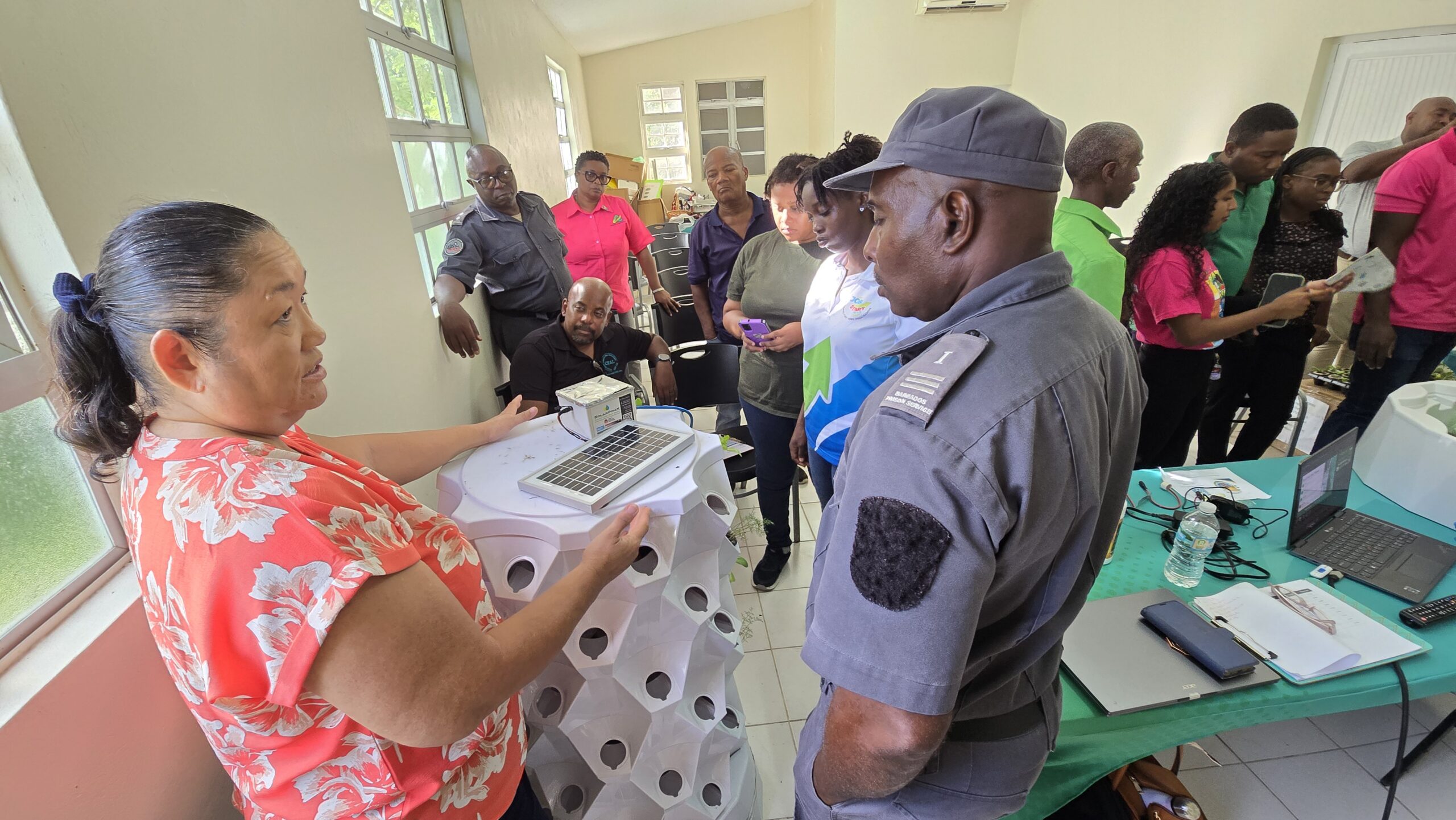
Barbados is rolling out an innovative solar-driven agricultural technology as part of a broader push to expand resilient, low-resource food production across the island. On a recent Wednesday, local sustainable solutions firm Caribbean Sustainable Solutions kicked off official hands-on training for key stakeholders from the public and agricultural sectors to operate the new solarponics vertical farming system. Trainees include staff from the national Ministry of Agriculture, the Barbados Agricultural Development and Marketing Corporation, and the Barbados Prison Service, marking the formal launch of the technology’s local deployment. Luana Gibbs, chief executive of Caribbean Sustainable Solutions and regional marketing lead for the system’s Trinidad-based developer PROTOFABTT, confirmed that the first consignment of modular growing towers has already cleared customs and is being installed in partnership with Ministry of Agriculture teams. The opening training workshop covered core fundamentals of the system, including its core operational principles, step-by-step assembly guidance, and day-to-day maintenance protocols. The training rollout will first upskill the ministry’s frontline agricultural extension officers, who will then pass on the knowledge to smallholder farmers and any members of the public interested in adopting the technology. Gibbs outlined a suite of unique design features that set the solarponics system apart from conventional soil farming: the integrated technology actively repels common agricultural pests including snails, slugs, caterpillars, and ants, eliminating the need for harmful chemical pesticides. Compared to traditional ground cultivation, the system cuts water consumption by an extraordinary 95% by recirculating nutrient-rich water in a closed, concentrated growing loop. Fully powered by renewable solar energy, the lightweight modular towers are also fully portable, allowing users to reposition them to shield crops from extreme weather events such as high winds or unseasonably intense sunlight. The towers come in two standard sizes, with compact 27-by-27 inch units that can hold either 48 or 96 individual plants, enabling far higher crop yields per square foot of land than sprawling traditional farms. Unlike soil-based operations, the solarponics system eliminates labor-intensive tasks including weeding, soil tilling, and rock removal, while also preventing the waste of water and fertilizer that typically leaches away through open ground. For local farmers navigating increasingly frequent climate shocks including prolonged droughts and sudden heavy downpours, Gibbs noted the system puts full control of growing conditions directly in producers’ hands, removing their vulnerability to erratic weather patterns. While she did not disclose a fixed unit price, Gibbs explained final costs for end users are shaped by variable expenses including international shipping, insurance, import duties, and fuel surcharges. She noted that registered farmers with official farmer identification qualify for duty exemptions, significantly lowering their purchase costs and incentivizing wider adoption. Currently, the solarponics units are manufactured in Trinidad, but Caribbean Sustainable Solutions has set a long-term strategic goal to expand production facilities across multiple Caribbean islands, including Barbados, to cut regional supply chain costs and shorten delivery times. Gibbs shared that she spent a decade researching low-resource agricultural technologies, and held nearly two years of negotiations with PROTOFABTT lead developer Ancel Bhagwandeen to bring the solarponics system to the Eastern Caribbean. The full deployment of the technology aligns directly with CARICOM’s landmark 25 by 2025 initiative, which targets a 25% reduction in the regional food import bill by 2025. Gibbs emphasized that the system is accessible not just to established farmers, but also to part-time hobbyists and new agricultural entrepreneurs, who can grow fresh produce for household consumption or generate extra income by selling surplus crops. Widespread adoption across the region, she added, will collectively cut reliance on imported food, strengthen local food security, and build a more self-sufficient, climate-resilient Caribbean agricultural ecosystem.