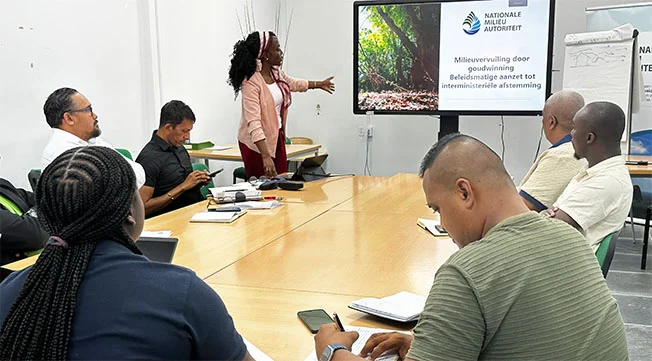
On November 18, Suriname’s National Environmental Authority (NMA) held a formal consultation with the presidential commission tasked with streamlining the country’s artisanal and small-scale gold mining sector, amid growing alarms over unregulated deployment of hazardous chemical agents including the widely used gold processing compound Jin Chan. The high-level discussion took place during an introductory working visit led by commission chair Egmond Letterboom, as both bodies move to resolve longstanding systemic gaps that have allowed unmonitored chemical usage to degrade local water supplies and pose severe, cumulative health risks to nearby communities, livestock, and fragile local ecosystems. During the bilateral meeting, NMA leadership laid out its full statutory mandate under the National Framework Environmental Law, which includes conducting mandatory environmental impact assessments, setting enforceable national environmental quality standards, running compliance verification operations for industrial activities, and rolling out public outreach campaigns to raise community awareness of environmental protection protocols. However, the authority outlined multiple persistent barriers that prevent it from fully executing these duties: chronic understaffing, insufficient operational funding, fragmented inter-agency coordination, and overlapping, ill-defined regulatory jurisdictions across multiple government departments that create loopholes for unethical mining operators. The most pressing agenda item centered on the unregulated distribution and application of so-called Gold Dressing Agents, most notably Jin Chan, a highly potent chemical mixture used to separate gold from raw ore that has never been subject to consistent national monitoring. Uncontrolled dumping of residual processing waste from small-scale mining operations into local rivers and groundwater reserves has already been linked to degraded drinking water quality in mining-heavy regions, with documented cases of adverse health impacts for residents and wildlife. To mitigate these risks, the two parties agreed to roll out a coordinated, multi-stakeholder action framework that brings together relevant regulatory bodies, small-scale mining associations, and chemical suppliers to clarify shared responsibilities for chemical oversight. The new regime will mandate that all current Jin Chan stockpiles held by mining operators and chemical distributors be formally registered with the NMA immediately, creating a centralized tracking system to monitor the full supply chain of the hazardous chemical and crack down on unlicensed sales. The joint action plan will also allocate dedicated resources to post-mining ecological restoration, to rehabilitate land and water bodies damaged by decades of unregulated mining activity. Both institutions emphasized that the strengthened partnership will lay the groundwork for a permanent, sustainable regulatory system that eliminates the environmental and public health harms associated with unregulated small-scale gold mining, while supporting the long-term viability of Suriname’s gold sector as a key national economic asset.
NMA en goudcommissie richten aandacht op risico’s Jin Chan en gebrekkig toezicht