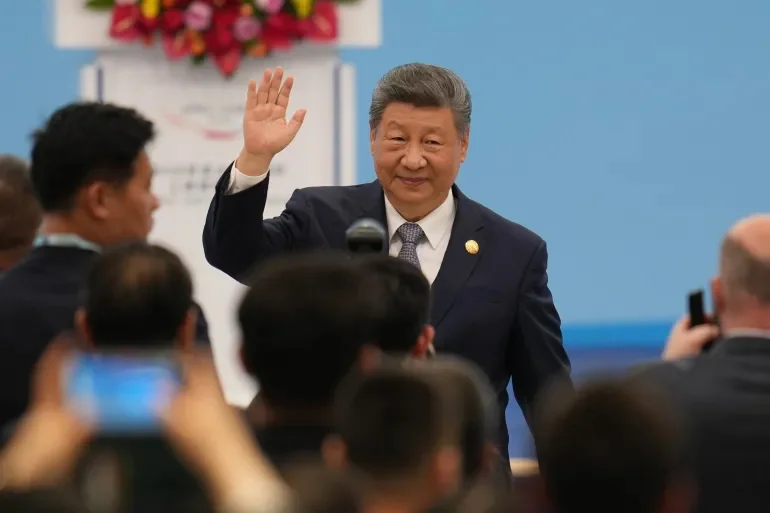
Against the backdrop of the 2026 Asia-Pacific Economic Cooperation (APEC) Summit hosted in Shenzhen on November 18, Chinese President Xi Jinping and Russian President Vladimir Putin held a high-stakes bilateral meeting on the summit sidelines, issuing a joint call for deepened strategic coordination between the two nations to accelerate the transition toward a multipolar global order. The talks unfolded at a moment of unprecedented flux in global power dynamics, marked by rising frictions between major economic and military blocs, widespread trade protectionism, and lingering geopolitical tensions stemming from the 2022 Russian invasion of Ukraine.
During their closed-door discussion, Xi emphasized that Beijing and Moscow must take tangible, targeted steps to expand cooperation across all sectors, jointly shaping a global governance system free from the unilateral dominance of a small handful of nations. Putin echoed this stance, delivering a sharp critique of the post-Cold War western-led international order, arguing that traditional western economic hegemony has already eroded significantly. He characterized Europe’s current trajectory as a period of “humiliating decline,” adding that western punitive measures including sanctions, import tariffs, and export restrictions have lost much of their coercive power over rival economies. The Russian president’s remarks served as a robust defense of his nation’s economic resilience, noting that sweeping western sanctions imposed after the Ukraine incursion have failed to cripple the Russian economy or derail its long-term growth trajectory.
This narrative was immediately countered by Canadian Prime Minister Mark Carney, who pushed back firmly against Putin’s assessment, stating that the sanctions regime targeting Russia remains highly effective, with measurable impacts visible across Russian financial institutions and the country’s economic elite. Carney reaffirmed that the restrictive measures will remain in full force for as long as military operations in Ukraine continue, laying bare deep, unresolved divisions within the global community over the utility of economic sanctions as a tool for geopolitical leverage.
Parallel to its geopolitical alignment with Russia, Beijing is leveraging the APEC platform to position itself as a leading champion of open global trade and multilateral economic cooperation. Xi delivered a stark warning against the rising tide of nationalist market protectionism and arbitrary trade barriers, remarks widely interpreted as a direct rebuke of U.S. President Donald Trump’s “America First” trade agenda, which has imposed steep tariffs on both U.S. allies and major economic competitors. The Chinese president called for the preservation of the rules-based multilateral trading system anchored by the World Trade Organization, advocating for reduced trade barriers, expanded market access for all nations, and the construction of stable, resilient global supply chains. Xi also pledged that China will further open up its manufacturing and services sectors to foreign enterprises, framing Beijing as a predictable, reliable trade partner at a time of widespread volatility in global commercial relations. U.S. curbs on Chinese access to advanced semiconductors and artificial intelligence-related high technology remain a core point of economic rivalry between the two largest global economies.
The summit’s agenda has been further elevated by the arrival of U.S. President Donald Trump in Shenzhen, where Xi personally welcomed him at the airport as a reciprocal gesture mirroring the warm reception extended to Xi during his state visit to the U.S. in September. Trump and Putin have already exchanged greetings and a handshake on the summit margins, with a historic first trilateral meeting between Trump, Xi, and Putin scheduled for the following day. The wide-ranging discussions on the agenda are set to cover some of the world’s most pressing flashpoints: the ongoing Ukraine conflict, tensions with Iran, bilateral trade relations, global artificial intelligence governance, and nuclear disarmament. The planned deliberations over Ukraine have sparked significant international concern, with many observers warning that the three major powers could reach agreements over Ukraine’s future without the Ukrainian government present at the negotiating table, a development that European nations are monitoring with intense scrutiny. Putin has publicly stated he holds high expectations for the trilateral talks, noting that tangible, actionable outcomes are within reach, and that cross-major-power cooperation is indispensable to preventing further fragmentation of the global order.
High on the sidelines agenda is also the fate of the U.S.-China partial trade deal, which has been extended through January 10, 2027, but faces deep uncertainty over whether a further extension or a more comprehensive bilateral trade framework can be negotiated after that date. Ongoing negotiations cover thorny issues including reciprocal tariff reductions, U.S. high-tech export restrictions, and Chinese controls over critical raw material exports.
Founded in 1989, APEC comprises 21 member economies, representing 2.7 billion people and accounting for more than 50% of global gross domestic product. Alongside trade, the 2026 summit agenda prioritizes technological innovation, artificial intelligence regulation, and inclusive cross-border economic collaboration. The ongoing deliberations in Shenzhen lay bare the deep, interconnected nature of economic interests and geopolitical alignments in the 21st century: as China and Russia advocate for a multipolar system with multiple distributed power centers, the trajectory of U.S. relations with both nations will remain the defining variable shaping the future of global trade and collective security for years to come.