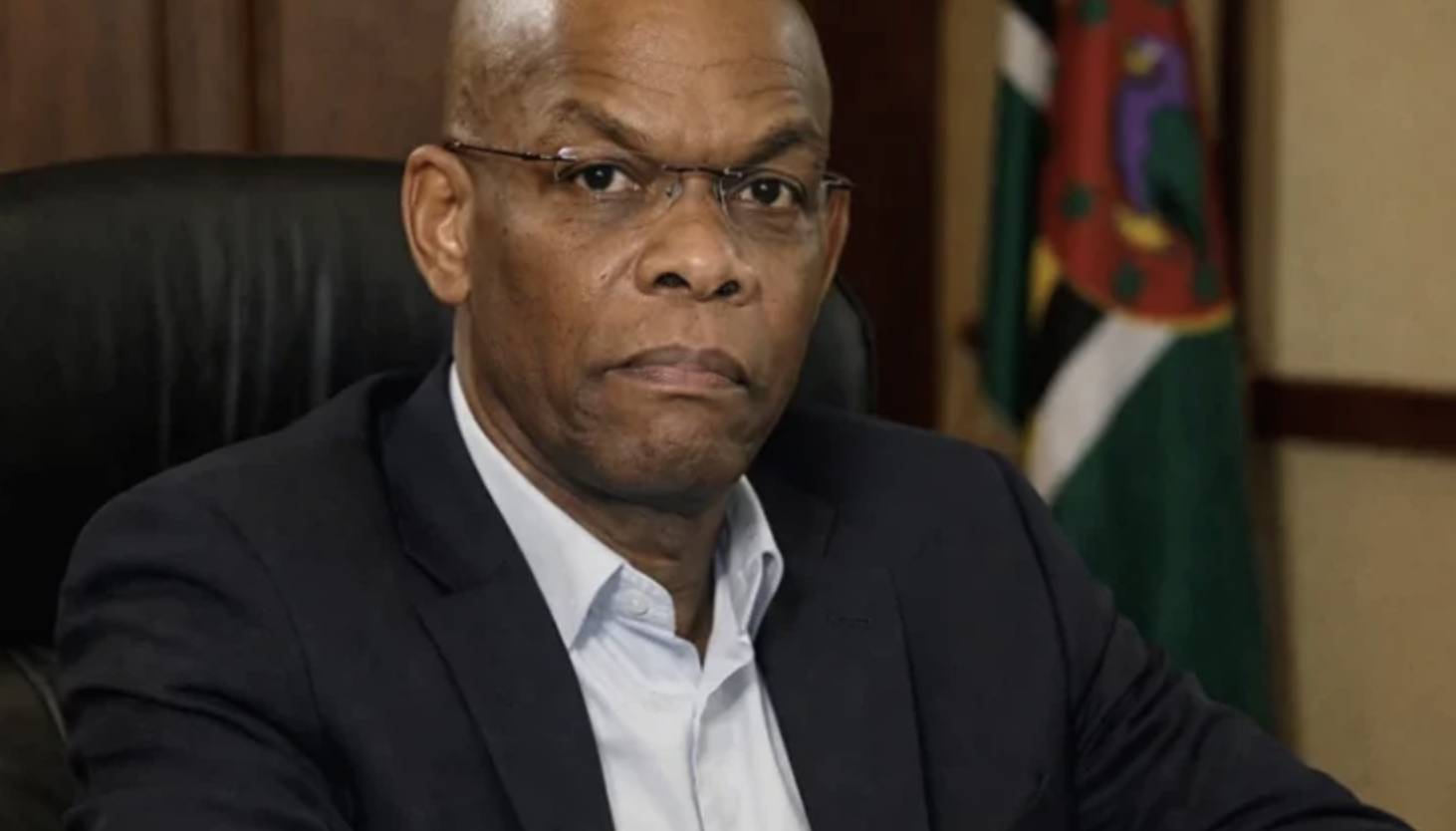
Recent general elections across the Eastern Caribbean have delivered unprecedented landslide wins for incumbent ruling parties, raising critical questions about the long-term health of parliamentary democracy in the small island sub-region. In the span of just months, governing parties secured near-total control of lower legislative chambers: the Barbados Labour Party claimed every one of the 30 contested seats in February 2026; the Saint Lucia Labour Party took 14 out of 17 available seats; the New Democratic Party in Saint Vincent and the Grenadines captured 14 of 15 seats; the Antigua and Barbuda Labour Party won 15 of 17 seats; and most recently, Grenada’s National Democratic Congress secured 14 of 15 seats in the November 5, 2026 general election. These decisive outcomes reflect the free, fair choices of local electorates, and no democratic system should seek to undermine the popular mandate that delivers a legitimate governing party to office. However, the region now faces a pressing structural challenge that extends far beyond individual partisan fortunes: when one political party holds nearly every seat in parliament, who retains the capacity to rigorously hold the executive branch to account? This analysis is not an argument against strong, democratically elected governments, but a warning against the risks of unchallenged, unchecked state power. The Westminster parliamentary system, which nearly all former British Caribbean territories inherited upon independence, is built on a foundational principle: the executive must answer fully to parliament, and parliament must be structured to carry out unflinching scrutiny of government actions. A functional opposition is not a nuisance for ruling parties, but a non-negotiable pillar of healthy parliamentary democracy. Its core duties include interrogating cabinet ministers, vetting draft legislation line by line, auditing public expenditure, pushing back against flawed or unethical policy proposals, and offering viable alternative frameworks for national development. It also amplifies the voices of citizens who did not cast their ballot for the governing party, ensuring their priorities around employment, healthcare, education, housing, public services, and taxation are not erased from national discourse, while presenting a credible alternative administration to guarantee that political power remains temporary and permanently subject to voter judgment. When opposition representation dwindles to a single elected member, or is entirely eliminated as seen in Barbados’ 2026 election result, the very function of legislative oversight is put at severe risk. These are not abstract academic debates: they strike at the core of how Caribbean democratic institutions operate on a day-to-day basis, and the risks are amplified in the sub-region’s small island contexts. Most Eastern Caribbean national parliaments have a tiny number of total seats, and the lines between the executive and legislative branches are inherently blurred, as cabinet ministers are almost exclusively drawn from the ranks of the governing party’s parliamentary caucus. When the ruling majority becomes so large that no meaningful opposition counterweight exists, party loyalty and top-down political discipline often prevent government backbenchers from mounting independent challenges to cabinet decisions. Parliamentary oversight committees, which are designed to conduct deep dives into government spending and policy implementation, also become largely ineffective when opposition representation is negligible. The end result is a legislative body that increasingly rubber-stamps government decisions rather than rigorously examining their merits, risks, and public value. Compounding this structural flaw is a quirk of the region’s first-past-the-post electoral system: a party can secure a crushing supermajority of parliamentary seats without winning a corresponding share of the national popular vote. A relatively narrow lead in aggregate voter support can translate to near-total legislative control, while a rival party that earns widespread public backing across constituencies can end up with almost no elected representatives at all. The fact that the electoral system permits this outcome does not mean that a ruling party is entitled to an unrestricted mandate to exercise power as it sees fit: winning an election does not equate to gaining ownership of the state. Citizens who voted for opposition parties retain full, equal rights, and their policy priorities do not cease to matter simply because their preferred candidates lost at the polls. Functional democracy must protect the majority’s right to govern, while equally safeguarding the political minority’s right to be heard. This reality makes it urgent for Caribbean nations to launch a full, public review of whether their existing parliamentary structures are fit for purpose for the unique political realities of small island states. A suite of targeted, actionable reforms deserve serious, region-wide consideration: the adoption of mixed-member proportional representation to guarantee legislative seats for parties that secure significant shares of the popular vote, even if they do not win individual constituency races; strengthening the independence and staffing of parliamentary oversight committees, most notably the Public Accounts Committee, which should remain chaired by the Leader of the Opposition and be granted full unobstructed access to audit government spending and public administration free from political interference. Additional critical safeguards include formal protections for the independence of key constitutional offices: the Auditor General, national Electoral Commissions, the Director of Public Prosecutions, and national integrity commissions. Enshrining robust freedom of information legislation, mandatory transparent public procurement rules, and legally required meaningful public consultation for major policy decisions must also become core, non-negotiable features of Caribbean democratic governance. These institutional guardrails cannot be left dependent on the goodwill of whichever political party happens to hold power at any given time. The responsibility to strengthen democratic accountability does not rest solely on governing parties, however. Opposition groups cannot blame every shortcoming on overwhelming ruling party majorities: they must demonstrate consistent competence, internal discipline, personal integrity, and a clear willingness to develop evidence-based, credible alternative policy platforms, engage with marginalized communities, renew their leadership structures, and prepare themselves to be a viable governing option for voters. Even so, the heaviest burden of upholding democratic norms falls on those who currently hold state power. A government that has earned an overwhelming popular mandate should have the confidence to welcome robust scrutiny, respect longstanding parliamentary procedures, and defend independent institutions even when those bodies challenge its policy decisions. These conversations are of particular urgency for Dominica and other nations that have seen similar lopsided electoral outcomes in recent years. National dialogues on electoral reform must no longer be limited to narrow technical debates over voter registration rules, constituency boundary adjustments, and election day logistics. They must expand to address the full constitutional architecture of governance: the balance of power between the executive and legislative branches, the operational resources and formal authority granted to opposition parties, the legal independence of constitutional oversight bodies, the effectiveness of parliamentary oversight, and the guaranteed right of all citizens to participate meaningfully in public decision-making between election cycles. Nations should not wait until their own parliaments face extreme, unprecedented partisan imbalance to address these structural gaps. The Caribbean Community (CARICOM) and Organization of Eastern Caribbean States (OECS) should also facilitate a coordinated regional conversation on strengthening parliamentary democracy, as the challenges facing small island Westminster systems are remarkably similar across the sub-region, even as national constitutional frameworks differ in minor ways. The overarching goal of these reforms is never to weaken democratically elected governments, but to strengthen the foundations of democracy itself. A government must have clear authority to deliver on its electoral promises, but an opposition must have the full capacity to hold that government to account. Parliament must remain a space for rigorous scrutiny and robust public debate, not a mere rubber stamp for cabinet decisions. Independent oversight institutions must be protected from partisan interference, and citizens must never be forced to surrender their democratic voice in the multi-year gap between general elections. The core lesson for the entire sub-region is unambiguous: the size of a government’s parliamentary majority should never determine the strength of its accountability to the public. Caribbean societies must move beyond the narrow, incomplete framing that limits democratic practice to the single act of casting a ballot on election day. Democratic health must instead be measured by the quality of public governance, the integrity of state institutions, the transparency of official decision-making, and the consistent willingness of those in power to answer directly to the people they serve. Winning an election never grants a political party ownership of parliament, state institutions, or the citizenry. A strong, effective government requires a strong, independent parliament, and a strong parliament requires a well-resourced, effective opposition. A thriving, sustainable democracy demands that no government, no matter how overwhelming its electoral victory, is ever placed beyond public accountability. The ruling party may win the election, but the people must never lose their voice.
COMMENTARY: When the government wins almost everything does democracy lose something?